Trinidadian Doubles: The Curried Chickpea Street Food Addiction
Trinidadian Doubles: The Curried Chickpea Street Food Addiction
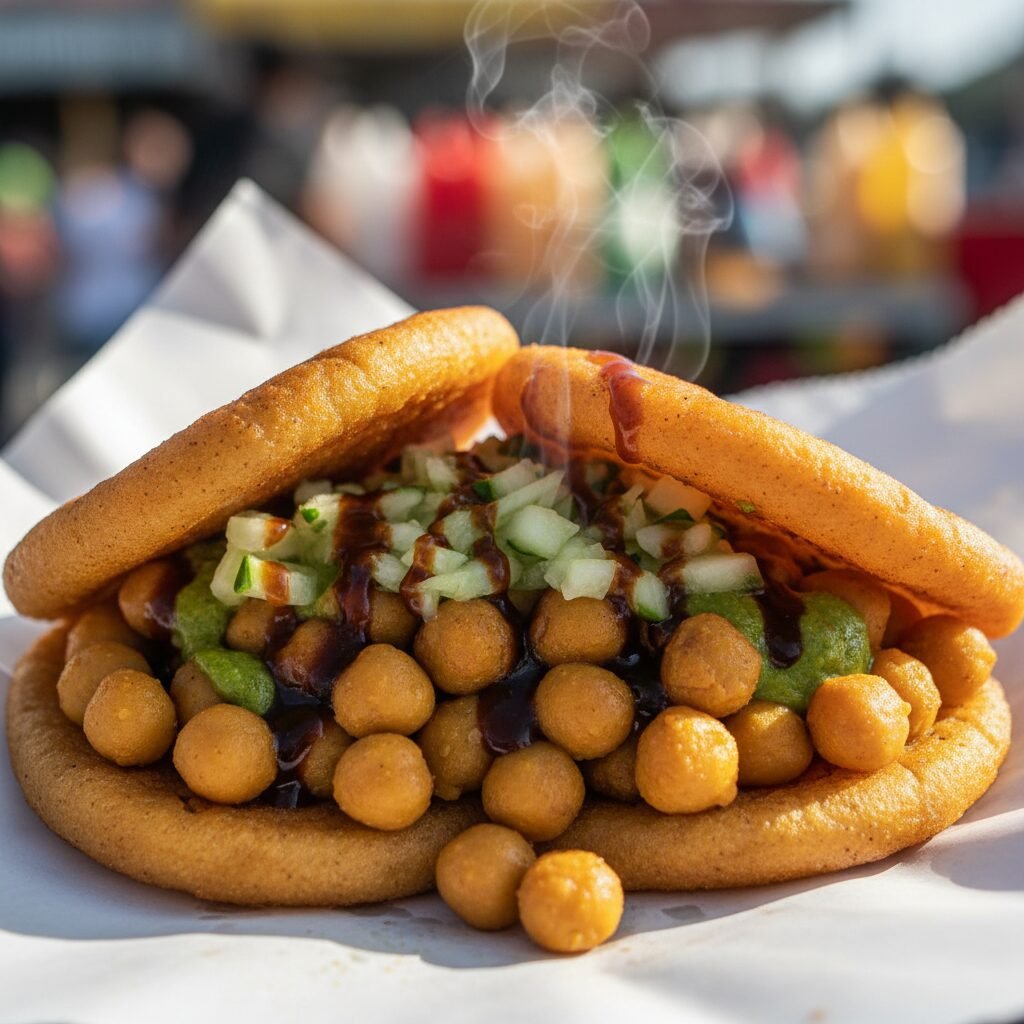
Step into the vibrant world of Trinidadian street food with its undisputed king: Doubles. More than just a snack, Doubles are a cultural institution, a beloved breakfast, a late-night craving-fixer, and a taste of home for Trinidadians worldwide. The concept is simple yet sublime: two pieces of soft, pillowy, turmeric-tinged fried bread called ‘bara,’ cradling a savory, fragrant filling of curried chickpeas, or ‘channa.’ The magic, however, lies in the symphony of textures and flavors when topped with an array of condiments—sweet tamarind sauce, pungent shado beni chutney, cooling cucumber, and a fiery hit of pepper sauce. This recipe will guide you through creating an authentic Doubles experience right in your own kitchen, from proofing the perfect bara dough to simmering a deeply flavorful channa that will transport you straight to a bustling stall in Port of Spain.
30 minutes (plus 8 hours for soaking chickpeas and 1 hour for dough to rise)
1 hour
1 hour 30 minutes (plus inactive time)
16 doubles (32 bara)
Street Food
Frying & Stewing
Trinidadian
Vegan
Why You’ll Love This Recipe
- Authentic Trinidadian street food flavor
- Perfectly soft and pillowy fried bara bread
- Richly spiced, savory curried chickpea (channa) filling
- Completely vegan and packed with plant-based protein
- Customizable with a variety of traditional condiments
Equipment You’ll Need
- Large mixing bowl
- Dutch oven or large, heavy-bottomed pot
- Deep fryer or a large, deep skillet/wok
- Slotted spoon or spider strainer
- Wire rack and paper towels
- Blender or small food processor
- Rolling pin (optional, hands work best)
- Measuring cups and spoons
Ingredients
- For the Bara (Fried Bread):
- 4 cups all-purpose flour
- 2 1/4 tsp (1 packet) active dry yeast
- 1 tbsp granulated sugar
- 1 1/2 tsp salt
- 1 tsp baking powder
- 1 tsp ground turmeric
- 1 3/4 cups warm water (around 110°F/43°C)
- Vegetable or canola oil, for frying (about 4-6 cups)
- For the Channa (Curried Chickpeas):
- 1 lb dried chickpeas, soaked overnight and drained
- 3 tbsp vegetable oil
- 1 large onion, finely chopped
- 6-8 cloves garlic, minced
- 1 tbsp grated fresh ginger
- 1 Scotch bonnet or habanero pepper, finely minced (optional, adjust to taste)
- 4 tbsp Trinidadian curry powder
- 1 tsp ground cumin (geera)
- 1/2 tsp ground turmeric
- 6-8 sprigs of shado beni (culantro) or 1/2 cup chopped cilantro, divided
- 6 cups water or vegetable broth
- Salt and black pepper to taste
- For Serving (Optional Condiments):
- Tamarind sauce (sweet and sour)
- Shado beni chutney (green seasoning)
- Cucumber chutney
- Pepper sauce
Instructions
- Step 1: Prepare the Channa
- After soaking the chickpeas overnight, place them in a large pot with enough fresh water to cover by 2 inches. Bring to a boil, then reduce heat and simmer for 60-90 minutes, or until very tender. Drain and set aside. Reserve about 1 cup of the cooking liquid.
- Step 2: Create the Curry Base
- In a large Dutch oven or heavy-bottomed pot, heat 3 tbsp of oil over medium heat. Add the chopped onion and cook until softened and translucent, about 5-7 minutes. Add the minced garlic, ginger, and Scotch bonnet pepper (if using) and cook for another minute until fragrant.
- Step 3: Cook the Channa
- Add the curry powder, cumin, and turmeric to the pot. Stir constantly for 30-60 seconds until the spices are toasted and fragrant. This is called ‘bunjal’-ing the curry. Add the cooked chickpeas and stir well to coat them in the spice mixture. Add 6 cups of water (or broth) and half of the chopped shado beni (or cilantro). Bring to a boil.
- Step 4: Simmer and Thicken
- Reduce the heat to a low simmer, partially cover the pot, and cook for at least 30-40 minutes, stirring occasionally. The channa should be very soft and the liquid should begin to thicken. To achieve the classic texture, use an immersion blender to briefly pulse the mixture a few times, or mash about a quarter of the chickpeas against the side of the pot with a spoon. This releases starch and thickens the sauce. Season generously with salt and pepper. Stir in the remaining shado beni and keep warm.
- Step 5: Make the Bara Dough
- While the channa simmers, prepare the bara. In a small bowl, dissolve the sugar and yeast in 1/4 cup of the warm water. Let it sit for 5-10 minutes until it becomes foamy. In a large bowl, whisk together the flour, salt, baking powder, and turmeric. Make a well in the center and pour in the yeast mixture and the remaining 1 1/2 cups of warm water. Mix with your hands or a wooden spoon until a very soft, sticky dough forms. Do not overwork it.
- Step 6: Let the Dough Rise
- Lightly oil your hands and the surface of the dough. Cover the bowl with a damp cloth or plastic wrap and place it in a warm, draft-free spot for about 1 hour, or until doubled in size.
- Step 7: Shape the Bara
- Punch down the risen dough. Lightly oil your hands and a work surface. Pinch off golf ball-sized pieces of dough (you should get about 32). Roll each piece into a smooth ball. Place the balls on the oiled surface, cover with plastic wrap, and let them rest for 15 minutes.
- Step 8: Fry the Bara
- In a deep skillet or fryer, heat about 2-3 inches of oil to 350-375°F (175-190°C). Working one at a time, take a dough ball and flatten it with oiled fingertips into a thin circle, about 4-5 inches in diameter. Carefully slide the bara into the hot oil. It should puff up almost immediately. Fry for 30-45 seconds per side, until golden brown. Use a slotted spoon to remove it from the oil and drain on a wire rack lined with paper towels. Repeat with the remaining dough.
- Step 9: Assemble the Doubles
- To serve, take two warm bara. Place one on a piece of wax paper, spoon a generous amount of the hot channa on top, and then place the second bara over the filling. Top with your desired condiments like tamarind sauce, cucumber chutney, and pepper sauce. Fold the wax paper around the double and serve immediately.
Expert Cooking Tips
- For the softest bara, ensure your dough is very soft and slightly sticky. A stiff dough will result in tough bara.
- The oil temperature is crucial. If it’s too low, the bara will be greasy. If it’s too high, they will burn before cooking through. Use a thermometer for best results.
- Don’t be shy with the seasoning for the channa. It needs to be bold and flavorful to stand up to the bara and condiments.
- Mashing some of the chickpeas is the traditional secret to a thick, creamy channa filling. Don’t skip this step!
- Work with well-oiled hands and surfaces when handling the bara dough to prevent it from sticking.
Substitutions and Variations
If you’re short on time, you can use canned chickpeas; just be sure to rinse them well and reduce the simmering time. Cilantro is a common and acceptable substitute for shado beni (culantro), though the flavor will be slightly different. If you cannot find Trinidadian curry powder, a good quality Madras curry powder can be used as an alternative.
Common Mistakes to Avoid
A common mistake is undercooking the chickpeas; they should be extremely tender, almost falling apart, for the right texture. Another error is making the bara too thick, which results in a doughy center. Aim for a thin, even circle before frying. Finally, avoid overcrowding the pan when frying the bara, as this will lower the oil temperature and lead to greasy results.
Serving Suggestions
Doubles are traditionally served hot, wrapped in wax paper, and eaten on the spot. Offer a ‘sauce station’ with bowls of tamarind sauce, shado beni chutney, cucumber chutney, and a very hot pepper sauce so guests can customize their ‘slight pepper’ or ‘plenty pepper’. The classic beverage pairing is a cold, sweet Trinidadian soda like Solo or a Red Kola Champagne.
Storage and Reheating Tips
It’s best to store the channa and bara separately. Both can be kept in airtight containers in the refrigerator for up to 3 days. To reheat, warm the channa on the stovetop over low heat. Reheat the bara for a few seconds in a hot, dry skillet, a toaster oven, or an air fryer to restore their softness.
Nutrition Facts (Estimated)
| Serving Size | 1 double (2 bara and filling) |
| Calories | 345 kcal |
| Fat | 14g |
| Saturated Fat | 1.5g |
| Unsaturated Fat | 12.5g |
| Trans Fat | 0g |
| Cholesterol | 0mg |
| Sodium | 580mg |
| Carbohydrates | 48g |
| Fiber | 8g |
| Sugar | 4g |
| Protein | 9g |
Frequently Asked Questions
What is the difference between shado beni and cilantro?
Shado beni, also known as culantro, is a Caribbean herb with long, serrated leaves. It has a much more pungent and potent flavor than its cousin, cilantro. While they can be used interchangeably, shado beni provides a more authentic Trinidadian taste.
Can I make the components ahead of time?
Yes. The channa can be made a day or two in advance; its flavor often improves overnight. The bara dough can be refrigerated for up to 24 hours after its first rise. Let it come to room temperature for about 30 minutes before shaping and frying.
Why didn’t my bara puff up?
This could be due to a few reasons: your yeast may not have been active, the oil wasn’t hot enough, or the dough was rolled too thick. Ensure your yeast is foamy before using and that the oil sizzles immediately when the dough is added.
Conclusion
Mastering Trinidadian Doubles at home is a rewarding culinary journey. It’s about more than just following steps; it’s about understanding the balance of spice, the texture of perfectly soft bara, and the joy of assembling this iconic street food. Each bite is a complex, satisfying explosion of flavor that tells a story of Trinidad and Tobago’s rich cultural tapestry. We hope this recipe empowers you to bring a taste of the islands into your kitchen and share the addiction with friends and family.