Traditional Scottish Stovies: The Meat And Potato Stew That Uses Leftovers
Traditional Scottish Stovies: The Meat And Potato Stew That Uses Leftovers
Welcome to a taste of authentic Scottish comfort. Stovies are more than just a dish; they are a cherished culinary tradition, a testament to Scotland’s frugal and resourceful heritage. The name ‘stovies’ is believed to derive from the French word ‘étouffée,’ meaning to stew, steam, or braise in a covered pot. At its heart, this humble one-pot meal is a way to transform the remnants of a Sunday roast—be it beef, lamb, or mutton—into a deeply flavorful and satisfying stew. It’s a dish born from necessity, designed to stretch ingredients and warm the soul on a cold Highland night. Every Scottish family has its own version, a recipe passed down through generations, often debated with fierce passion. Some insist on a ‘wet’ stovie, almost a soup, while others prefer a ‘dry’ version where the potatoes break down completely to enrobe the meat. Our recipe honors the classic approach, creating a rich, savory, and utterly comforting dish that is both a historical artifact and a perfect modern meal for using leftovers wisely.
20 minutes
1 hour 30 minutes
1 hour 50 minutes
4-6 servings
Main Course
Stewing
Scottish
Standard
Why You’ll Love This Recipe
- Authentic Scottish Comfort Food: A true taste of Scotland’s culinary heritage.
- Perfect for Leftovers: The ideal way to use up leftover roast meat and potatoes.
- One-Pot Wonder: A simple, no-fuss recipe that minimizes cleanup.
- Hearty and Filling: A deeply satisfying meal perfect for cold weather.
- Highly Adaptable: Easily customized based on the ingredients you have on hand.
Equipment You’ll Need
- Large heavy-bottomed pot or Dutch oven with a lid
- Chef’s knife
- Cutting board
- Wooden spoon or spatula
- Vegetable peeler
Ingredients
- 2 tablespoons beef dripping, lard, or vegetable oil
- 2 large onions, thinly sliced
- 1.5 kg (approx 3.3 lbs) floury potatoes (like Maris Piper, King Edward, or Russet), peeled and sliced about 1/2-inch thick
- 500g (approx 1.1 lbs) leftover cooked roast beef or lamb, roughly chopped or shredded
- 500-750ml (2-3 cups) hot beef or lamb stock
- Salt, to taste
- Freshly ground black pepper, to taste
- Optional: 1-2 carrots, peeled and sliced
- Optional: 1 tablespoon Worcestershire sauce
- Fresh parsley, chopped, for garnish
Instructions
- Melt the beef dripping or oil in a large, heavy-bottomed pot or Dutch oven over medium heat. Add the sliced onions and cook gently for 8-10 minutes, until they are soft, translucent, and slightly sweet. Do not let them brown.
- Once the onions are softened, remove the pot from the heat. Arrange a single layer of sliced potatoes over the onions at the bottom of the pot. This will help prevent the other ingredients from sticking.
- Create the layers. Sprinkle about a third of your leftover chopped meat over the potato layer. Season with a little salt and pepper. Follow this with another layer of potatoes, then another layer of meat. Continue this process until all the meat and potatoes are used, finishing with a final layer of potatoes on top. If using carrots, layer them in with the meat.
- Pour the hot stock over the layers. You want the liquid to come about two-thirds of the way up the ingredients, but not completely cover the top layer of potatoes. This is crucial for achieving the right ‘stewed’ consistency rather than a soup. Add the Worcestershire sauce now, if using.
- Place the pot back on the stove and bring the liquid to a gentle simmer over medium-high heat.
- Once simmering, reduce the heat to low, cover the pot with a tight-fitting lid, and let it cook for 1 to 1.5 hours. The key is to cook it ‘low and slow’. Do not be tempted to stir it frequently, as this will break down the potatoes too much, too soon. A gentle shake of the pot every 20-30 minutes is sufficient.
- After about an hour, check the potatoes. They should be very tender and starting to break down, naturally thickening the gravy. If you prefer a drier stovie, you can remove the lid for the last 15-20 minutes of cooking to allow some of the liquid to evaporate.
- Once the potatoes are tender and the flavors have melded, gently stir the stovies once to combine everything. Taste and adjust the seasoning with salt and pepper as needed. It will likely need a generous amount of pepper.
- Let the stovies rest off the heat for 10 minutes before serving. This allows the flavors to settle. Serve hot in bowls, garnished with fresh parsley.
Expert Cooking Tips
- Low and Slow is Key: The magic of stovies happens over a long, slow cooking time. Rushing the process will result in hard potatoes and a less flavorful dish.
- Use Floury Potatoes: Starchy, floury potatoes are essential. They break down during cooking to create the thick, savory gravy that defines the dish. Waxy potatoes will hold their shape and won’t thicken the stew.
- Don’t Drown It: Be careful not to add too much stock. You want to steam and stew the ingredients, not boil them. The top layer of potatoes should steam rather than boil.
- Flavorful Fat: Using beef dripping or lamb fat from the original roast will add an incredible depth of flavor that you won’t get from vegetable oil alone.
- Better the Next Day: Like many stews, stovies are often even more delicious the day after they’re made, as the flavors have more time to meld together.
Substitutions and Variations
The beauty of stovies lies in its flexibility. For meat, you can use leftover roast chicken (with chicken stock), corned beef (a very popular variation), or even good-quality sausages (brown them first). For a vegetarian version, omit the meat and use a mix of root vegetables like carrots, parsnips, and swede, and use a rich vegetable stock. Instead of beef dripping, butter or a neutral oil can be used.
Common Mistakes to Avoid
The most common mistake is cooking stovies too quickly on high heat, which results in a watery base and unevenly cooked potatoes. Another frequent error is adding too much liquid, turning it into a potato soup rather than a stew. Finally, don’t forget to season generously; potatoes and meat absorb a lot of salt, and a good amount of black pepper is characteristic of the dish.
Serving Suggestions
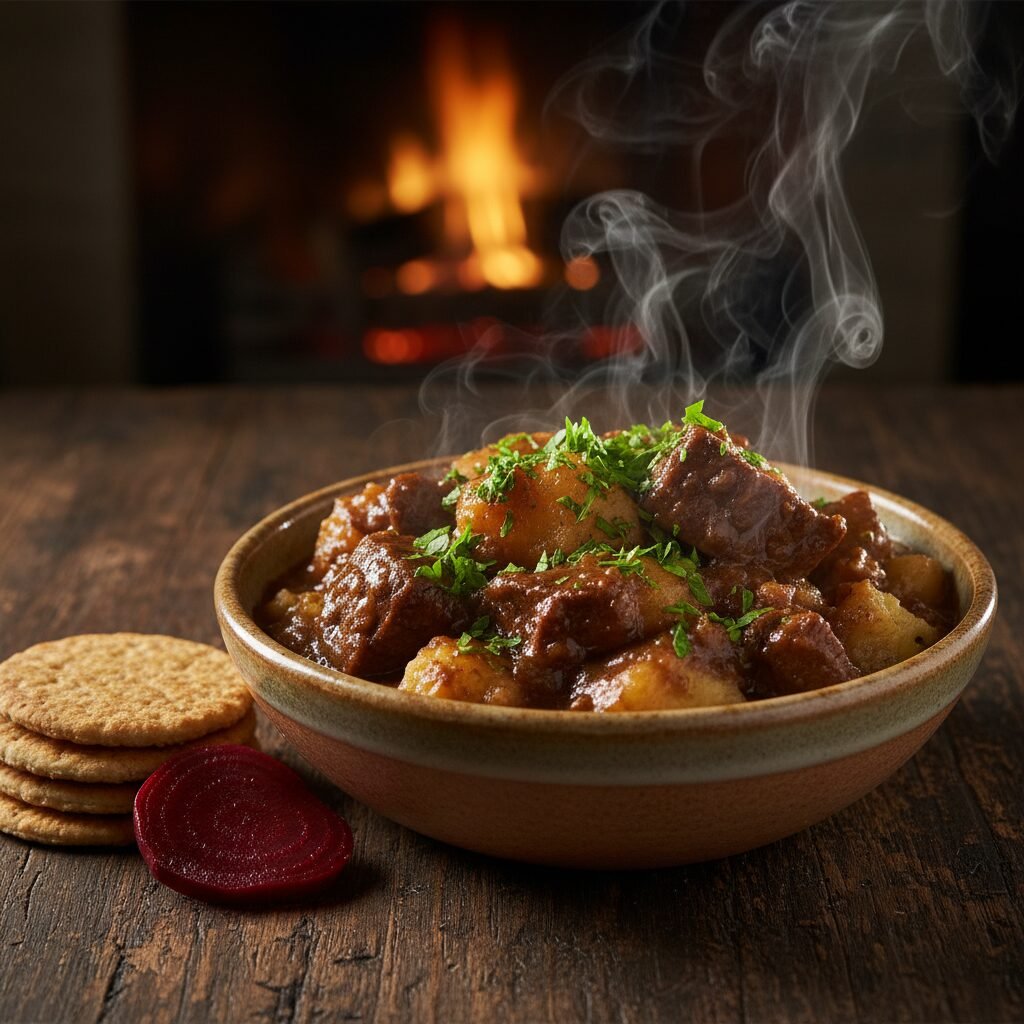
Stovies are a complete meal in a bowl, but they are traditionally served with a side of Scottish oatcakes for scooping or crusty bread to mop up the gravy. A sharp, acidic side like pickled red cabbage or pickled beetroot cuts through the richness of the stew beautifully. For a truly authentic experience, enjoy with a small dram of Scotch whisky.
Storage and Reheating Tips
Allow the stovies to cool completely before transferring to an airtight container. It can be stored in the refrigerator for up to 3-4 days. Stovies do not freeze particularly well as the texture of the potatoes can become watery upon thawing. To reheat, warm gently in a pot over low heat, adding a splash of stock or water if it has become too thick.
Nutrition Facts (Estimated)
| Serving Size | 1 bowl (approx. 400g) |
| Calories | 480 kcal |
| Fat | 22g |
| Saturated Fat | 9g |
| Unsaturated Fat | 13g |
| Trans Fat | 0g |
| Cholesterol | 75mg |
| Sodium | 850mg |
| Carbohydrates | 40g |
| Fiber | 5g |
| Sugar | 6g |
| Protein | 30g |
Frequently Asked Questions
What does the name ‘Stovies’ mean?
The name is believed to come from the cooking method. ‘To stove’ something is an old Scots term for stewing, likely derived from the French word ‘étouffée’, which means to smother or braise in a covered vessel.
Can I use raw meat instead of leftovers?
Yes, you can. If using stewing beef or lamb, cut it into chunks, brown it in the pot first, then proceed with the recipe, ensuring you cook it long enough for the meat to become tender (this may increase the total cooking time). If using sausages, brown them and slice them before layering.
My stovies are too watery. How can I fix it?
If your stovies are too liquidy, remove the lid for the last 20-30 minutes of cooking time. This allows excess steam to escape and the liquid to reduce. You can also gently mash some of the potatoes against the side of the pot to help thicken the gravy.
Is it authentic to add other vegetables?
While the most basic, traditional recipes use only potatoes and onions, many Scottish families add carrots or sometimes swede (rutabaga) for extra flavor and substance. It’s a matter of personal and regional preference.
Conclusion
Stovies represent the very essence of Scottish home cooking: hearty, unpretentious, and deeply comforting. It’s a dish that tells a story of thrift and warmth, transforming simple leftovers into a meal that feels like a hug in a bowl. Whether you’re a Scot longing for a taste of home or a newcomer to this classic dish, we encourage you to embrace the tradition, make it your own, and share it with those you love. There are few things more satisfying than a steaming bowl of stovies on a chilly day.