The Secret To Perfect Persian Tahdig (Golden Crispy Rice)
The Secret To Perfect Persian Tahdig (Golden Crispy Rice)
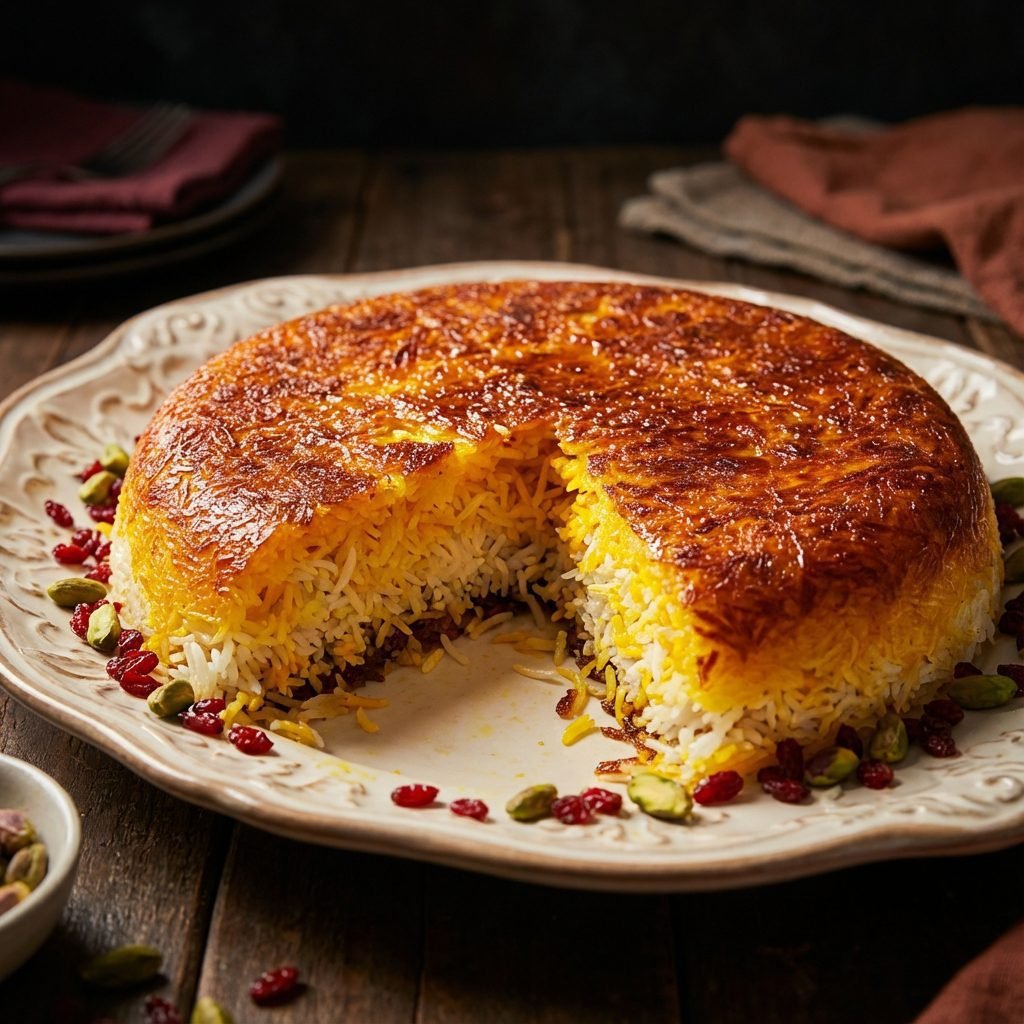
Welcome to the ultimate guide to mastering one of the most revered and beloved dishes in Persian cuisine: Tahdig. The name itself, translating to ‘bottom of the pot,’ hints at the treasure within. Tahdig is the golden, crispy layer of rice that forms at the base of the pot as the main dish of fluffy rice steams to perfection above it. For many, it is not merely a side dish but the entire point of making rice. The sound of a spatula cracking through the crust, the communal fight for the best piece—these are core memories in any Persian household. But achieving that perfect, uniform, golden-brown crust can be intimidating. Many a home cook has faced the disappointment of a stuck, burnt, or pale and soft bottom. Fear not. This recipe demystifies the process, breaking it down into clear, manageable steps. We will unveil the secrets—from selecting the right rice and the crucial parboiling stage to creating the perfect yogurt-saffron slurry—that guarantee a flawless, shatteringly crisp Tahdig every single time. Prepare to transform simple rice into a culinary masterpiece that will be the undisputed star of your dining table.
20 minutes (plus 1-2 hours for soaking rice)
50-60 minutes
Approximately 3 hours
Serves 4-6
Side Dish
Steaming / Pan-Frying
Persian
Vegetarian, Gluten-Free
Why You’ll Love This Recipe
- Authentic, foolproof method for achieving a perfectly golden and crispy rice crust.
- Utilizes simple, readily available ingredients to create a show-stopping dish.
- Detailed step-by-step instructions suitable for both beginners and experienced cooks.
- Includes variations for potato and bread Tahdig.
- A cornerstone of Persian cuisine, perfect for family dinners and special occasions.
Equipment You’ll Need
- Large, high-quality non-stick pot with a tight-fitting lid (at least 4-quart)
- Large bowl for soaking rice
- Fine-mesh colander or sieve
- Small bowl for blooming saffron
- Medium bowl for the Tahdig slurry
- Heat-resistant spatula
- A clean, thick kitchen towel (a ‘damkoni’)
Ingredients
- 2 cups aged long-grain basmati rice
- 8 cups water, for boiling
- 3 tablespoons kosher salt, for boiling water
- 1/4 cup neutral oil (like canola or grapeseed), or ghee, plus more for drizzling
- 1/2 teaspoon high-quality saffron threads
- 3 tablespoons hot water
- 1/2 cup full-fat plain yogurt
- 1 tablespoon liquid saffron (from the bloomed saffron)
Instructions
- Step 1: Rinse and Soak the Rice. Place the basmati rice in a large bowl. Cover with lukewarm water and gently swish the grains with your fingers. Carefully pour out the cloudy water. Repeat this process 4-5 times until the water runs mostly clear. This removes excess starch and is crucial for fluffy, separated grains. Once rinsed, cover the rice with fresh cool water and add 1 tablespoon of salt. Let it soak for at least 1-2 hours. This step hydrates the grains, ensuring they cook evenly.
- Step 2: Bloom the Saffron. While the rice soaks, prepare the saffron. Using a mortar and pestle, grind the saffron threads into a fine powder. Transfer the powder to a small bowl and pour 3 tablespoons of hot (not boiling) water over it. Stir gently and set aside to ‘bloom’ for at least 20 minutes. The color will deepen into a vibrant, fragrant liquid gold.
- Step 3: Parboil the Rice. Bring 8 cups of water and 3 tablespoons of kosher salt to a rolling boil in a large pot. Drain the soaked rice and add it to the boiling water. Stir once gently to prevent sticking. Boil for 5-7 minutes. The exact time depends on your rice. To check for doneness, bite a grain: it should be soft on the outside but still have a firm, white dot in the center (al dente). Do not overcook, or your final rice will be mushy.
- Step 4: Drain and Rinse. Immediately drain the parboiled rice through a fine-mesh colander. Gently rinse it with lukewarm water for a few seconds. This stops the cooking process and removes any remaining surface starch. Set aside.
- Step 5: Prepare the Tahdig Slurry. In a medium bowl, combine the yogurt, 2 tablespoons of the oil (or ghee), and 1 tablespoon of your bloomed saffron liquid. Mix well. Add about 1.5 to 2 cups of the parboiled rice to this mixture and fold gently until every grain is coated in the golden yogurt slurry. This is the foundation of your crispy crust.
- Step 6: Prepare the Pot. Place your non-stick pot over medium heat. Add the remaining 2 tablespoons of oil and a drizzle of the saffron water to the bottom. Swirl the pot to ensure the entire bottom surface is coated. Let the oil get hot; you should see it shimmer.
- Step 7: Build the Tahdig. Carefully spoon the yogurt-rice slurry into the hot pot. Use the back of a spatula to spread it into an even, compact layer across the bottom. This even pressure is key to a uniform crust.
- Step 8: Layer the Remaining Rice. Gently spoon the rest of the parboiled rice on top of the Tahdig layer. Shape the rice into a pyramid or mound, pulling it away from the sides of the pot. This shape allows steam to circulate efficiently.
- Step 9: Steam the Rice. Using the handle of a wooden spoon, poke 4-5 holes through the mound of rice down to the bottom layer, being careful not to disturb the crust too much. These holes act as steam vents. Drizzle the remaining saffron liquid and a tablespoon of oil or melted ghee over the top of the rice mound.
- Step 10: The ‘Damkoni’ Method. Wrap the pot’s lid tightly in a clean, thick kitchen towel. This is called a ‘damkoni’ and is essential for absorbing condensation, preventing water from dripping back onto the rice and making it soggy. Place the wrapped lid securely on the pot. Cook on medium-high heat for about 10 minutes. You should hear a distinct sizzling sound, which indicates the crust is forming.
- Step 11: The Final Steam. After 10 minutes, reduce the heat to the lowest possible setting. Let the rice steam for 40-50 minutes. Do not lift the lid during this time. The low, slow heat will gently cook the rice with trapped steam while the bottom continues to crisp up into a deep golden brown.
- Step 12: The Reveal. Remove the pot from the heat and let it rest for 5 minutes. You can place the bottom of the pot in a shallow bath of cold water for 30 seconds to help release the crust. Remove the lid. Place a large, flat serving platter over the top of the pot. With oven mitts, confidently and quickly invert the pot. If you’ve done everything right, the Tahdig should release in one perfect, golden disc. Listen for the satisfying ‘thump’ as it lands on the platter. Serve immediately.
Expert Cooking Tips
- Invest in Quality Rice: Aged, long-grain Indian or Pakistani basmati rice is non-negotiable for the best results. It has a lower starch content and cooks up into fluffy, separate grains.
- Don’t Skip the Soak: Soaking the rice is a critical step that ensures the grains expand properly and cook evenly. It is the first step towards perfect, fluffy rice.
- The Non-Stick Pot is Your Best Friend: For beginners, a heavy-bottomed, high-quality non-stick pot is essential to prevent the Tahdig from sticking and ensure an easy release.
- Listen to the Sizzle: The sound the pot makes is your guide. The initial 10 minutes on medium-high heat should produce a clear sizzling sound. If it’s silent, the heat is too low. If it’s crackling aggressively, it’s too high and might burn.
- Patience is a Virtue: Resist the temptation to lift the lid and peek while the rice is steaming. This releases the precious steam required to cook the rice through and can ruin the final texture.
Substitutions and Variations
For a different flavor and texture, you can create other types of Tahdig. For Potato Tahdig, peel and slice a russet potato into 1/4-inch thick rounds. Layer them in the hot oil at the bottom of the pot before adding the rice. For Lavash Bread Tahdig, simply lay a large piece of lavash flatbread in the oiled pot. For a vegan version, use a thick, plain vegan yogurt and a neutral oil or vegan butter. If you don’t have saffron, a pinch of turmeric can be added to the slurry for color, though the flavor will be different.
Common Mistakes to Avoid
The most common mistake is impatience. Rushing the soaking, parboiling, or steaming stages will lead to suboptimal results. Overcooking the rice during the parboiling step is another frequent error, resulting in a mushy final product instead of distinct, fluffy grains. Using insufficient oil or a low-quality pot will almost certainly cause the Tahdig to stick. Finally, using too high a heat during the final steaming phase will burn the crust before the rice on top has a chance to cook through.
Serving Suggestions
Tahdig is traditionally served on a large platter, with the fluffy rice mounded around or alongside the golden crust, which is broken into large shards for sharing. It is the perfect accompaniment to rich Persian stews (khoresh) like Ghormeh Sabzi (herb stew) or Fesenjan (pomegranate and walnut stew). It also pairs beautifully with all types of kebabs. Often, the person who successfully inverts the Tahdig gets the honor of the first piece.
Storage and Reheating Tips
Store leftover Tahdig in an airtight container in the refrigerator for up to 3 days. The crispy crust will soften upon refrigeration. To revive some of its texture, you can reheat pieces in a dry non-stick skillet over medium heat for a few minutes per side, or in an air fryer or oven until warmed through and slightly crisped.
Nutrition Facts (Estimated)
| Serving Size | 1/6th of recipe (approx. 1.5 cups) |
| Calories | 410 kcal |
| Fat | 14 g |
| Saturated Fat | 3 g |
| Unsaturated Fat | 11 g |
| Trans Fat | 0 g |
| Cholesterol | 10 mg |
| Sodium | 450 mg |
| Carbohydrates | 62 g |
| Fiber | 2 g |
| Sugar | 1 g |
| Protein | 8 g |
Frequently Asked Questions
Why did my Tahdig stick to the pot?
This usually happens for one of three reasons: you didn’t use a non-stick pot, you didn’t use enough oil, or you tried to invert it while it was still too hot. Allowing it to rest for 5 minutes off the heat, or even shocking the bottom of the pot in cold water, helps it release cleanly.
My Tahdig was pale and soft, not crispy. What went wrong?
A soft Tahdig is typically caused by insufficient heat or too much moisture. Ensure you get a good sizzle during the first 10 minutes of cooking, and make sure to use a towel-wrapped lid (damkoni) to absorb all the steam. Not using enough oil can also prevent it from crisping up.
Can I use brown rice or other types of rice for Tahdig?
While technically possible, it is not traditional and will yield very different results. Basmati rice is prized for its unique aromatic qualities and its ability to cook into long, separate, fluffy grains, which is ideal for this dish. Other rice types may become sticky or not form a proper crust.
Conclusion
Mastering Tahdig is a rite of passage that connects you to the heart of Persian culture. It is more than just food; it’s an experience of texture, aroma, and communal joy. With this detailed guide, the secrets to that coveted golden crust are now yours. Embrace the process, trust your senses, and prepare for the rewarding crunch that signifies a Tahdig made with patience and love. Enjoy the applause that is sure to follow when you place this magnificent, golden crown of a dish on your table.