The British Secret To Using Up Leftover Mash And Cabbage
The British Secret To Using Up Leftover Mash And Cabbage
In the annals of culinary history, few dishes exemplify resourcefulness and comfort quite like the British classic, Bubble and Squeak. Born from a tradition of frugality and a no-waste kitchen ethos, this humble dish transforms yesterday’s leftovers into today’s star attraction. The ‘secret’ isn’t some complex gastronomic technique; it’s the simple, profound understanding that leftover mashed potatoes and cooked cabbage, when combined and fried to crispy perfection, create something truly magnificent. The name itself, ‘Bubble and Squeak,’ is wonderfully onomatopoeic, believed to describe the very sounds the ingredients make as they sizzle and cook in the pan. It’s a dish that speaks to the heart of home cooking: creating delicious, satisfying meals from what you already have. This recipe isn’t just about saving food; it’s about celebrating it, proving that the most memorable meals often come from the simplest of origins.
10 minutes
15 minutes
25 minutes
Serves 4 (makes 4-8 patties)
Breakfast & Brunch
Pan-Frying
British
Vegetarian
Why You’ll Love This Recipe
- Perfect for reducing food waste.
- Transforms simple leftovers into a delicious meal.
- Incredibly versatile and adaptable to what you have on hand.
- A classic British comfort food, ideal for breakfast, brunch, or as a side dish.
- Quick and easy to prepare, requiring minimal effort.
Equipment You’ll Need
- Large mixing bowl
- Large non-stick frying pan or cast-iron skillet
- Spatula
- Knife
- Cutting board
Ingredients
- 4 cups (approx. 800g) cold leftover mashed potatoes
- 2 cups (approx. 300g) cooked, chopped cabbage (or other leftover greens like Brussels sprouts, kale)
- 1 small onion, finely diced (optional)
- 2 tablespoons unsalted butter or a neutral oil like sunflower or vegetable oil
- Salt and freshly ground black pepper to taste
- Optional: 1/4 cup chopped cooked bacon or ham, 1 teaspoon fresh thyme
Instructions
- If using onion, begin by melting 1 tablespoon of the butter or oil in the large skillet over medium heat. Add the finely diced onion and cook, stirring occasionally, until softened and translucent, about 5 minutes. Scrape the cooked onion into the large mixing bowl.
- To the mixing bowl with the onions, add the cold mashed potatoes and the cooked, chopped cabbage. If you’re using other optional additions like bacon or herbs, add them now.
- Using a spoon or your hands, gently mix all the ingredients together until they are just combined. Be careful not to overmix, as this can make the potatoes gummy. Season generously with salt and pepper and mix once more.
- Divide the mixture into 4 or 8 equal portions and shape them into round, slightly flattened patties, about 1-inch thick. The colder and firmer your mash, the easier this will be.
- Melt the remaining tablespoon of butter or oil in the same skillet over medium-high heat. Once the pan is hot and the butter is foaming, carefully place the patties in the pan. Do not overcrowd; cook in batches if necessary.
- Fry the patties for 5-7 minutes on the first side, undisturbed, until a deep golden-brown and crispy crust has formed. Use a spatula to check the underside before flipping.
- Carefully flip the patties and cook for another 5-7 minutes on the second side until equally golden brown and heated through.
- Remove the Bubble and Squeak from the pan and serve immediately.
Expert Cooking Tips
- Cold is Key: The single most important tip is to use thoroughly chilled, firm mashed potatoes. Warm or freshly made mash is too soft and will not hold its shape, resulting in a mess in the pan.
- Dry Your Greens: Ensure your cooked cabbage or other vegetables are well-drained and as dry as possible. Excess moisture will turn to steam in the pan, preventing the patties from becoming crispy.
- Don’t Overcrowd the Pan: Give the patties plenty of space in the skillet. Cooking them too close together will lower the pan’s temperature and steam them rather than fry them, robbing you of the essential crispy texture.
- Patience for the Crust: Resist the urge to move the patties around too much once they are in the pan. Allowing them to sit undisturbed is crucial for developing a deep, golden-brown, and flavourful crust.
Substitutions and Variations
The beauty of Bubble and Squeak lies in its adaptability. You can substitute the cabbage with virtually any leftover cooked vegetable. Finely chopped Brussels sprouts, carrots, peas, leeks, or kale are all excellent choices. For a richer flavor, use leftover bacon fat or beef dripping for frying instead of butter or oil. To make the dish vegan, simply ensure your original mashed potatoes were dairy-free and use a plant-based oil or butter for frying.
Common Mistakes to Avoid
The primary mistake is using warm mashed potatoes, which leads to patties that fall apart. Always start with cold, firm mash from the refrigerator. Another common pitfall is having a mixture that is too wet, usually from vegetables that haven’t been properly drained. This prevents crisping. If your mixture feels overly soft, you can try mixing in a tablespoon of all-purpose flour or breadcrumbs to act as a binder.
Serving Suggestions
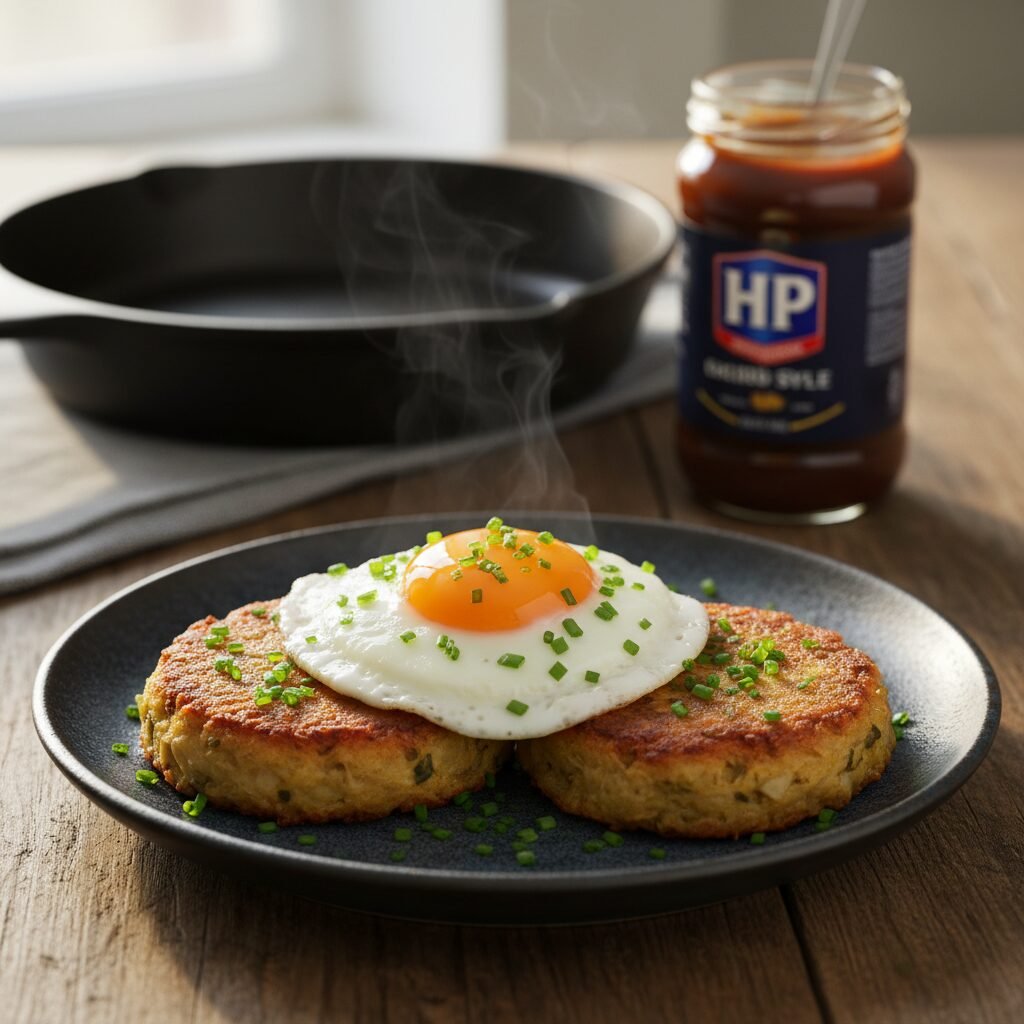
Bubble and Squeak is classically served as part of a ‘Full English Breakfast,’ topped with a fried or poached egg, allowing the runny yolk to create a rich sauce. It pairs wonderfully with sausages, bacon, or black pudding. It is also an exceptional side dish for roasted meats, such as beef or lamb, effectively taking the place of both the potato and vegetable components of the meal. For a simple and satisfying lunch, serve it on its own with a dollop of HP Sauce (brown sauce) or ketchup.
Storage and Reheating Tips
Store leftover patties in an airtight container in the refrigerator for up to 3 days. For the best texture, reheat in a lightly oiled skillet over medium heat until warmed through and crispy on both sides. Avoid using a microwave, as it will make the patties soft. You can also freeze uncooked patties by placing them on a baking sheet in a single layer until solid, then transferring them to a freezer-safe bag for up to 3 months. Cook from frozen, adding a few extra minutes to the cooking time.
Nutrition Facts (Estimated)
| Serving Size | 1/4 of the recipe |
| Calories | 260 kcal |
| Fat | 14g |
| Saturated Fat | 6g |
| Unsaturated Fat | 8g |
| Trans Fat | 0g |
| Cholesterol | 25mg |
| Sodium | 350mg |
| Carbohydrates | 29g |
| Fiber | 5g |
| Sugar | 4g |
| Protein | 6g |
Frequently Asked Questions
Why is it called Bubble and Squeak?
The name is widely believed to be onomatopoeic, referring to the bubbling and squeaking sounds that the ingredients, particularly the cabbage, make as they are being fried in the pan.
Can I make this without leftover mashed potatoes?
Absolutely. You can boil potatoes (floury varieties like Russet or Maris Piper work best) until tender, drain them thoroughly, let them steam dry for a few minutes, then mash them. Allow the mash to cool completely in the refrigerator before proceeding with the recipe.
My patties are falling apart in the pan. What can I do?
This is typically caused by mash that is too warm or a mixture that is too wet. Ensure your potatoes are cold and your vegetables are well-drained. If the mixture still seems too loose, you can add a tablespoon of flour or a beaten egg to help bind it together.
Conclusion
Bubble and Squeak is more than just a recipe; it’s a philosophy. It’s a delicious testament to the virtues of thrift and culinary creativity, a dish that finds joy and flavor where others might see only scraps. By embracing this British secret, you’re not just making a meal; you’re participating in a time-honored tradition of turning leftovers into a feast. So the next time you have leftover mash and greens, don’t despair. Rejoice, and get frying. You’re about to create one of the most comforting and satisfying dishes imaginable.