The $2 Dinner You’ll Crave: Buttery Haluski Noodles
The $2 Dinner You’Ll Crave: Buttery Haluski Noodles
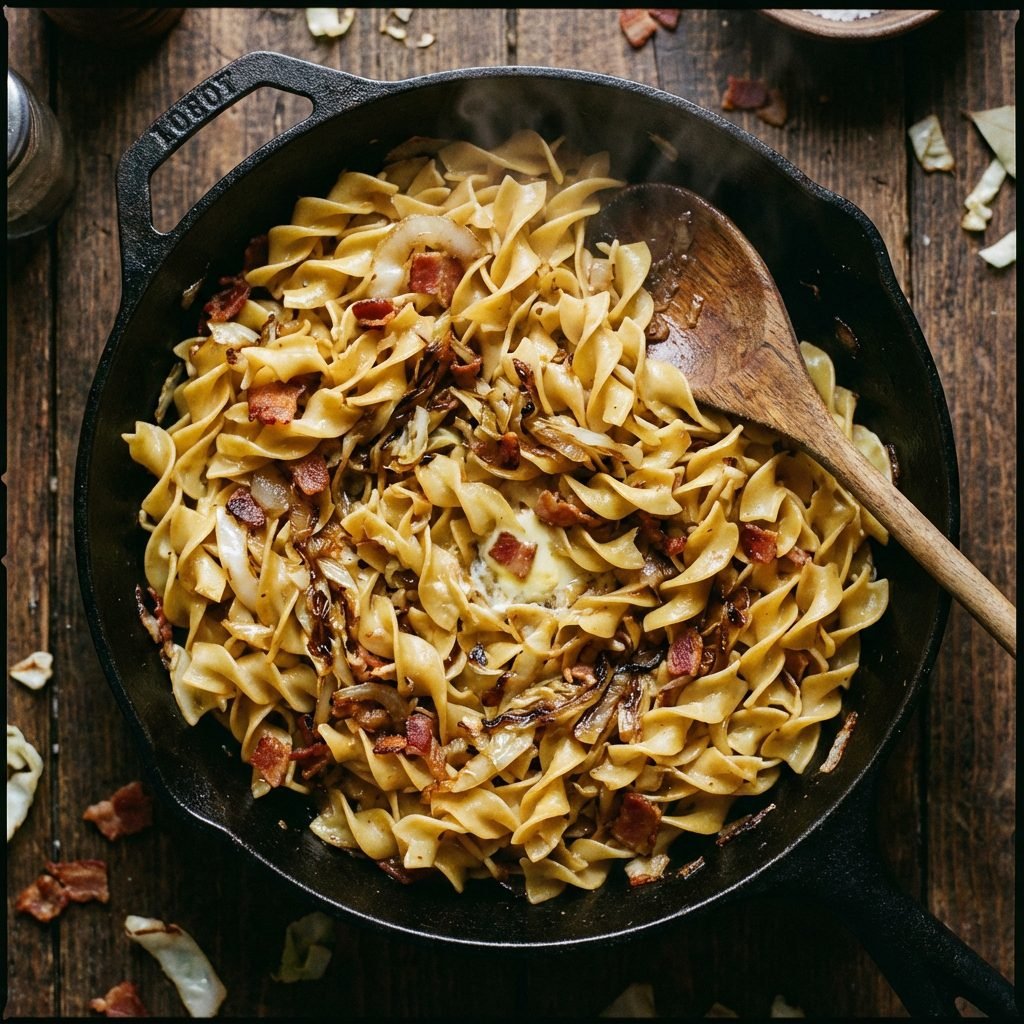
In a world of complex recipes and expensive ingredients, there is a profound beauty in returning to the basics. Today, we celebrate a dish that embodies this philosophy: Haluski. A humble yet deeply satisfying meal with roots stretching across Eastern Europe, Haluski is the ultimate peasant dish, born from necessity and perfected through generations. It’s a culinary hug in a bowl, a testament to the magic that happens when you combine buttery egg noodles, sweet caramelized onions, and tender sautéed cabbage. The name itself, derived from the Slovak word for little dumplings, hints at its comforting nature. But the true genius of Haluski lies in its affordability. This is the dinner that proves you don’t need a lavish budget to eat like royalty. For roughly two dollars a serving, you can create a meal that is rich, flavorful, and guaranteed to become a staple in your weeknight rotation. Forget takeout; this is the inexpensive, soul-warming dinner you’ll find yourself craving time and time again.
10 minutes
20 minutes
30 minutes
4-6 servings
Main Course
Sautéing, Boiling
Eastern European
Vegetarian
Why You’ll Love This Recipe
- Extremely budget-friendly, costing approximately $2 per generous serving.
- A quintessential comfort food with deep Eastern European heritage.
- Transforms simple, everyday ingredients into a remarkably flavorful meal.
- A one-pan wonder (after boiling the noodles) that comes together in under 30 minutes.
- Versatile and easily adaptable with additions like bacon, kielbasa, or cottage cheese.
Equipment You’ll Need
- Large Pot or Dutch Oven (for boiling pasta)
- Large Skillet or Braiser (at least 12 inches)
- Colander
- Chef’s Knife
- Cutting Board
- Wooden Spoon or Heatproof Spatula
Ingredients
- 1 (16 ounce) package wide egg noodles
- 1/2 cup (1 stick) unsalted butter, divided
- 1 large yellow onion, halved and thinly sliced
- 1 medium head green cabbage (about 2-2.5 lbs), cored and roughly chopped
- 1.5 teaspoons kosher salt, divided, plus more for pasta water
- 1 teaspoon freshly ground black pepper
- Optional for serving: Sour cream, cottage cheese, or farmer’s cheese
- Optional garnish: Freshly chopped parsley or dill
Instructions
- Bring a large pot of heavily salted water to a rolling boil. Add the egg noodles and cook according to package directions until al dente. Reserve about 1 cup of the starchy pasta water before draining the noodles in a colander. Set aside.
- While the noodles are cooking, melt 4 tablespoons (half) of the butter in a large skillet or Dutch oven over medium heat. Once the butter is melted and foaming, add the thinly sliced onion.
- Sauté the onion, stirring occasionally, for 5-7 minutes, until it becomes soft, translucent, and starts to turn golden at the edges. This initial step builds a sweet flavor base for the dish.
- Add the remaining 4 tablespoons of butter to the skillet with the onions. Once melted, add the chopped cabbage and 1 teaspoon of the kosher salt. Stir well to coat the cabbage in the butter and onions.
- Cook the cabbage, stirring every few minutes, for about 10-15 minutes. The cabbage will wilt down significantly. Continue cooking until it is tender and has developed deep, caramelized brown spots. This browning is crucial for flavor, so don’t rush this step.
- Once the cabbage is perfectly tender and caramelized, reduce the heat to low. Add the cooked egg noodles to the skillet with the cabbage mixture. Pour in 1/4 cup of the reserved pasta water to start.
- Toss everything together gently until the noodles are well-coated in the buttery cabbage and onion mixture. If the mixture seems dry, add another splash of pasta water until it reaches your desired consistency. The starch in the water helps create a light, glossy sauce.
- Season generously with the remaining 1/2 teaspoon of salt and the freshly ground black pepper. Taste and adjust seasoning as needed. Haluski should be well-seasoned to bring out the sweetness of the vegetables.
- Serve immediately in warm bowls. Garnish with fresh parsley or dill if desired, and offer a dollop of sour cream or cottage cheese on the side for a traditional touch.
Expert Cooking Tips
- Don’t Crowd the Pan: To achieve beautifully browned and caramelized cabbage instead of steamed, ensure your skillet is large enough. If necessary, cook the cabbage in two batches, then combine everything at the end.
- Salt Strategically: Salting the cabbage as it begins to cook not only seasons it but also helps draw out excess moisture, which aids in the browning process.
- Embrace the Brown Bits: The browned bits (or fond) that form on the bottom of the pan are packed with flavor. When you add the pasta water, gently scrape these up to incorporate them into the sauce.
- Quality Butter Matters: Since butter is a star ingredient, using a high-quality European-style butter with a higher fat content can elevate the dish with a richer, more nuanced flavor.
- Al Dente is Key: Be careful not to overcook the noodles initially. They will continue to cook slightly when combined with the hot cabbage mixture, so pulling them when they are al dente ensures they have the perfect final texture.
Substitutions and Variations
For a meatier version, start by rendering 6 slices of chopped bacon or a 1/2 pound of sliced kielbasa in the skillet before cooking the onions. For a vegan-friendly Haluski, use a high-quality plant-based butter and ensure your noodles are egg-free. You can also experiment with different types of cabbage, such as Savoy or Napa, for slightly different textures and flavors.
Common Mistakes to Avoid
The most common mistake is not cooking the cabbage long enough. The goal is not just to soften it, but to caramelize it. Rushing this step will result in a bland, watery dish. Be patient and allow the cabbage to develop deep golden-brown spots. Another pitfall is under-seasoning. This is a simple dish, and it relies on adequate salt and pepper to make the flavors of the butter, onion, and cabbage pop. Taste and adjust seasoning at the end before serving.
Serving Suggestions
Haluski is a hearty, complete meal on its own. Traditionally, it’s served with a generous dollop of sour cream or cottage cheese, which adds a creamy, tangy counterpoint to the rich butteriness. It also pairs wonderfully as a side dish for roasted chicken, grilled pork chops, or pan-seared kielbasa. A simple, crisp green salad with a sharp lemon vinaigrette can also be a refreshing accompaniment to cut through the richness.
Storage and Reheating Tips
Store any leftovers in an airtight container in the refrigerator for up to 4 days. To reheat, add the Haluski to a skillet over medium-low heat with a small pat of butter or a splash of water to rehydrate the noodles and prevent sticking. Stir gently until warmed through. Microwaving also works well; heat in 60-second intervals, stirring in between.
Nutrition Facts (Estimated)
| Serving Size | 1 serving (approx. 1.5 cups) |
| Calories | 465 kcal |
| Fat | 22g |
| Saturated Fat | 13g |
| Unsaturated Fat | 7g |
| Trans Fat | 0g |
| Cholesterol | 55mg |
| Sodium | 620mg |
| Carbohydrates | 58g |
| Fiber | 7g |
| Sugar | 9g |
| Protein | 13g |
Frequently Asked Questions
What is the origin of Haluski?
Haluski is a beloved dish with variations found across Eastern and Central Europe, most notably in Poland (where it’s often called ‘kluski z kapustą’), Slovakia, and Ukraine. It’s a classic example of ‘peasant food,’ created from inexpensive, readily available ingredients to make a filling and delicious meal.
Can I use pre-shredded cabbage?
While you can use pre-shredded bagged cabbage for convenience, it’s generally not recommended. The shreds are often too fine and can become mushy or steam rather than caramelize. Chopping a fresh head of cabbage gives you larger, more robust pieces that hold up better to sautéing and provide a superior texture.
Can I make this dish ahead of time?
Yes, Haluski reheats quite well, making it a good option for meal prep. You can prepare the entire dish and store it in the refrigerator. The flavors may even meld and deepen overnight. Simply follow the reheating instructions provided in the ‘Storage Tips’ section.
Conclusion
Haluski is more than just a recipe; it’s a connection to a culinary tradition of making something wonderful out of very little. It’s proof that comfort and flavor don’t require complexity or expense. This dish is a warm, buttery embrace, a reliable friend on a busy weeknight, and a delicious reminder that the simplest things in life are often the most satisfying. We hope this recipe brings as much joy and comfort to your table as it has to countless others for generations. Enjoy every single bite.