The 1930s Hoover Stew That Fed Families for Pennies
The 1930s Hoover Stew That Fed Families For Pennies
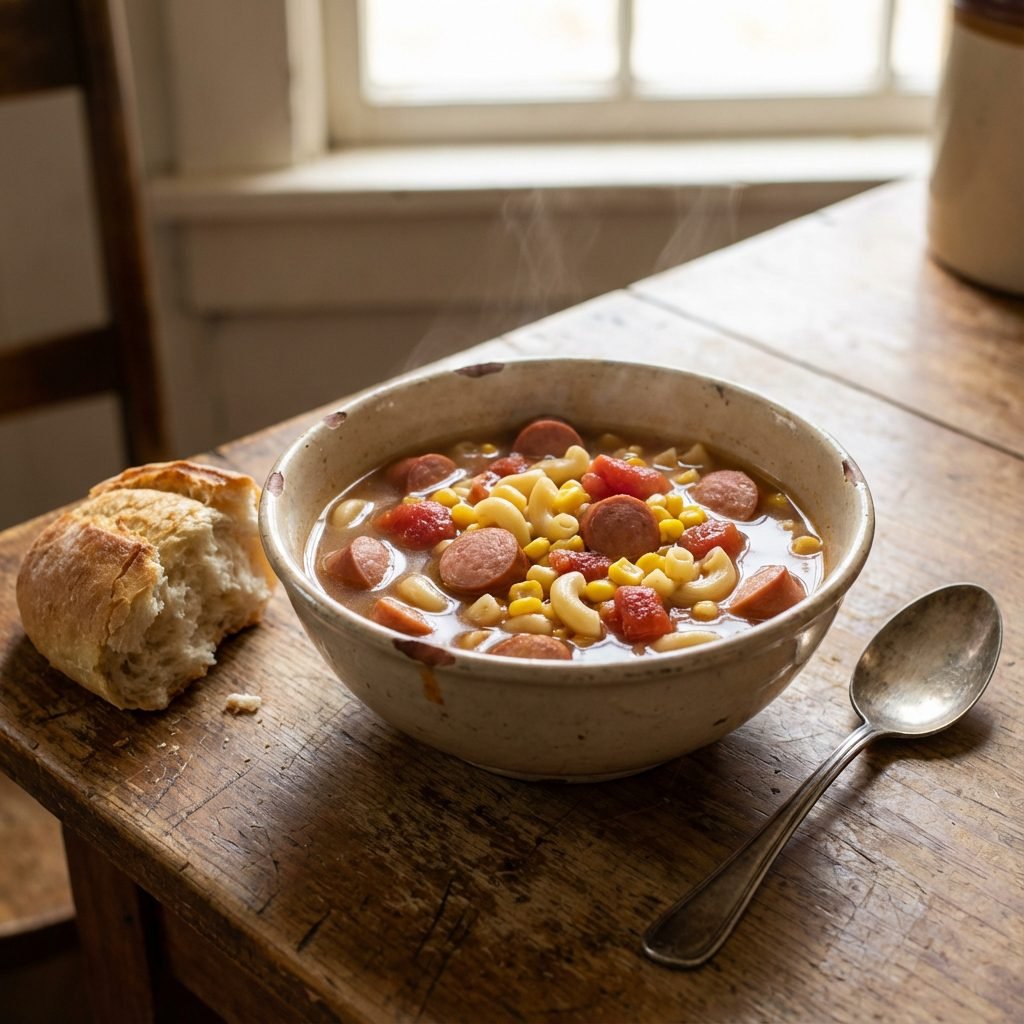
Step back in time to an era of unparalleled resourcefulness and resilience. The Great Depression of the 1930s was a period that forced American families to stretch every dollar and every ingredient to its absolute limit. Out of this necessity, a unique culinary landscape emerged, filled with dishes designed for maximum sustenance at minimum cost. One of the most iconic of these is Hoover Stew, a humble, one-pot meal that has become a symbol of the era. Named, often sardonically, after President Herbert Hoover, who was in office when the depression began, this stew represents the simple, accessible ingredients families had on hand: hot dogs, macaroni, and canned vegetables. While it may not be gourmet, Hoover Stew is a powerful taste of history—a testament to the ingenuity of a generation that made do with what they had. Today, it serves not only as a budget-friendly meal but as a poignant reminder of our collective past and the enduring power of a warm, filling dish.
10 minutes
25 minutes
35 minutes
4-6 servings
Main Course
Simmering
American
Standard
Why You’ll Love This Recipe
- Extremely budget-friendly, using inexpensive pantry staples.
- A one-pot meal, making for easy preparation and cleanup.
- Historically significant, offering a tangible connection to the Great Depression era.
- Highly adaptable and customizable based on available ingredients.
- Quick to make, ready in under 40 minutes.
Equipment You’ll Need
- Large pot or Dutch oven
- Knife
- Cutting board
- Can opener
- Wooden spoon or spatula
- Measuring cups and spoons
Ingredients
- 1 lb package of hot dogs (about 8), sliced into 1/2-inch rounds
- 1 tbsp vegetable oil or butter (optional)
- 1 medium onion, chopped (optional, for added flavor)
- 4 cups water or low-sodium chicken/vegetable broth
- 1 (15-ounce) can diced tomatoes, undrained
- 1 (15-ounce) can whole kernel corn, undrained
- 2 cups uncooked elbow macaroni
- Salt and black pepper to taste
Instructions
- If using, heat the oil or butter in a large pot or Dutch oven over medium heat. Add the chopped onion and cook until softened, about 3-4 minutes.
- Add the sliced hot dogs to the pot. Cook for 5-7 minutes, stirring occasionally, until they are lightly browned.
- Pour in the water or broth, the undrained can of diced tomatoes, and the undrained can of corn. Stir everything together and bring the mixture to a rolling boil.
- Once boiling, stir in the uncooked macaroni pasta. Reduce the heat to a simmer.
- Let the stew simmer for 10-15 minutes, or until the macaroni is tender, stirring occasionally to prevent the pasta from sticking to the bottom of the pot.
- Once the pasta is cooked through, taste the stew and season generously with salt and black pepper. The amount needed will vary depending on the saltiness of your hot dogs and whether you used water or broth.
- Serve hot in bowls.
Expert Cooking Tips
- Use broth instead of water. While water is historically accurate, using chicken, beef, or vegetable broth will add a significant layer of flavor to the otherwise simple dish.
- Don’t drain the cans. The liquid from the canned tomatoes and corn is part of the broth and adds essential flavor and body to the stew.
- Brown the hot dogs. Taking a few extra minutes to get some color on the sliced hot dogs before adding the liquid will deepen their savory flavor.
- Don’t be shy with seasoning. The ingredients are basic, so salt and pepper are your best friends. A dash of paprika or garlic powder can also elevate the taste without betraying the stew’s simple roots.
Substitutions and Variations
This recipe is all about using what you have. You can substitute the hot dogs with sliced sausage, ground beef, canned tuna, or even beans for a vegetarian option. Any small pasta shape will work in place of macaroni. Feel free to swap the corn for canned peas, green beans, or mixed vegetables.
Common Mistakes to Avoid
The most common mistake is under-seasoning. Because the ingredients are so simple, the final dish can taste bland if not properly seasoned with salt and pepper. Another pitfall is overcooking the pasta; simmer only until the macaroni is al dente, as it will continue to soften in the hot broth as it sits.
Serving Suggestions
Serve Hoover Stew hot, just as it is, for a simple and filling meal. It’s traditionally served with crackers (like saltines) or a slice of simple, crusty bread for dipping into the broth. A small side salad can add a touch of freshness to the meal.
Storage and Reheating Tips
Store any leftover stew in an airtight container in the refrigerator for up to 3 days. Be aware that the pasta will continue to absorb the liquid, making the leftovers much thicker. You may need to add a splash of water or broth when reheating on the stovetop or in the microwave.
Nutrition Facts (Estimated)
| Serving Size | Approx. 1.5 cups |
| Calories | 410 kcal |
| Fat | 18 g |
| Saturated Fat | 7 g |
| Unsaturated Fat | 11 g |
| Trans Fat | 0.5 g |
| Cholesterol | 45 mg |
| Sodium | 950 mg |
| Carbohydrates | 45 g |
| Fiber | 5 g |
| Sugar | 8 g |
| Protein | 16 g |
Frequently Asked Questions
Why is it called Hoover Stew?
The stew is named after Herbert Hoover, the 31st U.S. President, who was in office during the 1929 stock market crash and the start of the Great Depression. The name was often used ironically, associating the President with the economic hardships that led to the creation of such frugal meals.
Can I make this vegetarian or vegan?
Absolutely. To make it vegetarian, replace the hot dogs with a can of kidney beans, pinto beans, or chickpeas (drained and rinsed). Use vegetable broth instead of water for more flavor. For a vegan version, ensure your pasta is egg-free and use oil instead of butter for sautéing the onion.
Is this an authentic recipe from the 1930s?
It’s a representation of an authentic concept. There was no single, ‘official’ recipe for Hoover Stew. It was a catch-all term for any simple stew made with cheap, available ingredients. This version, with hot dogs, macaroni, and canned vegetables, is one of the most common and widely recognized variations.
Conclusion
Hoover Stew is more than just a recipe; it’s a history lesson in a bowl. It speaks to a time of scarcity but also of incredible strength and creativity in the American kitchen. Making it today offers a moment to reflect on how far we’ve come and to appreciate the simple act of turning a few humble ingredients into a warm, satisfying meal. Whether you’re looking for an ultra-frugal dinner option or a unique way to connect with the past, this stew delivers a surprisingly comforting and memorable experience.