Tangy Vinegar Pie: The “Poor Man’s Lemon” Dessert
Tangy Vinegar Pie: The “Poor Man’S Lemon” Dessert
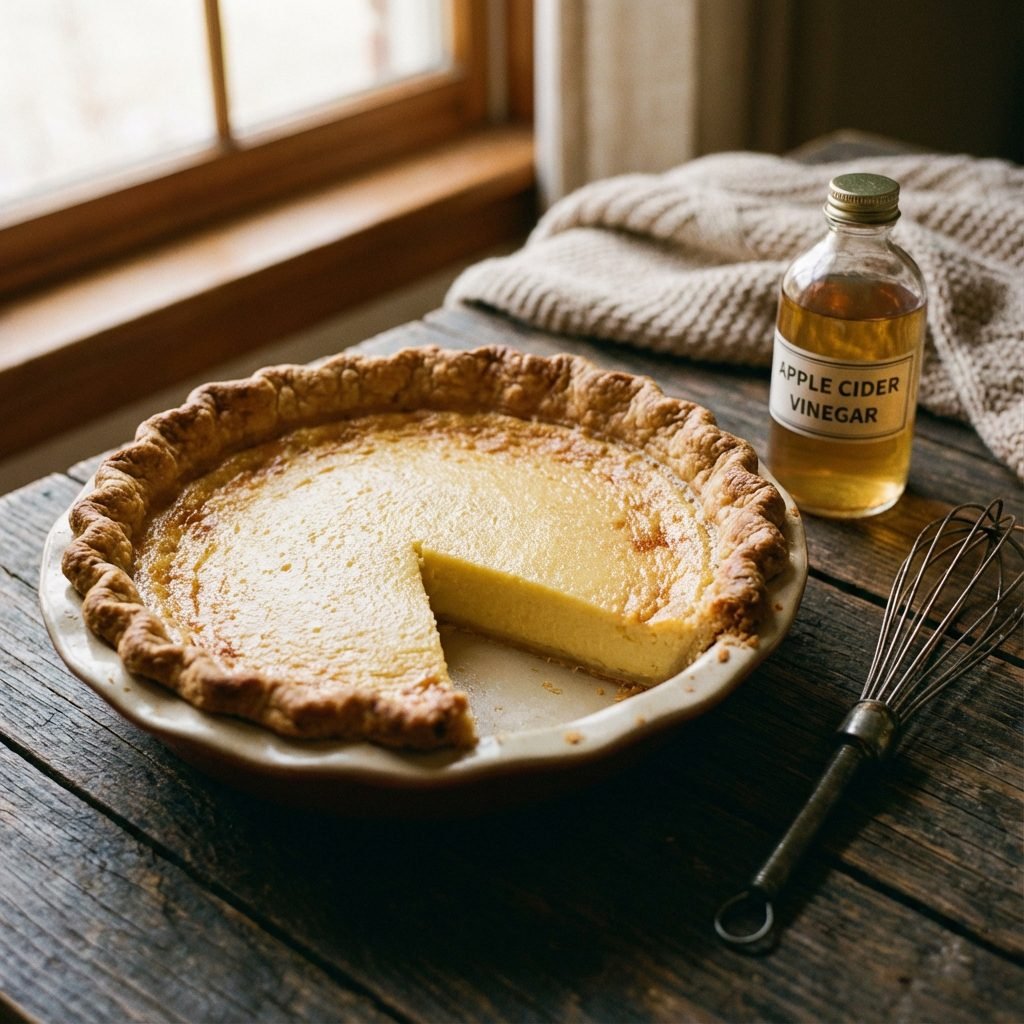
Step back in time and discover a dessert born from ingenuity and necessity: the Tangy Vinegar Pie. Often called a ‘desperation pie,’ this remarkable creation hails from a time when fresh fruit, especially lemons, was a luxury few could afford. Resourceful home bakers, particularly in regions like Appalachia and the American South, turned to a humble pantry staple—vinegar—to replicate the bright, tart flavor they craved. Don’t let the name fool you; this pie isn’t a pungent, acidic assault on the senses. Instead, the magic of cooking transforms the vinegar, mellowing its sharpness into a delightful tang that perfectly balances the sweet, creamy custard filling. It’s a culinary paradox: a simple, economical dessert that delivers a surprisingly complex and sophisticated flavor, proving that the best recipes often come from the most modest of ingredients.
15 minutes
40 minutes
2 hours 55 minutes (includes 2 hours cooling time)
One 9-inch pie (8 servings)
Dessert
Baking
American (Appalachian/Southern)
Vegetarian
Why You’ll Love This Recipe
- Features a surprisingly delicious sweet-tart flavor, similar to a lemon or buttermilk pie.
- Made with simple, inexpensive pantry staples you likely already have on hand.
- A fascinating piece of American culinary history, known as a ‘desperation pie’.
- A unique and memorable dessert that is sure to be a conversation starter.
Equipment You’ll Need
- 9-inch pie pan
- Medium saucepan
- Whisk
- Mixing bowl
- Measuring cups and spoons
- Rolling pin (for homemade crust)
Ingredients
- 1 unbaked 9-inch pie crust (store-bought or homemade)
- 1 1/2 cups granulated sugar
- 3 tablespoons all-purpose flour
- 1/4 teaspoon salt
- 1/4 teaspoon ground nutmeg (optional)
- 2 large eggs, lightly beaten
- 1 1/2 cups water
- 1/4 cup apple cider vinegar
- 2 tablespoons unsalted butter, cut into small pieces
Instructions
- Preheat your oven to 400°F (200°C). Press your unbaked pie crust into a 9-inch pie pan, crimping the edges as desired. Set aside.
- In a medium saucepan, whisk together the granulated sugar, all-purpose flour, salt, and optional nutmeg. This prevents the flour from clumping when liquids are added.
- In a separate mixing bowl, whisk the lightly beaten eggs with the water and apple cider vinegar until well combined.
- Slowly pour the wet egg mixture into the saucepan with the dry ingredients, whisking constantly until smooth.
- Place the saucepan over medium heat. Cook, whisking constantly, until the mixture begins to bubble and thicken. This should take about 8-10 minutes. The consistency should be similar to a thick pudding, able to coat the back of a spoon.
- Remove the saucepan from the heat. Add the pieces of unsalted butter and stir until they are completely melted and incorporated into the filling.
- Carefully pour the hot filling into the prepared unbaked pie crust and spread evenly.
- Bake for 10 minutes at 400°F (200°C). Then, reduce the oven temperature to 350°F (175°C) and continue to bake for another 25-30 minutes.
- The pie is done when the center is almost set but still has a slight jiggle. The filling will continue to set as it cools.
- Remove the pie from the oven and place it on a wire rack to cool completely to room temperature, which will take at least 2 hours. Chilling the pie in the refrigerator for another hour before serving will ensure clean slices.
Expert Cooking Tips
- Whisk constantly while the filling is on the stove. This is crucial to prevent the eggs from scrambling and to keep the bottom from scorching.
- For the best flavor, use a quality apple cider vinegar. Its fruity notes are more complex and pleasant than those of white vinegar.
- Do not overbake the pie. A slight wobble in the center is perfect. It will firm up as it cools, resulting in a silky, creamy texture.
- Allow the pie to cool completely before slicing. This is the most important step for a custard-style pie. Slicing it while warm will result in a runny filling.
Substitutions and Variations
While apple cider vinegar is traditional and recommended for its mellow, fruity tang, you can substitute it with white wine vinegar. White distilled vinegar will work in a pinch but can be harsher. For a richer flavor, you can substitute half of the granulated sugar with light brown sugar. A dash of cinnamon can be used instead of or in addition to the nutmeg.
Common Mistakes to Avoid
The most common mistake is scrambling the eggs by heating the mixture too quickly or without constant stirring. To avoid this, keep the heat at a steady medium and never stop whisking. Another frequent error is undercooking the filling on the stovetop; if it isn’t properly thickened before going into the pie shell, it will not set correctly in the oven. Finally, being impatient and slicing the pie before it has fully cooled will result in a soupy slice rather than a firm, clean-cut piece of pie.
Serving Suggestions
Vinegar pie shines when served chilled or at room temperature. Its sweet-tart profile is perfectly complemented by a generous dollop of unsweetened or lightly sweetened whipped cream, which cuts the richness and tang. A simple dusting of powdered sugar or a sprinkle of cinnamon can also add a nice finishing touch. It pairs wonderfully with a strong cup of black coffee or a simple black tea.
Storage and Reheating Tips
Store any leftover pie covered with plastic wrap or in an airtight container in the refrigerator. It will keep well for up to 4 days. The pie is best enjoyed chilled, as the flavors meld and the texture remains firm. Freezing is not recommended, as it can cause the custard filling to separate and become watery upon thawing.
Nutrition Facts (Estimated)
| Serving Size | 1 slice (1/8 of pie) |
| Calories | 385 kcal |
| Fat | 18g |
| Saturated Fat | 10g |
| Unsaturated Fat | 8g |
| Trans Fat | 0g |
| Cholesterol | 75mg |
| Sodium | 240mg |
| Carbohydrates | 48g |
| Fiber | 1g |
| Sugar | 26g |
| Protein | 4g |
Frequently Asked Questions
Will my pie actually taste like vinegar?
No, not in the way you might think. The sugar and cooking process mellow the vinegar’s harshness, transforming it into a bright, pleasant tang that is very similar to lemon or buttermilk. Most people are pleasantly surprised and can’t guess the secret ingredient.
Why is this called a ‘desperation pie’?
Vinegar pie belongs to a category of American desserts known as ‘desperation pies.’ These recipes were created out of necessity in times and places where fresh fruit was scarce or unaffordable, such as during winter months in Appalachia or during the Great Depression. Home cooks used pantry staples like vinegar, sugar, and spices to mimic the flavors of fruit pies.
Can I use a pre-baked pie shell?
You can, but the method described uses an unbaked shell, which cooks along with the filling. If you use a pre-baked (‘blind-baked’) shell, you can pour the cooked stovetop filling in and chill it until set, creating a no-bake version. However, the texture will be slightly different from the traditional baked method.
Conclusion
Vinegar Pie is more than just a dessert; it’s a testament to human creativity and the art of making something wonderful from humble beginnings. Each slice offers a delightful balance of sweet and tangy, with a creamy texture that is pure comfort. By baking this pie, you’re not just feeding your family; you’re preserving a delicious piece of culinary history. We encourage you to embrace the unexpected and give this classic recipe a try. You’ll be amazed at how an everyday pantry staple can be transformed into such an elegant and satisfying treat.