Spicy Nigerian Egg Stew: Why You Should Eat Breakfast For Dinner
Spicy Nigerian Egg Stew: Why You Should Eat Breakfast For Dinner
The concept of ‘breakfast for dinner,’ affectionately known as ‘brinner,’ is more than a quirky trend; it’s a celebration of comfort, convenience, and the simple joy of flipping culinary convention on its head. While pancakes and bacon might be the Western go-to, we invite you to explore a dish that elevates the evening breakfast to a new level of savory satisfaction: Spicy Nigerian Egg Stew. This beloved West African staple is a vibrant, deeply flavorful concoction of eggs gently scrambled into a rich, aromatic tomato and pepper base. It’s a one-pan wonder that is both soul-warming and incredibly quick to prepare, making it the perfect answer to the age-old question, ‘What’s for dinner?’ Forget everything you thought you knew about scrambled eggs; this dish transforms them from a simple morning meal into a robust, satisfying main course worthy of any dinner table.
10 minutes
20 minutes
30 minutes
4 servings
Main Course
Sautéing / Simmering
Nigerian
Vegetarian
Why You’ll Love This Recipe
- Ready in under 30 minutes, perfect for a weeknight meal.
- A versatile dish that pairs well with yams, plantains, rice, or bread.
- Easily adjustable spice level to suit all palates.
- A budget-friendly meal using common pantry staples.
- Packed with protein and rich, savory flavors.
Equipment You’ll Need
- Large skillet or non-stick frying pan
- Blender or food processor
- Cutting board
- Chef’s knife
- Medium bowl
- Whisk
- Wooden spoon or spatula
Ingredients
- 6 large eggs
- 4 large plum tomatoes, roughly chopped
- 1 large red bell pepper, deseeded and roughly chopped
- 1 medium onion, divided (half roughly chopped, half finely diced)
- 1-2 scotch bonnet peppers (or habanero), to taste
- 1/4 cup vegetable oil (or palm oil for a more traditional flavor)
- 2 cloves garlic, minced
- 1 teaspoon ground ginger
- 1 teaspoon dried thyme
- 1 teaspoon curry powder
- 1 bouillon cube (Maggi or Knorr), crumbled
- Salt and freshly ground black pepper to taste
- Optional: 1 tablespoon ground crayfish
Instructions
- Prepare the Pepper Base: In a blender or food processor, combine the roughly chopped tomatoes, red bell pepper, the roughly chopped half of the onion, and the scotch bonnet peppers. Blend until you have a relatively smooth, vibrant purée. Set aside.
- Sauté Aromatics: Heat the vegetable or palm oil in a large skillet over medium heat. Once hot, add the remaining finely diced half of the onion and sauté for 3-4 minutes until softened and translucent.
- Cook the Pepper Base: Pour the blended pepper purée into the skillet with the onions. Add the minced garlic, ground ginger, dried thyme, curry powder, and the crumbled bouillon cube. Stir everything together. Bring to a simmer, then reduce the heat to medium-low. Allow the sauce to cook for 10-12 minutes, stirring occasionally, until it has thickened, reduced in volume, and the color has deepened. The oil may begin to separate at the edges, which is a sign that the base is well-cooked.
- Prepare the Eggs: While the sauce is simmering, crack the 6 large eggs into a medium bowl. Season lightly with a pinch of salt and black pepper. Whisk until the yolks and whites are just combined – be careful not to over-whisk.
- Combine Eggs and Stew: Pour the whisked eggs into the simmering pepper base. Do not stir immediately. Let the eggs sit for about 30-60 seconds to begin setting at the bottom.
- Scramble Gently: Using a spatula or wooden spoon, gently push the eggs from the edge of the pan toward the center, creating large, soft curds. Continue this gentle folding and stirring motion for 2-3 minutes, until the eggs are cooked to your liking but still soft and moist.
- Final Seasoning: Taste the stew and adjust seasoning with additional salt and pepper if needed. If using, stir in the ground crayfish now for a final boost of umami flavor.
- Serve Immediately: Remove from heat and serve hot with your favorite accompaniments.
Expert Cooking Tips
- The key to a deeply flavorful stew is to properly cook down the tomato and pepper base. Don’t rush this step. Cooking it until the oil starts to separate removes the raw, acidic taste and concentrates the flavors.
- For the softest, most tender egg curds, use low and slow heat when you add the eggs to the stew. High heat will cause them to seize up and become rubbery.
- For an authentic Nigerian flavor, use palm oil. It imparts a unique richness and color that vegetable oil cannot replicate. However, if you don’t have it, any neutral oil will work well.
- Don’t over-whisk the eggs before adding them to the pot. A light whisk to just combine the yolks and whites is sufficient and helps create better texture in the final dish.
Substitutions and Variations
For a milder version, you can substitute the scotch bonnet pepper with a jalapeño or simply omit it. If fresh tomatoes are not in season, a 14.5-ounce (400g) can of diced or crushed tomatoes can be used. For a different flavor profile, you can add a teaspoon of smoked paprika. If you don’t have ground crayfish, a splash of fish sauce can add a similar umami depth.
Common Mistakes to Avoid
The most common mistake is not cooking the pepper base long enough, which results in a stew that tastes sharp and acidic rather than sweet and savory. Another frequent error is overcooking the eggs. The goal is soft, fluffy curds integrated into the sauce, not hard, rubbery lumps. Pull the skillet off the heat when the eggs are still slightly moist, as they will continue to cook from the residual heat of the sauce.
Serving Suggestions
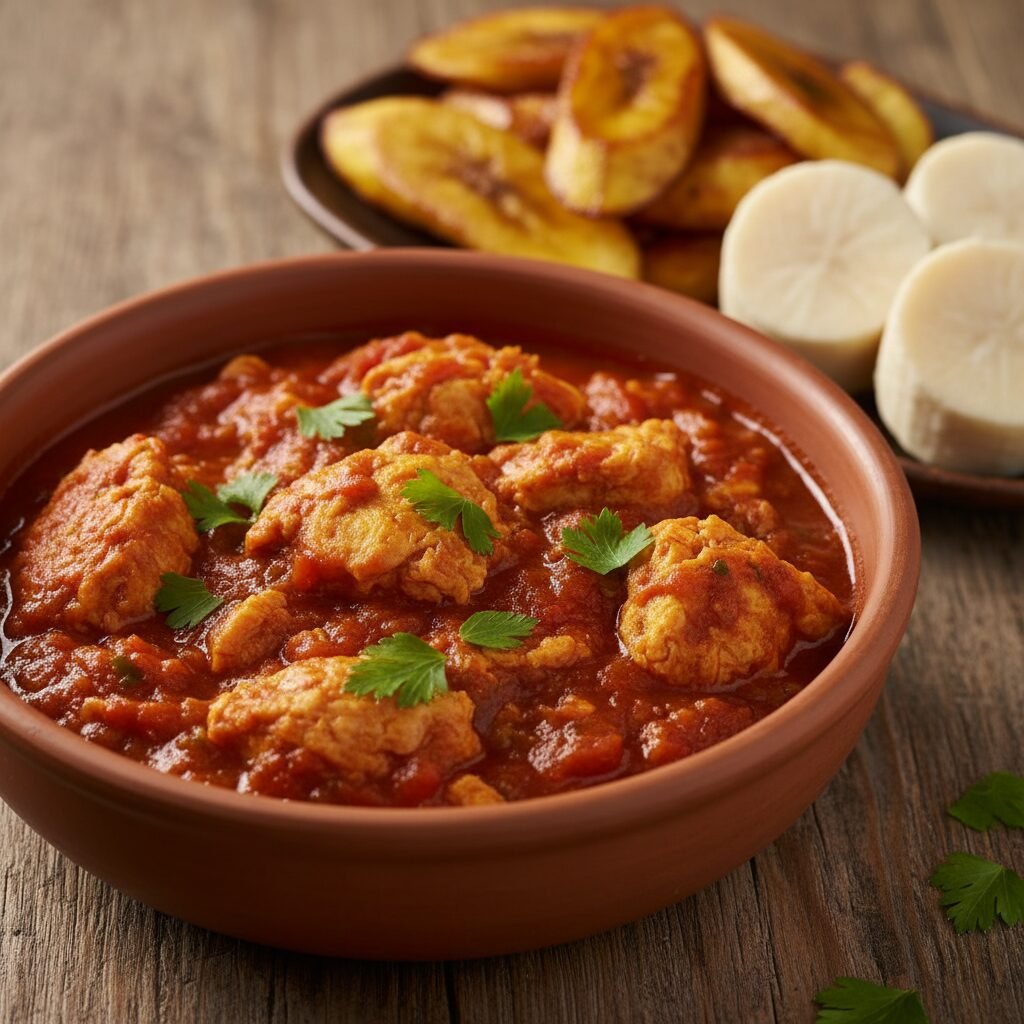
Nigerian Egg Stew is incredibly versatile. It is traditionally served with boiled yam, fried plantains, or soft, fluffy Agege bread for dipping. It’s also fantastic spooned over boiled white rice or potatoes. For a low-carb option, serve it alongside avocado slices or steamed vegetables. The possibilities are endless, making it a perfect dish for any meal of the day.
Storage and Reheating Tips
Store any leftover egg stew in an airtight container in the refrigerator for up to 3 days. To reheat, warm it gently in a saucepan over low heat, stirring occasionally, or in the microwave in 30-second intervals until heated through. Freezing is not recommended as the texture of the eggs can become watery and rubbery upon thawing.
Nutrition Facts (Estimated)
| Serving Size | 1 serving (approx. 1 cup) |
| Calories | 280 kcal |
| Fat | 20g |
| Saturated Fat | 4.5g |
| Unsaturated Fat | 14g |
| Trans Fat | 0g |
| Cholesterol | 370mg |
| Sodium | 550mg |
| Carbohydrates | 9g |
| Fiber | 3g |
| Sugar | 7g |
| Protein | 14g |
Frequently Asked Questions
What is the difference between Nigerian Egg Stew and Shakshuka?
While both are egg and tomato-based dishes, the preparation of the eggs is the key difference. In Shakshuka, whole eggs are poached directly in the sauce. In Nigerian Egg Stew, the eggs are whisked and then gently scrambled into the sauce, creating soft curds that are fully incorporated into the stew.
Can I add meat or fish to this stew?
Yes, you can. For a heartier meal, you can add cooked shredded chicken, smoked fish, or cooked shrimp to the stew base during the last few minutes of simmering, just before you add the eggs.
Is palm oil necessary for this recipe?
Palm oil provides a traditional and distinctive flavor and color, but it is not strictly necessary. You can achieve a delicious result using any neutral cooking oil like vegetable, canola, or sunflower oil.
Conclusion
By embracing the simple brilliance of ‘brinner’ with this Spicy Nigerian Egg Stew, you’re not just making a quick dinner; you’re participating in a rich culinary tradition. This dish proves that eggs are a formidable centerpiece for any meal, offering comfort, nourishment, and a spectacular canvas for bold flavors. It’s a testament to the fact that sometimes, the most satisfying dinners come from the breakfast menu. So, the next time you’re in a dinner rut, look no further than your egg carton and a few pantry staples to create a meal that is truly unforgettable.