Sotteok Sotteok: The Chewy, Spicy Skewer Taking Over The Internet
Sotteok Sotteok: The Chewy, Spicy Skewer Taking Over The Internet
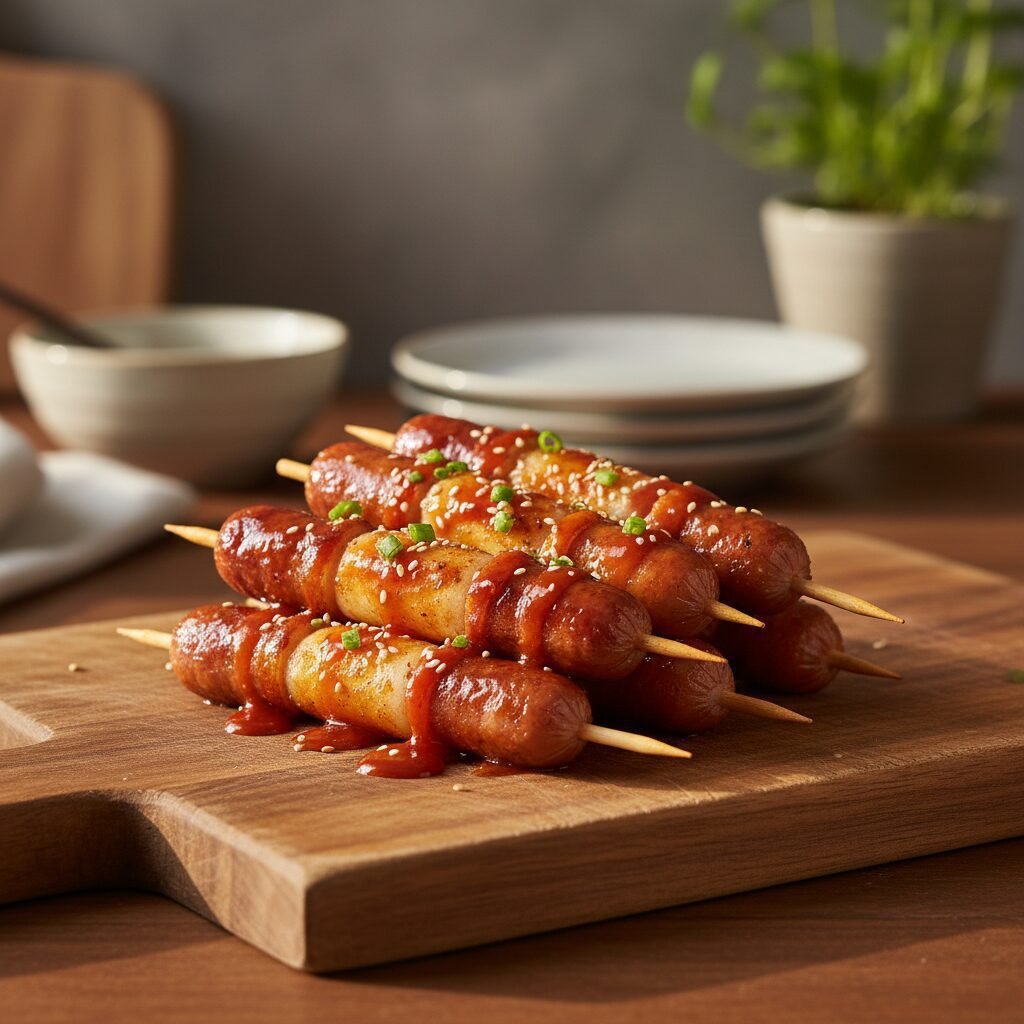
Get ready to fall in love with Sotteok Sotteok! These irresistible Korean skewers feature chewy rice cakes and savory sausages, all coated in a sweet and spicy gochujang sauce. They’re super fun to make and even more fun to eat, perfect for a family snack or a party appetizer!
15 minutes
10 minutes
25 minutes
4-6 servings (approx. 12-15 skewers)
Appetizer, Snack
Pan-frying, Skewering
Korean
Pescatarian (can be vegetarian with plant-based sausage)
Oh my goodness, mamas! Have you seen those adorable, vibrant skewers popping up all over your Pinterest feed and TikTok? We’re talking about Sotteok Sotteok, and let me tell you, they are an absolute game-changer for snack time, party appetizers, or even a fun weeknight dinner side! As a busy mom, I’m always on the hunt for recipes that are not only delicious but also bring a little spark of joy to our kitchen, and Sotteok Sotteok delivers on all fronts. It’s a delightful dance of textures and flavors – the satisfying chewiness of rice cakes, the savory bite of sausage, all enveloped in a sticky, sweet, and spicy sauce that will have everyone reaching for more. Trust me, once you try these, they’ll become a staple in your home!
This recipe isn’t just about making food; it’s about creating memories. Imagine your little ones helping to thread the rice cakes and sausages onto the skewers (with supervision, of course!), or the excited chatter as everyone devours these tasty treats. It’s a fantastic way to introduce new flavors and textures to your family in a fun, approachable format. Plus, they’re surprisingly easy to whip up, even on those hectic weeknights. So, grab your apron, put on your favorite playlist, and let’s dive into making these viral Korean street food sensations right in your own kitchen!
History & Origins
Sotteok Sotteok (pronounced soh-tteok soh-tteok) is a beloved Korean street food that has captured hearts worldwide, but its roots are firmly planted in the bustling streets and markets of South Korea. The name itself is a playful combination of ‘tteok’ (rice cake) and ‘sausage’ (often shortened to ‘sot’ from the English word). While rice cakes (tteokbokki) have been a staple in Korean cuisine for centuries, the specific combination of skewered rice cakes and sausages, slathered in a vibrant sauce, is a more modern invention. It gained significant popularity in recent years, especially after being featured on various Korean food shows and social media platforms, making it a trendy snack for all ages.
Originally, Sotteok Sotteok was a simple, convenient snack sold by street vendors, offering a quick and satisfying bite. The genius lies in its simplicity and the delightful contrast of textures – the soft, chewy rice cake against the firmer, savory sausage. The sauce, typically a variation of gochujang (Korean chili paste), gochugaru (Korean chili powder), soy sauce, and a sweetener, is what truly brings it all together, offering that signature sweet, spicy, and umami kick that Koreans adore. It’s a testament to how traditional ingredients can be reimagined into exciting new forms, becoming a symbol of modern Korean culinary innovation while still honoring its rich food heritage.
Why This Recipe Works
Sotteok Sotteok is a culinary marvel because it perfectly balances several key elements that make food incredibly appealing. First, let’s talk about texture. The combination of the wonderfully chewy, slightly sticky rice cakes (garaetteok) and the firm, juicy sausages creates an addictive mouthfeel that keeps you coming back for more. This textural contrast is a hallmark of many beloved dishes.
Next, the flavor profile is a masterclass in Korean cuisine. The sauce is a harmonious blend of sweet, spicy, savory, and a touch of tang. Gochujang provides a complex heat and depth, while a touch of sugar or corn syrup adds sweetness, balancing the spice. Soy sauce brings umami, and garlic and sesame oil add aromatic richness. This multi-layered flavor explosion hits all the right notes on your palate, making each bite exciting.
Finally, the presentation and convenience are undeniable. Skewering the ingredients makes them easy to handle, perfect for snacking on the go or serving at a party. The vibrant red sauce makes them visually appealing, and the alternating pattern of rice cake and sausage is just plain fun! From a technical standpoint, the starchiness of the rice cakes helps the sauce cling beautifully, ensuring every piece is coated in that delicious glaze. It’s a simple concept executed brilliantly, proving that sometimes the most satisfying dishes are those that play with fundamental culinary principles in the most delightful ways.
Why You’ll Love This Recipe
- ✓A viral Korean street food sensation you can make at home!
- ✓Perfect balance of chewy rice cakes and savory sausages.
- ✓Sweet, spicy, and savory gochujang sauce that’s incredibly addictive.
- ✓Fun and easy to assemble, great for involving the whole family.
- ✓Versatile snack, appetizer, or side dish for any occasion.
- ✓A delightful textural experience with every bite.
Equipment You’ll Need
- ✓Large non-stick pan or cast-iron skillet
- ✓Small mixing bowl
- ✓Whisk
- ✓Tongs
- ✓Wooden skewers (6-inch or 8-inch)
Ingredients
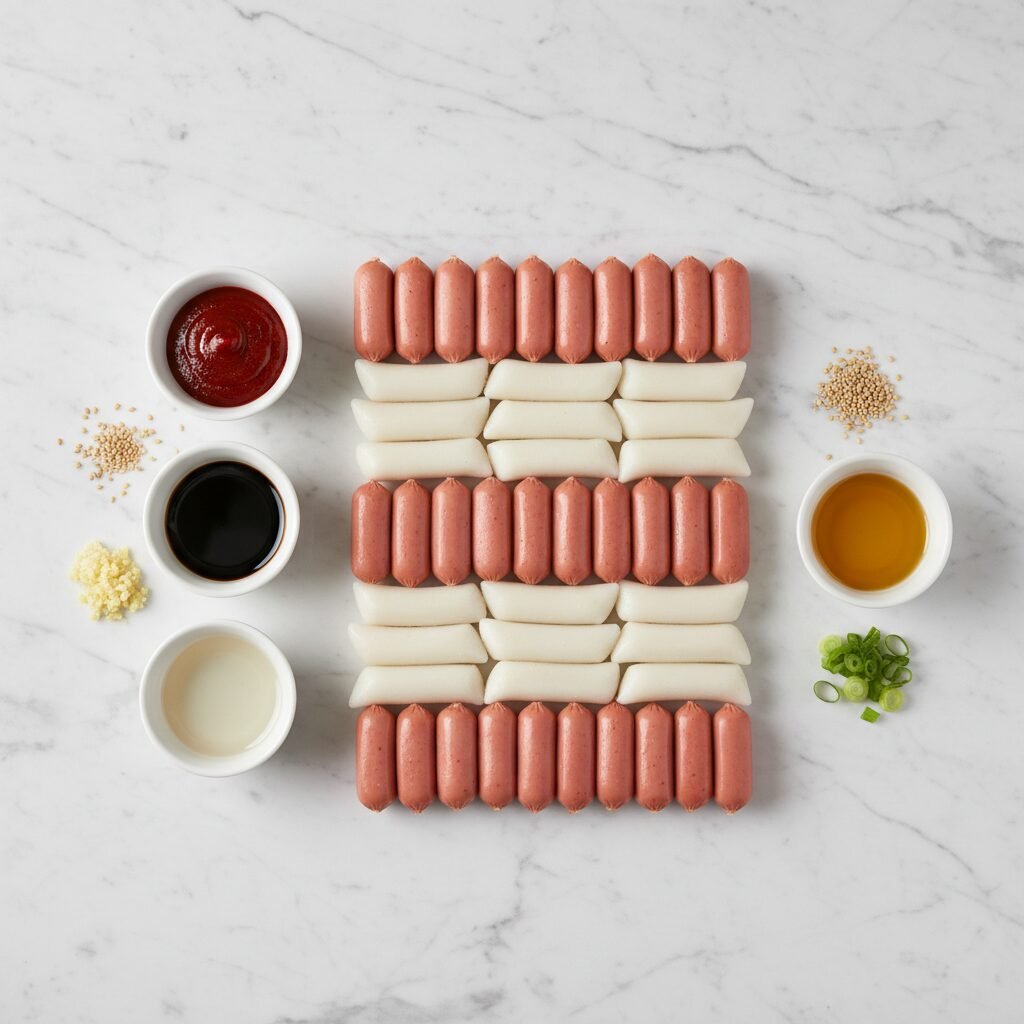
- ✓1 lb (450g) Korean cylindrical rice cakes (garaetteok), thawed if frozen
- ✓1 lb (450g) small cocktail sausages or Vienna sausages
- ✓2 tbsp vegetable oil (or other neutral oil)
- ✓For the Sauce:
- ✓3 tbsp gochujang (Korean chili paste)
- ✓2 tbsp gochugaru (Korean chili powder, optional, for extra heat)
- ✓2 tbsp soy sauce
- ✓2 tbsp corn syrup or honey (or maple syrup for a less sweet option)
- ✓1 tbsp sugar
- ✓1 tbsp minced garlic
- ✓1 tbsp sesame oil
- ✓2 tbsp water
Instructions
- Prepare the Rice Cakes: If your rice cakes are frozen or hard, soak them in warm water for about 10-15 minutes until they are soft and pliable. Drain well.
- Prepare the Sausages: If using larger cocktail sausages, you might want to cut them in half crosswise to match the size of the rice cakes. For Vienna sausages, they are usually good as is.
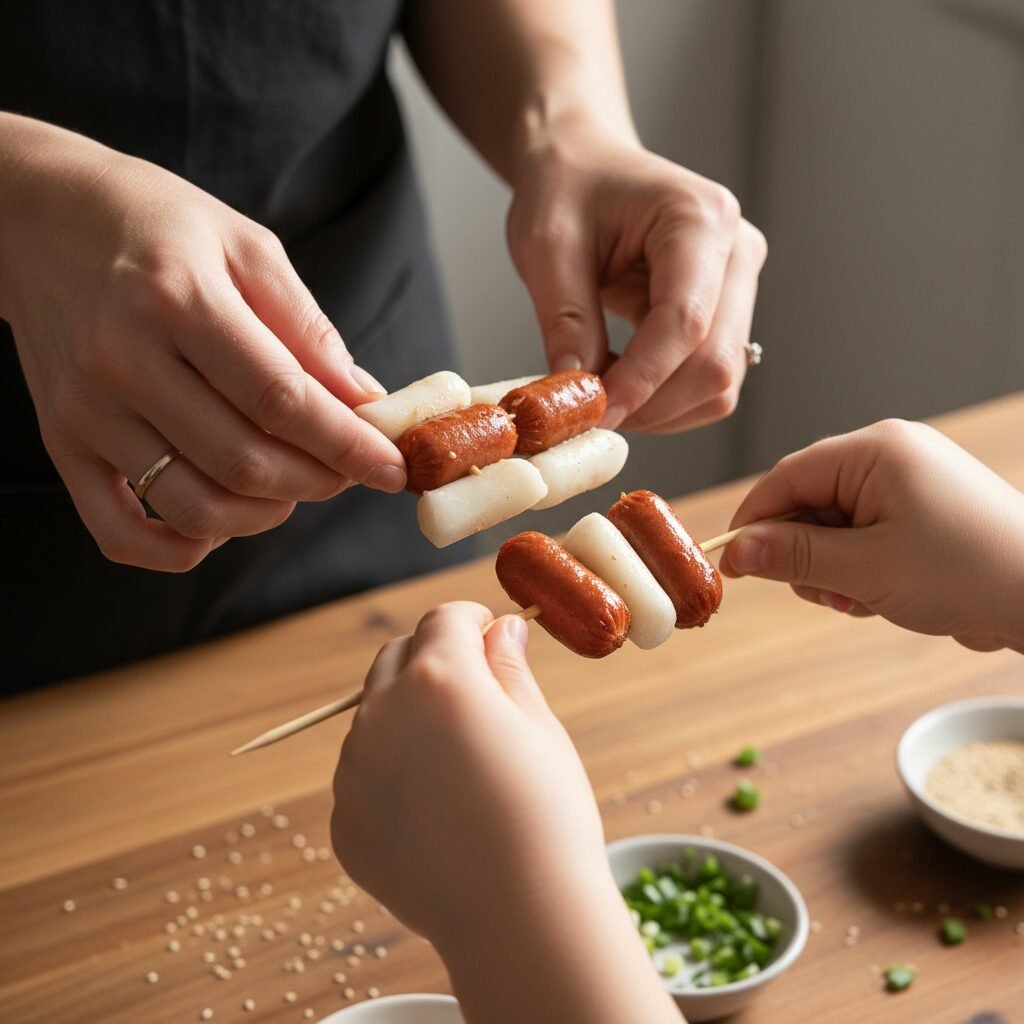
- Assemble the Skewers: Thread the rice cakes and sausages onto the wooden skewers, alternating between one rice cake and one sausage. Aim for 3-4 pieces of each per skewer, depending on the length of your skewers. Repeat until all ingredients are used.
- Make the Sauce: In a small mixing bowl, combine the gochujang, gochugaru (if using), soy sauce, corn syrup (or honey/maple syrup), sugar, minced garlic, sesame oil, and water. Whisk everything together until the sauce is smooth and well combined. Taste and adjust sweetness or spice to your liking.
- Cook the Skewers: Heat 2 tablespoons of vegetable oil in a large non-stick pan or cast-iron skillet over medium heat. Once hot, carefully place the assembled skewers in a single layer in the pan, making sure not to overcrowd it. You may need to cook them in batches.
- Pan-fry: Cook the skewers for 5-7 minutes, turning occasionally, until the rice cakes are slightly crispy and golden brown on the outside, and the sausages are heated through and lightly browned. This step is crucial for developing that delightful texture!
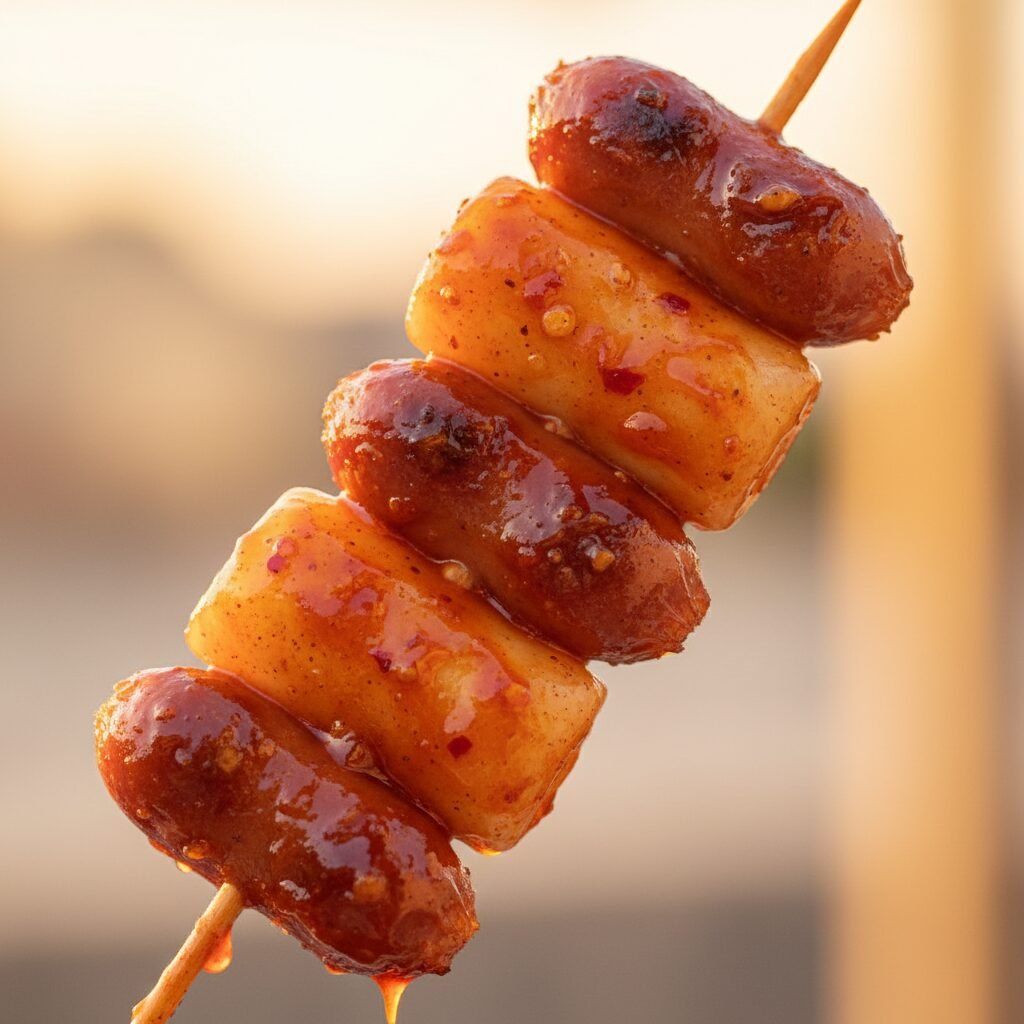
- Glaze with Sauce: Once the skewers are nicely browned, reduce the heat to low. Pour the prepared sauce over the skewers in the pan. Using tongs, gently toss and turn the skewers to ensure each one is evenly coated with the delicious, sticky sauce. Let them cook for another 1-2 minutes, allowing the sauce to thicken and cling to the skewers.
- Serve Immediately: Transfer the Sotteok Sotteok skewers to a serving platter. Garnish with a sprinkle of toasted sesame seeds or chopped green onions, if desired. Serve warm and watch them disappear!
Expert Cooking Tips
- ✓Don’t Skip Soaking: If your rice cakes are firm, soaking them is key for that perfect chewy texture and to prevent them from breaking when skewering.
- ✓Even Browning: Ensure your pan isn’t overcrowded to allow for even browning of the rice cakes and sausages. Cook in batches if necessary.
- ✓Adjust Spice Level: The gochugaru is optional. If you prefer less heat, omit it. For more heat, add an extra teaspoon or two!
- ✓Sweetener Options: Corn syrup gives that classic sticky glaze, but honey or maple syrup work well too for a slightly different flavor profile.
- ✓Sauce Consistency: If your sauce is too thick, add a tiny bit more water, a teaspoon at a time, until it reaches your desired consistency. If it’s too thin, let it simmer a bit longer in the pan to reduce.
- ✓Pre-Cook Sausages: If using raw sausages, make sure to cook them through before adding the sauce. Most cocktail sausages are pre-cooked.
Substitutions and Variations
Life in the kitchen is all about flexibility, isn’t it? If you’re out of an ingredient or want to try something new, here are some fantastic substitutions for your Sotteok Sotteok:
- Rice Cakes: While cylindrical garaetteok are traditional, you can use sliced tteokbokki rice cakes if that’s all you can find. Just be mindful of their size when skewering.
- Sausages: Feel free to experiment with different types of small, pre-cooked sausages! Chicken sausages, turkey sausages, or even vegetarian/vegan sausages can work wonderfully. Just make sure they are firm enough to skewer and hold their shape.
- Sweetener: No corn syrup? No problem! Honey, maple syrup, or even brown sugar can be used in place of corn syrup for the sauce. The texture might be slightly different, but the flavor will still be delicious.
- Gochujang: This is pretty central to the flavor, but if you absolutely can’t find it, a blend of sriracha, a touch of miso paste, and a pinch of sugar can offer a similar spicy-savory profile in a pinch. It won’t be exactly the same, but it’ll get you close!
- Vegetable Oil: Any neutral oil like canola, grapeseed, or even light olive oil will work for pan-frying.
Common Mistakes to Avoid
Even the best cooks make mistakes, but knowing what to look out for can save you a lot of trouble! Here are a few common pitfalls to avoid when making Sotteok Sotteok:
- Not Soaking Rice Cakes: If your rice cakes are hard, trying to skewer them without soaking will lead to breakage. Always ensure they are soft and pliable first.
- Overcrowding the Pan: This is a big one! If you put too many skewers in the pan at once, they will steam instead of pan-fry, resulting in soggy rice cakes and sausages instead of beautifully browned ones. Cook in batches if needed.
- Burning the Sauce: The sauce contains sugar, which can burn quickly if the heat is too high. Once you add the sauce, reduce the heat to low and keep tossing the skewers to ensure even coating and prevent scorching.
- Uneven Skewering: Try to keep the rice cakes and sausages roughly the same size so they cook evenly and look appealing on the skewer.
- Not Tasting the Sauce: Everyone’s palate is different! Always taste your sauce before coating the skewers and adjust the sweetness, spice, or saltiness to your preference.
Serving Suggestions
Sotteok Sotteok is incredibly versatile and can be enjoyed in so many ways! Of course, they’re fantastic on their own as a quick snack or appetizer. For a fun party spread, arrange them artfully on a platter with a sprinkle of toasted sesame seeds and finely chopped green onions for a pop of color. They also make a wonderful side dish to a larger Korean meal, perhaps alongside some kimchi fried rice, a refreshing cucumber salad, or even a simple bowl of ramen. For a heartier snack, you could serve them with a side of pickled radishes or a light coleslaw to cut through the richness. My kids love them packed in their lunchboxes (they’re great cold too!) or as an after-school treat. Don’t be afraid to get creative and serve them with your favorite dipping sauces on the side, like a creamy sriracha mayo for an extra kick!
Storage and Reheating Tips
If you happen to have any Sotteok Sotteok leftovers (which is a rare occurrence in my house!), they store quite well. Allow the skewers to cool completely before transferring them to an airtight container. They can be stored in the refrigerator for up to 3-4 days. To reheat, you can gently warm them in a microwave, but for the best texture, I recommend reheating them in a lightly oiled pan over medium-low heat until warmed through and the rice cakes regain some of their crispiness. This helps prevent them from becoming too soft. You can also pop them in an air fryer at 350°F (175°C) for a few minutes until heated through and slightly crispy again. Freezing is not recommended as the rice cakes can become mushy upon thawing and reheating.
Nutrition Facts (Estimated)
| Serving Size | 2 skewers |
| Calories | 280 kcal |
| Fat | 15g |
| Saturated Fat | 5g |
| Unsaturated Fat | 8g |
| Trans Fat | 0g |
| Cholesterol | 30mg |
| Sodium | 550mg |
| Carbohydrates | 25g |
| Fiber | 1g |
| Sugar | 12g |
| Protein | 10g |
Frequently Asked Questions
What kind of rice cakes should I use?
You’ll want to use Korean cylindrical rice cakes, often called garaetteok or tteokbokki tteok. They come fresh or frozen in most Asian grocery stores. Make sure they are soft and pliable before skewering.
Can I make this recipe vegetarian or vegan?
Absolutely! Simply substitute the cocktail sausages with your favorite plant-based sausages that are firm enough to skewer. Most Korean rice cakes are naturally vegan, but always double-check the ingredients if you have strict dietary requirements.
Is Sotteok Sotteok very spicy?
The spice level is adjustable! Gochujang provides a moderate heat. If you want it milder, reduce the amount of gochujang or omit the gochugaru. For more heat, add extra gochugaru or a pinch of cayenne pepper.
Can I prepare the skewers ahead of time?
Yes, you can assemble the skewers a few hours in advance and keep them covered in the refrigerator. However, it’s best to cook and sauce them right before serving for the freshest taste and best texture.
Where can I buy gochujang and gochugaru?
You can find gochujang (Korean chili paste) and gochugaru (Korean chili powder) at most Asian grocery stores, in the international aisle of larger supermarkets, or online. They are essential for authentic Korean flavors!
My rice cakes are sticking to the pan, what should I do?
Ensure your pan is well-oiled and hot enough before adding the skewers. Also, use a good quality non-stick pan. If they still stick, you might need a bit more oil, or try turning them more frequently.
Can I use different types of skewers?
Wooden skewers are traditional and easy to use. If you’re using metal skewers, just be aware they will get hot, so handle with care. Ensure whatever skewers you use are food-safe and appropriately sized.
What if I don’t have corn syrup?
Corn syrup helps create that signature glossy, sticky glaze. However, you can substitute it with honey or maple syrup for a similar sweetness and stickiness, though the flavor profile might be slightly different.
Conclusion
And there you have it, my sweet friends! Your very own batch of Sotteok Sotteok, ready to delight taste buds and bring smiles all around. Isn’t it just amazing how a few simple ingredients can transform into something so incredibly delicious and fun? This recipe is more than just food; it’s an experience, a little taste of Korean street food magic right in your cozy kitchen. Whether you’re making it for a family movie night, a playdate snack, or just because you’re craving something wonderfully chewy and flavorful, I promise this Sotteok Sotteok will be a hit.
Don’t be shy to get creative with your garnishes or even try different sausage varieties. The beauty of cooking is making it your own! I truly hope you and your loved ones enjoy every single bite of these delightful skewers. Happy cooking, and remember, the best memories are often made around the kitchen table!