Sopa de Ajo: The Healing Garlic Soup Made From Stale Bread
Sopa De Ajo: The Healing Garlic Soup Made From Stale Bread
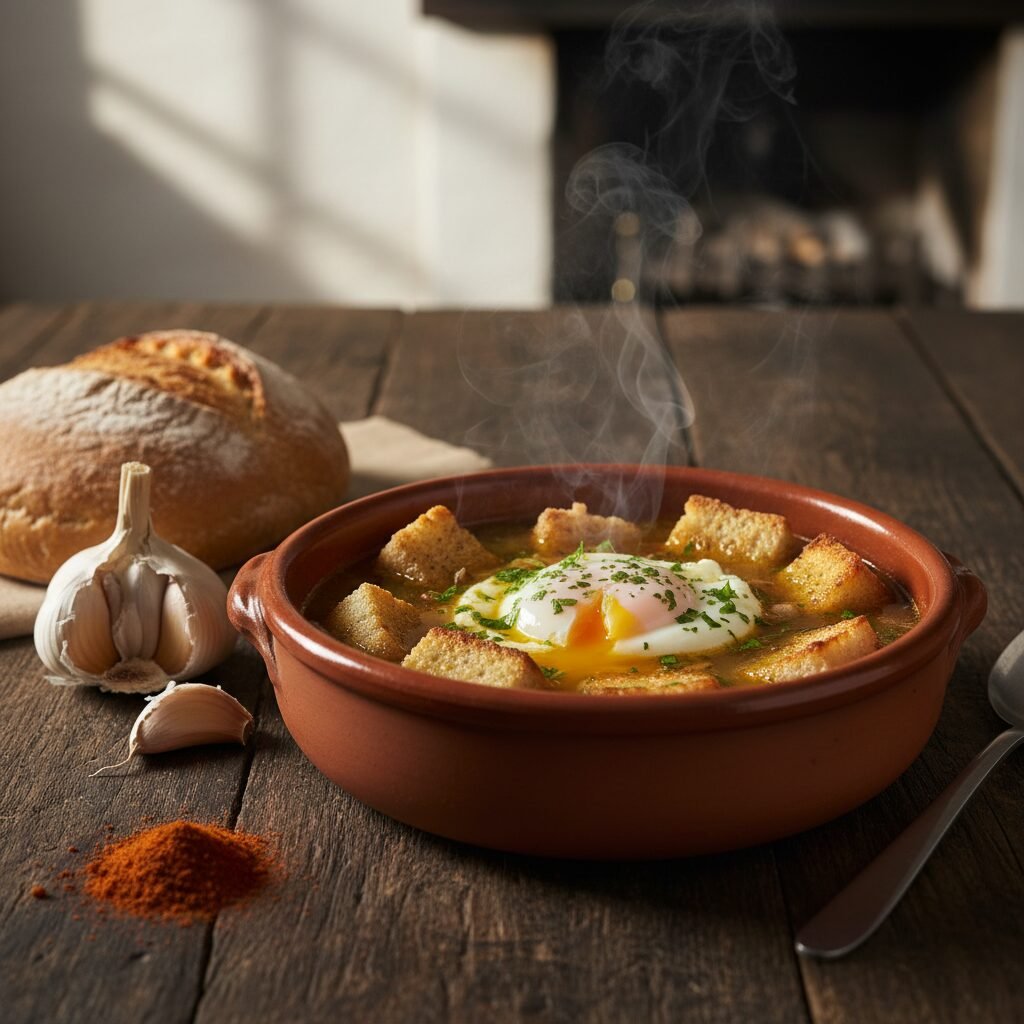
Sopa de Ajo, or Spanish garlic soup, is a testament to the genius of peasant cooking. Born from necessity in the Castile region of Spain, this humble dish transforms the simplest of pantry staples—stale bread, garlic, and olive oil—into a profoundly comforting and deeply flavorful soup. It’s a recipe that wastes nothing and creates something truly magical. Often called a ‘healing’ soup, it’s the perfect remedy for a cold day, a restorative meal when you’re feeling under the weather, or simply a quick, budget-friendly dinner that feels like a warm hug in a bowl. The magic lies in its simplicity: garlic is gently toasted in olive oil, stale bread soaks up the flavor, smoked paprika adds a warm, smoky depth, and a rich broth brings it all together. Finished with an egg poached directly in the simmering soup, each spoonful is a rustic, soul-soothing experience.
10 minutes
20 minutes
30 minutes
4 servings
Soup
Stovetop
Spanish
Vegetarian
Why You’ll Love This Recipe
- Transforms stale bread into a delicious meal, reducing food waste.
- Made with simple, inexpensive pantry staples.
- Ready in under 30 minutes for a quick and easy weeknight dinner.
- Deeply savory, smoky, and comforting flavor profile.
- A traditional Spanish recipe with a rich history.
Equipment You’ll Need
- Large pot or Dutch oven
- Chef’s knife
- Cutting board
- Wooden spoon or spatula
- Ladle
- Whisk
Ingredients
- 1/4 cup extra-virgin olive oil
- 8-10 cloves garlic, thinly sliced
- 6 ounces stale, crusty bread (like a baguette or ciabatta), torn or cut into 1-inch cubes
- 2 teaspoons smoked sweet paprika (pimentón dulce)
- 6 cups vegetable or chicken broth
- Salt and freshly ground black pepper to taste
- 4 large eggs
- 2 tablespoons fresh parsley, chopped (for garnish)
Instructions
- Heat the olive oil in a large pot or Dutch oven over medium heat. Add the sliced garlic and cook, stirring frequently, until it is fragrant and lightly golden, about 2-3 minutes. Be careful not to let it burn, as it will become bitter.
- Add the stale bread cubes to the pot. Stir well to coat the bread in the garlic-infused oil. Continue to cook, stirring occasionally, until the bread is toasted and golden brown on all sides, about 5-7 minutes.
- Remove the pot from the heat. Sprinkle the smoked paprika over the bread and stir immediately to combine. Letting the paprika toast for about 30 seconds off the heat prevents it from burning and brings out its flavor.
- Return the pot to medium heat and immediately pour in the broth. Scrape up any browned bits from the bottom of the pot. Bring the soup to a simmer.
- Reduce the heat to low, cover the pot, and let the soup gently simmer for 10 minutes. This allows the bread to soften and the flavors to meld together. Season with salt and pepper to your taste.
- To poach the eggs, use a spoon to create four small wells in the soup. Carefully crack one egg into each well. Cover the pot and let the eggs cook in the simmering soup for 3-5 minutes, or until the whites are set but the yolks are still runny.
- To serve, carefully ladle the soup into four bowls, making sure to place one poached egg in the center of each. Garnish with fresh chopped parsley and serve immediately.
Expert Cooking Tips
- Use genuinely stale, hard bread. Fresh bread will disintegrate and create a mushy texture rather than softening while retaining some body.
- Watch the garlic and paprika like a hawk. Burnt garlic or paprika will ruin the soup, making it acrid and bitter. It’s better to cook them at a slightly lower temperature if you’re unsure.
- For a richer soup, use a high-quality, flavorful broth. Homemade is best, but a good store-bought stock works well.
- When poaching the eggs, keeping the soup at a gentle, barely-there simmer is key. A rolling boil can break the eggs apart.
Substitutions and Variations
For a non-vegetarian version, use chicken broth and add some chopped serrano ham or chorizo with the garlic. If you don’t have smoked paprika, sweet paprika will work, but you’ll miss the characteristic smoky flavor. For a vegan version, simply omit the eggs or use a plant-based egg substitute.
Common Mistakes to Avoid
The most common mistake is using fresh bread, which leads to a porridge-like consistency. The second is burning the garlic or paprika, which introduces a bitter taste that’s impossible to fix. Finally, avoid over-boiling the soup after adding the broth; a gentle simmer is all that’s needed to meld the flavors without turning everything to mush.
Serving Suggestions
Serve Sopa de Ajo piping hot, garnished with fresh parsley. A drizzle of high-quality extra-virgin olive oil over the top just before serving enhances the flavor. While the soup contains bread, a side of fresh, crusty bread for dipping into the broth and runny egg yolk is always a welcome addition. A simple green salad with a light vinaigrette can round out the meal.
Storage and Reheating Tips
Sopa de Ajo is best enjoyed fresh, especially because of the poached eggs. If you have leftovers, it’s best to store the soup base separately from the eggs. Store the soup in an airtight container in the refrigerator for up to 3 days. Reheat gently on the stovetop and poach fresh eggs in the soup just before serving.
Nutrition Facts (Estimated)
| Serving Size | 1 bowl (approx. 1.5 cups) |
| Calories | 310 kcal |
| Fat | 18g |
| Saturated Fat | 3g |
| Unsaturated Fat | 14g |
| Trans Fat | 0g |
| Cholesterol | 185mg |
| Sodium | 750mg |
| Carbohydrates | 25g |
| Fiber | 2g |
| Sugar | 2g |
| Protein | 12g |
Frequently Asked Questions
My bread is fresh. Can I still make this soup?
Yes, you can ‘stale’ fresh bread. Cut it into cubes, spread them on a baking sheet, and bake at 300°F (150°C) for 15-20 minutes, or until it’s dry and hard. Let it cool completely before using.
What is the difference between smoked paprika and regular paprika?
Smoked paprika (pimentón) is made from peppers that are smoked and dried over oak fires, giving it a deep, smoky flavor that is essential to this dish. Regular or sweet paprika lacks this smoky element. For the most authentic taste, seek out Spanish pimentón.
Can I add other ingredients to this soup?
Absolutely. While the classic recipe is simple, you can add ingredients like mushrooms, chickpeas, or shredded chicken for a heartier meal. Sauté them after the garlic and before adding the bread.
Conclusion
Sopa de Ajo is more than just a soup; it’s a piece of culinary history that demonstrates how elegance can be found in simplicity. It’s a reminder that with a little creativity, the most humble ingredients can create a meal that is both nourishing and incredibly satisfying. Whether you’re fighting off a cold or simply seeking comfort in a bowl, this Spanish garlic soup is a timeless classic that deserves a place in your recipe collection.