Savory Mung Bean Stew: The $2 Filipino Comfort Food Better Than Chili
Savory Mung Bean Stew: The $2 Filipino Comfort Food Better Than Chili
Oh my goodness, mamas! Get ready to discover your new favorite budget-friendly, soul-warming meal. This Filipino Mung Bean Stew, or Ginisang Munggo, is an absolute game-changer, packed with flavor and so incredibly comforting, it’s like a warm hug in a bowl. Trust me, it’s going to become a staple in your kitchen!
20 minutes
1 hour 30 minutes
1 hour 50 minutes
6 servings
Main Course
Stewing
Filipino
Pescatarian (can be made vegetarian/vegan)
Sweet friends, let me tell you about a dish that has completely captured my heart and taste buds: Savory Mung Bean Stew. If you’ve never had Filipino Ginisang Munggo before, prepare to be amazed! This isn’t just a meal; it’s an experience, a journey to a place of pure culinary comfort that costs next to nothing to create. In our busy lives, finding recipes that are both incredibly delicious, super nutritious, and gentle on the wallet feels like hitting the jackpot, right? Well, this stew is exactly that jackpot!
Imagine a hearty, flavorful stew, rich with tender mung beans, savory pork (or a vegetarian option!), and a symphony of aromatic spices, all simmered to perfection. It’s thick, it’s creamy, and it has a depth of flavor that will make you wonder why you haven’t been making this all your life. And the best part? It truly can be made for around $2 a serving, making it a superhero in the world of budget-friendly meals. Forget your usual chili night; this mung bean stew is here to steal the show with its unique, comforting charm. It’s perfect for a cozy family dinner, a meal prep champion, or simply when you need a little extra warmth and love in your day. Let’s dive in and make some magic!
History & Origins
The story of Ginisang Munggo, or Sautéed Mung Beans, is deeply woven into the fabric of Filipino home cooking. Mung beans themselves have been cultivated in Asia for thousands of years, prized for their nutritional value and versatility. In the Philippines, they found their way into a beloved stew that embodies the spirit of resourcefulness and flavor. Traditionally, this dish was a way to stretch ingredients and provide a nourishing meal for families, often incorporating leftover pork or cracklings (chicharon) for added richness and texture.
It’s a dish that evokes nostalgia for many Filipinos, often prepared by grandmothers and mothers, filling homes with its inviting aroma. While the basic components remain consistent – mung beans, garlic, onions, tomatoes, and leafy greens – regional variations and family recipes abound. Some versions might include shrimp, others smoked fish, but the heart of the dish remains the humble yet mighty mung bean. It’s a testament to how simple, wholesome ingredients can be transformed into something truly extraordinary and deeply comforting, passed down through generations.
Why This Recipe Works
From a culinary perspective, Savory Mung Bean Stew is a masterpiece of balance and texture. The mung beans, when properly simmered, break down just enough to create a naturally thick, creamy base without needing any added thickeners. This provides a wonderfully satisfying mouthfeel. The initial sautéing (ginisa) of garlic, onions, and tomatoes builds a foundational layer of umami and sweetness, which is crucial for the stew’s depth of flavor. These aromatics caramelize slightly, releasing their essential oils and sugars, creating a complex flavor profile.
The addition of pork (or other protein) brings a savory richness and a different textural element. As the pork cooks, its fats render, infusing the entire stew with a delicious, meaty essence. The leafy greens, typically spinach or malunggay (moringa), are added at the end to retain their vibrant color and slight bitterness, which beautifully cuts through the richness of the stew, providing a fresh counterpoint. Finally, a splash of fish sauce (patis) or soy sauce enhances the savory notes and adds that quintessential Filipino flavor. It’s a harmonious blend of earthy, savory, slightly sweet, and fresh elements that makes every spoonful utterly delightful and incredibly satisfying.
Why You’ll Love This Recipe
- ✓Budget-Friendly: Costs around $2 per serving!
- ✓Incredibly Comforting: A warm hug in a bowl.
- ✓Nutrient-Packed: High in protein and fiber from mung beans.
- ✓Easy to Make: Simple steps for a delicious meal.
- ✓Versatile: Easily adaptable with different proteins or vegetables.
- ✓Authentic Filipino Flavor: A taste of traditional home cooking.
Equipment You’ll Need
- ✓Large pot or Dutch oven
- ✓Cutting board
- ✓Sharp knife
- ✓Measuring cups and spoons
- ✓Ladle
- ✓Strainer
Ingredients
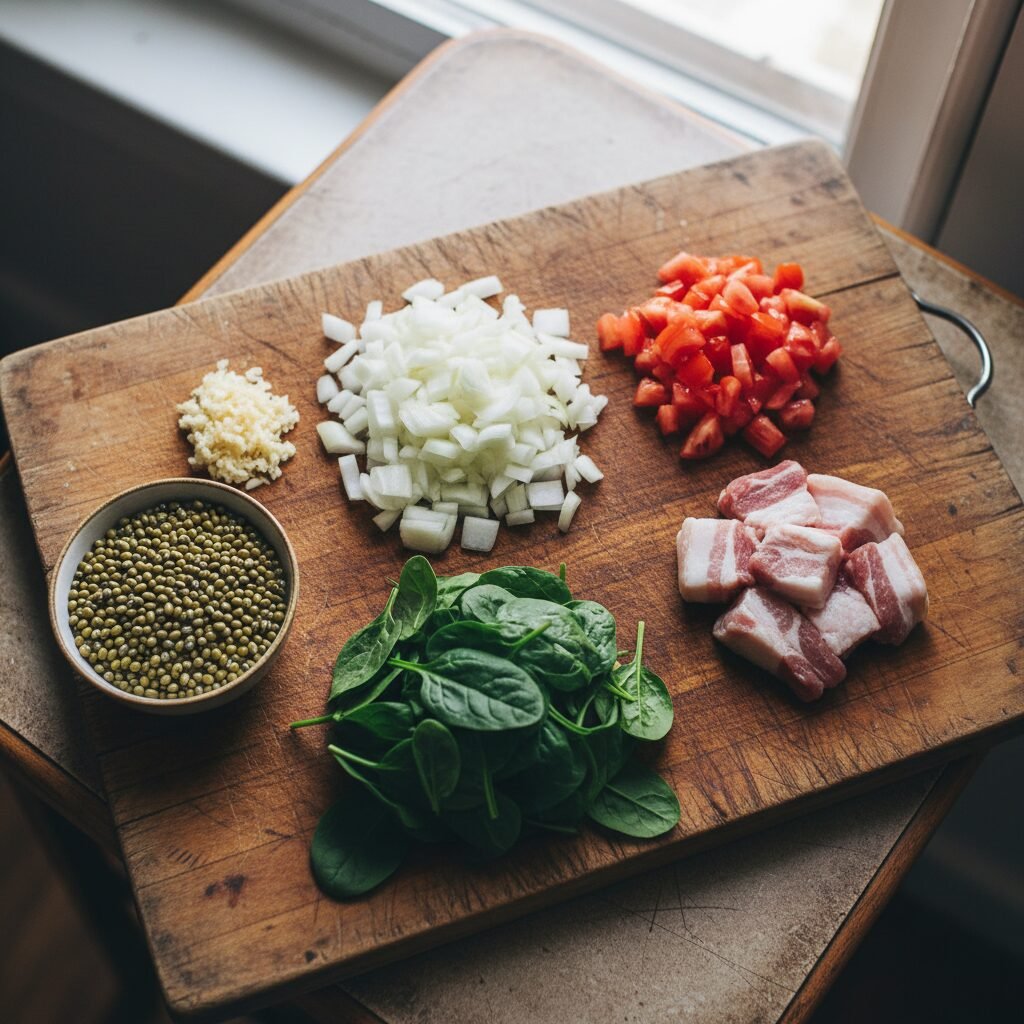
- ✓1 cup dried mung beans, rinsed and soaked for at least 4 hours or overnight
- ✓2 tbsp cooking oil (vegetable or canola)
- ✓4 cloves garlic, minced
- ✓1 medium onion, chopped
- ✓1 large tomato, diced
- ✓1/2 lb pork belly or pork shoulder, cut into small cubes (or shrimp, or plant-based protein)
- ✓6 cups water or vegetable broth
- ✓2 tbsp fish sauce (patis) or soy sauce, to taste
- ✓1/2 tsp black pepper, freshly ground
- ✓1 cup spinach or other leafy greens (malunggay, bitter melon leaves), roughly chopped
- ✓Optional: 1/4 cup chicharon (pork cracklings), crushed, for garnish

Instructions
- 1. Prepare the Mung Beans: After soaking, drain the mung beans and set aside. Soaking helps them cook faster and more evenly.
- 2. Sauté Aromatics: In a large pot or Dutch oven, heat the cooking oil over medium heat. Add the minced garlic and sauté until fragrant, about 30 seconds. Be careful not to burn it!
- 3. Add Onion and Tomato: Stir in the chopped onion and cook until softened and translucent, about 3-5 minutes. Add the diced tomato and cook until it breaks down and releases its juices, about 5-7 minutes, mashing it slightly with your spoon.
- 4. Brown the Pork: Add the cubed pork belly (or your chosen protein) to the pot. Cook, stirring occasionally, until the pork is lightly browned and rendered some of its fat, about 8-10 minutes.
- 5. Add Mung Beans and Liquid: Stir in the drained mung beans. Pour in the water or vegetable broth. Bring the mixture to a boil, then reduce the heat to low, cover, and simmer.
- 6. Simmer to Perfection: Let the stew simmer for 1 to 1.5 hours, or until the mung beans are very tender and have started to break down, creating a thick, creamy consistency. Stir occasionally to prevent sticking. If the stew becomes too thick, add a little more water or broth.
- 7. Season the Stew: Stir in the fish sauce (or soy sauce) and black pepper. Taste and adjust seasoning as needed. This is where you make it perfect for YOUR family!
- 8. Add Greens: Finally, stir in the chopped spinach (or other leafy greens) and cook for just 2-3 minutes, or until wilted. You want them vibrant and fresh!
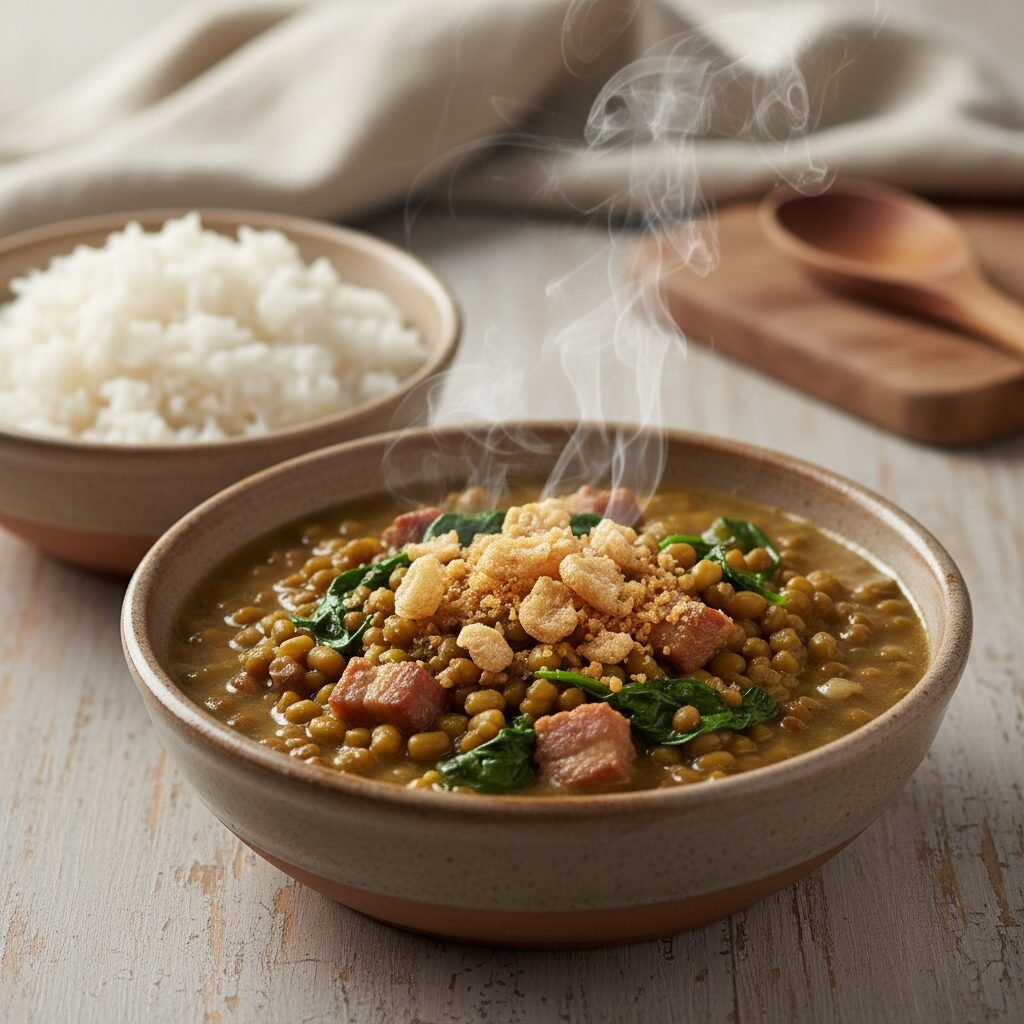
- 9. Serve: Ladle the hot Savory Mung Bean Stew into bowls. Garnish with crushed chicharon if using. Serve immediately with steamed white rice. Enjoy your cozy, delicious meal, sweet friends!

Expert Cooking Tips
- ✓Soaking is Key: Don’t skip soaking the mung beans! It significantly reduces cooking time and ensures a creamier texture.
- ✓Low and Slow: Simmering on low heat allows the flavors to meld beautifully and the beans to break down perfectly.
- ✓Adjust Consistency: If you prefer a thinner stew, add more water or broth during simmering. For a thicker stew, let it simmer uncovered for a bit longer at the end.
- ✓Taste and Adjust: Always taste before serving! Fish sauce can vary in saltiness, so add it gradually until it’s just right for your palate.
- ✓Fresh Greens: Add greens at the very end to keep them from overcooking and losing their vibrant color and nutrients.
Substitutions and Variations
This recipe is wonderfully flexible, sweet friends! If you’re not a fan of pork, you can easily substitute it with shrimp (add them in the last 5-7 minutes of cooking so they don’t overcook), chicken breast or thighs cut into small pieces, or even smoked fish flakes for a different depth of flavor. For a vegetarian or vegan version, simply omit the pork and use vegetable broth instead of water. You can add diced carrots, potatoes, or bell peppers along with the tomatoes for extra veggies. For a plant-based protein boost, consider adding firm tofu, pan-fried until golden, at the end of cooking. Instead of spinach, feel free to use other leafy greens like kale, collard greens, or even bok choy. If you don’t have fish sauce, soy sauce is a great alternative, just adjust the saltiness to your liking!
Common Mistakes to Avoid
Oh, we’ve all been there, right? Here are a few common pitfalls to avoid when making this delicious stew: Not soaking the mung beans – this will drastically increase your cooking time and might result in unevenly cooked beans. Overcooking the greens – adding them too early will turn them mushy and dull. They should be vibrant and slightly tender-crisp. Not sautéing the aromatics enough – rushing this step means you miss out on building that crucial flavor base. Let those garlic, onions, and tomatoes really do their thing! Not seasoning properly – taste, taste, taste! The balance of savory and earthy flavors is key, so adjust the fish sauce and pepper until it sings. And finally, letting it stick to the bottom – give it a stir every now and then, especially as the beans start to break down and thicken.
Serving Suggestions
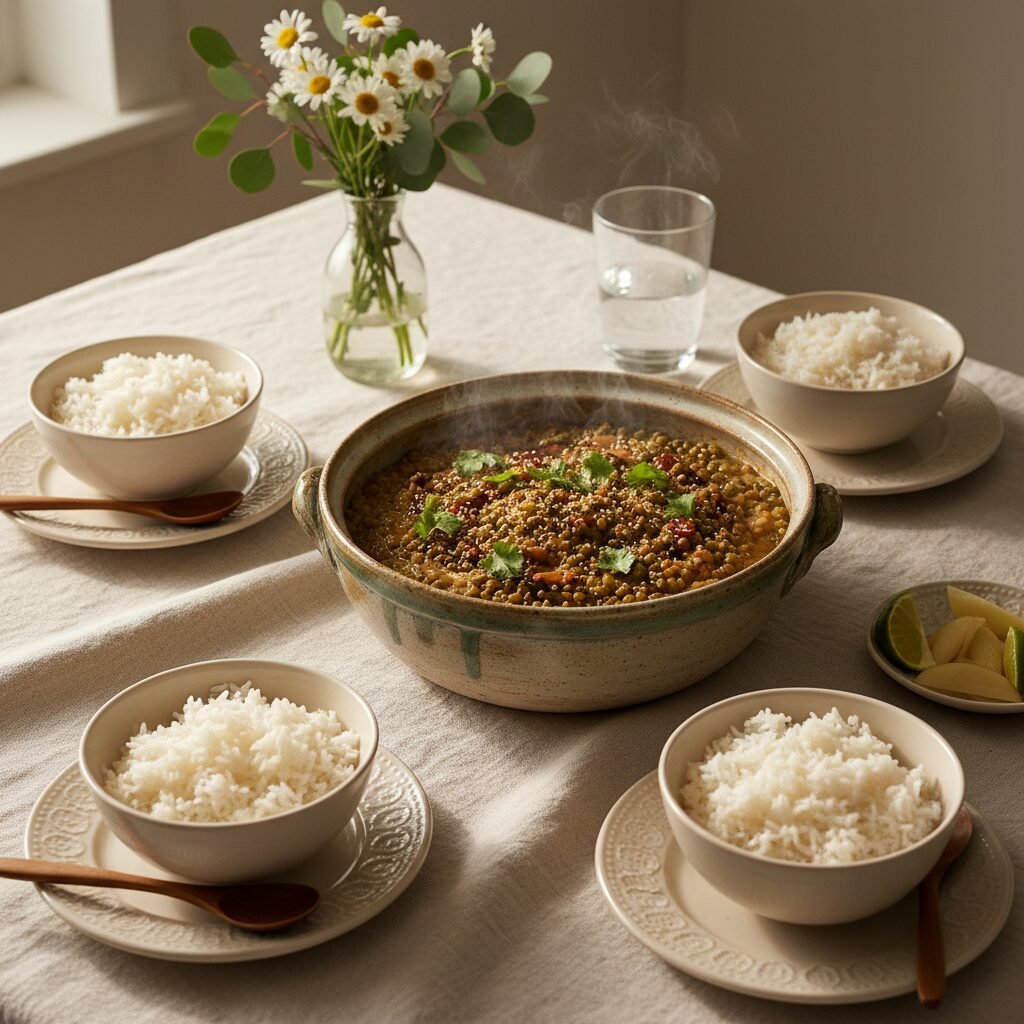
This Savory Mung Bean Stew is truly a meal in itself, but it absolutely shines when served alongside a generous scoop of fluffy steamed white rice. The rice soaks up all that delicious, creamy broth, making every bite heavenly! For an extra special touch, you can garnish individual bowls with a sprinkle of crispy chicharon (pork cracklings) for a delightful textural contrast. Some families also enjoy it with a side of fried fish or grilled pork chops for a more elaborate meal. And if you like a little kick, a dash of chili flakes or a side of fresh chili peppers can really elevate the experience. It’s comfort food at its finest, perfect for a cozy family dinner!
Storage and Reheating Tips
Good news, sweet friends! This mung bean stew is fantastic for meal prepping and stores beautifully. Once cooled completely, transfer the stew to airtight containers. It will keep wonderfully in the refrigerator for up to 3-4 days. For longer storage, you can freeze it! Portion the cooled stew into freezer-safe containers or heavy-duty freezer bags, leaving a little headspace. It will maintain its quality in the freezer for up to 2-3 months. When you’re ready to enjoy it again, simply thaw overnight in the refrigerator (if frozen) and reheat gently on the stovetop over medium-low heat, adding a splash of water or broth if needed to reach your desired consistency. It tastes just as good, if not better, the next day!
Nutrition Facts (Estimated)
| Serving Size | 1.5 cups |
| Calories | 320 kcal |
| Fat | 12g |
| Saturated Fat | 4g |
| Unsaturated Fat | 7g |
| Trans Fat | 0g |
| Cholesterol | 45mg |
| Sodium | 580mg |
| Carbohydrates | 35g |
| Fiber | 14g |
| Sugar | 4g |
| Protein | 20g |
Frequently Asked Questions
Can I make this stew vegetarian or vegan?
Absolutely, sweet friend! To make it vegetarian, simply omit the pork and use vegetable broth instead of water. For a vegan version, ensure your fish sauce substitute is plant-based (like a mushroom-based ‘fish sauce’ or just use soy sauce) and skip any chicharon garnish. You can add extra vegetables like carrots or potatoes, or even pan-fried tofu for added protein.
Do I really need to soak the mung beans?
Yes, I highly recommend it! Soaking the mung beans for at least 4 hours or overnight significantly reduces their cooking time and helps them cook more evenly, resulting in that wonderfully creamy texture we’re aiming for. If you forget, you can still cook them, but it will take much longer, possibly up to 2 hours or more.
What kind of pork should I use?
Pork belly is traditionally used for its rich flavor and tender texture, but pork shoulder or even lean ground pork can work beautifully. If using leaner cuts, you might want to add a tiny bit more oil at the beginning to help sauté the aromatics.
What if I can’t find fish sauce?
No worries at all! Soy sauce is a fantastic substitute for fish sauce. Start with a smaller amount and taste, as soy sauce can be saltier. You can also add a pinch of salt if needed to balance the flavors.
Can I use canned mung beans?
While fresh, dried mung beans are preferred for the best texture and flavor, you can use canned mung beans in a pinch. Drain and rinse them well. Since they are already cooked, you would add them in step 6, simmering for only about 15-20 minutes to allow the flavors to meld, rather than the full hour-plus.
What other greens can I use?
Spinach is a common and delicious choice, but you can also use other leafy greens like malunggay (moringa) leaves (very traditional!), bitter melon leaves, kale, or even bok choy. Just make sure to add them at the very end so they don’t overcook.
Is this dish spicy?
Traditionally, Ginisang Munggo is not spicy, but rather savory and comforting. However, if you love a little heat like I do sometimes, you can certainly add a pinch of red pepper flakes during the sautéing step or serve with fresh chilies on the side for a kick!
How can I make this stew thicker or thinner?
For a thicker stew, simply let it simmer uncovered for an additional 10-15 minutes at the end, allowing more liquid to evaporate. For a thinner consistency, stir in a bit more water or broth until it reaches your desired thickness.
Conclusion
And there you have it, my sweet friends! A truly heartwarming, incredibly flavorful, and unbelievably budget-friendly Savory Mung Bean Stew that’s ready to become a cherished recipe in your home. This dish isn’t just about feeding your family; it’s about nourishing their souls with a taste of tradition, comfort, and love. It’s proof that you don’t need fancy ingredients or a huge budget to create something truly extraordinary in your kitchen. So go ahead, gather your ingredients, put on your favorite apron, and get ready to whip up a batch of this Filipino comfort food magic. I just know you’re going to adore it as much as we do! Happy cooking, mamas!