Savory Japanese Okonomiyaki: The Cabbage Pancake That Costs Pennies To Make
Savory Japanese Okonomiyaki: The Cabbage Pancake That Costs Pennies To Make
Discover the magic of Okonomiyaki, a customizable and incredibly budget-friendly Japanese savory pancake that’s perfect for busy weeknights. It’s packed with flavor, surprisingly easy to make, and a fantastic way to get more veggies onto your family’s plates. Get ready to fall in love with this delicious and versatile dish!
15 minutes
20 minutes
35 minutes
4 large pancakes (serves 4-6)
Main Dish
Pan-fried
Japanese
Pescatarian (can be made vegetarian/vegan with substitutions)
Oh, sweet friends! Are you ready for a recipe that’s about to become your new weeknight hero? As a busy mom, I’m always on the hunt for meals that are not only delicious and satisfying but also kind to my wallet and my precious time. And let me tell you, I’ve found a true gem in Savory Japanese Okonomiyaki! This isn’t just any pancake; it’s a delightful, crispy-on-the-outside, tender-on-the-inside savory sensation that’s bursting with flavor. Imagine a dish that feels exotic and special, yet uses simple, everyday ingredients you probably already have in your pantry.
Okonomiyaki, often called ‘Japanese savory pancake’ or ‘Japanese pizza,’ is exactly that. It’s a culinary hug that brings warmth and joy to the dinner table without breaking the bank. The beauty of it lies in its name: ‘okonomi’ means ‘as you like it,’ and ‘yaki’ means ‘grilled’ or ‘fried.’ This means you can truly make it your own, customizing it with your family’s favorite proteins and veggies. It’s a fantastic way to use up leftover bits and bobs in the fridge, transforming them into something truly spectacular. My kids absolutely adore these, and honestly, so do I! It’s a fun, interactive meal that everyone can get excited about.
So, if you’re looking to add a little flair to your meal rotation, introduce your family to new and exciting flavors, and do it all on a budget, then you’ve come to the right place. Let’s dive into the wonderful world of Okonomiyaki and make some culinary magic together!
History & Origins
The story of Okonomiyaki is as rich and comforting as the dish itself! While its exact origins are a bit debated, most food historians trace its roots back to a simple grilled crepe-like dish called funoyaki from the Edo period (1603-1868). Over centuries, this humble dish evolved, incorporating more ingredients and becoming a popular snack or light meal, especially in the Kansai region (Osaka) and Hiroshima.
It really gained widespread popularity in Japan after World War II, when rice was scarce and wheat flour was more readily available. People needed filling, affordable meals, and Okonomiyaki fit the bill perfectly. It was a creative way to stretch ingredients and feed families, becoming a symbol of resilience and comfort during challenging times. The ‘as you like it’ aspect allowed people to use whatever they had on hand, making each pancake unique.
Today, Okonomiyaki is a beloved comfort food across Japan, with distinct regional variations. The Osaka style, which we’re focusing on today, typically mixes all the ingredients into the batter before grilling. The Hiroshima style, on the other hand, layers the ingredients, often including yakisoba noodles, creating a more structured pancake. Both are incredibly delicious, but the Osaka style is often considered easier for home cooks, making it perfect for our busy mom-friendly kitchen!
Why This Recipe Works
There’s a beautiful culinary science behind why Okonomiyaki is so incredibly satisfying! First, let’s talk about the batter. Our recipe uses a combination of flour and often a touch of baking powder, which creates a light, airy texture when cooked. The addition of dashi (Japanese soup stock) to the batter is a game-changer; it infuses every bite with a deep, savory umami flavor that’s truly irresistible. This isn’t just a plain flour and water mixture; it’s a flavor foundation!
Next, the star of the show: cabbage! Finely shredded cabbage is crucial. As it cooks, it softens and releases its natural sweetness, adding a wonderful tender texture and a fresh counterpoint to the savory elements. The cabbage also adds moisture, keeping the pancake from drying out. When you cook the pancake, the heat caramelizes the edges of the cabbage, giving you those delightful crispy bits that are just heavenly.
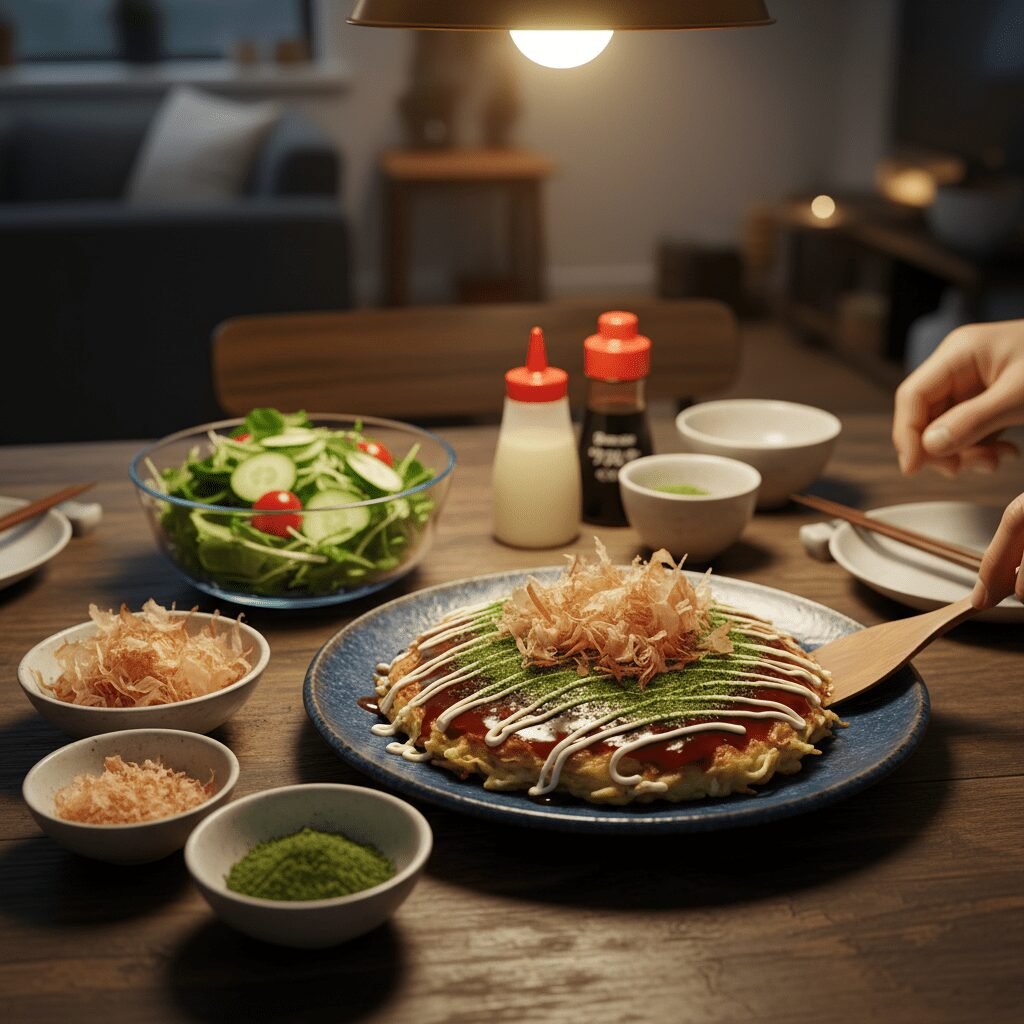
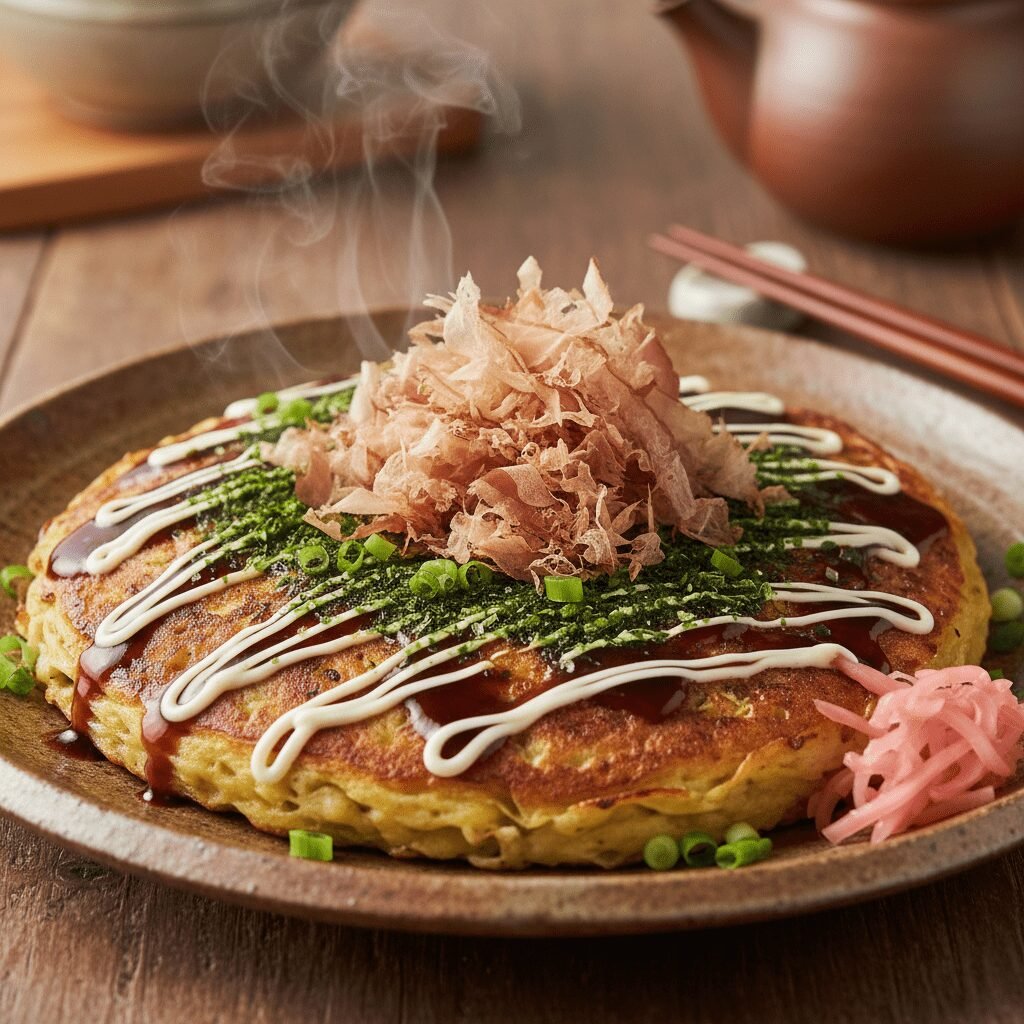
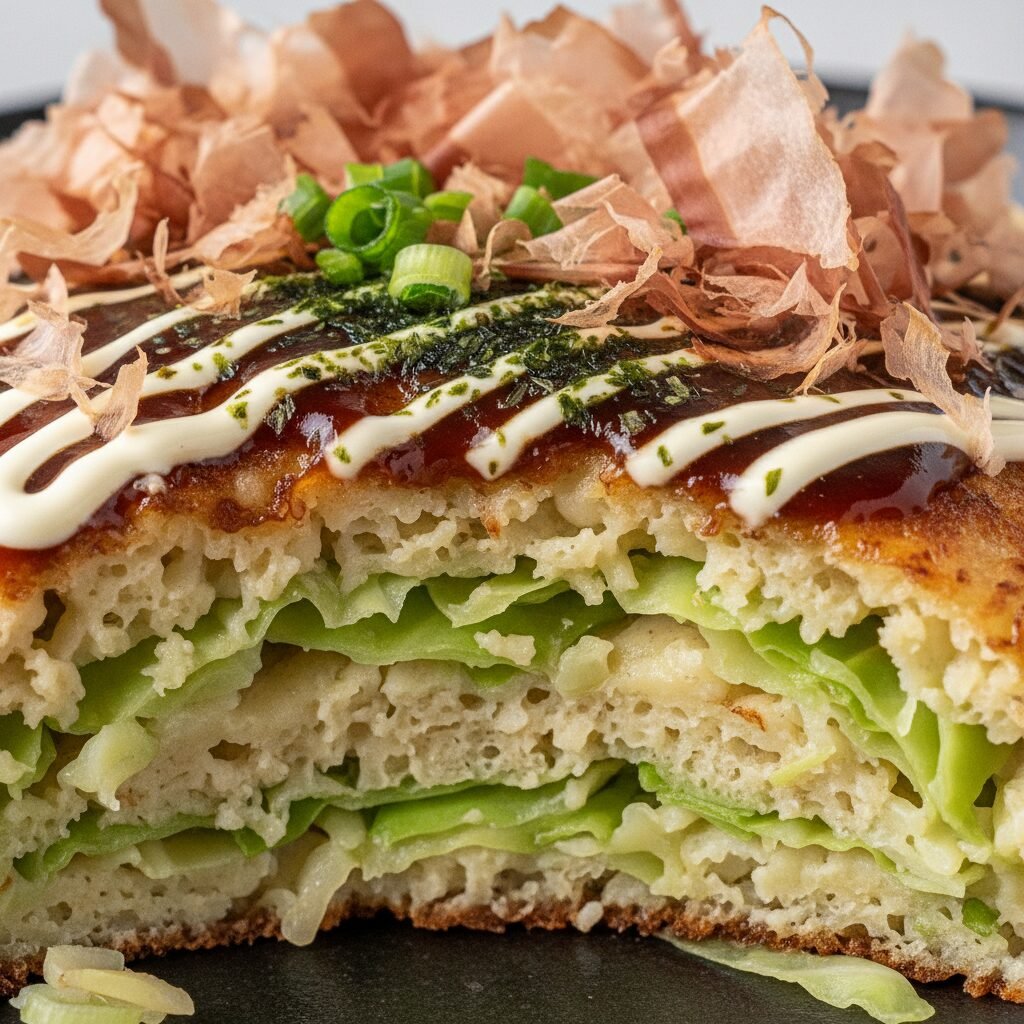
Finally, the toppings! The combination of savory Okonomiyaki sauce (a sweet and tangy Worcestershire-like sauce), creamy Japanese mayonnaise, salty bonito flakes (katsuobushi), and vibrant green nori (seaweed flakes) creates an explosion of flavors and textures. The umami from the sauce and bonito, the richness from the mayo, and the slight brininess from the nori all come together in perfect harmony, making each bite a complex and utterly delicious experience. It’s a symphony of savory, sweet, tangy, and rich all in one glorious pancake!
Why You’ll Love This Recipe
- ✓Incredibly budget-friendly, using simple pantry staples.
- ✓Highly customizable – perfect for using up leftover veggies and proteins.
- ✓Quick and easy to prepare, ideal for busy weeknights.
- ✓A fun and interactive meal that kids absolutely love.
- ✓Packed with savory umami flavors and delightful textures.
- ✓A fantastic way to introduce new Japanese flavors to your family.
Equipment You’ll Need
- ✓Large mixing bowl
- ✓Whisk
- ✓Sharp knife or mandoline for cabbage
- ✓Large non-stick skillet or griddle
- ✓Spatula
- ✓Measuring cups and spoons
- ✓Small bowls for toppings
Ingredients
- ✓For the Batter:
- ✓1 cup (120g) all-purpose flour
- ✓1/2 teaspoon baking powder
- ✓1/4 teaspoon salt
- ✓3/4 cup (180ml) dashi stock (or water + 1/2 tsp dashi powder)
- ✓1 large egg, lightly beaten
- ✓For the Pancakes:
- ✓5-6 cups (about 1/2 medium head) green cabbage, very thinly sliced or shredded
- ✓1/2 lb (225g) thinly sliced pork belly or bacon, cut into 2-inch pieces (optional, but highly recommended!)
- ✓2 green onions, thinly sliced, plus more for garnish
- ✓2 tablespoons vegetable oil, for cooking
- ✓For the Toppings (essential!):
- ✓Okonomiyaki sauce (store-bought or homemade)
- ✓Japanese mayonnaise (like Kewpie)
- ✓Katsuobushi (bonito flakes)
- ✓Aonori (dried green seaweed flakes)
Instructions
-
Step 1: Prepare the Batter
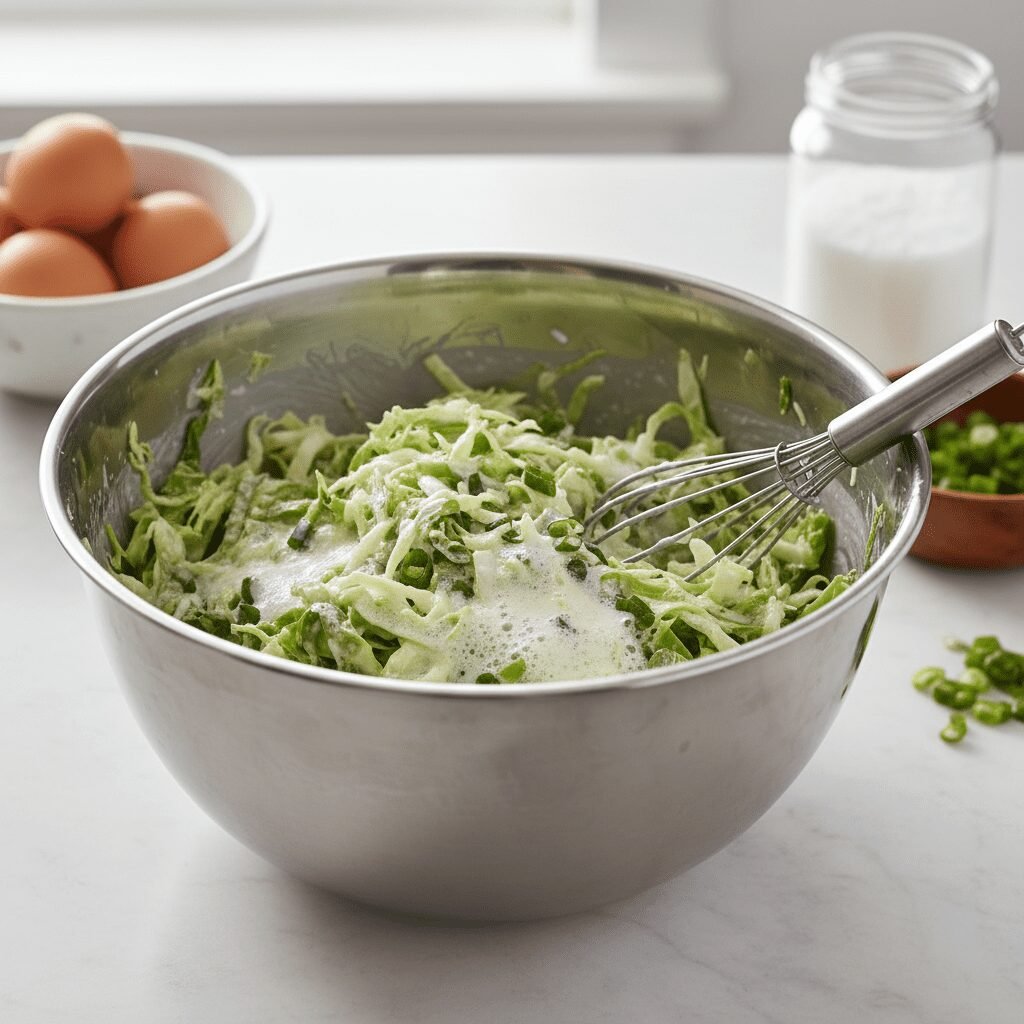
- In a large mixing bowl, whisk together the flour, baking powder, and salt. Gradually add the dashi stock and the beaten egg, whisking until you have a smooth, thick batter. Don’t overmix; a few small lumps are okay. Set aside.
-
Step 2: Prepare the Cabbage and Mix
- Finely shred or thinly slice the cabbage. The thinner, the better for a tender pancake! Add the shredded cabbage and most of the sliced green onions (reserve a little for garnish) to the batter. Gently fold everything together until the cabbage is evenly coated. Be careful not to mash the cabbage; you want it to retain some texture.
-
Step 3: Cook the Pork (if using)
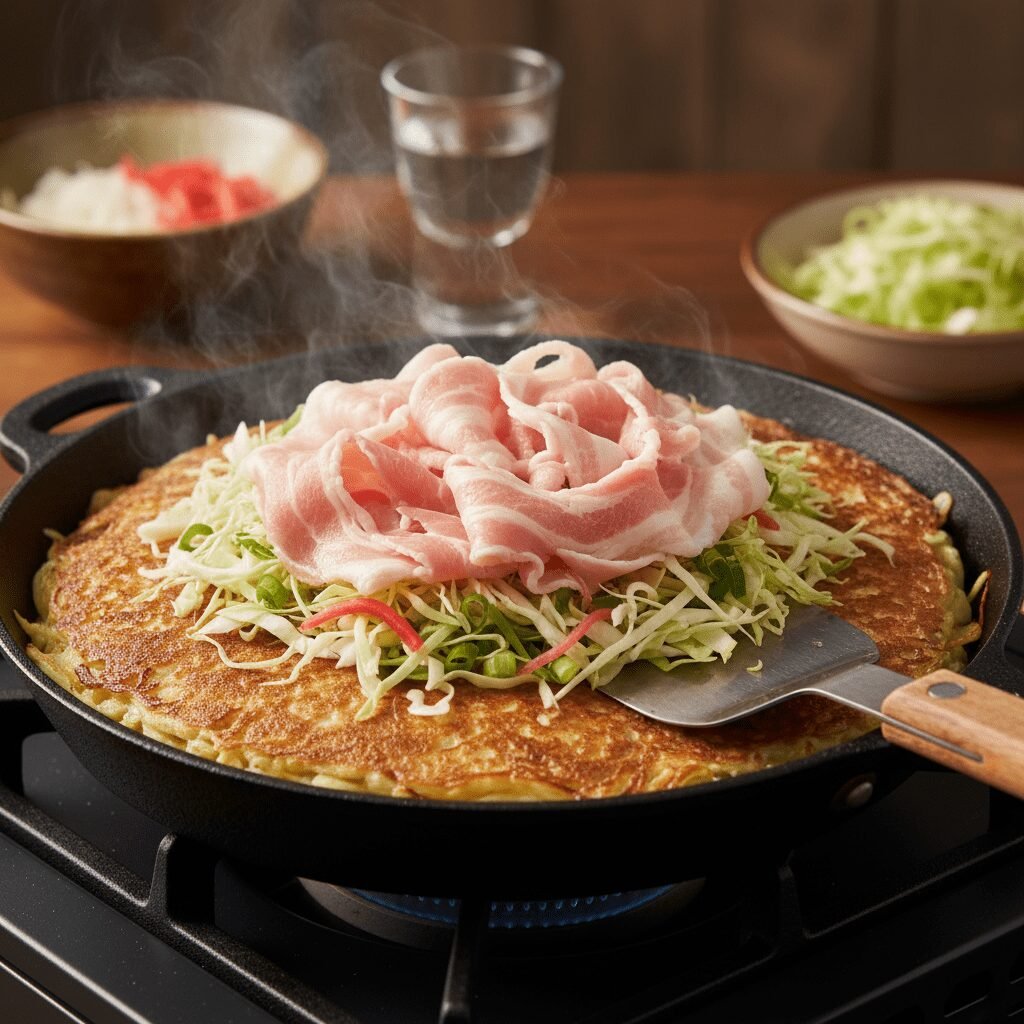
- Heat 1 tablespoon of vegetable oil in a large non-stick skillet or on a griddle over medium heat. If using pork belly or bacon, cook the slices until crispy and browned. Remove the pork from the skillet and set aside on a paper towel-lined plate. Drain off most of the rendered fat, leaving about 1 teaspoon in the pan.
-
Step 4: Cook the Okonomiyaki
- Add another tablespoon of vegetable oil to the skillet (or use the remaining fat if you didn’t cook pork). Spoon about 1/4 of the cabbage mixture into the hot skillet, forming a round pancake about 6-7 inches in diameter and about 1 inch thick. Gently press down on the top to flatten slightly. If using pork, arrange a few slices of the cooked pork on top of the raw batter.
-
Step 5: Flip and Finish
- Cook for 5-7 minutes on the first side, until the bottom is golden brown and crispy, and the edges start to look set. Carefully flip the pancake using a large spatula. Cook for another 5-7 minutes on the second side, or until golden brown and cooked through. You can cover the skillet for a few minutes during the second side cooking to help the cabbage steam and become tender. Repeat with the remaining batter, adding more oil as needed.
-
Step 6: Garnish and Serve
- Transfer the cooked Okonomiyaki to serving plates. Now for the fun part! Generously drizzle with Okonomiyaki sauce, then zig-zag with Japanese mayonnaise. Sprinkle with a good amount of katsuobushi (bonito flakes) – watch them dance! – and a dusting of aonori. Garnish with the reserved fresh green onions. Serve immediately and enjoy your delicious creation!
-
Step 7: Repeat and Enjoy!
- Continue cooking the remaining pancakes, adding oil to the pan as needed. Serve each one hot off the skillet for the best experience. Enjoy your homemade Okonomiyaki feast!
Expert Cooking Tips
- ✓Shredding Cabbage: The thinner you slice your cabbage, the more tender your Okonomiyaki will be. A mandoline slicer makes this super easy!
- ✓Don’t Overmix: When combining the cabbage and batter, fold gently. Overmixing can develop the gluten in the flour, leading to a tougher pancake.
- ✓Medium Heat is Key: Cook on medium heat to ensure the pancake cooks through without burning the outside. Patience is a virtue here!
- ✓The Flip: Use a large, sturdy spatula and be confident with your flip! If you’re nervous, you can use two spatulas.
- ✓Customize Your Fillings: Feel free to add shrimp, squid, thinly sliced beef, corn, or even cheese to the batter along with the cabbage.
- ✓Dashi Power: Dashi stock is essential for authentic flavor. You can find dashi powder at most Asian markets, or even some larger supermarkets. If you absolutely can’t find it, chicken broth or even water can be used, but the flavor won’t be quite the same.
Substitutions and Variations
This recipe is wonderfully flexible! If you don’t eat pork, you can easily substitute with thinly sliced chicken, shrimp, or even omit meat entirely for a delicious vegetarian version. For a vegetarian option, consider adding mushrooms or corn to the batter for extra texture and flavor. To make it vegan, use a flax egg or commercial egg replacer, ensure your dashi is kombu-based (seaweed only), and use vegan mayonnaise and Okonomiyaki sauce (some brands are already vegan, but check labels!). For gluten-free, simply swap the all-purpose flour for a gluten-free all-purpose flour blend. Just be mindful that the texture might be slightly different.
Common Mistakes to Avoid
One of the most common mistakes is overmixing the batter once the cabbage is added. This can make your pancakes tough instead of tender. Another pitfall is cooking on too high heat, which will burn the outside before the inside is cooked through. Be patient and keep the heat at a steady medium. Also, don’t skimp on the toppings! The sauces and bonito flakes are what truly make Okonomiyaki sing; without them, it’s just a savory cabbage pancake.
Serving Suggestions
Okonomiyaki is a meal in itself, but it pairs wonderfully with a simple side salad dressed with a light sesame vinaigrette. A bowl of miso soup or some steamed white rice can also complement the meal beautifully. For a fun family dinner, set out all the toppings on the table and let everyone customize their own pancake – it’s like a build-your-own Okonomiyaki bar!
Storage and Reheating Tips
Leftover Okonomiyaki can be stored in an airtight container in the refrigerator for up to 2-3 days. To reheat, I recommend gently warming it in a non-stick skillet over medium-low heat until heated through and the edges crisp up again. You can also microwave it, but it won’t have the same crispy texture. Add fresh toppings after reheating for the best experience!
Nutrition Facts (Estimated)
| Serving Size | 1 pancake |
| Calories | 350 kcal |
| Fat | 15g |
| Saturated Fat | 4g |
| Unsaturated Fat | 8g |
| Trans Fat | 0g |
| Cholesterol | 50mg |
| Sodium | 850mg |
| Carbohydrates | 40g |
| Fiber | 5g |
| Sugar | 10g |
| Protein | 15g |
Frequently Asked Questions
What is dashi stock and where can I find it?
Dashi is a fundamental Japanese soup stock, usually made from kombu (dried kelp) and katsuobushi (dried bonito flakes). It provides a rich umami flavor. You can find instant dashi powder at most Asian grocery stores or in the international aisle of larger supermarkets. Just mix it with hot water according to package directions.
Can I make Okonomiyaki ahead of time?
While the batter is best used fresh, you can shred the cabbage and prepare the dashi stock a day in advance. Store them separately in the refrigerator. Mix the batter and cabbage just before cooking for the best texture.
What if I don’t have Okonomiyaki sauce or Japanese mayonnaise?
Okonomiyaki sauce is crucial for the authentic flavor, but you can make a quick substitute by mixing Worcestershire sauce, ketchup, soy sauce, and a pinch of sugar. For Japanese mayonnaise (like Kewpie), regular mayonnaise can be used, but Kewpie has a richer, tangier flavor due to its use of only egg yolks and different vinegars.
My Okonomiyaki is falling apart when I try to flip it. What am I doing wrong?
This usually means the pancake hasn’t cooked long enough on the first side to set properly, or it’s too thick. Ensure you’re cooking on medium heat for at least 5-7 minutes until the edges look firm and the bottom is golden brown. Also, try to keep the pancakes to about 1 inch thick.
Can I add other vegetables?
Absolutely! Okonomiyaki means ‘as you like it’! Finely diced carrots, corn kernels, or even bean sprouts can be added to the batter. Just be mindful not to add too many watery vegetables, as it can make the batter too loose.
Is Okonomiyaki spicy?
No, traditional Okonomiyaki is not spicy. The flavor profile is savory, sweet, and tangy from the sauces. If you like a kick, you can add a dash of sriracha to your mayonnaise or sprinkle some shichimi togarashi (Japanese seven-spice blend) on top.
What are bonito flakes (katsuobushi) and aonori (seaweed flakes)?
Katsuobushi are dried, fermented, and smoked skipjack tuna flakes that add incredible umami. Aonori are dried green seaweed flakes that provide a subtle oceanic flavor and vibrant color. Both are essential for authentic Okonomiyaki flavor and can be found at Asian grocery stores.
Can I bake Okonomiyaki instead of pan-frying?
While you could technically bake it, the traditional pan-frying method is what gives Okonomiyaki its characteristic crispy exterior and tender interior. Baking would result in a different texture, more like a frittata or a thick pancake, and you’d miss out on those delicious browned bits.
Conclusion
And there you have it, my dear friends – a truly delightful and incredibly versatile recipe for Savory Japanese Okonomiyaki! I hope you feel inspired to bring this budget-friendly, flavor-packed dish into your kitchen. It’s more than just a meal; it’s an experience, a chance to get creative, and a wonderful way to gather your loved ones around the table for something truly special.
From its humble beginnings to its place as a beloved comfort food, Okonomiyaki truly embodies the spirit of ‘as you like it.’ So go ahead, experiment with your favorite fillings, pile on those delicious toppings, and savor every single bite. I promise, once you try this, it’s going to be a regular on your family’s menu. Happy cooking, and enjoy making memories around your delicious Okonomiyaki!