North Dakota Knoephla Soup: The Coziest Potato Dumpling Bowl
North Dakota Knoephla Soup: The Coziest Potato Dumpling Bowl
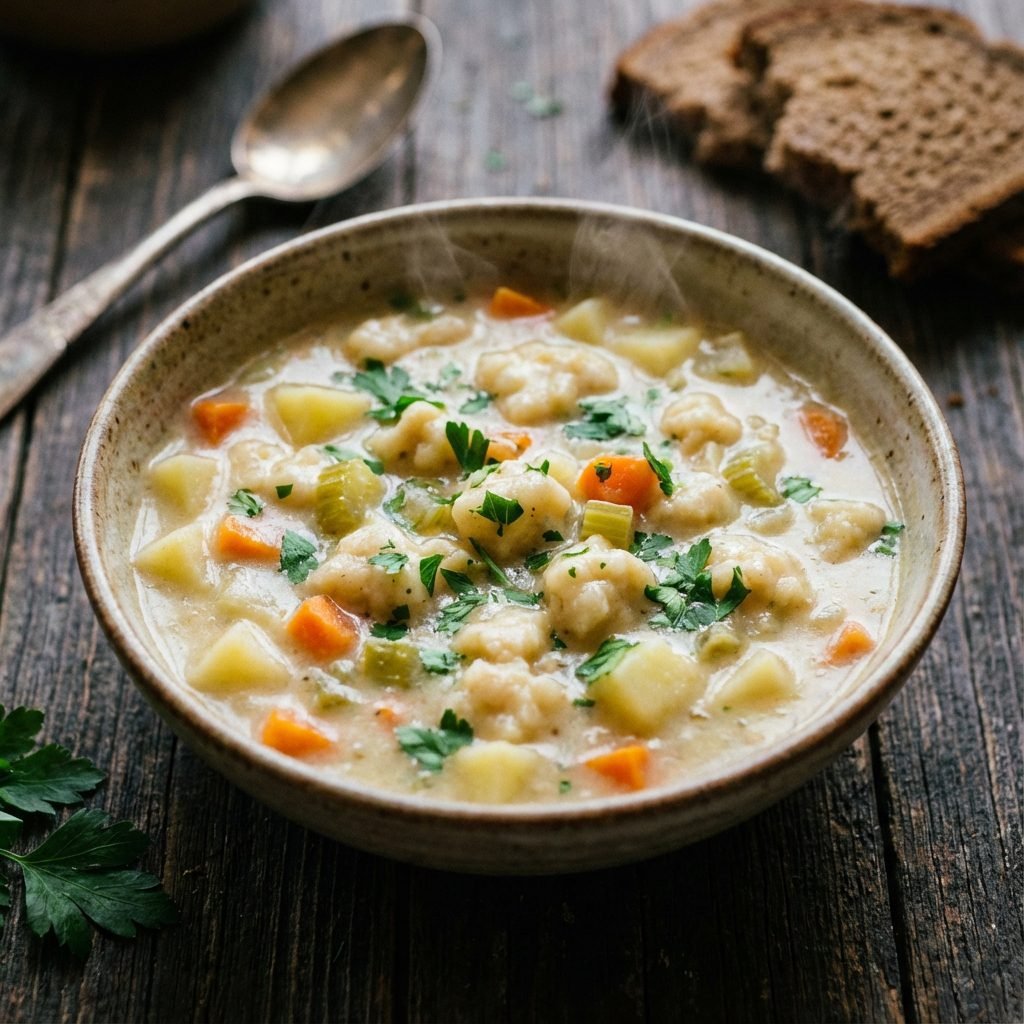
Step into a world of pure comfort with a bowl of North Dakota’s most beloved soup: Knoephla. Pronounced ‘nep-fla,’ this heartwarming dish is a culinary hug, a direct link to the German-Russian immigrants who settled the Great Plains and brought their cherished recipes with them. At its heart, Knoephla Soup is a creamy, rich potato soup made extraordinary by the addition of tender, chewy little dumplings. It’s the kind of food that warms you from the inside out, perfect for a chilly day, a family gathering, or any time you crave something simple, satisfying, and deeply nourishing. This recipe honors that tradition, delivering an authentic taste of Midwestern comfort that has been passed down through generations.
30 minutes
45 minutes
1 hour 15 minutes
6-8 servings
Soup
Simmering
German-Russian
Traditional
Why You’ll Love This Recipe
- Authentic German-Russian heritage recipe
- Features tender, homemade flour dumplings (Knoephla)
- A rich, creamy, and hearty potato soup base
- Made with simple, accessible pantry staples
- The ultimate one-pot comfort meal for chilly weather
Equipment You’ll Need
- Large Dutch oven or heavy-bottomed pot
- Large mixing bowl
- Whisk
- Chef’s knife
- Cutting board
- Wooden spoon or spatula
- Pizza cutter or bench scraper
- Ladle
Ingredients
- For the Knoephla Dumplings:
- 2 cups all-purpose flour
- 1 teaspoon salt
- 1/4 teaspoon black pepper
- 1/4 teaspoon nutmeg (optional, but traditional)
- 2 large eggs, beaten
- 1/4 to 1/2 cup milk or water
- For the Soup:
- 4 tablespoons unsalted butter
- 1 large yellow onion, diced
- 3 celery stalks, diced
- 3 medium carrots, peeled and diced
- 2 cloves garlic, minced
- 1/4 cup all-purpose flour
- 8 cups low-sodium chicken or vegetable broth
- 2 lbs Russet or Yukon Gold potatoes, peeled and cut into 1/2-inch cubes
- 1 teaspoon salt, or to taste
- 1/2 teaspoon black pepper, or to taste
- 1 1/2 cups heavy cream or half-and-half
- 1/4 cup fresh parsley, chopped
Instructions
- Step 1: Prepare the Knoephla Dough. In a large mixing bowl, whisk together 2 cups of flour, 1 teaspoon salt, 1/4 teaspoon pepper, and the nutmeg. Make a well in the center and add the beaten eggs. Begin to mix, gradually adding the milk or water (starting with 1/4 cup) until a shaggy, stiff dough forms. Do not overmix. Cover the bowl with a clean cloth and let the dough rest for at least 20 minutes.
- Step 2: Sauté the Vegetables. While the dough rests, melt the butter in a large Dutch oven over medium heat. Add the diced onion, celery, and carrots. Cook, stirring occasionally, until the vegetables have softened, about 8-10 minutes.
- Step 3: Create the Roux. Stir in the minced garlic and cook for another minute until fragrant. Sprinkle the 1/4 cup of flour over the vegetables and stir continuously for 1-2 minutes to cook out the raw flour taste. This forms a roux that will thicken the soup.
- Step 4: Build the Soup Base. Slowly pour in the broth, about a cup at a time, whisking constantly to prevent lumps and create a smooth base. Once all the broth is incorporated, bring the mixture to a gentle simmer.
- Step 5: Cook the Potatoes. Add the cubed potatoes to the pot, along with 1 teaspoon of salt and 1/2 teaspoon of pepper. Bring back to a simmer, then reduce the heat to medium-low, cover, and cook for 15-20 minutes, or until the potatoes are tender.
- Step 6: Form and Cook the Dumplings. Lightly flour a work surface. Roll the rested dough into long ropes about 1/2-inch thick. Use a knife or pizza cutter to slice the ropes into small, 1/2-inch pieces. Drop the dumplings one by one into the simmering soup. Stir gently to prevent sticking.
- Step 7: Simmer the Dumplings. Let the dumplings cook in the soup for 10-15 minutes, or until they are firm and cooked through. They will float to the surface when they are nearly done. You can test one by cutting it in half to ensure it’s not doughy inside.
- Step 8: Finish and Serve. Reduce the heat to low and slowly stir in the heavy cream. Be careful not to let the soup boil after adding the cream. Stir in the fresh parsley. Taste and adjust seasoning with more salt and pepper if needed. Serve hot.
Expert Cooking Tips
- Don’t Overwork the Dough: Mix the dumpling dough just until it comes together. Overworking it can result in tough, dense dumplings instead of light and chewy ones.
- Uniform Dumpling Size: Try to cut your knoephla into similar-sized pieces to ensure they all cook evenly in the same amount of time.
- Temper the Cream: To prevent the cream from curdling, you can ‘temper’ it by whisking a ladleful of the hot soup broth into the cream before slowly stirring the warmed cream mixture back into the pot.
- Simmer, Don’t Boil: Once the cream is added, keep the soup at a gentle simmer. Boiling can cause the dairy to separate.
Substitutions and Variations
For a vegetarian version, use a quality vegetable broth instead of chicken broth. Heavy cream provides the richest flavor, but half-and-half or even evaporated milk can be used for a slightly lighter soup. For a shortcut, some people use canned biscuit dough, cut into pieces, though homemade knoephla are highly recommended for authentic texture and flavor.
Common Mistakes to Avoid
The most common mistake is creating tough dumplings by over-mixing the dough. Mix only until the ingredients are combined. Another pitfall is adding the cream while the soup is at a rolling boil, which can cause it to curdle. Always lower the heat before stirring in dairy. Finally, be sure not to undercook the dumplings; test one to ensure the center is fully cooked before you serve.
Serving Suggestions
Serve Knoephla Soup piping hot in generous bowls, garnished with extra fresh parsley or chives. It is a complete meal on its own, but pairs beautifully with a slice of crusty rye or pumpernickel bread for dipping. A simple green salad with a light vinaigrette can provide a fresh contrast to the soup’s richness.
Storage and Reheating Tips
Store leftover soup in an airtight container in the refrigerator for up to 4 days. Note that the dumplings will continue to absorb liquid, making the soup thicker upon reheating. Reheat gently on the stovetop over low heat, adding a splash of milk or broth to thin it to your desired consistency. Freezing is generally not recommended, as the cream-based broth can separate and the texture of the potatoes can become mealy upon thawing.
Nutrition Facts (Estimated)
| Serving Size | Approx. 1.5 cups |
| Calories | 480 kcal |
| Fat | 22g |
| Saturated Fat | 13g |
| Unsaturated Fat | 7g |
| Trans Fat | 0g |
| Cholesterol | 85mg |
| Sodium | 950mg |
| Carbohydrates | 58g |
| Fiber | 5g |
| Sugar | 6g |
| Protein | 14g |
Frequently Asked Questions
What does ‘Knoephla’ mean?
Knoephla is a German word that translates to ‘little button’ or ‘little knob,’ which perfectly describes the small, button-like shape of the dumplings.
Can I make the dough ahead of time?
Yes, you can prepare the dumpling dough, wrap it tightly in plastic wrap, and refrigerate it for up to 24 hours before you plan to make the soup.
My soup seems too thick/thin. How can I fix it?
If your soup is too thick, simply stir in a little more broth or milk until it reaches your desired consistency. If it’s too thin, you can let it simmer uncovered for a bit longer to reduce, or create a small slurry of 1 tablespoon cornstarch and 2 tablespoons cold water, then whisk it into the simmering soup until it thickens.
Conclusion
This North Dakota Knoephla Soup is more than just a recipe; it’s a taste of history, a bowl of comfort, and a celebration of simple, wholesome ingredients. Every spoonful, rich with creamy potatoes and delightfully chewy dumplings, tells a story of heritage and home. We hope this recipe brings the cozy, comforting spirit of the heartland right into your kitchen.