Korean Budae Jjigae: The Viral Army Stew Made Entirely From Canned Goods
Korean Budae Jjigae: The Viral Army Stew Made Entirely From Canned Goods
Get ready for a flavor explosion with this incredible Budae Jjigae recipe, made super easy with pantry staples! This viral Korean Army Stew is hearty, spicy, and perfect for a cozy family meal, proving that deliciousness can come from the simplest ingredients.
15 minutes
25 minutes
40 minutes
4-6 servings
Main Dish
Stovetop Simmer
Korean
Omnivore
Oh, sweet friends, do I have a treat for you today! If you’re anything like me, you’re always on the hunt for those magical recipes that are both incredibly delicious and surprisingly simple to whip up, especially on those busy weeknights. Well, buckle up, because we’re diving headfirst into the wonderful world of Korean Budae Jjigae, or as it’s affectionately known, Army Stew! But here’s the twist that makes this recipe truly special and perfect for our busy lives: we’re making it almost entirely from canned goods and pantry staples!
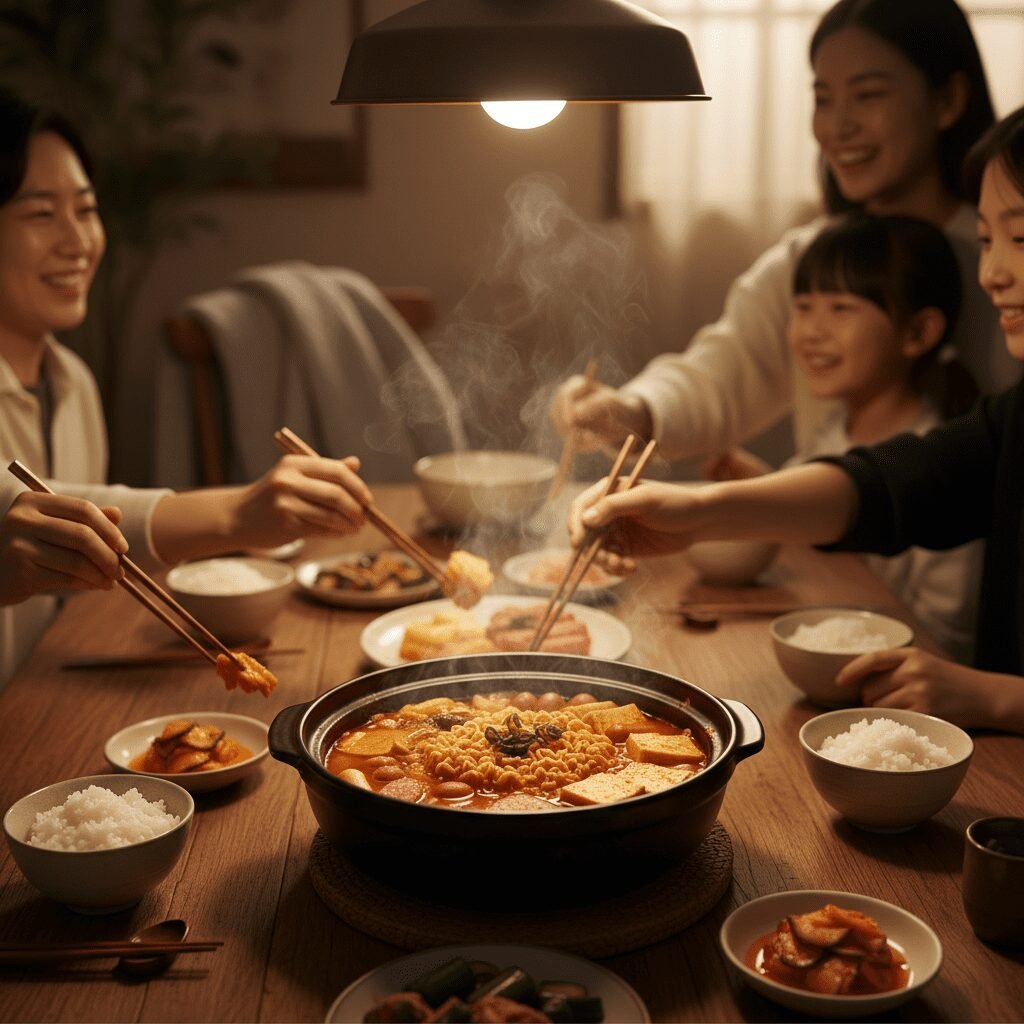
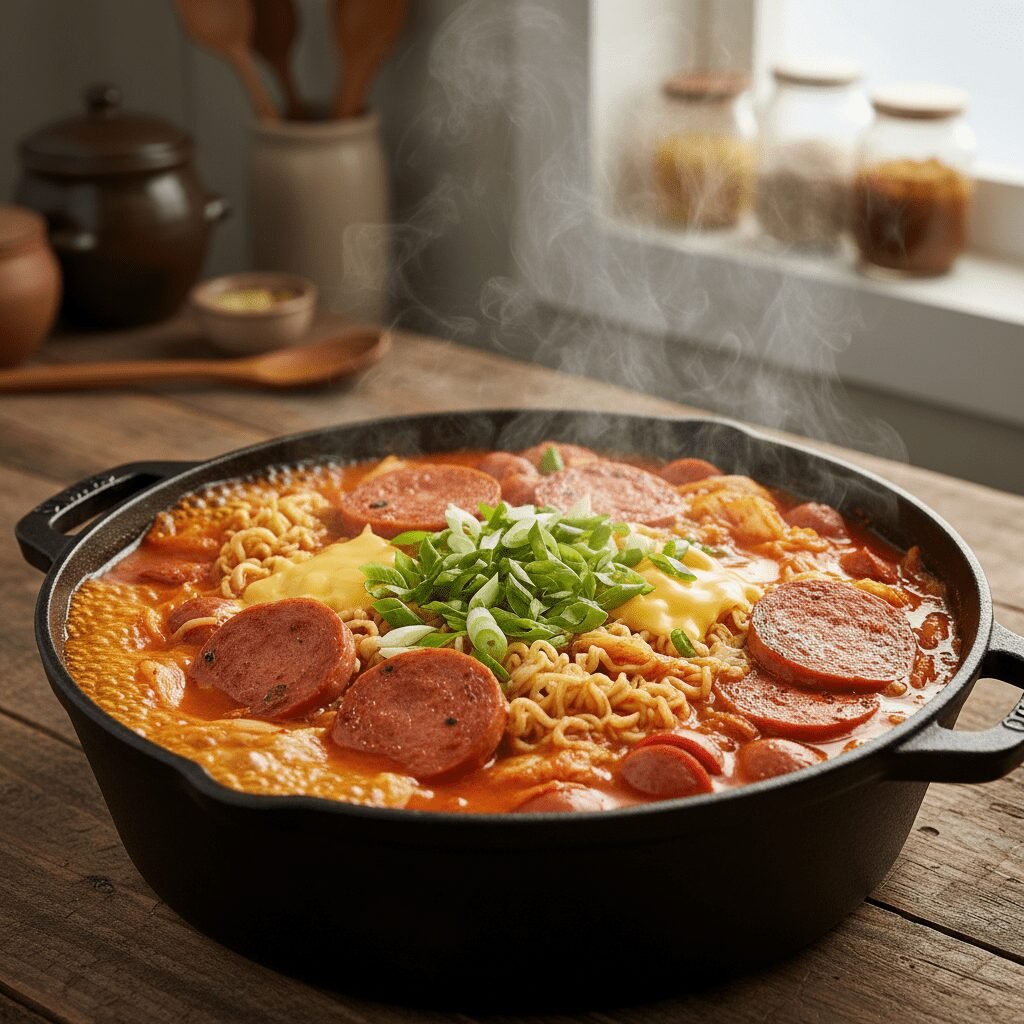
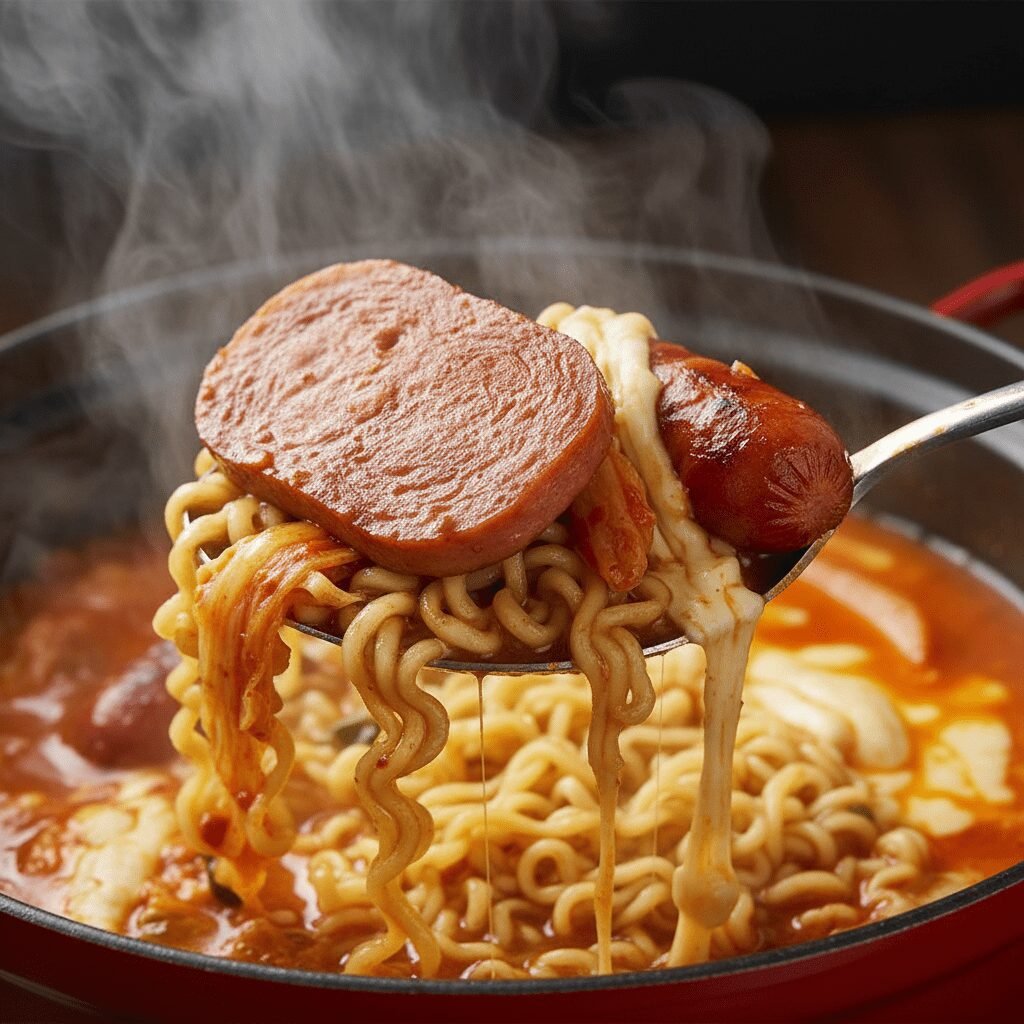
Imagine a bubbling pot of savory, spicy, and deeply comforting stew, brimming with all sorts of delightful textures and flavors. Think tender spam, juicy hot dogs, chewy ramen noodles, and a vibrant, spicy broth that warms you from the inside out. This isn’t just a meal; it’s an experience, a culinary hug in a bowl that’s perfect for sharing with your loved ones. And the best part? No fancy ingredients or complicated techniques required. If you’ve got a can opener and a craving for something truly spectacular, you’re already halfway there!
This recipe is a testament to resourcefulness and flavor, proving that even humble ingredients can create something extraordinary. It’s budget-friendly, incredibly satisfying, and guaranteed to become a new family favorite. So, let’s gather our canned treasures and get ready to create some kitchen magic together!
History & Origins
The story of Budae Jjigae is as rich and heartwarming as the stew itself, born out of necessity and ingenuity during a challenging time in Korean history. After the Korean War, food was scarce, and American military bases provided a source of surplus ingredients. Korean cooks, with their incredible creativity and resilience, began to incorporate these readily available items – like canned ham (Spam!), hot dogs, and baked beans – into traditional Korean stews. They combined these new ingredients with classic Korean staples like kimchi, gochujang (Korean chili paste), and gochugaru (Korean chili flakes) to create something truly unique and utterly delicious.
The name “Budae Jjigae” literally translates to “army base stew,” a direct nod to its origins. It quickly became a beloved comfort food, symbolizing a time when communities came together to make the most of what they had. What started as a dish born from scarcity evolved into a celebrated culinary icon, cherished for its hearty flavors and comforting warmth. Today, it’s enjoyed by millions worldwide, a testament to its deliciousness and its fascinating history. It’s a beautiful reminder that sometimes, the most incredible dishes come from the most unexpected places.
Why This Recipe Works
So, why does this “canned goods only” Budae Jjigae work so incredibly well? It’s all about the beautiful symphony of flavors and textures that come together in that bubbling pot! First, let’s talk about the stars of our show: the canned meats. Spam, with its unique savory, slightly salty, and umami-rich profile, provides a fantastic base flavor that renders out just enough fat to enrich the broth. The canned hot dogs (or Vienna sausages) add another layer of savory meatiness and a delightful chew. These processed meats, while simple, are packed with flavor enhancers that contribute deeply to the overall taste of the stew.
Then we have the Korean flavor powerhouses: kimchi and gochujang. Fermented kimchi brings a complex sourness, a touch of spice, and incredible depth of flavor that can’t be replicated. Gochujang, the vibrant red chili paste, provides a sweet, savory, and spicy kick that is the heart and soul of Korean stews. When these combine with a good quality broth (even from a can or bouillon!), they create a rich, robust, and incredibly addictive base.
The addition of canned baked beans might seem unconventional, but trust me, it’s a traditional touch that adds a subtle sweetness and a creamy texture that beautifully balances the spice. The starch from the beans also helps to slightly thicken the broth. Finally, the ramen noodles soak up all those glorious flavors, becoming soft, chewy, and utterly satisfying. The cheese slice, melting into the hot broth, adds a creamy, salty, and slightly tangy finish that ties everything together. It’s a masterclass in flavor layering, proving that simple, accessible ingredients can create a dish that’s far greater than the sum of its parts!
Why You’ll Love This Recipe
- ✓Super easy to make with readily available canned goods.
- ✓Hearty, comforting, and incredibly flavorful Korean stew.
- ✓Perfect for busy weeknights or cozy family gatherings.
- ✓Customizable with your favorite canned ingredients.
- ✓A fantastic way to use up pantry staples.
- ✓Budget-friendly and satisfying for the whole family.
Equipment You’ll Need
- ✓Large pot or shallow Dutch oven
- ✓Cutting board
- ✓Sharp knife
- ✓Measuring cups and spoons
- ✓Ladle
- ✓Serving bowls
Ingredients
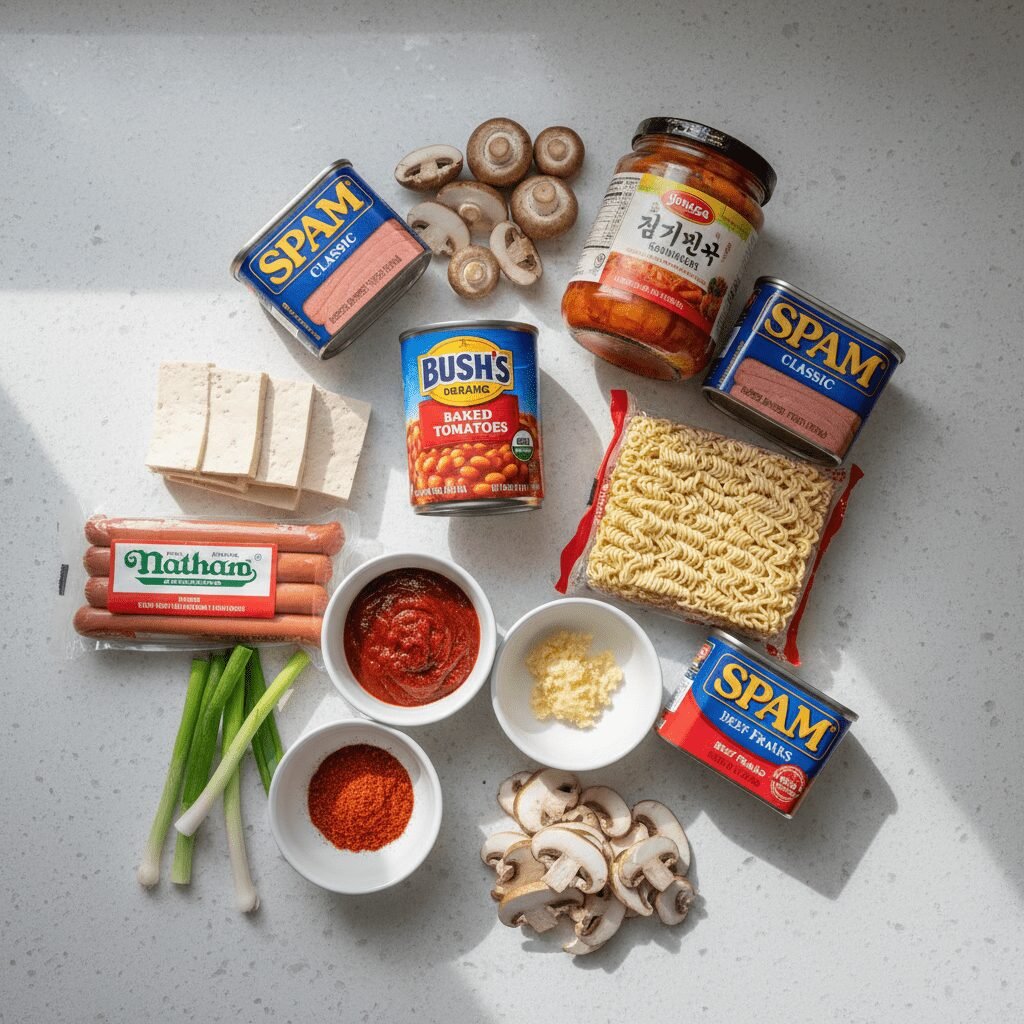
- ✓1 (12-ounce) can Spam, sliced into 1/4-inch thick pieces
- ✓1 (10-ounce) can hot dogs or Vienna sausages, sliced diagonally
- ✓1 (15-ounce) can baked beans in tomato sauce, undrained
- ✓1 (14.5-ounce) can diced tomatoes, undrained
- ✓1 (15-ounce) can kimchi, roughly chopped (or 1.5 cups fresh kimchi if available)
- ✓4 cups chicken or vegetable broth (from a can or bouillon cubes dissolved in water)
- ✓2 blocks instant ramen noodles (flavor packets discarded)
- ✓1/2 cup canned mushrooms, sliced and drained
- ✓1/2 cup canned corn, drained
- ✓1/2 cup canned green onions, chopped (or fresh if available)
- ✓2 slices American cheese or processed cheese slices
- ✓For the Sauce:
- ✓2 tablespoons gochujang (Korean chili paste)
- ✓1 tablespoon gochugaru (Korean chili flakes)
- ✓1 tablespoon soy sauce (from a bottle)
- ✓1 tablespoon minced garlic (from a jar or fresh)
- ✓1 teaspoon sugar
- ✓1/2 teaspoon black pepper
Instructions
- Prepare the Sauce: In a small bowl, combine the gochujang, gochugaru, soy sauce, minced garlic, sugar, and black pepper. Mix well until a smooth paste forms. Set aside.
- Arrange Ingredients: In a large pot or shallow Dutch oven, artfully arrange the sliced Spam, hot dogs, chopped kimchi, diced tomatoes (undrained), baked beans (undrained), canned mushrooms, and canned corn. Try to keep them in separate sections for a beautiful presentation.
- Add Broth and Sauce: Pour the chicken or vegetable broth over the ingredients in the pot. Spoon the prepared sauce mixture into the center of the pot.
- Bring to a Simmer: Place the pot over medium-high heat and bring the stew to a gentle boil. Once boiling, reduce the heat to medium-low, cover, and let it simmer for about 10-15 minutes, allowing the flavors to meld beautifully.
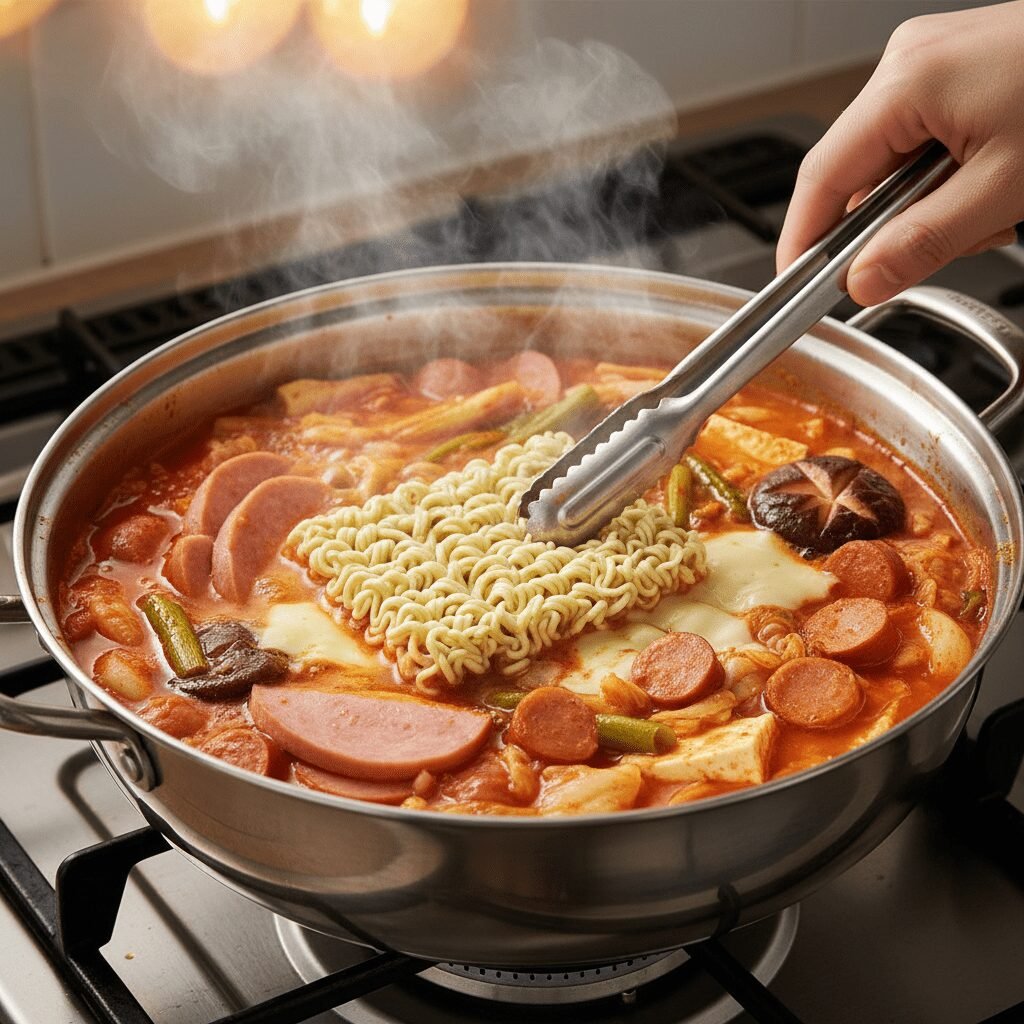
- Add Ramen and Cheese: Uncover the pot. Add the two blocks of instant ramen noodles directly into the simmering stew, pushing them down gently so they are submerged in the broth. Place the slices of American cheese on top of the ramen noodles.
- Cook Until Noodles are Tender: Continue to simmer, uncovered, for another 5-7 minutes, or until the ramen noodles are tender and the cheese has melted and started to incorporate into the broth.
- Garnish and Serve: Sprinkle the chopped canned green onions over the top. Serve immediately, directly from the pot at the table, with plenty of ladles for everyone to enjoy this hearty, comforting stew!
Expert Cooking Tips
- ✓Don’t Overcrowd the Pot: While it’s tempting to add more, ensure there’s enough room for the broth to bubble and the noodles to cook evenly.
- ✓Taste and Adjust: Before adding the ramen, taste the broth. If you prefer it spicier, add a little more gochugaru. If it needs more savory depth, a splash more soy sauce can help.
- ✓Noodle Timing is Key: Add the ramen noodles towards the end of the cooking process to prevent them from becoming mushy. You want them perfectly chewy!
- ✓Cheese for Creaminess: The processed cheese is traditional and adds a wonderful creaminess and slight tang. Don’t skip it!
- ✓Serve Hot: Budae Jjigae is best enjoyed piping hot, straight from the pot. A portable burner at the table makes for a fun, interactive dining experience.
Substitutions and Variations
One of the most wonderful things about Budae Jjigae is its flexibility! While this recipe focuses on canned goods, you can absolutely get creative. If you don’t have Spam, canned corned beef or even canned chicken could work in a pinch, though the flavor profile will shift. For the hot dogs, canned cocktail sausages or even sliced canned pepperoni could be interesting. If you’re out of baked beans, a small can of kidney beans or cannellini beans, rinsed and drained, could add a similar texture, though you’d lose the subtle sweetness. No canned kimchi? Fresh is always fantastic, but if you’re truly sticking to cans, you might find some specialty Asian markets carry canned kimchi. If not, a little extra vinegar and chili flakes can mimic some of the tang and spice. Feel free to swap out canned mushrooms for canned bamboo shoots or water chestnuts for different textures. And if you don’t have ramen, canned udon noodles or even spaghetti broken into shorter pieces can be used, just adjust cooking time accordingly. The beauty is in making it your own with what you have!
Common Mistakes to Avoid
Even with a seemingly simple dish like Budae Jjigae, there are a few common pitfalls to watch out for to ensure your stew is absolutely perfect. The first is not letting the flavors meld. While it’s a quick dish, that initial 10-15 minute simmer before adding the noodles is crucial for the sauce and broth to really come together and infuse all the ingredients with their deliciousness. Another mistake is overcooking the ramen noodles. Nobody likes mushy noodles! Add them towards the end and keep an eye on them; they cook surprisingly fast in the hot broth. Also, skipping the cheese might seem like a healthy choice, but it truly adds a unique creamy, salty, and slightly tangy element that is characteristic of authentic Budae Jjigae. It balances the spice beautifully. Finally, under-seasoning the broth can lead to a bland stew. Don’t be afraid to taste and adjust the sauce before adding the noodles. A little extra soy sauce or gochugaru can make all the difference in achieving that perfect balance of savory, spicy, and umami.
Serving Suggestions
Budae Jjigae is a meal in itself, a complete and satisfying experience! It’s traditionally served family-style, directly from the pot, with everyone gathered around, ladling out portions into individual bowls. It’s the ultimate communal dining experience! While it’s incredibly hearty on its own, a bowl of warm, fluffy steamed white rice is the perfect accompaniment to soak up all that glorious, spicy broth. You can also serve it with a simple side of pickled radishes or cucumber kimchi for a refreshing crunch that cuts through the richness. For an extra touch, a sprinkle of toasted sesame seeds or a drizzle of sesame oil just before serving can elevate the flavors even further. Don’t forget to have extra napkins handy, because this is a dish you’ll want to slurp and savor every single drop of!
Storage and Reheating Tips
Leftover Budae Jjigae is a true treasure, and often tastes even better the next day as the flavors have had more time to deepen! To store, allow the stew to cool completely to room temperature. Then, transfer it to an airtight container. It will keep beautifully in the refrigerator for up to 3-4 days. When reheating, you might find the noodles have absorbed a lot of the broth. Simply add a splash more chicken or vegetable broth (or even just water) to loosen it up before gently reheating on the stovetop over medium-low heat until warmed through. You can also microwave individual portions. I don’t typically recommend freezing Budae Jjigae, as the noodles and some of the canned meats can change texture upon thawing and reheating, becoming a bit mushy. It’s best enjoyed fresh or within a few days from the fridge!
Nutrition Facts (Estimated)
| Serving Size | 1.5 cups |
| Calories | 650 kcal |
| Fat | 45g |
| Saturated Fat | 18g |
| Unsaturated Fat | 20g |
| Trans Fat | 0.5g |
| Cholesterol | 90mg |
| Sodium | 1800mg |
| Carbohydrates | 40g |
| Fiber | 5g |
| Sugar | 12g |
| Protein | 25g |
Frequently Asked Questions
Can I make Budae Jjigae less spicy?
Absolutely! The spice level primarily comes from the gochugaru (chili flakes) and gochujang (chili paste). You can reduce the amount of gochugaru or omit it entirely if you prefer a milder stew. You can also use less gochujang, but it will slightly alter the overall flavor profile.
What kind of ramen noodles should I use?
Any instant ramen noodles will work! Just discard the flavor packets, as we’re making our own delicious broth from scratch. The plain noodle blocks are what you’re after.
Is it okay to use fresh ingredients instead of canned?
While this recipe focuses on canned goods for convenience, you can certainly substitute fresh ingredients where possible! Fresh kimchi, fresh mushrooms, and fresh green onions would be wonderful additions. Just ensure you’re still getting that “canned goods” vibe for the Spam and hot dogs to keep it authentic to the dish’s spirit!
Can I add other vegetables?
Yes, absolutely! If you want to sneak in more veggies, consider adding canned bamboo shoots, canned water chestnuts, or even some canned spinach (drained well) towards the end of cooking.
Why do you add cheese? Is it traditional?
Yes, processed cheese slices are a surprisingly traditional and beloved addition to Budae Jjigae! They melt into the broth, adding a wonderful creaminess, a touch of saltiness, and a unique tang that balances the spicy flavors beautifully. Don’t knock it ’til you try it!
Can I prepare the sauce ahead of time?
Yes, you can! Mix the sauce ingredients together and store it in an airtight container in the refrigerator for up to 3-4 days. This makes meal prep even faster on a busy day.
What if I don’t have a large pot?
A large, deep skillet or a Dutch oven works perfectly. The key is to have enough surface area to arrange the ingredients and enough depth for the broth and noodles.
Is this dish gluten-free?
Unfortunately, traditional Budae Jjigae with Spam, hot dogs, ramen, and soy sauce is typically not gluten-free. Spam and hot dogs often contain gluten, as do most instant ramen noodles and regular soy sauce. You would need to seek out gluten-free alternatives for all these ingredients to make it GF.
Conclusion
And there you have it, my dear friends – a truly spectacular Korean Budae Jjigae, made with love and a little help from our trusty pantry! This dish is more than just a recipe; it’s a celebration of comfort, community, and the incredible magic that happens when simple ingredients come together. Whether you’re a seasoned Korean food lover or just dipping your toes into this vibrant cuisine, this “canned goods only” version is the perfect entry point. It’s proof that you don’t need a gourmet kitchen or exotic ingredients to create something truly memorable and utterly delicious for your family. So go ahead, gather your loved ones, and share a bubbling pot of this amazing Army Stew. I promise, it’s a meal that will bring smiles, warmth, and happy tummies all around. Happy cooking, mamas!