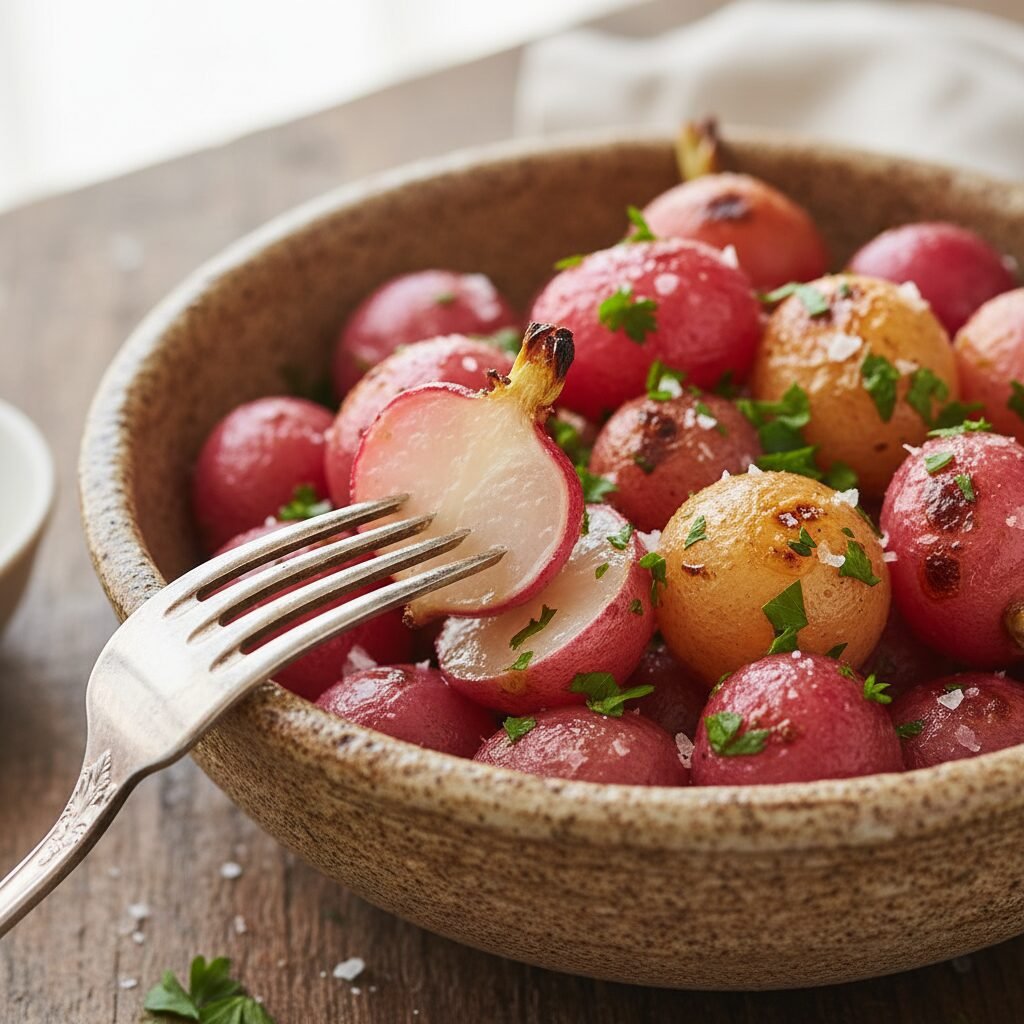
Keto ‘Potatoes’: Why Roasted Radishes Are The Ultimate Low Carb Swap
Keto ‘Potatoes’: Why Roasted Radishes Are The Ultimate Low Carb Swap
For anyone embarking on a ketogenic or low-carbohydrate lifestyle, the list of foods to avoid can feel daunting. At the top of that list, sitting majestically yet menacingly, is the humble potato. Mashed, fried, roasted, or baked, potatoes are a cornerstone of comfort food, and their absence is often keenly felt. The search for a satisfying substitute is a common quest, leading many through the winding paths of cauliflower, celeriac, and turnips. But what if the ultimate potato swap has been hiding in plain sight, disguised as a crisp, peppery salad garnish? Enter the radish.
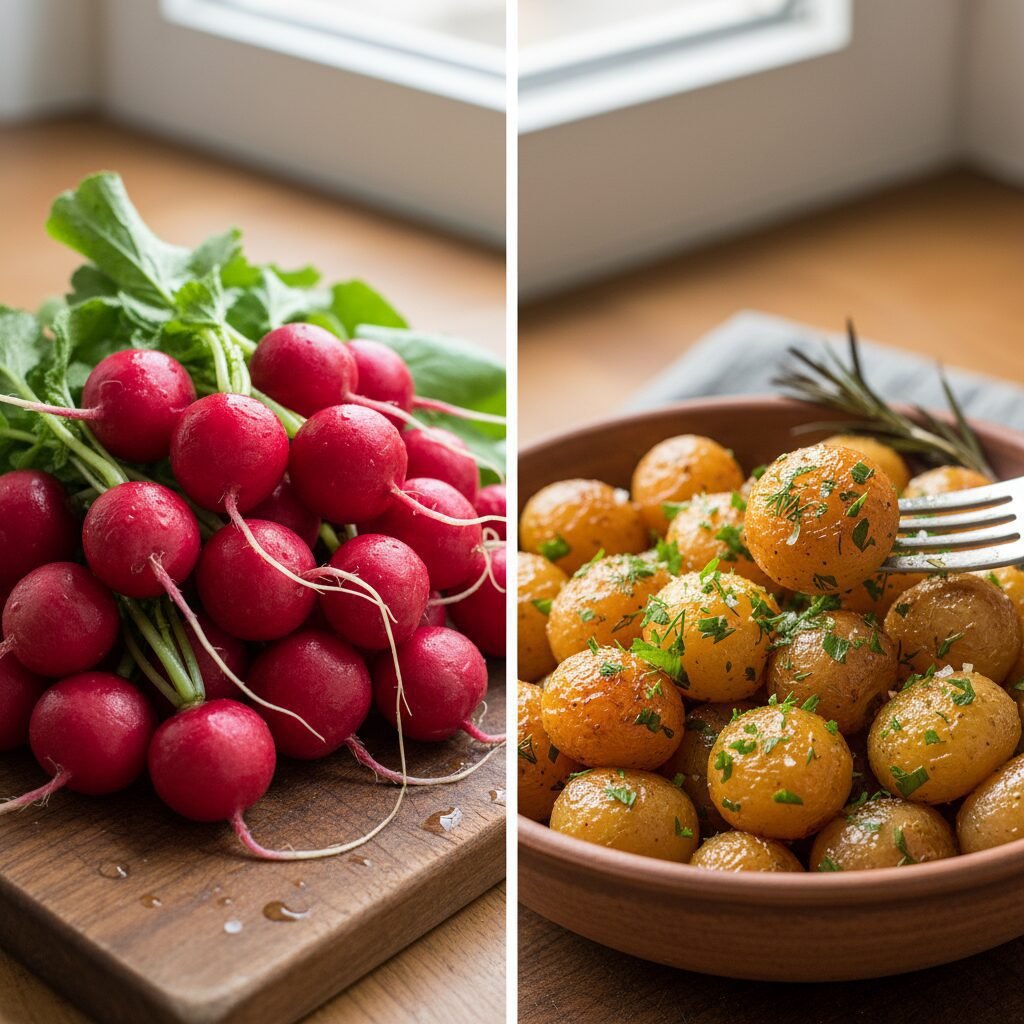
When eaten raw, radishes are crunchy and assertive, with a spicy bite that seems a world away from a fluffy baked potato. However, when subjected to the transformative heat of an oven, a remarkable culinary alchemy occurs. The sharp, peppery notes mellow into a mild, savory, and subtly sweet flavor. The crisp texture softens into a tender, starchy-like consistency that is astonishingly similar to a well-roasted potato. This recipe is more than just a substitute; it’s a revelation. It proves that a low-carb diet doesn’t have to be about deprivation, but about delicious discovery. Prepare to be amazed as we turn this unassuming root vegetable into your new favorite keto-friendly side dish.
10 minutes
25-30 minutes
35-40 minutes
4 servings
Side Dish
Roasting
American
Keto, Low-Carb, Gluten-Free, Vegan
Why You’ll Love This Recipe
- Incredibly low in carbohydrates, making it perfect for a ketogenic diet.
- Transforms from sharp and peppery to mild and savory when roasted.
- Achieves a tender, fork-soft texture that mimics roasted potatoes.
- A simple, versatile side dish that pairs well with almost any protein.
- Ready in under 40 minutes with minimal prep time.
Equipment You’ll Need
- Rimmed baking sheet
- Large mixing bowl
- Chef’s knife or paring knife
- Cutting board
- Spatula
Ingredients
- 2 lbs (about 4 bunches) fresh radishes, preferably similar in size
- 3 tablespoons extra virgin olive oil or avocado oil
- 1 teaspoon sea salt (or to taste)
- 1/2 teaspoon black pepper, freshly ground
- 1 teaspoon garlic powder
- 1/2 teaspoon onion powder
- 1/2 teaspoon smoked paprika
- Optional: 1 tablespoon fresh rosemary or thyme, finely chopped
Instructions
- Preheat your oven to 425°F (220°C). Position a rack in the middle of the oven. A high heat is crucial for achieving a good roast rather than just steaming the vegetables.
- Prepare the radishes. Wash them thoroughly under cold running water and pat them completely dry with a clean kitchen towel or paper towels. This step is vital for browning. Trim off the root ends and the leafy green tops.
- Cut the radishes into uniform pieces. For small radishes, you can leave them whole or simply halve them. For larger radishes, quarter them. The goal is to have pieces of a roughly equal size to ensure they cook evenly.
- In a large mixing bowl, combine the prepared radishes with the olive oil, sea salt, black pepper, garlic powder, onion powder, and smoked paprika. If you’re using dried herbs, add them now. Toss everything together until the radishes are evenly and generously coated in oil and spices.
- Spread the seasoned radishes onto the rimmed baking sheet in a single, even layer. Do not overcrowd the pan. The radishes should have space between them to allow hot air to circulate, which promotes caramelization and browning. Use two baking sheets if necessary.
- Place the baking sheet in the preheated oven and roast for 15 minutes.
- After 15 minutes, remove the baking sheet from the oven and use a spatula to toss or flip the radishes. This ensures they brown evenly on all sides.
- Return the baking sheet to the oven and continue to roast for another 10-15 minutes, or until the radishes are golden brown, slightly wrinkled, and fork-tender. The exact time will depend on the size of your radishes.
- Once cooked to perfection, remove from the oven. If using fresh herbs like rosemary or parsley, toss them with the hot radishes now. The residual heat will release their aromatic oils.
- Taste and adjust seasoning if necessary. Serve immediately while hot for the best texture and flavor.
Expert Cooking Tips
- Ensure Radishes Are Bone Dry: Any excess moisture will create steam, which prevents the radishes from browning and developing that desirable roasted texture. Pat them very dry after washing.
- Don’t Crowd the Pan: This is the golden rule of roasting. Give your radishes plenty of space on the baking sheet. If they are too close together, they will steam and become soft and watery instead of caramelized and tender.
- Use High, Consistent Heat: A hot oven (425°F / 220°C) is essential. It helps the exterior of the radishes to brown quickly while the inside becomes tender, perfectly mimicking the texture of a roasted potato.
- Uniform Sizing is Key: Cut your radishes into pieces of a similar size to promote even cooking. This prevents you from having a mix of perfectly cooked, burnt, and undercooked pieces in the same batch.
- Don’t Skimp on the Fat: A good coating of oil is necessary to conduct heat, prevent sticking, and help the spices adhere. It’s also crucial for flavor and achieving a satisfying mouthfeel.
Substitutions and Variations
While this recipe celebrates the radish, you can easily adapt the seasoning blend. For a different flavor profile, try a mix of cumin and chili powder for a smoky, Southwestern feel. An Italian herb blend with oregano and basil also works wonderfully. For the fat, melted ghee or coconut oil can be used in place of olive or avocado oil, each adding a unique flavor.
Common Mistakes to Avoid
The most common mistake is under-roasting. If you pull the radishes out too early, they will retain some of their sharp, pungent flavor and a watery crunch. You must roast them until they are truly tender all the way through and well-caramelized on the outside. Another frequent error is overcrowding the baking sheet, which leads to steaming instead of roasting, resulting in a soggy texture. Finally, not using enough oil will result in dry, lackluster radishes that fail to brown properly.
Serving Suggestions
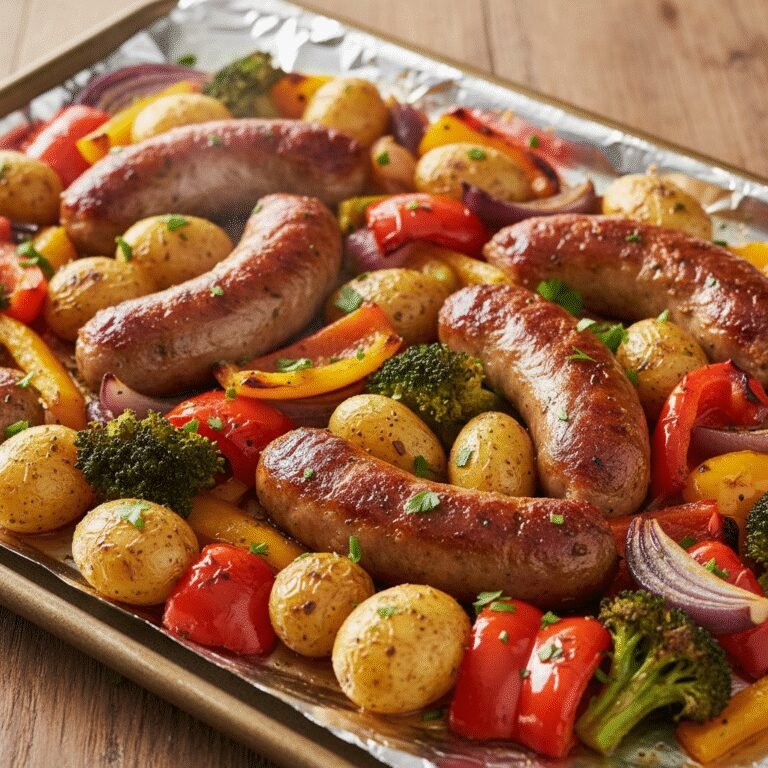
These roasted radishes are an incredibly versatile side dish. Serve them alongside a perfectly seared steak, roasted chicken, or a flaky piece of salmon for a complete and satisfying keto meal. They can also be used as the base for a low-carb breakfast hash, tossed with crumbled sausage, onions, bell peppers, and topped with a fried egg. For a touch of richness, drizzle them with a bit of melted butter or toss with grated Parmesan cheese in the last few minutes of cooking.
Storage and Reheating Tips
Store any leftovers in an airtight container in the refrigerator for up to 4 days. While they can be eaten cold, their texture is best when reheated. To bring back some of their original roasted quality, avoid the microwave. Instead, reheat them on a baking sheet in a 400°F (200°C) oven or in an air fryer for 5-7 minutes until heated through and slightly crisped.
Nutrition Facts (Estimated)
| Serving Size | 1 cup (approx. 150g) |
| Calories | 115 kcal |
| Fat | 9g |
| Saturated Fat | 1.3g |
| Unsaturated Fat | 7.7g |
| Trans Fat | 0g |
| Cholesterol | 0mg |
| Sodium | 380mg |
| Carbohydrates | 6g |
| Fiber | 2.5g |
| Sugar | 2.8g |
| Protein | 1.1g |
Frequently Asked Questions
Do roasted radishes really taste like potatoes?
While not an identical match, the transformation is remarkable. Roasting eliminates the sharp, peppery bite of raw radishes, leaving a mild, earthy, and slightly sweet flavor. The texture becomes soft and tender, closely resembling that of a roasted new potato. They satisfy the craving for a starchy side dish without the carbs.
Can I use Daikon or other types of radishes for this recipe?
Absolutely. While standard red globe radishes are most common, this recipe works well with other varieties. Daikon radish can be peeled and chopped into cubes. Black radishes and watermelon radishes are also excellent choices. Be aware that different varieties have slightly different water content and densities, so you may need to adjust your cooking time accordingly.
My radishes came out bitter. What did I do wrong?
Bitterness can sometimes be present in radishes that are older or have been stored for a while. However, the most common reason for a bitter taste after cooking is under-roasting. The heat is what breaks down the compounds that cause the sharp, sometimes bitter flavor. Ensure you roast them long enough until they are well-caramelized and very tender.
Conclusion
Embracing a low-carbohydrate lifestyle is a journey of culinary adaptation and delightful surprises. Roasted radishes stand as a testament to this, offering a simple, nutritious, and deeply satisfying alternative to a high-carb staple. They absorb flavors beautifully, roast to a perfect tenderness, and deliver the comforting experience of a classic side dish without derailing your health goals. So, the next time a potato craving strikes, don’t despair. Reach for a bunch of humble radishes and unlock their hidden potential. You might just find your new favorite vegetable.