Italian Penicillin: The Comfort Soup Every Grandma Swears By
Italian Penicillin: The Comfort Soup Every Grandma Swears By
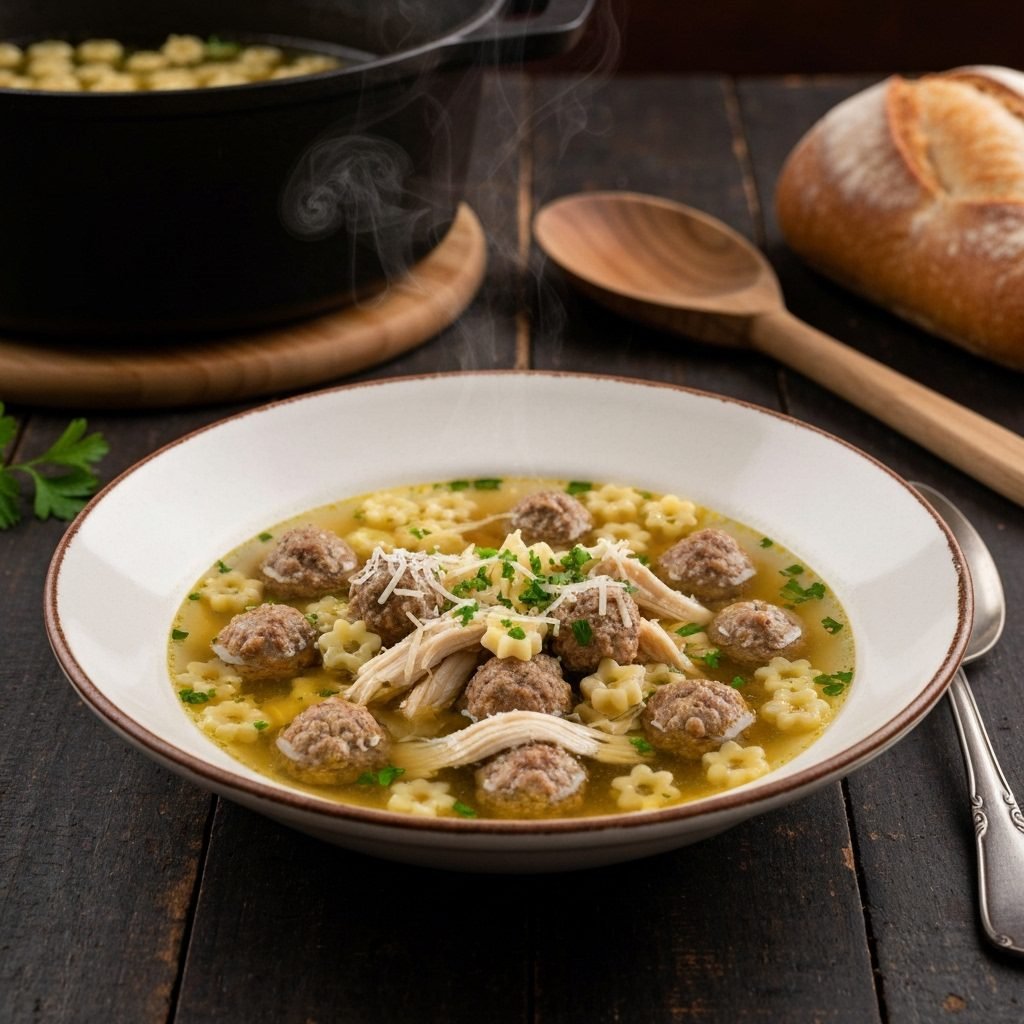
In the grand lexicon of comfort foods, few dishes hold the same revered status as a simple bowl of chicken soup. It’s the universal panacea, the culinary hug we crave when we’re feeling under the weather, chilled to the bone, or simply in need of a little solace. While every culture has its own version, the Italian-American interpretation, affectionately known as ‘Italian Penicillin,’ is a masterpiece of nurturing simplicity. This isn’t just soup; it’s a tradition, a liquid testament to the healing power of a grandmother’s love. At its heart is a rich, golden, homemade chicken broth, or ‘brodo,’ simmered for hours until it extracts every bit of flavor and goodness from the bone. Floating in this restorative elixir are three key elements: tender shreds of chicken, tiny, savory meatballs called ‘polpettine,’ and a delicate small pasta, or ‘pastina,’ like stelline (little stars) or acini di pepe. This soup is more than the sum of its parts. It’s the aroma that fills the house, a promise of comfort and care. It’s the gentle clinking of a spoon against a bowl, a sound that quiets the soul. It’s the recipe passed down through generations, a culinary heirloom that connects us to our roots. Forget fleeting food trends; this is timeless, essential cooking. This is the soup every nonna swears by, her first line of defense against colds, heartbreak, and the rigors of a weary world. Today, we’re not just making soup; we’re bottling a little bit of that old-world magic.
30 minutes
2 hours 30 minutes
3 hours
Serves 6-8 (makes about 12 cups)
Soup
Simmering
Italian-American
Standard
Why You’ll Love This Recipe
- Soul-Warming Comfort: The ultimate culinary remedy for colds, rainy days, or a case of the blues.
- Authentic Homemade Broth: A deeply flavorful, from-scratch chicken broth (brodo) forms the golden heart of this recipe.
- Tender, Savory Meatballs: Tiny, perfectly seasoned meatballs (polpettine) make every spoonful a delightful experience.
- Simple, Wholesome Ingredients: Built on a foundation of accessible, nourishing ingredients you can feel good about.
- Family-Friendly & Customizable: A beloved classic that can be easily adapted to suit your family’s tastes and dietary needs.
Equipment You’ll Need
- Large stockpot or Dutch oven (8-quart or larger)
- Large skillet
- Fine-mesh sieve or strainer
- Cheesecloth (optional, for an exceptionally clear broth)
- Two large mixing bowls
- Cutting board and chef’s knife
- Slotted spoon
- Ladle
- Small saucepan (for pasta)
Ingredients
- For the Chicken Broth (Brodo):
- 1 whole chicken (about 4-5 lbs), giblets removed
- 2 large carrots, peeled and roughly chopped
- 3 celery stalks, roughly chopped
- 1 large yellow onion, peeled and quartered
- 4-5 cloves garlic, peeled and smashed
- 1 small bunch fresh parsley stems
- 2 bay leaves
- 1 teaspoon whole black peppercorns
- 16 cups (1 gallon) cold water
- Kosher salt to taste
- For the Tiny Meatballs (Polpettine):
- 1 lb ground chicken or a mix of ground pork and veal
- 1/2 cup plain breadcrumbs
- 1/2 cup freshly grated Parmesan cheese, plus more for serving
- 1 large egg, lightly beaten
- 1/4 cup chopped fresh parsley
- 1 teaspoon garlic powder
- 1/2 teaspoon kosher salt
- 1/4 teaspoon black pepper
- 2 tablespoons olive oil, for frying
- For Assembling the Soup:
- 1 cup small pasta (pastina), such as acini di pepe, stelline, or ditalini
- Shredded chicken meat (from making the broth)
- Freshly chopped parsley, for garnish
- Freshly grated Parmesan cheese, for garnish
Instructions
- Step 1: Prepare the Broth. Place the whole chicken, chopped carrots, celery, quartered onion, smashed garlic, parsley stems, bay leaves, and whole peppercorns into your large stockpot or Dutch oven. Pour the 16 cups of cold water over everything, ensuring the chicken is fully submerged.
- Step 2: Simmer the Broth. Place the pot over medium-high heat and bring it slowly to a gentle simmer. Do not let it come to a rolling boil. As it heats, a layer of foam or ‘scum’ will rise to the surface. Use a slotted spoon to carefully skim this off and discard it. Once simmering, reduce the heat to low, partially cover the pot, and let it gently simmer for at least 2 hours, or up to 3 for a richer flavor. The key is a lazy, gentle bubble, not a vigorous boil.
- Step 3: Make the Meatball Mixture. While the broth is simmering, prepare the polpettine. In a large mixing bowl, combine the ground meat, breadcrumbs, 1/2 cup Parmesan cheese, beaten egg, chopped parsley, garlic powder, salt, and pepper. Mix gently with your hands until just combined. Overworking the mixture can make the meatballs tough.
- Step 4: Form and Cook the Meatballs. Roll the mixture into tiny, marble-sized meatballs (about 1/2 inch in diameter). Heat the olive oil in a large skillet over medium-high heat. Working in batches, carefully place the meatballs in the skillet and brown them on all sides, about 4-5 minutes per batch. They do not need to be cooked through. Remove the browned meatballs with a slotted spoon and set them aside on a plate.
- Step 5: Strain the Broth and Shred the Chicken. After the broth has finished simmering, carefully remove the chicken and vegetables from the pot using a slotted spoon or tongs. Place the chicken on a cutting board to cool. Once cool enough to handle, remove the meat from the bones and shred it, discarding the skin and bones. Discard the spent vegetables and aromatics.
- Step 6: Clarify the Broth. Place a fine-mesh sieve (lined with cheesecloth for extra clarity, if desired) over a large, clean bowl or another pot. Carefully pour the broth through the sieve to strain out any solids. Season the finished broth with kosher salt to your taste.
- Step 7: Cook the Pasta. Bring a small saucepan of salted water to a boil. Add the pastina and cook according to package directions until al dente. Drain well. It is crucial to cook the pasta separately to prevent it from absorbing all the broth and becoming mushy.
- Step 8: Final Assembly. Return the strained, seasoned broth to the large pot and bring it to a simmer. Add the browned meatballs and the shredded chicken to the broth and let them simmer for 10-15 minutes, or until the meatballs are cooked through and everything is heated.
- Step 9: Serve. To serve, place a scoop of the cooked pastina in the bottom of each individual soup bowl. Ladle the hot broth, filled with meatballs and chicken, over the pasta. Garnish generously with freshly grated Parmesan cheese and a sprinkle of chopped fresh parsley. Serve immediately.
Expert Cooking Tips
- For the Clearest Broth: The secret to a crystal-clear, golden brodo is twofold: start with cold water and never let it boil. A gentle, lazy simmer allows the flavors to meld without emulsifying fats, which causes cloudiness. Skimming the initial scum is also non-negotiable.
- The Perfect Meatball: For the most tender meatballs, use a light hand when mixing and rolling. Chilling the formed meatballs for 15-20 minutes before frying can also help them hold their shape perfectly.
- The Pasta Principle: We cannot stress this enough—cook your pasta separately. Adding it directly to the pot of soup will result in a starchy broth and mushy pasta, especially in leftovers. Assembling per bowl ensures perfect texture every time.
- Seasoning Strategy: Always season your broth at the end of the cooking process. As the liquid simmers and reduces, the flavors concentrate. Seasoning too early can easily lead to an overly salty final product.
Substitutions and Variations
For a quicker version, you can use a high-quality, low-sodium store-bought chicken broth; however, we recommend simmering it for 30 minutes with a carrot, celery stalk, and onion quarter to add a fresh, homemade flavor. Ground turkey can be substituted for ground chicken in the meatballs. For a gluten-free option, use your favorite gluten-free pastina or substitute with small-grain rice or quinoa, always cooked separately.
Common Mistakes to Avoid
The most common mistake is boiling the broth instead of simmering it. A rolling boil creates a cloudy, greasy soup. The second mistake is cooking the pasta directly in the soup pot. This makes the broth starchy and the pasta will bloat and turn to mush upon storing. Always cook the pasta separately and add it to individual bowls upon serving.
Serving Suggestions
Serve this soup piping hot in wide, shallow bowls to showcase all the delicious components. A generous shower of high-quality Parmesan cheese and fresh parsley is essential. The absolute best accompaniment is a loaf of crusty, rustic Italian bread for dipping into the golden broth—it’s the perfect tool for ensuring not a single drop goes to waste.
Storage and Reheating Tips
For optimal quality, store the components separately. Allow the broth (with meatballs and chicken) and the cooked pasta to cool completely. Store the broth in an airtight container and the pasta in another airtight container in the refrigerator for up to 4 days. To reheat, gently warm the broth mixture on the stovetop. Place the cold pasta in a bowl and pour the hot soup over it.
Nutrition Facts (Estimated)
| Serving Size | 1.5 cups |
| Calories | 380 kcal |
| Fat | 16g |
| Saturated Fat | 5g |
| Unsaturated Fat | 11g |
| Trans Fat | 0g |
| Cholesterol | 95mg |
| Sodium | 650mg |
| Carbohydrates | 30g |
| Fiber | 3g |
| Sugar | 3g |
| Protein | 28g |
Frequently Asked Questions
Can I make this soup ahead of time?
Absolutely. In fact, the flavor of the broth often improves after a day in the refrigerator. You can prepare the broth, meatballs, and chicken a day or two in advance. Store them in the fridge and cook the pasta just before you’re ready to assemble and serve.
Is it possible to freeze Italian Penicillin?
Yes, this soup freezes wonderfully. Allow the finished broth with the meatballs and shredded chicken to cool completely, then transfer to freezer-safe containers or bags. It can be frozen for up to 3 months. Do NOT freeze the pasta. When you’re ready to eat, thaw the soup in the refrigerator overnight and reheat on the stovetop. Cook a fresh batch of pasta to serve with it.
My meatballs were tough. What did I do wrong?
Tough meatballs are usually the result of overworking the meat mixture. When combining the ingredients, mix only until they are just incorporated. A light, gentle touch is key to a tender, delicate meatball.
Conclusion
Italian Penicillin is more than a recipe; it’s a ritual of care. It’s a culinary tradition that nourishes the body and soothes the spirit. Every step, from the slow simmer of the broth to the rolling of each tiny meatball, is an act of love. We hope this recipe brings as much comfort and warmth to your kitchen as it has to countless others. Make a large pot, share it with those you love, and create your own chapter in this timeless story of healing and home.