How To Make Plain Rice Taste Like A 5-Star Side Dish
How To Make Plain Rice Taste Like A 5-Star Side Dish
Rice. It’s the humble, unassuming staple gracing plates across the globe, often relegated to the role of a bland, starchy filler. We’ve all had it: mushy, sticky, or utterly forgettable. But what if I told you that the secret to transforming this simple grain into a side dish worthy of a five-star restaurant lies not in complex techniques or exotic ingredients, but in a few simple, game-changing steps? Forget everything you thought you knew about cooking rice. This guide will walk you through a foolproof method that elevates plain rice into a fluffy, aromatic, and deeply flavorful pilaf-style dish that will steal the show. We will unlock the power of toasting the grains, using aromatics, and simmering in a rich broth to create a foundation of flavor that is simply irresistible. Prepare to make rice not just a side, but a destination.
10 minutes
20 minutes
30 minutes
Serves 4-6 (approx. 3 cups cooked)
Side Dish
Stovetop / Pilaf
Global / Fusion
Gluten-Free
Why You’ll Love This Recipe
- Transforms a basic staple into a gourmet side dish.
- Utilizes the pilaf method for perfectly fluffy, separated grains.
- Builds layers of flavor with simple, accessible aromatics and broth.
- A foolproof recipe that guarantees success, even for beginners.
- Highly versatile and adaptable to pair with countless main courses.
Equipment You’ll Need
- Fine-mesh sieve
- Medium saucepan or pot with a tight-fitting lid (heavy-bottomed is best)
- Measuring cups and spoons
- Fork for fluffing
Ingredients
- 1 cup long-grain white rice (Basmati or Jasmine are excellent choices)
- 1 tablespoon unsalted butter (or olive oil for a vegan option)
- 1 small shallot or 1/4 small onion, finely diced
- 2 cloves garlic, minced
- 2 cups high-quality chicken or vegetable broth, warmed
- 1 bay leaf
- 1/2 teaspoon kosher salt (adjust based on broth saltiness)
- 1/4 teaspoon freshly ground black pepper
- 2 tablespoons fresh parsley or chives, finely chopped for garnish
Instructions
- Step 1: Rinse the Rice Thoroughly. Place the rice in a fine-mesh sieve. Rinse under cold running water, swishing the grains with your hand, until the water runs clear. This crucial step removes excess surface starch, which is the primary cause of gummy rice. Shake the sieve well to drain as much water as possible.
- Step 2: Sauté the Aromatics. In a medium, heavy-bottomed saucepan, melt the butter or heat the olive oil over medium heat. Add the diced shallot or onion and cook, stirring occasionally, until softened and translucent, about 3-4 minutes. Add the minced garlic and cook for another minute until fragrant, being careful not to let it burn.
- Step 3: Toast the Grains. Add the rinsed and drained rice to the saucepan. Stir continuously to coat the grains in the fat and aromatics. Continue toasting the rice for 2-3 minutes. You will notice the grains turning slightly opaque and emitting a nutty, fragrant aroma. This step is essential for developing flavor and ensuring each grain remains distinct after cooking.
- Step 4: Deglaze and Add Liquid. Pour in the warmed broth. It should sizzle upon hitting the hot pan. Use a spoon to scrape up any browned bits from the bottom of the pan—this is pure flavor! Add the bay leaf, salt, and pepper, and give everything one final, gentle stir to combine.
- Step 5: Bring to a Boil, then Simmer. Increase the heat to high and bring the liquid to a full boil. As soon as it boils, immediately reduce the heat to the lowest possible setting on your stove. Cover the pot with a tight-fitting lid.
- Step 6: Cook Undisturbed. Let the rice simmer on low heat for 15-18 minutes. Do not lift the lid during this time. The trapped steam is what cooks the rice to perfection, and peeking will disrupt this process.
- Step 7: Rest Off the Heat. Once the time is up, remove the pot from the heat entirely but keep the lid on. Let the rice rest, undisturbed, for at least 10 minutes. This allows the moisture to redistribute evenly throughout the grains, resulting in a perfectly fluffy, non-soggy texture.
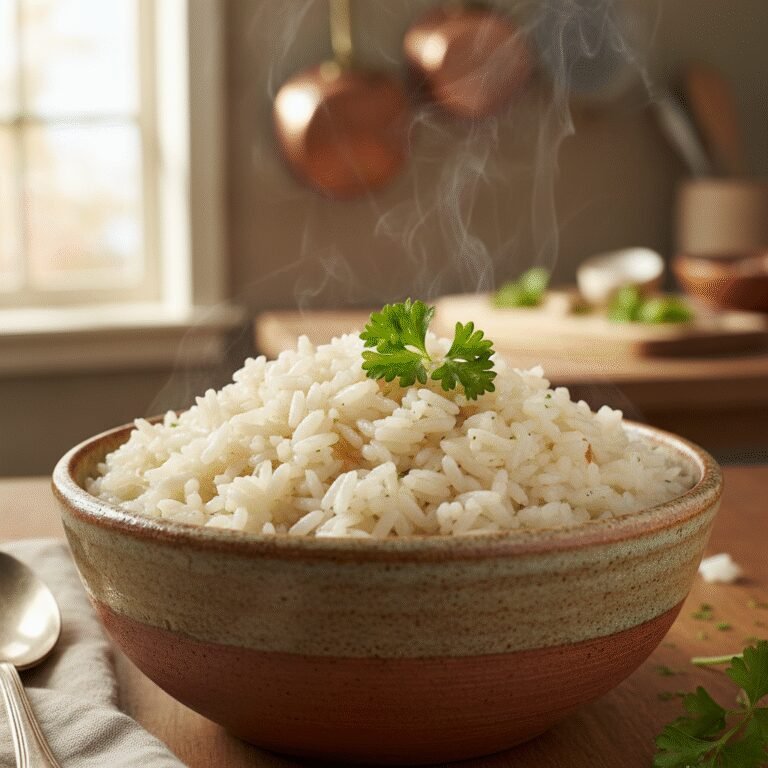
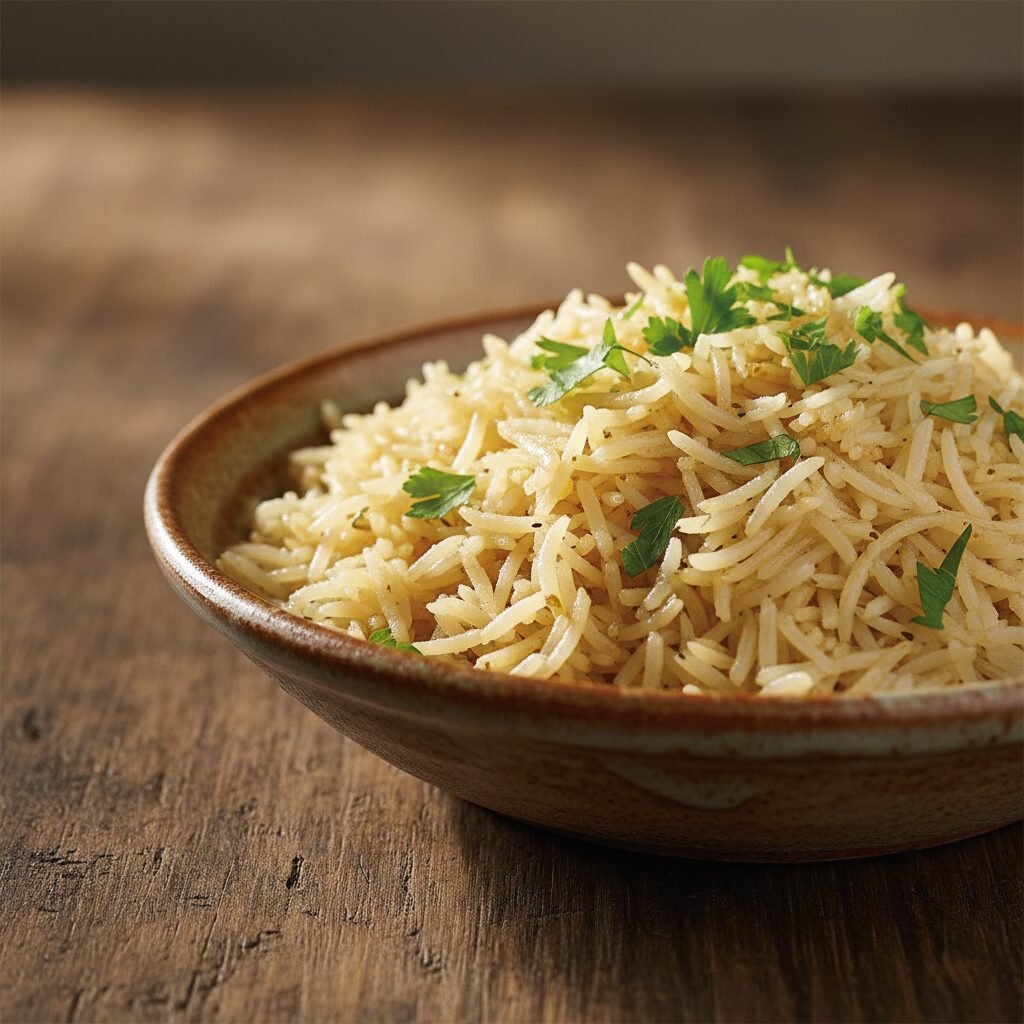
- Step 8: Fluff and Garnish. After resting, remove the lid and discard the bay leaf. Use a fork, not a spoon, to gently fluff the rice, lifting and separating the grains. Stir in the freshly chopped parsley or chives. Serve immediately.
Expert Cooking Tips
- Use a Heavy-Bottomed Pot: This distributes heat more evenly and prevents the bottom layer of rice from scorching before the rest is cooked.
- Warm Your Broth: Adding cold liquid to the hot pan can shock the grains and affect the final texture. Warming it first ensures an even cooking temperature.
- The Lid Test: A tight-fitting lid is non-negotiable. If your lid is loose, you can place a clean kitchen towel or a layer of aluminum foil between the pot and the lid to create a tighter seal and trap the steam.
- Know Your Stove: Every stove is different. The ‘lowest setting’ can vary. Your goal is a gentle simmer, not a boil. If your stove runs hot, you may need to use a simmer plate or diffuser.
Substitutions and Variations
This recipe is a canvas for creativity. For a different flavor profile, use ghee or coconut oil instead of butter. Swap the shallot for leeks or green onions. Feel free to add spices like a pinch of saffron, turmeric, or a cinnamon stick along with the broth. For herbs, dill, cilantro, or thyme work beautifully. To make it a more substantial side, stir in toasted almonds, pine nuts, or frozen peas during the last few minutes of resting.
Common Mistakes to Avoid
The most common mistake is skipping the rinsing step, which leads to gummy rice. The second is stirring the rice while it simmers; this releases starches and creates a porridge-like consistency. Another frequent error is not resting the rice after cooking. This final step is just as important as the cooking itself, as it allows the grains to firm up and absorb the last bits of steam, ensuring a perfectly fluffy result.
Serving Suggestions
This elevated rice is the perfect accompaniment to almost any main course. Pair it with roasted chicken, pan-seared salmon, grilled steak, or hearty stews. It serves as an excellent base for grain bowls topped with roasted vegetables, beans, and a flavorful sauce. It can also stand on its own as a light main course when served with a simple green salad.
Storage and Reheating Tips
Store leftover rice in an airtight container in the refrigerator for up to 4 days. To reheat, add a splash of water or broth (about 1 tablespoon per cup of rice) to prevent it from drying out. Cover and microwave until steamy, or gently reheat in a saucepan over low heat. Fluff with a fork before serving.
Nutrition Facts (Estimated)
| Serving Size | 1 cup cooked |
| Calories | 245 kcal |
| Fat | 4.5 g |
| Saturated Fat | 2.5 g |
| Unsaturated Fat | 2 g |
| Trans Fat | 0 g |
| Cholesterol | 10 mg |
| Sodium | 350 mg |
| Carbohydrates | 45 g |
| Fiber | 0.7 g |
| Sugar | 0.5 g |
| Protein | 5 g |
Frequently Asked Questions
Can I double this recipe?
Yes, this recipe can be easily doubled. Use a larger pot (like a Dutch oven) to ensure the rice has enough room. The cooking time should remain roughly the same, but it might take a bit longer to come to a boil.
Why did my rice burn on the bottom?
This usually happens for one of two reasons: the heat was too high during the simmering phase, or you used a pot with a thin bottom that doesn’t distribute heat evenly. Always use the lowest possible heat setting and a heavy-bottomed pot for best results.
Can I make this in a rice cooker?
You can adapt it. Use the sauté function on your rice cooker for steps 2 and 3 (sautéing aromatics and toasting rice). Then, add the liquid and seasonings, cancel the sauté function, and set it to the standard ‘white rice’ setting. It will handle the cooking and resting times automatically.
Conclusion
You now possess the knowledge to banish bland rice from your kitchen forever. By embracing these fundamental techniques—rinsing, toasting, and simmering with aromatics—you’ve learned that exceptional flavor isn’t about complexity, but about intention. This recipe is more than just a set of instructions; it’s a foundation. Master it, understand why each step matters, and then make it your own. You’ll find that a perfectly cooked bowl of rice is one of life’s simple, most satisfying pleasures.