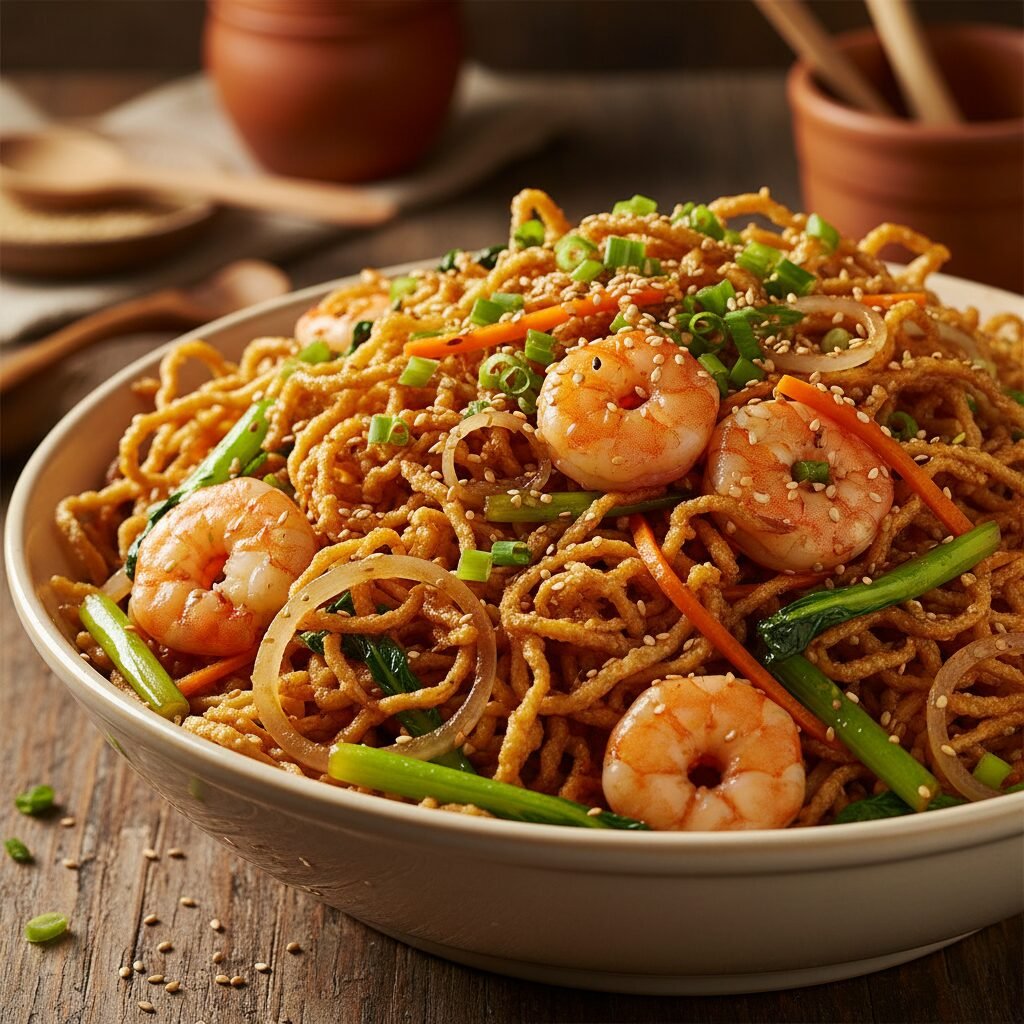
How To Make Crispy Cantonese Soy Sauce Noodles At Home
How To Make Crispy Cantonese Soy Sauce Noodles At Home
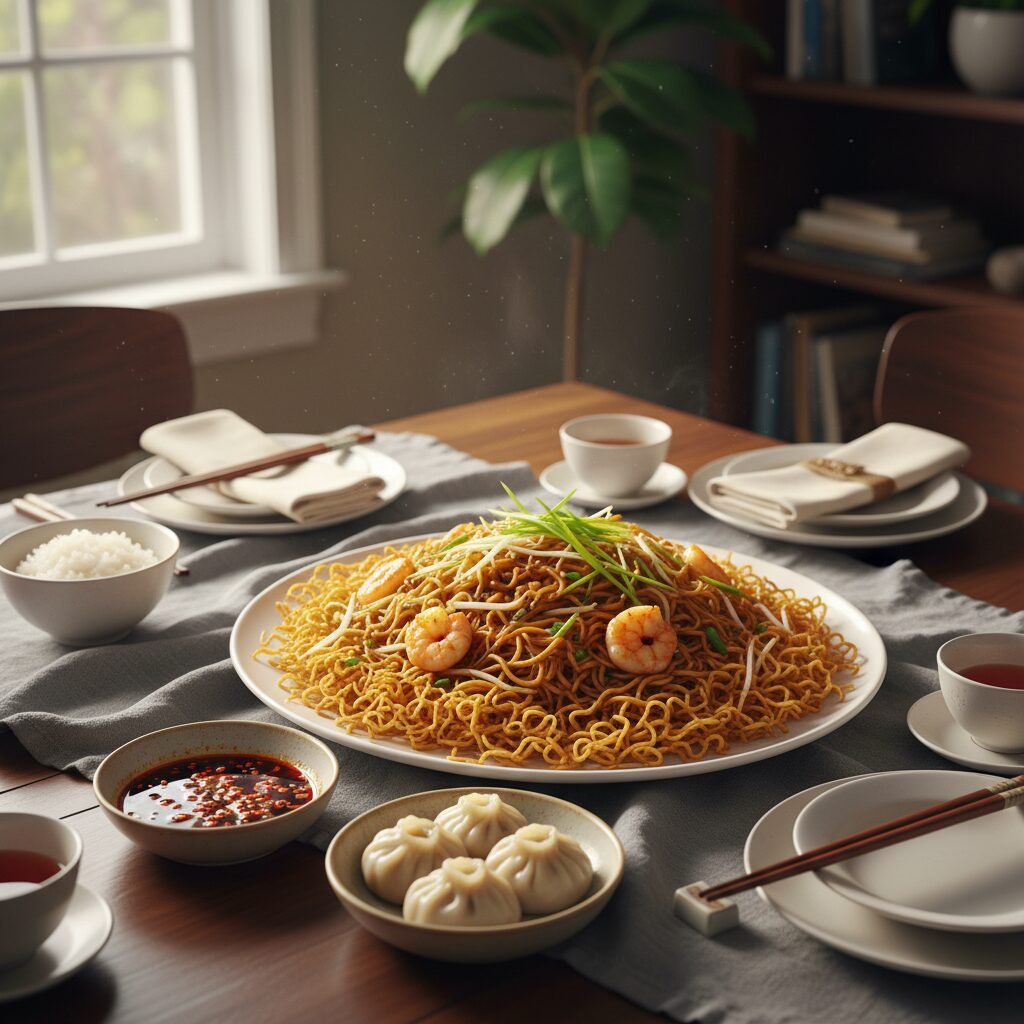
Craving that irresistible, savory crunch of authentic Cantonese soy sauce noodles? Get ready to bring the bustling flavors of a Hong Kong cafe right into your kitchen! This recipe will guide you to perfectly crispy noodles, coated in a rich, umami-packed sauce that’s simply divine.
15 minutes
10 minutes
25 minutes
4 servings
Main Dish
Stir-fry
Cantonese
Pescatarian (can be made Vegetarian/Vegan)
Hey there, lovely foodies! Are you ready to embark on a culinary adventure that will transport your taste buds straight to the vibrant streets of Hong Kong? Today, we’re diving into one of my absolute favorite comfort foods: Crispy Cantonese Soy Sauce Noodles! Oh my goodness, just thinking about that perfect balance of chewy, crispy noodles coated in a glossy, savory sauce makes my heart sing!
As a busy mom, I’m always on the hunt for recipes that are not only incredibly delicious but also relatively simple to whip up, especially on those hectic weeknights. And let me tell you, this dish ticks all the boxes! It’s a fantastic way to bring a little bit of restaurant magic into your home, impressing your family and friends without spending hours slaving over a hot stove. Plus, who doesn’t love a good noodle dish? It’s universally loved, comforting, and oh-so-satisfying.
This isn’t just any noodle recipe; it’s about achieving that coveted ‘wok hei’ – that smoky, charred flavor that makes Cantonese stir-fries so special. We’re going for crispy edges, tender centers, and a sauce that clings to every strand, bursting with umami. Imagine the aroma filling your kitchen, the sizzle of the noodles in the pan, and that first glorious bite. Pure bliss! So, grab your apron, put on your favorite playlist, and let’s make some noodle magic together. Your family is going to absolutely adore this!
History & Origins
The humble yet incredibly flavorful soy sauce noodles, or ‘si yau wong chao min’ (豉油皇炒麵), hold a special place in Cantonese cuisine, particularly in Hong Kong. This dish is a quintessential example of ‘dai pai dong’ (大牌檔) or street food culture, often served as a quick, satisfying breakfast, lunch, or late-night snack. Its origins are deeply rooted in the everyday lives of the working class, offering a delicious and affordable meal.
While seemingly simple, the dish’s popularity stems from its ability to showcase the mastery of stir-frying. Early versions would have been prepared over roaring flames in large woks, imparting that distinctive smoky ‘wok hei’ that is so prized. It’s a testament to the idea that sometimes, the most profound flavors come from the simplest ingredients, expertly handled. Over time, it evolved from a basic street food to a beloved staple found in everything from bustling tea houses (cha chaan teng) to upscale Cantonese restaurants.
The beauty of Cantonese soy sauce noodles lies in its versatility and comforting familiarity. It’s a dish that evokes nostalgia for many, a taste of home, and a reminder of shared meals. It’s a culinary hug in a bowl, and now you get to recreate that wonderful tradition right in your own kitchen!
Why This Recipe Works
Achieving truly crispy Cantonese soy sauce noodles at home involves a few key culinary principles that make all the difference. First, the choice of noodles is crucial. We opt for fresh egg noodles, specifically the thin, springy kind often labeled ‘Hong Kong style pan-fried noodles’ or ‘chow mein noodles’. These noodles have the perfect texture to absorb the sauce while still holding their shape and developing that desirable crispiness.
The secret to the ‘crispy’ part lies in a two-step cooking process. Initially, the noodles are briefly boiled or blanched to cook them through and remove excess starch. This prevents them from becoming gummy. The real magic happens during the stir-frying. By using a hot wok or large skillet with sufficient oil, and allowing the noodles to sit undisturbed for a few minutes on each side, they develop a beautiful golden-brown crust. This direct contact with the hot surface creates the Maillard reaction, leading to those irresistible crispy bits and a deeper flavor profile.
The sauce itself is a masterclass in balance. A combination of light and dark soy sauce provides both salinity and a rich, appealing color. A touch of oyster sauce adds umami depth, while a hint of sugar balances the savory notes. Sesame oil at the end adds a fragrant finish. The high heat of stir-frying also helps to caramelize the sugars in the sauce, creating a glossy coating that clings perfectly to the noodles. The rapid cooking ensures the vegetables remain crisp-tender, adding a lovely textural contrast to the noodles. It’s a symphony of textures and flavors that makes this dish so incredibly satisfying!
Why You’ll Love This Recipe
- ✓Achieve authentic ‘wok hei’ flavor at home.
- ✓Perfectly crispy and chewy noodles every time.
- ✓Quick and easy weeknight meal solution.
- ✓Customizable with your favorite proteins and veggies.
- ✓A taste of Hong Kong street food in your kitchen.
- ✓Family-friendly and incredibly satisfying.
Equipment You’ll Need
- ✓Large pot for boiling noodles
- ✓Colander
- ✓Large wok or a very large non-stick skillet
- ✓Spatula or tongs
- ✓Small bowl for sauce mixing
- ✓Cutting board
- ✓Sharp knife
Ingredients
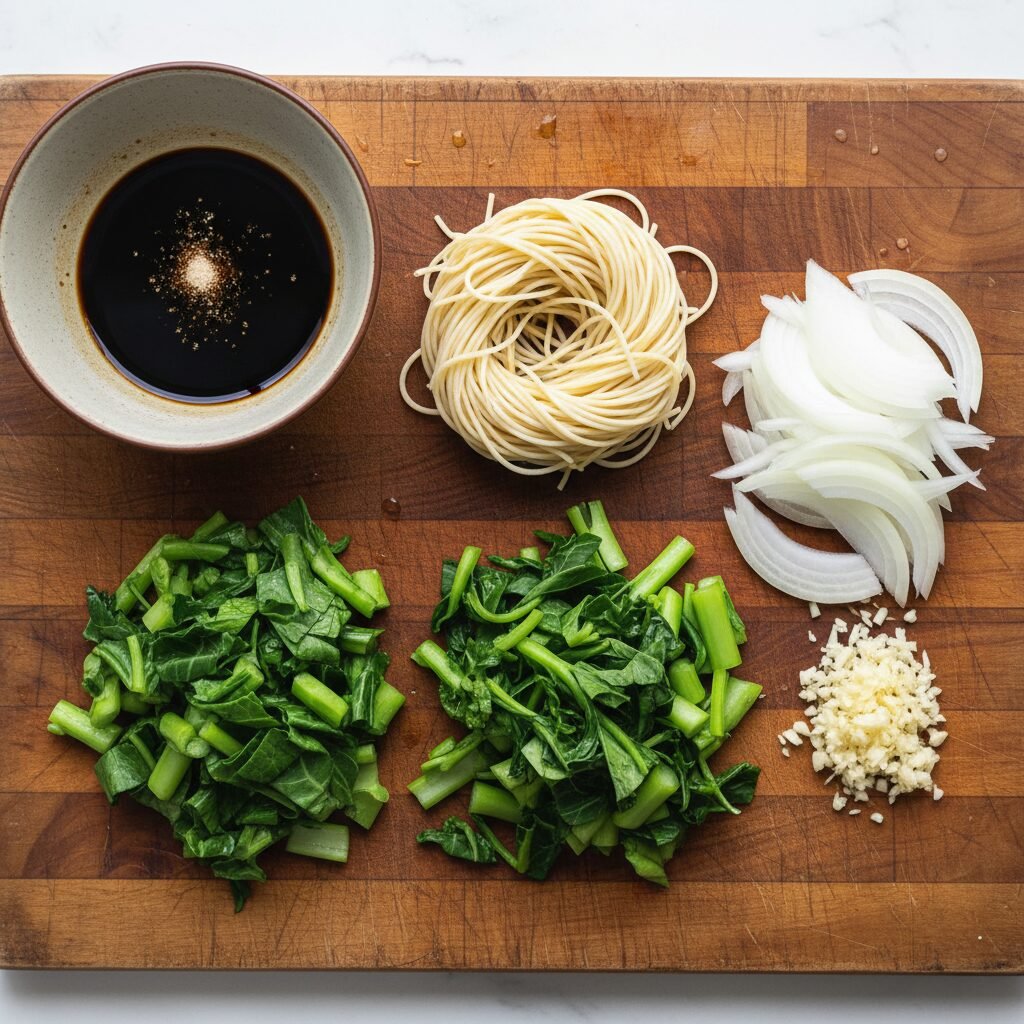
- ✓1 lb fresh thin egg noodles (Hong Kong style chow mein noodles)
- ✓3 tablespoons vegetable oil (or other high smoke point oil), divided
- ✓1 small yellow onion, thinly sliced
- ✓2 cloves garlic, minced
- ✓1 cup bean sprouts
- ✓1 cup gai lan (Chinese broccoli), cut into 1-inch pieces, or baby bok choy
- ✓1/2 cup shredded carrots (optional, for color and crunch)
- ✓2 tablespoons light soy sauce
- ✓1 tablespoon dark soy sauce
- ✓1 tablespoon oyster sauce (or vegetarian mushroom oyster sauce)
- ✓1 teaspoon sugar
- ✓1/2 teaspoon white pepper
- ✓1 teaspoon sesame oil
- ✓Optional: 1/2 cup cooked protein (e.g., shredded chicken, shrimp, tofu)
Instructions
- Prepare the Noodles: Bring a large pot of water to a rolling boil. Add the fresh egg noodles and cook according to package directions, usually 1-2 minutes, until just tender but still firm (al dente). Do not overcook! Drain immediately in a colander and rinse briefly with cold water to stop the cooking and prevent sticking. Toss with 1 tablespoon of vegetable oil to keep them from clumping. Set aside.
- Mix the Sauce: In a small bowl, whisk together the light soy sauce, dark soy sauce, oyster sauce, sugar, and white pepper. Set aside.
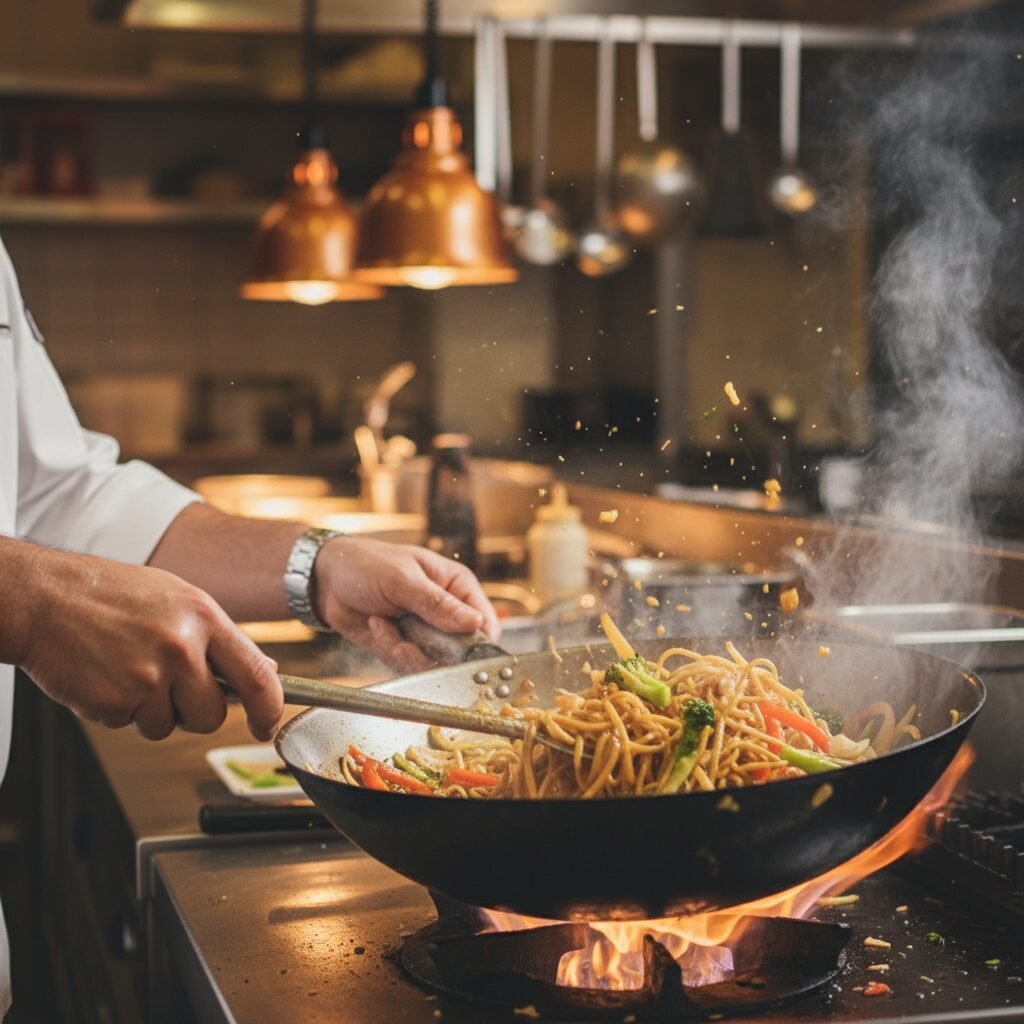
- Heat the Wok: Heat 1 tablespoon of vegetable oil in a large wok or very large non-stick skillet over high heat until shimmering.
- Stir-fry Aromatics & Veggies: Add the sliced onion and stir-fry for 1-2 minutes until slightly softened. Add the minced garlic, gai lan (or bok choy), and shredded carrots (if using). Stir-fry for another 2-3 minutes until the vegetables are crisp-tender. If adding cooked protein, add it now and toss to heat through. Remove all vegetables and protein from the wok and set aside.
- Crisp the Noodles: Add the remaining 1 tablespoon of vegetable oil to the hot wok. Add the drained noodles, spreading them out in a single layer as much as possible. Let them cook undisturbed for 2-3 minutes until the bottom layer is golden brown and crispy.
- Toss and Finish: Using a spatula or tongs, gently flip and toss the noodles, breaking them up. Add the stir-fried vegetables and protein back into the wok. Pour the prepared sauce over the noodles and vegetables. Toss everything together vigorously for 1-2 minutes, ensuring the sauce evenly coats all the noodles and vegetables. Continue to stir-fry until the sauce has thickened slightly and the noodles are heated through and have developed more crispy bits.
- Serve: Remove from heat. Drizzle with sesame oil and toss one last time. Serve immediately and enjoy your perfectly crispy Cantonese Soy Sauce Noodles!
Expert Cooking Tips
- ✓Don’t Overcook Noodles: Fresh egg noodles cook very quickly. Boil them just until al dente, as they will continue to cook in the wok.
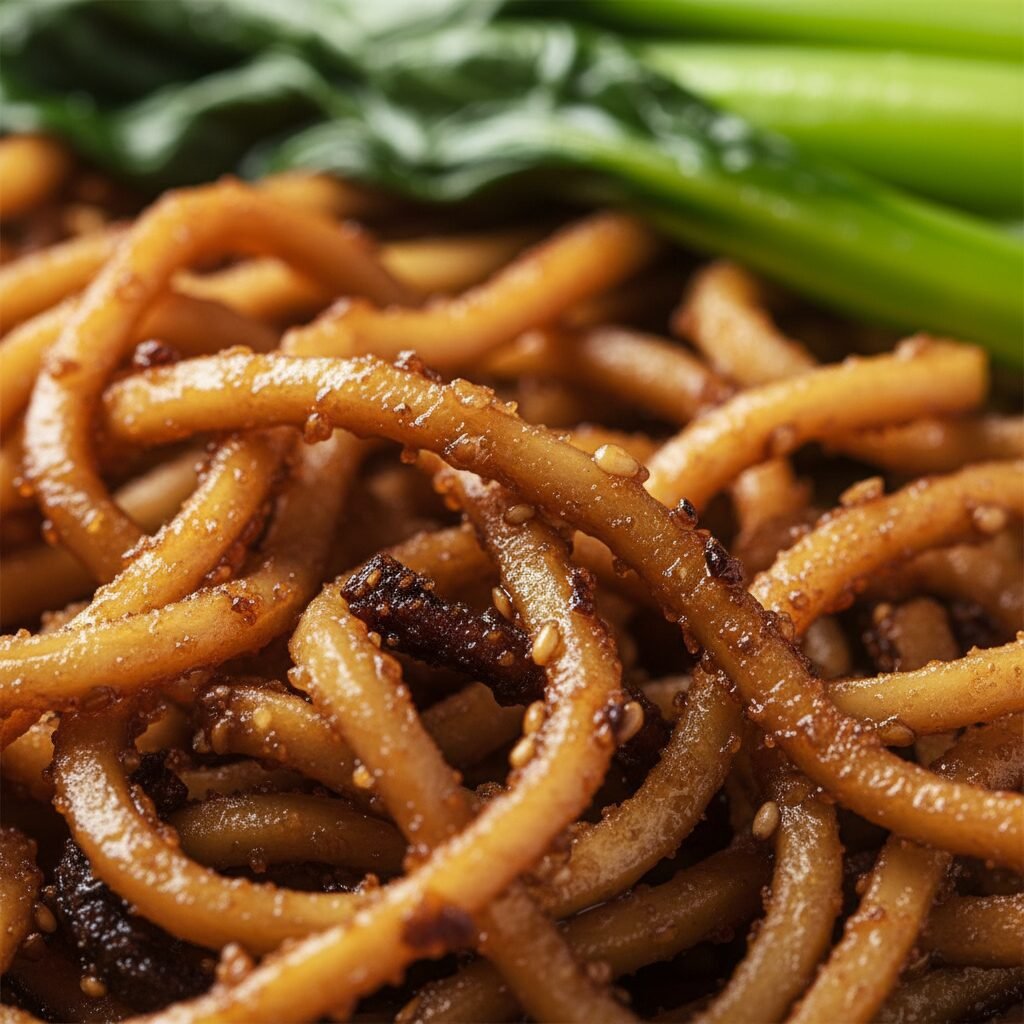
- ✓High Heat is Key: A hot wok or skillet is essential for achieving that ‘wok hei’ and crispy texture. Don’t overcrowd the pan.
- ✓Spread and Sear: When adding noodles to the wok, spread them out and let them sit undisturbed for a few minutes to develop a crispy crust before tossing.
- ✓Prep Ahead: Have all your ingredients chopped and your sauce mixed before you start cooking. Stir-frying is a fast process!
- ✓Adjust Seasoning: Taste the sauce before adding it to the noodles and adjust soy sauce or sugar to your preference.
Substitutions and Variations
No gai lan? No problem! You can easily swap it out for other quick-cooking greens like baby bok choy, spinach, or even thinly sliced Napa cabbage. If you don’t have fresh egg noodles, dried chow mein noodles can work, just be sure to boil them according to package directions until tender. For a vegetarian or vegan version, simply omit the oyster sauce or use a mushroom-based vegetarian oyster sauce, and skip any meat protein. Tofu or tempeh would be fantastic additions! Feel free to add other veggies like bell peppers, snow peas, or mushrooms for extra color and nutrition.
Common Mistakes to Avoid
The most common mistake when making these noodles is overcooking the noodles during the initial boil. This results in mushy noodles that won’t crisp up properly in the wok. Another pitfall is not using enough heat or overcrowding the wok. This lowers the temperature, steaming the noodles instead of frying them, preventing that beautiful crispy texture. Lastly, not having all your ingredients prepped and ready before you start stir-frying can lead to uneven cooking and a rushed, less enjoyable experience. Stir-frying is fast, so ‘mise en place’ (everything in its place) is crucial!
Serving Suggestions
These Crispy Cantonese Soy Sauce Noodles are a complete meal on their own, but they also pair wonderfully with other Cantonese favorites! Serve them alongside some delicious Char Siu (BBQ Pork), a simple steamed fish, or a refreshing cucumber salad. For a heartier meal, you can add a fried egg on top, or a side of crispy spring rolls. A sprinkle of toasted sesame seeds or chopped green onions as a garnish adds a lovely touch of freshness and visual appeal. Don’t forget a dash of chili oil if you like a little kick!
Storage and Reheating Tips
Leftover Crispy Cantonese Soy Sauce Noodles can be stored in an airtight container in the refrigerator for up to 3 days. To reheat, I recommend using a hot skillet or wok over medium-high heat with a tiny bit of oil. This helps to revive some of that crispy texture. You can also microwave them, but they might lose some of their crispiness and become a bit softer. They are best enjoyed fresh, but leftovers are still incredibly tasty!
Nutrition Facts (Estimated)
| Serving Size | 1/4 of recipe |
| Calories | 450 kcal |
| Fat | 18g |
| Saturated Fat | 3g |
| Unsaturated Fat | 12g |
| Trans Fat | 0g |
| Cholesterol | 40mg |
| Sodium | 1200mg |
| Carbohydrates | 55g |
| Fiber | 4g |
| Sugar | 8g |
| Protein | 15g |
Frequently Asked Questions
Can I use dried noodles instead of fresh?
Yes, you can! If using dried chow mein or egg noodles, follow the package instructions for boiling until al dente. Make sure to rinse them well and toss with a little oil to prevent sticking before stir-frying.
What is ‘wok hei’ and how do I achieve it at home?
‘Wok hei’ translates to ‘breath of the wok’ and refers to the unique smoky, charred aroma and flavor imparted by a well-seasoned wok over high heat. To achieve it at home, use a very hot wok or large skillet, don’t overcrowd the pan, and allow ingredients to sear undisturbed for a bit before tossing.
My noodles are sticking to the pan, what am I doing wrong?
This usually happens if your wok isn’t hot enough, or if you haven’t used enough oil. Ensure your wok is smoking hot before adding oil, and then add the noodles. Also, make sure to toss the boiled noodles with a tablespoon of oil after draining to prevent clumping.
Can I add protein to this dish?
Absolutely! Cooked shredded chicken, sliced pork, shrimp, or even pan-fried tofu cubes are wonderful additions. Add them to the wok after the aromatics and vegetables, just to heat through, before adding the noodles and sauce.
Is this dish spicy?
Traditionally, Cantonese Soy Sauce Noodles are not spicy. However, you can easily add a kick by incorporating a dash of chili oil, sriracha, or fresh sliced chilies when serving.
What’s the difference between light and dark soy sauce?
Light soy sauce is primarily for salinity and flavor. Dark soy sauce is thicker, less salty, and used mainly for its rich, dark color and a hint of sweetness. Both are essential for the authentic flavor and appearance of this dish.
Can I make this gluten-free?
Yes, you can! Use gluten-free tamari instead of regular soy sauce, ensure your oyster sauce is gluten-free (or use a gluten-free mushroom sauce), and use gluten-free noodles (like rice vermicelli, though the texture will be different, or gluten-free ramen noodles).
How do I prevent my vegetables from becoming soggy?
The key is high heat and quick cooking. Stir-fry your vegetables until they are crisp-tender, not soft. Remove them from the wok before adding the noodles, and then add them back in at the very end to ensure they retain their texture.
Conclusion
And there you have it, my sweet friends! A truly irresistible recipe for Crispy Cantonese Soy Sauce Noodles that will have everyone asking for seconds. This dish is more than just a meal; it’s an experience, a little taste of culinary adventure right in your own home. It’s perfect for a cozy family dinner, a fun gathering with friends, or even a special treat for yourself after a long day. The joy of creating something so delicious and authentic from scratch is truly unmatched.
I hope you feel inspired to get into your kitchen and give this recipe a try. Don’t be afraid to experiment and make it your own! Remember, cooking should be fun, a way to express your creativity and nourish your loved ones. So go ahead, whip up a batch of these glorious noodles, and savor every single crispy, savory bite. Happy cooking, and I can’t wait to hear how much you love them!