Healing Chicken Congee: The Ultimate Cheap Comfort Food
Healing Chicken Congee: The Ultimate Cheap Comfort Food
There are certain dishes that transcend mere sustenance, offering a warmth that seeps into your bones and soothes the soul. Chicken congee is one of those dishes. Known across Asia by many names—jook in Cantonese, bubur ayam in Indonesian, cháo gà in Vietnamese—this humble rice porridge is the culinary equivalent of a warm hug. It’s the food your mother makes when you’re sick, the comforting breakfast that starts a cold day right, and the simple, satisfying meal that can be dressed up or down. At its core, congee is a testament to the magic of transformation. Simple grains of rice and water, simmered slowly over a low flame, break down and blossom into a creamy, luscious porridge. When infused with the savory essence of chicken, the pungent warmth of ginger, and the subtle fragrance of aromatics, it becomes something truly special. This recipe for Healing Chicken Congee is designed to be your go-to guide for creating the ultimate comfort food. It’s incredibly affordable, relying on pantry staples and inexpensive cuts of chicken. It’s also exceptionally gentle on the digestive system, making it the perfect restorative meal when you’re feeling under the weather. But don’t reserve it just for sick days; this congee is a canvas for a myriad of flavors and textures, ready to be customized with your favorite toppings for a hearty and deeply satisfying meal anytime.
20 minutes
1 hour 30 minutes
1 hour 50 minutes
6-8 servings
Main Course
Stovetop Simmering
Chinese
Gluten-Free, Dairy-Free
Why You’ll Love This Recipe
- Incredibly budget-friendly, using simple pantry staples.
- A deeply comforting and soothing meal, perfect for when you’re feeling unwell.
- Gentle on the stomach and easy to digest.
- Highly customizable with a wide array of delicious toppings.
- A one-pot meal that requires minimal active cooking time.
Equipment You’ll Need
- Large heavy-bottomed pot or Dutch oven (at least 6 quarts)
- Cutting board
- Chef’s knife
- Measuring cups and spoons
- Fine-mesh sieve or colander
- Ladle
- Two forks (for shredding chicken)
Ingredients
- 1 cup uncooked long-grain white rice, such as Jasmine
- 10 cups chicken broth, homemade or low-sodium store-bought (plus more for thinning if needed)
- 1.5 lbs bone-in, skin-on chicken thighs or legs
- 2-inch piece of fresh ginger, peeled and thinly sliced
- 4-5 cloves garlic, smashed
- 2 scallions, white parts only, lightly smashed
- 1 tablespoon sesame oil
- 1 teaspoon salt, or to taste
- 1/2 teaspoon white pepper
- For Garnish (Optional but Recommended):
- Thinly sliced green parts of scallions
- Chopped fresh cilantro
- Crispy fried shallots or garlic
- A drizzle of sesame oil
- A splash of soy sauce or tamari
- Chili oil or chili crisp
- A soft-boiled or century egg
- Youtiao (Chinese fried crullers)
Instructions
- Step 1: Prepare the Rice. Place the rice in a fine-mesh sieve and rinse under cold running water until the water runs clear. This removes excess starch and prevents the congee from becoming gummy. Drain well.
- Step 2: Sear the Chicken. Pat the chicken pieces dry with a paper towel. Heat the sesame oil in your large pot or Dutch oven over medium-high heat. Add the chicken, skin-side down, and sear for 3-4 minutes until the skin is golden brown and crisp. This step adds a deeper, savory flavor to the final dish. You don’t need to cook the chicken through. Remove the chicken and set it aside.
- Step 3: Sauté the Aromatics. Add the sliced ginger, smashed garlic, and smashed white parts of the scallions to the pot. Sauté for about 1-2 minutes until fragrant, scraping up any browned bits from the bottom of the pot.
- Step 4: Combine and Simmer. Add the rinsed rice to the pot and stir for a minute to toast the grains lightly. Return the seared chicken to the pot. Pour in the 10 cups of chicken broth and add the salt and white pepper. Stir everything together.
- Step 5: Bring to a Boil, then Simmer. Increase the heat to high and bring the mixture to a rolling boil. Once boiling, immediately reduce the heat to low, cover the pot with a lid left slightly ajar to allow steam to escape, and let it simmer gently.
- Step 6: Slow Cook the Congee. Let the congee simmer for at least 1.5 hours. Stir occasionally, especially towards the end of the cooking time, to prevent the rice from sticking to the bottom of the pot. The congee is ready when the rice grains have broken down and the mixture has a thick, creamy, porridge-like consistency. If it becomes too thick for your liking, you can stir in an extra cup of broth or hot water.
- Step 7: Shred the Chicken. Carefully remove the cooked chicken pieces from the pot and place them on a cutting board. Let them cool slightly until you can handle them. Discard the bones, skin, and the large pieces of ginger and scallion. Using two forks, shred the chicken meat into bite-sized pieces.
- Step 8: Final Seasoning and Serving. Return the shredded chicken to the congee and stir to combine. Taste the congee and adjust the seasoning with more salt or white pepper if needed. Ladle the hot congee into bowls and serve immediately with your choice of garnishes.
Expert Cooking Tips
- The Right Rice-to-Liquid Ratio: The classic ratio is 1 part rice to 10 parts liquid, but this can be adjusted. For a thicker congee, use a 1:8 ratio. For a thinner, more soup-like consistency, use a 1:12 ratio.
- Don’t Skip Rinsing the Rice: Rinsing the rice is crucial for removing excess surface starch. This results in a cleaner flavor and a creamier, less gluey texture.
- Bone-In Chicken is Key: Using bone-in chicken imparts a much richer, more complex flavor to the broth and the congee itself. The collagen from the bones also contributes to a silkier texture.
- Low and Slow is the Way to Go: Resist the urge to crank up the heat to speed up the process. A gentle, slow simmer is essential for the rice grains to break down properly and release their starches, creating that signature creamy consistency without scorching the bottom.
- Stir, but Not Too Much: Stir the pot every 15-20 minutes to prevent sticking. Stirring too frequently can make the congee gummy, while not stirring enough can cause it to burn.
- Make a Big Batch: Congee reheats beautifully and is arguably even better the next day. Don’t be afraid to make more than you need for one meal.
Substitutions and Variations
This recipe is very forgiving. For protein, you can substitute chicken with turkey legs, pork shoulder, or even a savory fish stock with flakes of white fish added at the end. For a vegetarian or vegan version, use a high-quality vegetable or mushroom broth and add cubed firm tofu, shiitake mushrooms, or edamame. Brown rice can be used for a nuttier flavor and more fiber, but it will require a longer cooking time and more liquid.
Common Mistakes to Avoid
The most common mistake is cooking congee on too high a heat, which causes the rice to stick to the bottom of the pot and burn, ruining the entire batch. Always use low heat and a heavy-bottomed pot. Another frequent error is under-seasoning. Congee itself has a mild flavor and acts as a base; it needs salt and white pepper in the pot, and benefits immensely from flavorful toppings like soy sauce and chili oil upon serving. Finally, not using enough liquid will result in a thick, stodgy paste rather than a creamy porridge. Be prepared to add more hot water or broth as it cooks if it becomes too thick.
Serving Suggestions
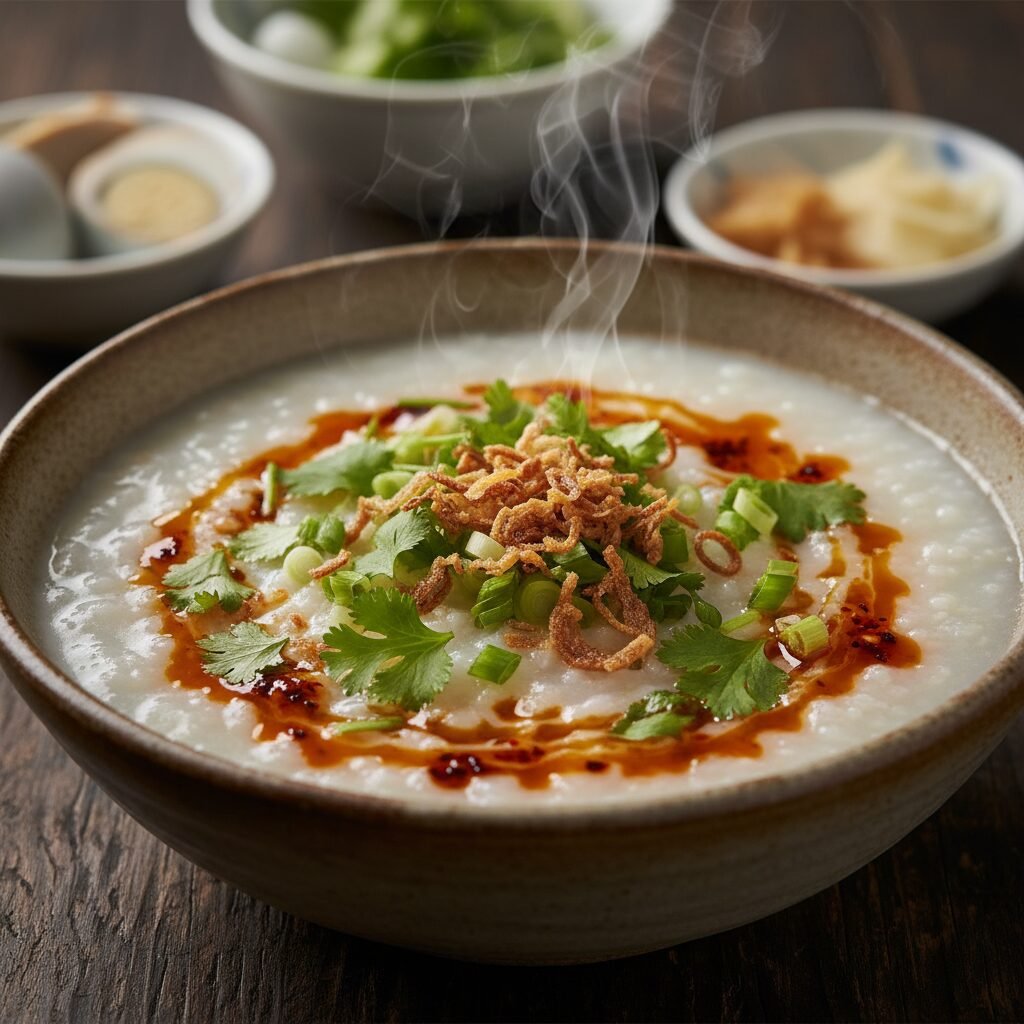
The true joy of congee lies in the toppings. Set up a ‘congee bar’ with small bowls of various garnishes so everyone can customize their own bowl. Essential toppings include thinly sliced scallions for a fresh, sharp bite, and chopped cilantro for a herby brightness. For texture, add crispy fried shallots or garlic for a savory crunch. A drizzle of toasted sesame oil adds nutty aroma, while a splash of soy sauce or tamari provides a salty, umami depth. For those who enjoy heat, a spoonful of chili oil or chili crisp is a must. To make it a more substantial meal, add a soft-boiled egg, a preserved duck egg (century egg), or serve with youtiao (Chinese crullers) for dipping.
Storage and Reheating Tips
Leftover congee can be stored in an airtight container in the refrigerator for up to 4-5 days. It will thicken considerably as it cools. To reheat, place the desired amount in a saucepan over medium-low heat. Add a splash of broth or water (about 1/4 cup per serving) and stir continuously until it’s heated through and has returned to your desired consistency. You can also reheat it in the microwave, stopping to stir every minute.
Nutrition Facts (Estimated)
| Serving Size | 1 bowl (approx. 1.5 cups) |
| Calories | 265 kcal |
| Fat | 8g |
| Saturated Fat | 2g |
| Unsaturated Fat | 5g |
| Trans Fat | 0g |
| Cholesterol | 50mg |
| Sodium | 580mg |
| Carbohydrates | 32g |
| Fiber | 2g |
| Sugar | 1g |
| Protein | 16g |
Frequently Asked Questions
Can I make chicken congee in a slow cooker or Instant Pot?
Yes, absolutely! For a slow cooker, combine all ingredients and cook on low for 6-8 hours or on high for 3-4 hours. For an Instant Pot, combine ingredients and cook on high pressure for 30 minutes, followed by a natural pressure release. You will then remove and shred the chicken as instructed.
What is the best type of rice to use for congee?
Jasmine rice is the most common and recommended choice as it breaks down beautifully and creates a fragrant, creamy congee. However, any long-grain or medium-grain white rice will work. Short-grain sushi rice will result in a stickier, thicker congee.
Is congee healthy?
Congee is considered a very healthy dish. It’s hydrating, low in fat, and extremely easy to digest, which is why it’s often served to people who are ill or recovering. The nutritional value can be enhanced with protein like chicken and nutrient-dense toppings.
My congee turned out bland. What did I do wrong?
The congee base itself is meant to be subtly flavored, acting as a canvas for other tastes. Ensure you’ve salted the cooking liquid properly. The real flavor explosion comes from the garnishes. Be generous with toppings like soy sauce, sesame oil, scallions, and chili oil to elevate the final dish.
Conclusion
Chicken congee is more than just a recipe; it’s a practice in patience and a celebration of simplicity. It’s a culinary tradition passed down through generations, a reliable source of comfort in a chaotic world. Whether you’re seeking a nourishing meal to fight off a cold, a simple supper for a busy weeknight, or a blank canvas for your culinary creativity, this Healing Chicken Congee delivers on all fronts. Embrace the slow simmer, gather your favorite toppings, and enjoy a bowl of this timeless, soul-warming classic.