Giant Egg Yolk Ravioli (Restaurant Quality At Home)
Giant Egg Yolk Ravioli (Restaurant Quality At Home)
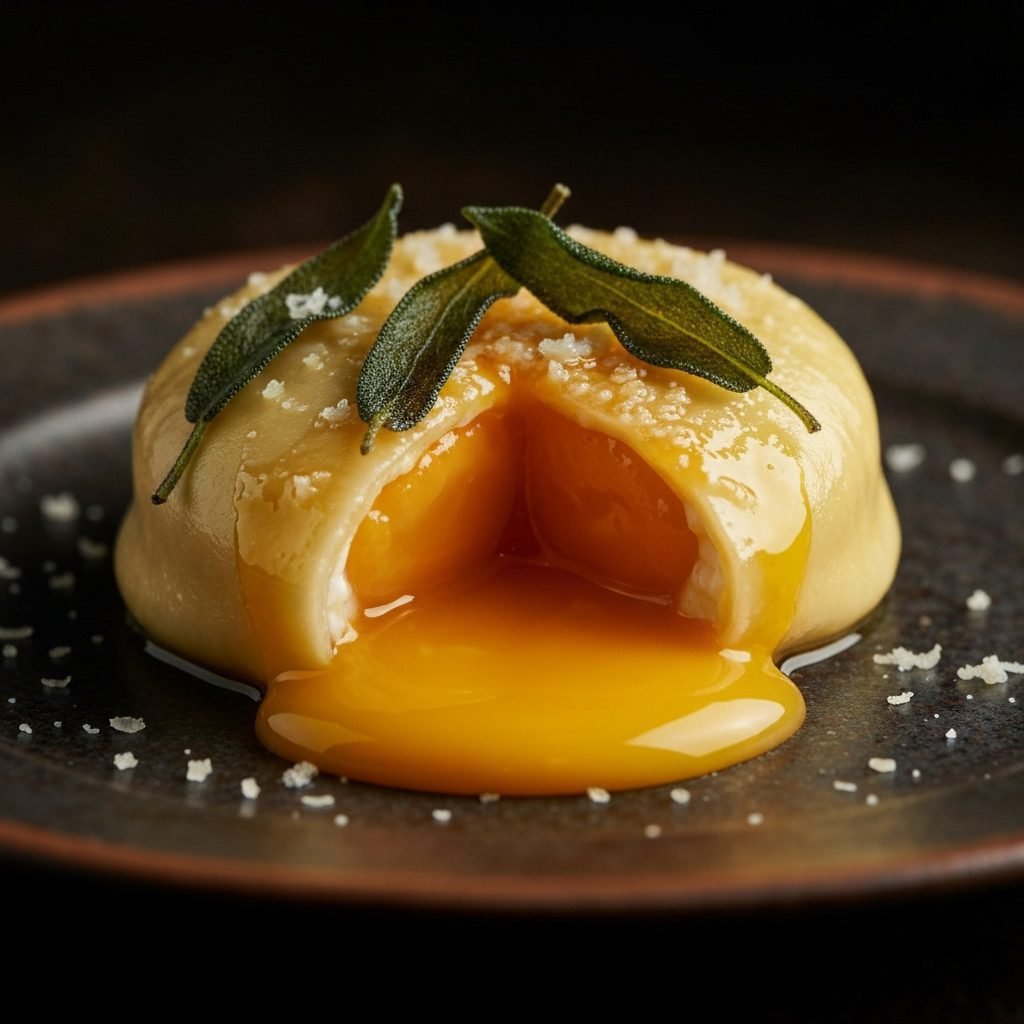
Welcome to the pinnacle of pasta indulgence: the Giant Egg Yolk Ravioli, or as it’s known in Italian, ‘Uovo in Raviolo’. This isn’t just a meal; it’s a culinary event. Imagine cutting into a perfectly cooked, oversized raviolo, the delicate pasta giving way to a warm, creamy ricotta filling, and then, the grand finale—a river of liquid gold as the molten egg yolk cascades onto your plate, mingling with a nutty brown butter and sage sauce. It’s a dish that commands silence, a moment of pure, unadulterated gastronomic pleasure. For years, this showstopper was a treasure found only in the hallowed kitchens of high-end Italian restaurants. The technique seemed daunting, the result too perfect to replicate. But that changes today. This comprehensive guide is designed to demystify the process, empowering you to recreate this masterpiece in your own kitchen. We will walk you through every step, from crafting a silky, pliable pasta dough from scratch to balancing the savory notes of the cheese filling and achieving that perfectly runny yolk. This recipe is more than just instructions; it’s a lesson in technique, patience, and the profound joy of creating something truly special. Prepare to impress your guests, your family, and most importantly, yourself. Let’s bring restaurant-quality magic to your dining table.
1 hour 30 minutes
5 minutes
1 hour 35 minutes
4 giant ravioli
Main Course
Boiling
Italian
Vegetarian
Why You’ll Love This Recipe
- Features a spectacular, molten egg yolk center.
- Luxurious and rich flavor profile with creamy ricotta and nutty brown butter.
- A perfect showstopper for special occasions, dinner parties, or a romantic meal.
- Comprehensive step-by-step instructions for fail-proof results.
- Utilizes fundamental Italian cooking techniques for an authentic experience.
Equipment You’ll Need
- Stand mixer with dough hook (optional)
- Pasta machine or a long rolling pin
- Large mixing bowl
- Bench scraper
- Round cutter (approximately 4.5 to 5 inches in diameter)
- Piping bag with a round tip (or a zip-top bag with the corner snipped)
- Pastry brush
- Large pot for boiling water
- Large slotted spoon or spider strainer
- Small, light-colored saucepan for the sauce
Ingredients
- For the Fresh Pasta Dough:
- 200g (approx. 1 2/3 cups) ’00’ flour, plus extra for dusting
- 2 large, high-quality eggs
- 1 pinch of fine sea salt
- For the Ricotta Filling:
- 250g (approx. 1 cup) whole milk ricotta cheese, well-drained
- 50g (approx. 1/2 cup) freshly grated Parmigiano-Reggiano cheese
- 25g (approx. 1/4 cup) freshly grated Pecorino Romano cheese
- 1/4 teaspoon freshly grated nutmeg
- Salt and freshly ground black pepper to taste
- For the Assembly:
- 4 large, very fresh, high-quality egg yolks, kept separate and intact
- 1 large egg, beaten (for egg wash)
- For the Brown Butter Sage Sauce:
- 1/2 cup (113g) unsalted butter
- 8-12 fresh sage leaves
- Flaky sea salt for finishing
- Extra Parmigiano-Reggiano for serving
Instructions
- Step 1: Prepare the Pasta Dough. On a clean work surface, mound the ’00’ flour and create a well in the center. Crack the 2 eggs into the well and add the pinch of salt. Using a fork, gently beat the eggs, gradually incorporating flour from the inner walls of the well. Once the dough becomes too thick to mix with a fork, use your hands or a bench scraper to bring it together. Knead the dough for 8-10 minutes, until it is smooth, elastic, and no longer sticky. If using a stand mixer, combine ingredients with the dough hook and knead on low speed for 6-8 minutes. Form the dough into a ball, wrap it tightly in plastic wrap, and let it rest at room temperature for at least 30 minutes, or up to 2 hours.
- Step 2: Prepare the Ricotta Filling. While the dough rests, prepare the filling. It is crucial that your ricotta is well-drained to avoid a watery filling that could compromise the ravioli. If needed, press the ricotta between paper towels or let it drain in a cheesecloth-lined sieve for an hour. In a medium bowl, combine the drained ricotta, grated Parmigiano-Reggiano, grated Pecorino Romano, and nutmeg. Season with salt and pepper. Mix until just combined. Be careful not to overmix. Transfer the filling to a piping bag.
- Step 3: Roll Out the Pasta. Unwrap your rested dough and cut it in half. Keep one half covered while you work with the other. Lightly flour your work surface and the dough. Begin to flatten the dough with a rolling pin. If using a pasta machine, start on the widest setting, passing the dough through 2-3 times, folding it in thirds each time. Continue to pass the dough through progressively narrower settings until you have a long, thin sheet (setting 6 or 7 on most machines, or about 1/16-inch thick). The sheet should be thin enough to see the shadow of your hand through it. Repeat with the second half of the dough. Lay the two sheets on a lightly floured surface.
- Step 4: Assemble the Giant Ravioli. On one of the pasta sheets, lightly mark four circles with your round cutter to guide your placement. Pipe a ring of the ricotta filling inside each marked circle, creating a ‘nest’ or ‘well’ that is about 3 inches in diameter. The ring should be substantial enough to hold the egg yolk. Carefully separate your 4 egg yolks, ensuring they remain perfectly intact. Gently slide one yolk into the center of each ricotta nest.
- Step 5: Seal the Ravioli. Lightly brush the beaten egg wash on the pasta around the outside of each ricotta ring. Take the second sheet of pasta and carefully drape it over the first sheet, covering the fillings. Gently press the top sheet of pasta down around the filling, starting near the ricotta mound and working your way out. It is critical to push out all the air pockets, as trapped air can cause the ravioli to burst during cooking. Once sealed, use your 4.5 or 5-inch round cutter to cut out each individual raviolo. Press the edges firmly one more time with your fingertips to ensure a perfect seal. Place the finished ravioli on a tray dusted with semolina flour to prevent sticking.
- Step 6: Cook the Ravioli. Bring a large pot of water to a boil, then reduce the heat to a gentle, consistent simmer. A rolling boil is too aggressive and will likely break the delicate ravioli. Salt the water generously. Carefully lower the ravioli into the simmering water, one or two at a time, to avoid overcrowding. Cook for 2-4 minutes. The exact time will depend on the thickness of your pasta. You want the pasta to be cooked ‘al dente’ and the yolk to be warmed through but still completely liquid.
- Step 7: Prepare the Brown Butter Sage Sauce. While the ravioli are cooking, make the sauce. In your light-colored saucepan, melt the unsalted butter over medium heat. Continue to cook, swirling the pan occasionally, as the butter foams and then subsides. You will see milk solids at the bottom begin to turn brown. Once the butter smells nutty and is a beautiful amber color (not black), immediately add the fresh sage leaves. They will sizzle and crisp up in about 30 seconds. Remove the pan from the heat.
- Step 8: Serve Immediately. Using a large slotted spoon or spider strainer, very gently remove the cooked ravioli from the water, allowing excess water to drain off. Transfer one raviolo to each serving plate. Immediately spoon the hot brown butter and crispy sage leaves over the top. Finish with a sprinkle of flaky sea salt and another generous grating of Parmigiano-Reggiano. Serve at once and instruct your guests to cut into the center for the full experience.
Expert Cooking Tips
- Use ’00’ flour for the most authentic and tender pasta texture. If unavailable, all-purpose flour can be used, but the result will be slightly chewier.
- The quality of your ingredients is paramount in a simple dish like this. Use the freshest, best-quality eggs (with vibrant yolks), ricotta, and Parmigiano-Reggiano you can find.
- Do not skip the dough resting step. It allows the gluten to relax, making the dough much easier to roll out and giving it a better texture.
- When sealing the ravioli, ensure there is absolutely no air trapped inside. Air expands when heated and is the number one cause of ravioli bursting.
- Cook the ravioli in a very gentle simmer, not a rolling boil. The violent motion of boiling water can easily tear the delicate pasta.
- A light-colored saucepan is recommended for the brown butter sauce so you can accurately judge the color of the milk solids and prevent them from burning.
Substitutions and Variations
For the filling, you can substitute Grana Padano for some or all of the Parmigiano-Reggiano. If you don’t have Pecorino, you can use all Parmesan. For a different flavor profile, you can add a small amount of finely chopped spinach (cooked and squeezed very dry) to the ricotta. If you don’t care for sage, a simple sauce of melted butter and freshly cracked black pepper, or a high-quality extra virgin olive oil, also works beautifully.
Common Mistakes to Avoid
The most common mistake is having the ravioli burst during cooking. This is usually caused by one of three things: 1) The ricotta filling was too wet, creating steam that burst the seam. 2) Air was trapped inside the raviolo when sealing. 3) The water was at a rolling boil instead of a gentle simmer. Another common issue is a pasta dough that is too dry or too wet. The dough should feel firm and pliable, not sticky or crumbly. Adjust with a few drops of water or a sprinkle of flour as needed during kneading.
Serving Suggestions
This dish is the star of the show and needs little accompaniment. Serve one raviolo per person as a decadent appetizer (primo piatto) or two for a very rich main course. A simple green salad with a sharp lemon vinaigrette is the perfect counterpoint to cut through the richness. For wine pairings, a crisp, acidic Italian white wine like a Vermentino or Pinot Grigio is an excellent choice. A light-bodied, low-tannin red such as a Barbera d’Asti also complements the dish without overpowering it.
Storage and Reheating Tips
Uovo in Raviolo is a dish best made and eaten fresh. It does not store well once cooked. It is also not recommended to assemble the ravioli far in advance, as the salt in the cheese filling can begin to cure the egg yolk, changing its texture. However, you can make the components ahead of time: the pasta dough can be made, wrapped, and refrigerated for up to 24 hours. The ricotta filling can also be made and stored in an airtight container in the refrigerator for up to 24 hours. This allows for quicker assembly right before you plan to cook and serve.
Nutrition Facts (Estimated)
| Serving Size | 1 giant raviolo |
| Calories | 480 kcal |
| Fat | 28g |
| Saturated Fat | 16g |
| Unsaturated Fat | 12g |
| Trans Fat | 0g |
| Cholesterol | 310mg |
| Sodium | 650mg |
| Carbohydrates | 38g |
| Fiber | 2g |
| Sugar | 2g |
| Protein | 22g |
Frequently Asked Questions
Can I use store-bought fresh pasta sheets?
Absolutely. For a significant time-saver, high-quality fresh lasagna sheets from a good Italian deli or the refrigerated section of your supermarket will work well. Just be sure they are thin enough and handle them gently.
My egg yolks keep breaking when I try to separate them. Any tips?
Use very fresh, cold eggs, as the yolks are firmer and less likely to break. The best method is to crack the egg into a small bowl and then gently scoop the yolk out with your clean hands, letting the white slip through your fingers.
Can I freeze the ravioli?
Freezing Uovo in Raviolo is not recommended. The freezing and thawing process can damage the delicate structure of the raw egg yolk, and it’s very likely to break or cook unevenly. This is a dish best enjoyed fresh.
Why ’00’ flour? Is it really necessary?
’00’ or ‘doppio zero’ flour is a super-finely milled Italian flour. It has a moderate protein content but its fine grind allows it to absorb water easily, creating a silky, smooth, and tender pasta dough that is a true pleasure to work with. While all-purpose flour works, ’00’ flour will elevate your pasta to a professional level.
Conclusion
Mastering the Giant Egg Yolk Raviolo is a rite of passage for any aspiring home chef. It’s a dish that teaches precision, patience, and the beauty of simple, high-quality ingredients. The moment you and your guests experience that ‘yolk-break’ is a truly rewarding payoff for your efforts. Don’t be intimidated by the process; by following these detailed steps, you have all the tools you need to succeed. Embrace the journey of creating this iconic dish, and bring an unforgettable taste of authentic Italian luxury into your home.