German Bacon Pizza: 3 Ingredients, Zero Tomato Sauce Needed
German Bacon Pizza: 3 Ingredients, Zero Tomato Sauce Needed
Step away from the familiar world of mozzarella and marinara. Today, we’re exploring a European classic that redefines what ‘pizza’ can be. Meet Flammkuchen, the German ‘flame cake’ that boasts a cracker-thin crust, a tangy cream base, and a blissfully simple trio of toppings. While its name might seem intimidating, this rustic flatbread is one of the easiest, most satisfying dishes you can make. Hailing from the Alsace region, a historical crossroads of German and French culture, Flammkuchen was traditionally baked in a wood-fired oven to test its temperature. If the tart baked quickly to perfection, the oven was hot enough for bread. This practical origin story is reflected in its no-fuss preparation. The title says it all: three core ingredients—smoky bacon, sweet onions, and luscious crème fraîche—are all you need to create a masterpiece. Forget simmering sauces and complex cheese blends; the magic of this dish lies in its elegant simplicity and the perfect harmony of its components.
10 minutes
12-15 minutes
22-25 minutes
1 large pizza (Serves 2-4)
Main Course
Baking
German / Alsatian
Standard
Why You’ll Love This Recipe
- Incredibly Simple: Only 3 main toppings are required for an authentic taste.
- No Tomato Sauce: A unique and sophisticated creamy alternative to traditional pizza.
- Quick & Easy: Ready in under 30 minutes using store-bought dough.
- Crispy Thin Crust: Achieves a deeply satisfying, cracker-like crunch with every bite.
Equipment You’ll Need
- Baking sheet or pizza stone
- Parchment paper
- Rolling pin
- Sharp knife or mandoline slicer
- Spatula
- Pizza cutter
Ingredients
- 1 (13.8 oz) can refrigerated pizza crust or 1 lb fresh pizza dough
- 1 cup crème fraîche
- 1 large yellow onion, very thinly sliced
- 6 ounces bacon (lardons or thin-cut strips), chopped into small pieces
- 1/4 teaspoon freshly ground black pepper
- 1/8 teaspoon freshly grated nutmeg
- Optional: 2 tablespoons fresh chives, chopped, for garnish
Instructions
- Preheat your oven to the highest setting, typically 500°F (260°C). If using a pizza stone, place it in the oven to preheat as well. Line a baking sheet with parchment paper if not using a stone.
- While the oven heats, prepare your toppings. Slice the onion as thinly as possible – a mandoline is perfect for this. Chop the bacon into small, bite-sized pieces or lardons.
- On a lightly floured surface, roll out the pizza dough into a large, thin rectangle or oval. The goal is a crust that is almost paper-thin, about 1/8-inch thick. Carefully transfer the dough to your prepared baking sheet or a piece of parchment paper for easy transfer to the stone.
- In a small bowl, stir the crème fraîche, black pepper, and nutmeg together until smooth.
- Using the back of a spoon or a spatula, spread the seasoned crème fraîche evenly over the dough, leaving a small 1/4-inch border around the edges.
- Evenly scatter the thinly sliced onions over the crème fraîche base. Don’t overcrowd the pizza.
- Distribute the chopped bacon pieces evenly over the onions.
- Carefully slide the parchment paper with the Flammkuchen onto the preheated pizza stone, or place the baking sheet in the oven.
- Bake for 10-15 minutes, or until the crust is golden brown and crispy, the edges are slightly charred, and the bacon is rendered and sizzling.
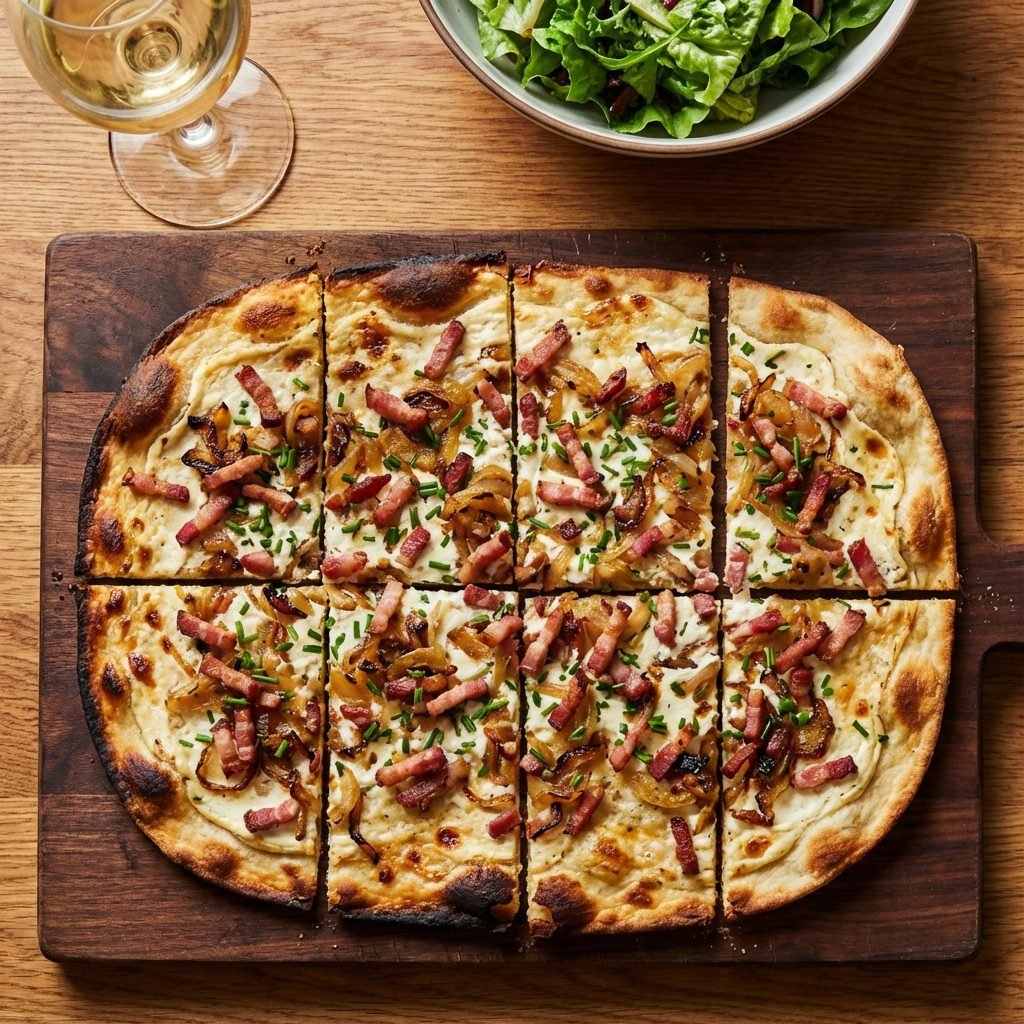
- Remove from the oven and let it cool for a minute. Sprinkle with fresh chives, if using. Cut into squares or slices and serve immediately.
Expert Cooking Tips
- The Thinner, The Better: For a classic Flammkuchen, roll the dough as thinly as you can without it tearing. This is the secret to the signature cracker-like, crispy crust.
- Don’t Overload: Resist the temptation to add too many toppings. The beauty of this dish is its simplicity. An even, sparse layer of onions and bacon is key to a balanced flavor and crisp texture.
- High Heat is Crucial: A very hot oven is essential for a quick bake that crisps the crust before the toppings release too much moisture and make it soggy.
- Use a Pizza Stone: If you have one, preheating a pizza stone in the oven for at least 30 minutes will give you the crispiest possible bottom crust, mimicking a traditional wood-fired oven.
- Raw Toppings Work Best: Do not pre-cook the bacon or onions. The high oven temperature will cook them perfectly on the pizza, allowing the bacon fat to render and crisp up while the onions soften and caramelize.
Substitutions and Variations
For Crème Fraîche: Full-fat sour cream is the best substitute. In a pinch, full-fat Greek yogurt mixed with a tablespoon of heavy cream can work, but it will be tangier. For Bacon: Pancetta is an excellent alternative. For a vegetarian version, use thinly sliced smoked mushrooms (like shiitake) sautéed with a little smoked paprika, or a high-quality plant-based bacon. For the Dough: While pizza dough is standard, you can use puff pastry for a flakier, richer base (bake at 400°F/200°C until puffed and golden). Flatbread or naan can also work for quick, individual-sized versions.
Common Mistakes to Avoid
Using a Thick Crust: Flammkuchen is defined by its thinness. Using a thick, bready crust will steam the toppings and prevent the signature crispiness, resulting in a completely different dish. Watery Base: Using low-fat sour cream or yogurt is a common error. The lower fat content means more water, which will release during baking and create a soggy center. Stick to full-fat crème fraîche or sour cream. Under-baking: Don’t be afraid to let the edges get deeply golden brown and even a little charred. Those crispy, slightly bitter notes are part of the authentic flavor profile. The pizza is done when the crust is firm and the bacon is fully rendered.
Serving Suggestions
Traditionally, Flammkuchen is cut into squares and served on a large wooden board as a shared appetizer or a light meal. It pairs exceptionally well with a crisp, dry white wine from the Alsace region, such as a Riesling, Pinot Blanc, or Sylvaner. A simple green salad dressed with a sharp vinaigrette provides a fresh, acidic counterpoint to the rich cream and bacon. For a heartier meal, serve it alongside a German sausage or a light soup.
Storage and Reheating Tips
Flammkuchen is best enjoyed immediately while the crust is at its crispiest. If you have leftovers, allow them to cool completely before storing in an airtight container in the refrigerator for up to 2 days. To reheat and revive the crispness, place the slices on a baking sheet in a hot oven (400°F / 200°C) for 5-7 minutes. Avoid reheating in the microwave, as this will result in a soft, chewy crust.
Nutrition Facts (Estimated)
| Serving Size | 1/4 pizza (approx. 150g) |
| Calories | 450 kcal |
| Fat | 25g |
| Saturated Fat | 12g |
| Unsaturated Fat | 11g |
| Trans Fat | 0.5g |
| Cholesterol | 50mg |
| Sodium | 800mg |
| Carbohydrates | 35g |
| Fiber | 2g |
| Sugar | 5g |
| Protein | 18g |
Frequently Asked Questions
What is the difference between Flammkuchen and pizza?
The main differences are the crust, the base, and the origin. Flammkuchen has an unleavened or minimally leavened, very thin, cracker-like crust. Pizza crusts vary but are typically softer and chewier. Flammkuchen uses a crème fraîche or sour cream base instead of tomato sauce. Originating from the German-French Alsace region, its flavor profile is distinctly savory and creamy, unlike the acidic tomato base of Italian pizza.
Can I make the dough from scratch?
Absolutely, and it’s highly recommended for the most authentic result. A simple Flammkuchen dough can be made with flour, water, salt, and a little oil. Unlike pizza dough, it often contains no yeast, which contributes to its thin, crisp texture. A quick search for ‘Flammkuchen dough recipe’ will yield many simple options.
Conclusion
This German Bacon Pizza, or Flammkuchen, is a testament to the idea that fewer ingredients can often lead to a more profound flavor experience. It’s a journey into rustic European comfort food that is both elegant and incredibly approachable. The next time you’re considering pizza night, dare to skip the tomato sauce and embrace this creamy, crispy, and utterly addictive alternative. It’s a culinary revelation that proves simplicity is the ultimate sophistication.