Gamja Jorim: The Sticky Soy Potato Side Dish You Can’t Stop Eating
Gamja Jorim: The Sticky Soy Potato Side Dish You Can’T Stop Eating
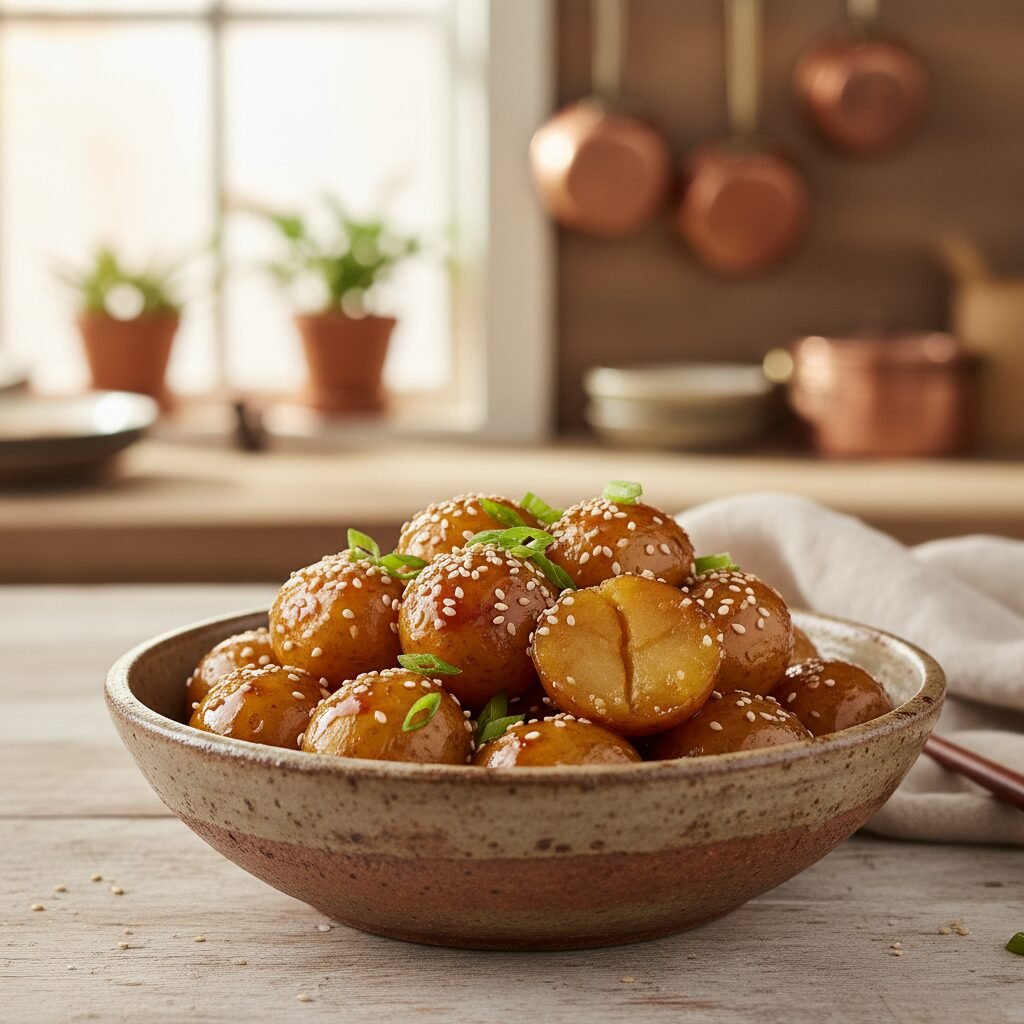
Oh, sweet friends, get ready to fall head over heels for Gamja Jorim! This delightful Korean sticky soy potato side dish is pure comfort food magic, with tender potatoes coated in a savory, slightly sweet, and utterly addictive glaze. It’s super easy to make and perfect for busy weeknights, bringing a little bit of Korean warmth right to your dinner table!
15 minutes
25 minutes
40 minutes
4-6 servings
Side Dish
Braised, Simmered
Korean
Vegetarian, Gluten-Free (with tamari)
Hello, lovely foodies! Are you ready to discover your new favorite side dish? Today, we’re diving into the wonderful world of Korean cuisine with a recipe that’s stolen my heart (and my family’s!): Gamja Jorim. Imagine tender, bite-sized potatoes, simmered to perfection in a glossy, savory-sweet soy garlic glaze that clings to every single piece. It’s the kind of dish that disappears from the table in a flash, leaving everyone asking for more!
For me, Gamja Jorim isn’t just a side dish; it’s a hug in a bowl. It reminds me of cozy evenings, shared meals, and the simple joy of truly delicious, wholesome food. It’s incredibly versatile, pairing beautifully with almost any main course, and honestly, sometimes I just eat a bowl of it all by itself! If you’re new to Korean cooking, this is the perfect entry point – it uses simple ingredients, comes together quickly, and delivers big on flavor. Trust me, once you try these sticky soy potatoes, you’ll be adding them to your regular rotation. Let’s get cooking and bring some of that Korean kitchen magic into your home!
History & Origins
Gamja Jorim, or Korean braised potatoes, is a beloved staple in Korean households, a classic banchan (side dish) that graces almost every meal. Its origins are rooted in the practicality and resourcefulness of Korean home cooking. Potatoes, or ‘gamja’ in Korean, became a significant part of the Korean diet after their introduction to the peninsula, likely in the 19th century.
The ‘jorim’ cooking method refers to dishes that are simmered in a seasoned broth until the liquid reduces and coats the ingredients, creating a rich, concentrated flavor. This technique is common in Korean cuisine for various ingredients, from tofu to fish. Gamja Jorim specifically highlights the humble potato, transforming it into something extraordinary with a simple yet profound combination of soy sauce, garlic, sugar, and often a touch of sesame oil and seeds. It’s a testament to how everyday ingredients can be elevated into something truly special through thoughtful preparation, a tradition passed down through generations of Korean mothers and grandmothers.
Why This Recipe Works
The magic of Gamja Jorim lies in a few key culinary principles that make it so irresistibly delicious. First, the potatoes are often pan-fried or blanched slightly before simmering. This step creates a slightly crisp exterior that helps them hold their shape better during braising and allows them to absorb the sauce more effectively without becoming mushy.
Second, the sauce itself is a masterclass in balance: the umami from soy sauce, the sweetness from sugar or corn syrup, the pungent warmth of garlic, and a hint of spice from gochugaru (Korean chili flakes, if used). As the potatoes simmer, the starch from the potatoes slightly thickens the sauce, and the sugars caramelize, creating that signature glossy, sticky glaze. This reduction process concentrates the flavors, ensuring every bite is packed with savory, sweet, and garlicky goodness. The final touch of sesame oil and seeds adds a nutty aroma and a delightful textural contrast, completing a perfectly harmonious dish.
Why You’ll Love This Recipe
- ✓Incredibly easy to make, perfect for beginners!
- ✓A delightful balance of savory, sweet, and umami flavors.
- ✓Tender potatoes coated in a glossy, sticky glaze.
- ✓Versatile side dish that pairs with almost any meal.
- ✓Budget-friendly and uses simple pantry staples.
- ✓A comforting taste of authentic Korean home cooking.
Equipment You’ll Need
- ✓Large non-stick skillet or wok
- ✓Cutting board
- ✓Sharp knife
- ✓Measuring cups and spoons
- ✓Spatula or wooden spoon
Ingredients
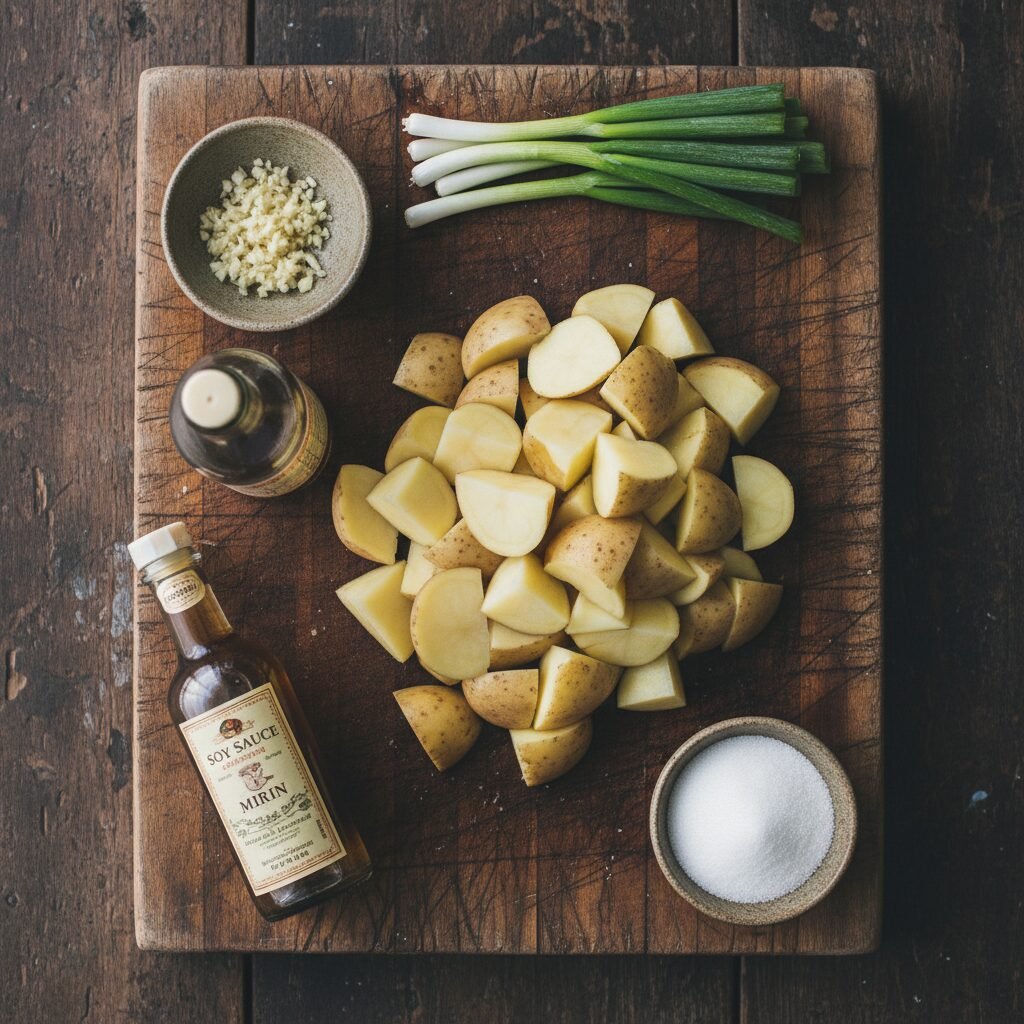
- ✓2 lbs (about 4-5 medium) Yukon Gold or Russet potatoes, peeled and cut into 1-inch cubes
- ✓2 tablespoons neutral oil (like canola or vegetable oil)
- ✓4 cloves garlic, minced
- ✓1/2 cup soy sauce (use low sodium if preferred)
- ✓1/4 cup water
- ✓2 tablespoons sugar (or Korean corn syrup/rice syrup for extra gloss)
- ✓1 tablespoon mirin (rice wine)
- ✓1 teaspoon sesame oil
- ✓1 teaspoon sesame seeds, for garnish
- ✓1 green onion, chopped, for garnish (optional)
- ✓1/2 teaspoon gochugaru (Korean chili flakes, optional, for a hint of spice)
Instructions
- Prepare the Potatoes: Peel the potatoes and cut them into roughly 1-inch cubes. Rinse them under cold water to remove excess starch, then drain well and pat them very dry with a clean kitchen towel or paper towels. This step is important for achieving a good texture.
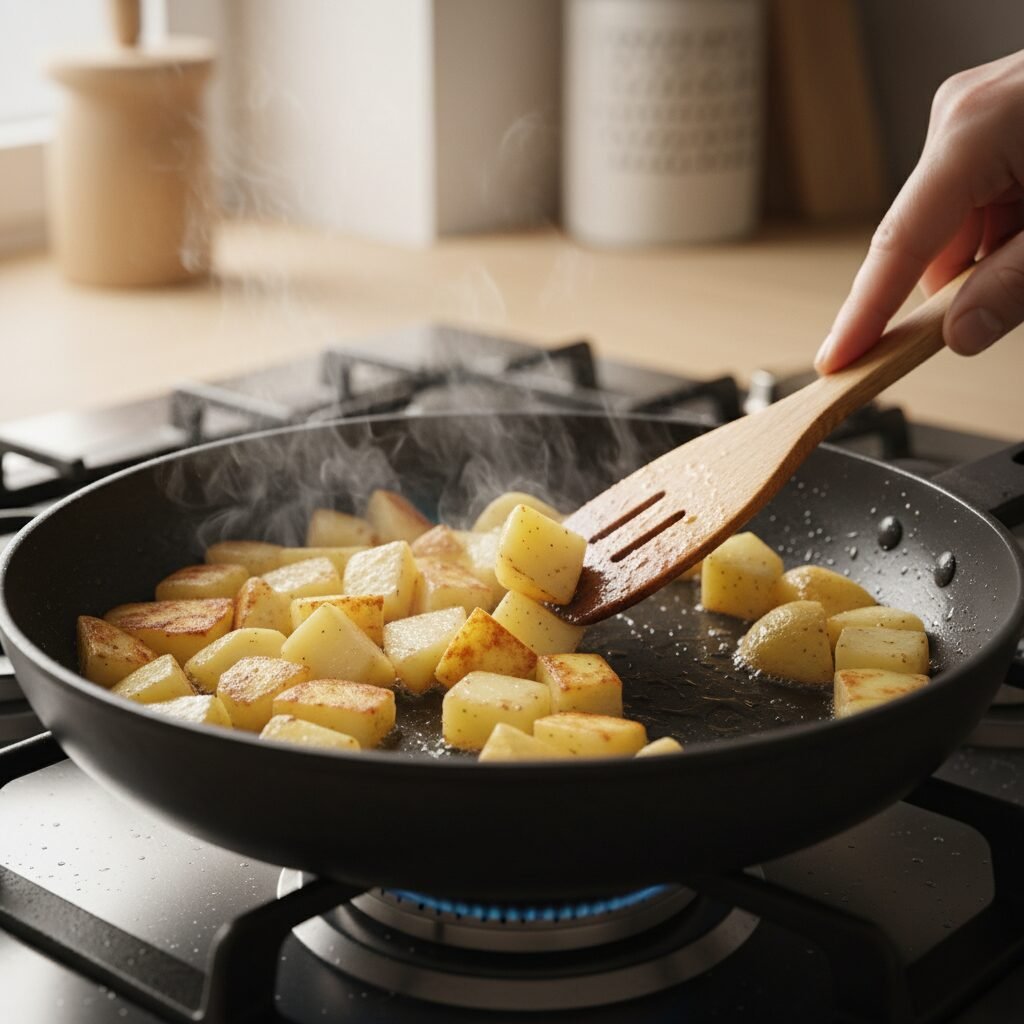
- Sear the Potatoes: Heat the neutral oil in a large non-stick skillet or wok over medium-high heat. Add the dried potato cubes in a single layer if possible. Cook for 5-7 minutes, stirring occasionally, until they are lightly golden brown on a few sides. You don’t need to cook them through, just get some color.
- Add Aromatics: Reduce the heat to medium. Add the minced garlic to the skillet and cook for 1 minute until fragrant, being careful not to burn it. If using, add the gochugaru now and stir for 30 seconds.
- Make the Sauce: In a small bowl, whisk together the soy sauce, water, sugar (or corn syrup), and mirin. Pour this sauce mixture over the potatoes in the skillet.
- Simmer and Glaze: Bring the sauce to a gentle simmer. Reduce the heat to medium-low, cover the skillet, and let it cook for 10-15 minutes, or until the potatoes are tender when pierced with a fork.
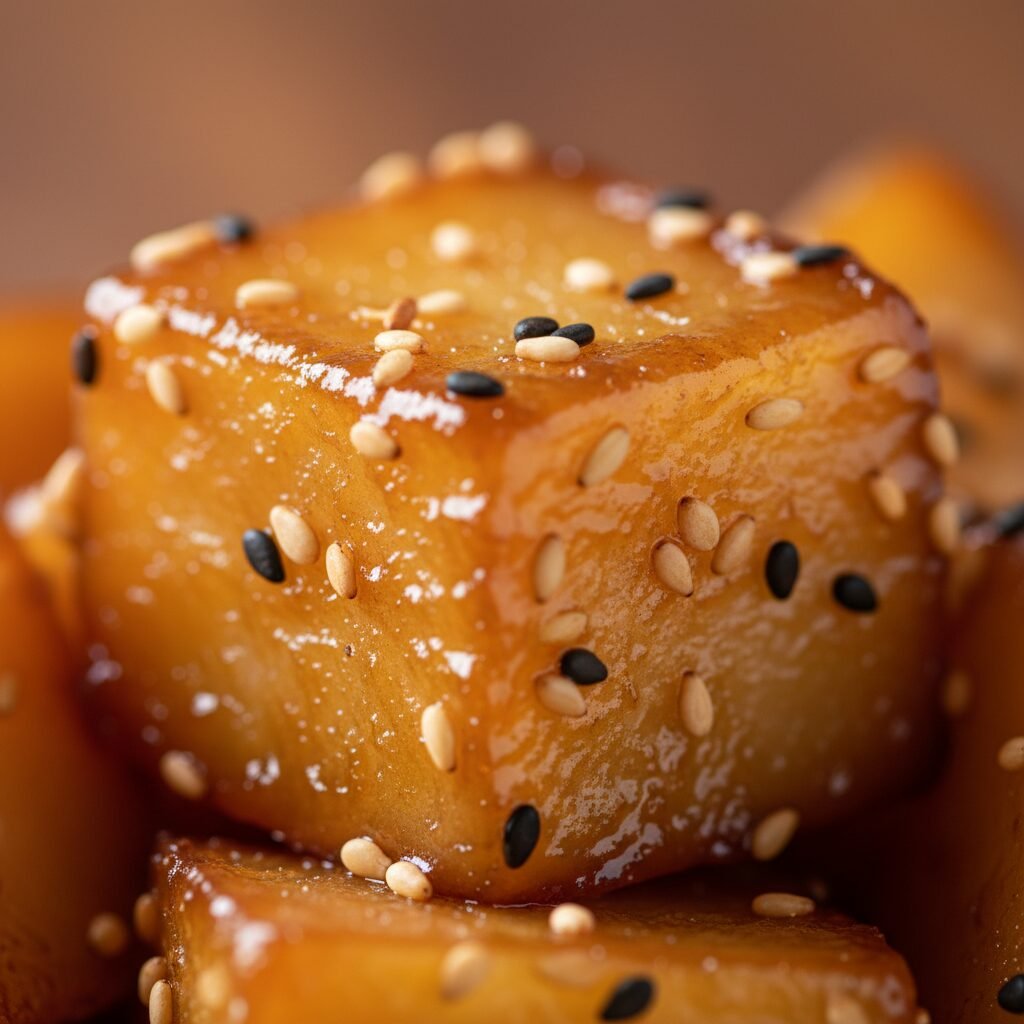
- Reduce the Sauce: Remove the lid and increase the heat to medium-high. Continue to cook, stirring gently and frequently, for another 5-7 minutes, or until the sauce has thickened and reduced to a glossy, sticky glaze that coats the potatoes beautifully. Be careful not to let it burn.
- Finish and Serve: Remove the skillet from the heat. Stir in the sesame oil. Transfer the Gamja Jorim to a serving dish. Garnish with sesame seeds and chopped green onions, if desired. Serve warm as a delicious side dish!
Expert Cooking Tips
- ✓Don’t overcrowd the pan when searing the potatoes; cook in batches if necessary to ensure even browning.
- ✓Patting the potatoes dry is crucial for getting a nice sear and preventing them from steaming.
- ✓Adjust the sweetness to your liking; some prefer more sugar, others less. Korean corn syrup gives a beautiful sheen.
- ✓For extra depth of flavor, you can add a small piece of dried kelp (dashima) to the sauce while simmering, removing it before the sauce reduces.
- ✓Taste the sauce as it reduces and adjust seasonings if needed.
Substitutions and Variations
If you’re looking to tweak this recipe a bit, there are definitely some easy substitutions!
For the potatoes, while Yukon Golds are my absolute favorite for their creamy texture, Russet or even red potatoes can work in a pinch. Just be aware that Russets might break down a bit more easily. If you don’t have mirin, a dry sherry or even a touch more sugar with a splash of water can mimic its sweetness and mild tang, though the flavor won’t be exactly the same. For a gluten-free version, simply swap out regular soy sauce for tamari. And if you’re out of green onions for garnish, a sprinkle of fresh chives or even a tiny bit of finely chopped parsley can add a fresh pop of color.
Common Mistakes to Avoid
Even though Gamja Jorim is super straightforward, there are a couple of pitfalls to watch out for to ensure your dish turns out perfectly every time.
The most common mistake is not drying the potatoes enough after rinsing. If they’re wet, they’ll steam instead of sear, leading to a mushy texture rather than that lovely slight crispness. Another common issue is overcooking the potatoes during the initial simmer. You want them tender, but not falling apart. Keep an eye on them and test with a fork. Finally, when reducing the sauce, make sure to stir frequently, especially towards the end, to prevent the sugars from burning and sticking to the bottom of the pan. A burnt sauce can quickly ruin the delicate balance of flavors!
Serving Suggestions
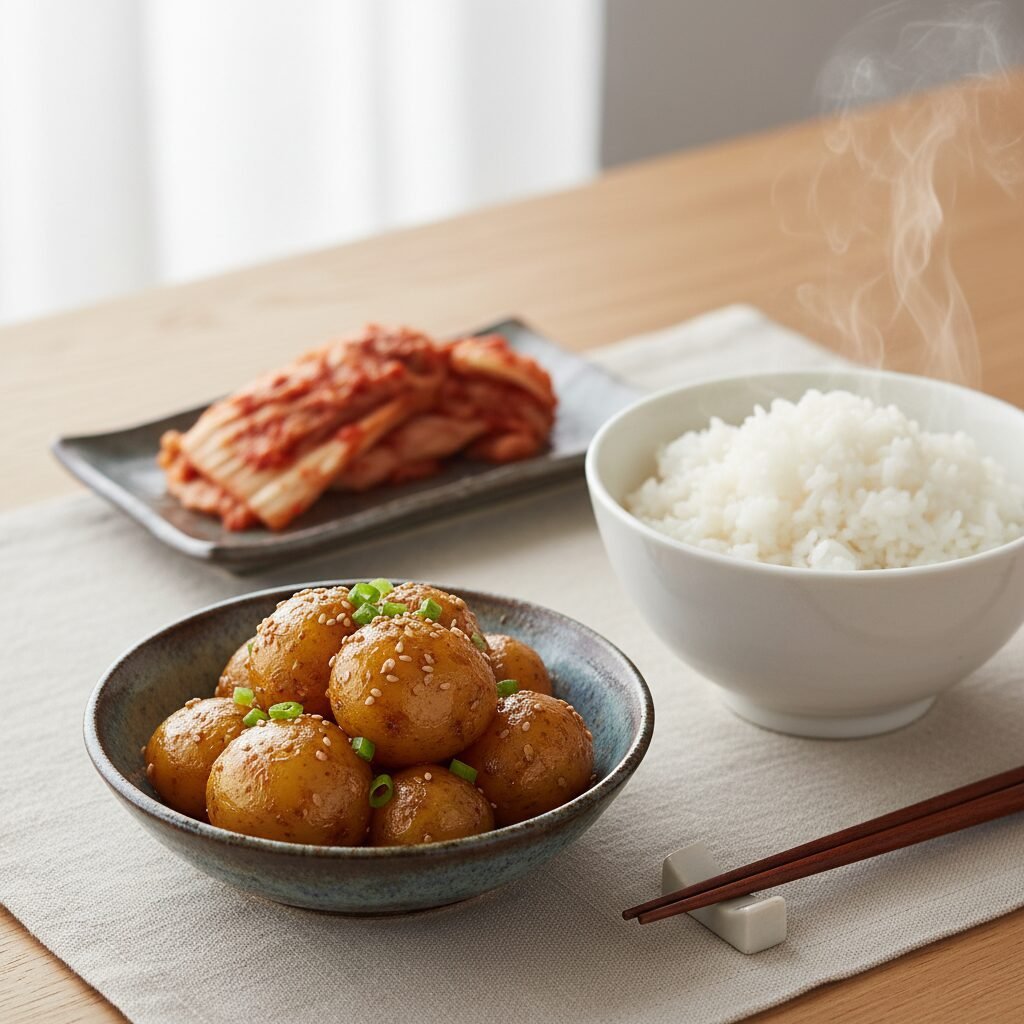
Gamja Jorim is the ultimate versatile side dish! It shines alongside a bowl of fluffy white rice and any Korean main course like Bulgogi, Kimchi Jjigae, or Galbi.
But don’t limit yourself to Korean fare! These sticky potatoes are fantastic with grilled chicken, pan-seared fish, or even as a unique twist to your weeknight roasted vegetables. I love serving them with a sprinkle of extra sesame seeds and a side of steamed greens for a complete and satisfying meal. They’re also wonderful packed into lunchboxes for a delicious cold or room-temperature treat!
Storage and Reheating Tips
Got leftovers? Lucky you! Gamja Jorim stores beautifully.
Simply transfer any cooled leftovers to an airtight container and refrigerate for up to 3-4 days. It’s actually one of those dishes that tastes even better the next day as the flavors have more time to meld and deepen! You can enjoy it cold straight from the fridge, or gently reheat it in the microwave or on the stovetop over low heat until warmed through. If reheating on the stovetop, you might want to add a tiny splash of water to loosen the sauce if it’s too thick.
Nutrition Facts (Estimated)
| Serving Size | 1/6 of recipe |
| Calories | 220 kcal |
| Fat | 5g |
| Saturated Fat | 0.5g |
| Unsaturated Fat | 3g |
| Trans Fat | 0g |
| Cholesterol | 0mg |
| Sodium | 450mg |
| Carbohydrates | 40g |
| Fiber | 4g |
| Sugar | 10g |
| Protein | 4g |
Frequently Asked Questions
Can I make Gamja Jorim spicy?
Absolutely! For a spicy kick, add 1/2 to 1 teaspoon of gochugaru (Korean chili flakes) along with the garlic in step 3, or a drizzle of sriracha at the end.
What kind of potatoes are best for Gamja Jorim?
Yukon Gold potatoes are highly recommended for their creamy texture and ability to hold their shape. Russet potatoes also work but can be a bit starchier and may break down more easily.
Can I prepare Gamja Jorim ahead of time?
Yes, Gamja Jorim is a fantastic make-ahead dish! The flavors often deepen overnight, making it perfect for meal prep or potlucks. Store it in an airtight container in the fridge for up to 3-4 days.
My sauce isn’t getting sticky, what should I do?
Make sure you’ve cooked the sauce down long enough with the lid off. Increasing the heat slightly and stirring frequently will help it reduce and thicken into that beautiful sticky glaze. If it’s still too thin, you can add a tiny cornstarch slurry (1/2 tsp cornstarch mixed with 1 tsp water) and simmer for another minute.
Is this recipe vegetarian/vegan?
Yes, this recipe is naturally vegetarian! To make it vegan, ensure your sugar is vegan (some sugars are processed with bone char, though most common granulated sugars are fine) and use a vegan-friendly soy sauce.
Can I add other vegetables to Gamja Jorim?
While traditional Gamja Jorim focuses on potatoes, you can certainly experiment! Small carrots, bell peppers, or even firm tofu cubes could be added during the simmering stage for extra nutrition and color.
What is mirin and can I skip it?
Mirin is a sweet Japanese rice wine used for cooking. It adds a subtle sweetness, tang, and gloss to the sauce. While you can skip it, it does contribute to the authentic flavor. A dry sherry or a pinch more sugar can be a substitute.
Why do I need to rinse the potatoes?
Rinsing the cut potatoes removes excess surface starch. This helps prevent them from sticking together, promotes better browning, and contributes to a less gummy texture in the final dish.
Can I use sweet potatoes instead of regular potatoes?
You can, but it will significantly change the flavor profile. Sweet potatoes will make the dish much sweeter and have a different texture. It would be a delicious variation, but not traditional Gamja Jorim.
Conclusion
And there you have it, my dear friends – a truly irresistible recipe for Gamja Jorim! This sticky soy potato side dish is more than just food; it’s a little piece of comfort, a burst of flavor, and a testament to how simple ingredients can create something truly extraordinary.
Whether you’re serving it alongside your favorite Korean BBQ, as a delightful addition to a weeknight meal, or simply enjoying it straight from the pan (no judgment here!), I promise it will bring smiles to your table. So go ahead, gather your ingredients, put on your favorite apron, and let’s make some culinary magic. Happy cooking, and don’t forget to share your beautiful creations with me!