Forget Sausage: Old Fashioned Tomato Gravy Is The Breakfast King
Forget Sausage: Old Fashioned Tomato Gravy Is The Breakfast King
In the grand pantheon of Southern breakfast staples, sausage gravy often hogs the spotlight. Poured over fluffy biscuits, it’s a hearty, comforting classic. But allow me to introduce you to its brighter, tangier, and arguably more versatile cousin: Old Fashioned Tomato Gravy. This humble, rustic sauce is a testament to the ingenuity of Appalachian and Southern kitchens, transforming simple pantry ingredients—fat, flour, and tomatoes—into a breakfast worthy of royalty. It’s a taste of history, a smooth, savory, and slightly sweet gravy that cuts through richness and adds a vibrant dimension to your morning plate. Forget the heavy, one-note gravies of the past; it’s time to crown a new breakfast king.
10 minutes
20 minutes
30 minutes
4-6 servings (about 3 cups)
Breakfast
Simmering
Southern American
Vegetarian
Why You’ll Love This Recipe
- A classic Southern and Appalachian recipe.
- Vegetarian-friendly when made with butter.
- Made with simple, affordable pantry staples.
- Incredibly versatile: perfect for breakfast, lunch, or dinner.
- Ready in under 30 minutes.
Equipment You’ll Need
- Large skillet (cast iron preferred)
- Whisk
- Measuring cups and spoons
- Knife and cutting board
Ingredients
- 4 tablespoons unsalted butter or reserved bacon grease
- 1/4 cup finely chopped sweet onion
- 1 clove garlic, minced
- 1/4 cup all-purpose flour
- 1 (15-ounce) can crushed tomatoes or tomato purée
- 1 1/2 cups whole milk or half-and-half
- 1 teaspoon granulated sugar (optional, to balance acidity)
- 1/2 teaspoon salt, or to taste
- 1/4 teaspoon freshly ground black pepper, or to taste
- Pinch of cayenne pepper or red pepper flakes (optional, for heat)
Instructions
- Melt the butter or bacon grease in a large skillet over medium heat. Add the chopped onion and cook, stirring occasionally, until softened and translucent, about 4-5 minutes.
- Add the minced garlic and cook for another minute until fragrant, being careful not to burn it.
- Sprinkle the flour over the onions and garlic. Whisk constantly to form a paste (a roux). Cook the roux for 2-3 minutes, stirring continuously. This step is crucial to cook out the raw flour taste. The roux should be smooth and smell slightly nutty.
- Gradually pour in the crushed tomatoes while whisking vigorously to prevent lumps. Once the tomatoes are fully incorporated and the mixture is smooth, slowly pour in the milk, whisking constantly.
- Bring the mixture to a gentle simmer. Reduce the heat to low and let it cook, stirring frequently, for 10-15 minutes, or until the gravy has thickened to your desired consistency. It should be thick enough to coat the back of a spoon.
- Stir in the sugar (if using), salt, black pepper, and cayenne pepper (if using). Taste and adjust seasonings as needed. Some canned tomatoes are more acidic than others, so you may need a bit more sugar or salt.
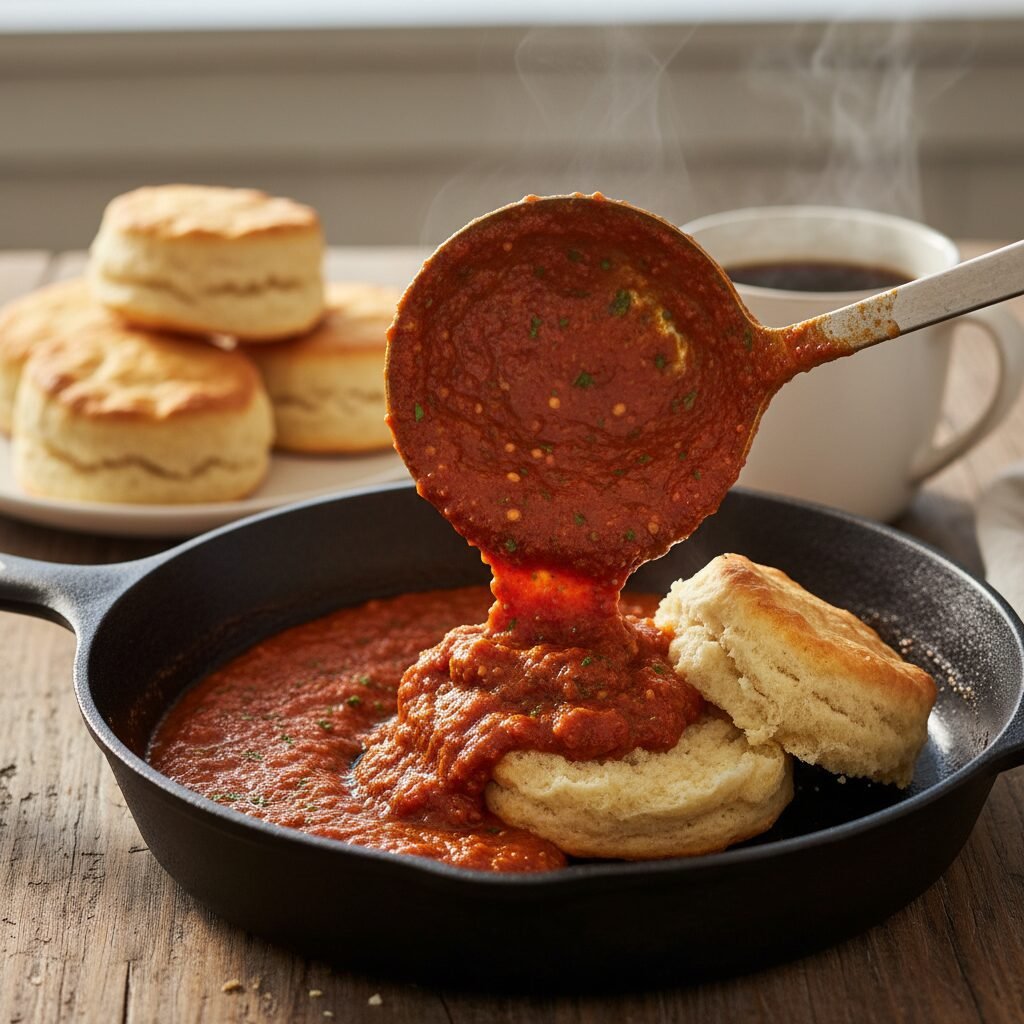
- Serve immediately over hot biscuits, grits, or toast.
Expert Cooking Tips
- Don’t rush the roux. Cooking the flour for a few minutes is essential for developing a rich flavor and avoiding a pasty taste.
- Add liquids slowly. Pouring in the tomatoes and milk gradually while whisking constantly is the key to a perfectly smooth, lump-free gravy.
- Taste and adjust. The final seasoning is personal. Adjust salt, pepper, and sugar to balance the acidity of the tomatoes and suit your palate.
- For a richer gravy, use half-and-half or a splash of heavy cream instead of all milk.
Substitutions and Variations
For a traditional flavor, use bacon grease instead of butter. For a vegan version, use a neutral oil or plant-based butter, all-purpose gluten-free flour, and an unsweetened plant-based milk like oat or soy milk. You can use fresh, finely diced tomatoes, but you may need to cook them down longer to achieve the right consistency.
Common Mistakes to Avoid
The most common mistake is not cooking the roux long enough, resulting in a gravy that tastes of raw flour. Another is adding the liquids too quickly, which can create lumps that are difficult to whisk out. Finally, under-seasoning can leave the gravy tasting flat; be sure to balance the tomato’s acidity with enough salt and a touch of sugar.
Serving Suggestions
The classic pairing is with hot, fluffy buttermilk biscuits. It’s also fantastic spooned over creamy grits, fried potatoes, scrambled eggs, or even fried chicken. For a hearty meal, serve it alongside sausage patties or crispy bacon.
Storage and Reheating Tips
Store leftover tomato gravy in an airtight container in the refrigerator for up to 4 days. The gravy will thicken as it cools. Reheat gently in a saucepan over low heat, adding a splash of milk to thin it to the desired consistency while whisking.
Nutrition Facts (Estimated)
| Serving Size | 3/4 cup |
| Calories | 145 kcal |
| Fat | 9g |
| Saturated Fat | 5g |
| Unsaturated Fat | 4g |
| Trans Fat | 0g |
| Cholesterol | 25mg |
| Sodium | 450mg |
| Carbohydrates | 14g |
| Fiber | 2g |
| Sugar | 7g |
| Protein | 3g |
Frequently Asked Questions
Can I make this tomato gravy gluten-free?
Yes, you can substitute the all-purpose flour with a 1:1 gluten-free baking flour blend. The texture may be slightly different, but it will still be delicious.
Is tomato gravy supposed to be sweet?
It’s not a sweet gravy, but a small amount of sugar is often added to balance the natural acidity of the tomatoes, creating a more rounded, savory flavor profile. You can adjust the sugar to your preference or omit it entirely.
Can I use fresh tomatoes instead of canned?
Absolutely. You’ll need about 2 cups of finely chopped and seeded ripe tomatoes. You may need to cook the gravy a bit longer to allow the fresh tomatoes to break down and the sauce to thicken properly.
Conclusion
Simple, soulful, and deeply satisfying, Old Fashioned Tomato Gravy is more than just a recipe; it’s a celebration of making something wonderful from humble beginnings. Whether you’re a Southerner longing for a taste of home or a newcomer ready to be converted, this gravy will earn its permanent place on your breakfast table. Give it a try, and you’ll see why this vibrant, savory sauce deserves to be crowned the true king of breakfast.