Don’t Throw It Out! Turn Cold Mash Into Pillowy Gnocchi
Don’T Throw It Out! Turn Cold Mash Into Pillowy Gnocchi
In the culinary world, few transformations are as magical or as satisfying as turning humble leftovers into a dish of sublime elegance. We’ve all been there: a container of cold, slightly stiff mashed potatoes sits forlornly in the refrigerator after a holiday feast or a Sunday dinner. Your first instinct might be to discard it, but I’m here to tell you to stop. That container doesn’t hold leftovers; it holds potential. Specifically, the potential for the most tender, pillowy, and soul-satisfying potato gnocchi you’ve ever tasted. This recipe is more than just a method for cooking; it’s a philosophy of resourceful, waste-free kitchen craft. It honors the ingredients we’ve already prepared and elevates them into something entirely new and utterly delicious. Forget the dense, gummy store-bought varieties. With just a few staple ingredients and that cold mashed potato, you are about to create a restaurant-quality Italian classic in your own kitchen. Prepare to be amazed at how simple it is to spin yesterday’s side dish into tonight’s star attraction.
25 minutes
10 minutes
35 minutes
4-6 servings
Main Course
Boiling
Italian
Vegetarian
Why You’ll Love This Recipe
- Reduces food waste by using leftover mashed potatoes.
- Requires only 4 main ingredients.
- Achieves a light, airy texture that rivals restaurant gnocchi.
- Freezer-friendly for easy make-ahead meals.
- A versatile dish that pairs with a wide variety of sauces.
Equipment You’ll Need
- Large mixing bowl
- Potato ricer or fork
- Bench scraper or knife
- Gnocchi board or a standard dinner fork
- Large pot for boiling
- Slotted spoon
- Baking sheet lined with parchment paper
Ingredients
- 2 cups (approx. 1 lb or 450g) cold, leftover mashed potatoes, preferably unseasoned or lightly seasoned
- 1 cup (125g) all-purpose flour, plus more for dusting
- 1 large egg yolk
- 1/4 cup (25g) finely grated Parmesan cheese
- 1/2 teaspoon fine sea salt
- 1/4 teaspoon freshly ground black pepper
- Pinch of freshly grated nutmeg (optional)
Instructions
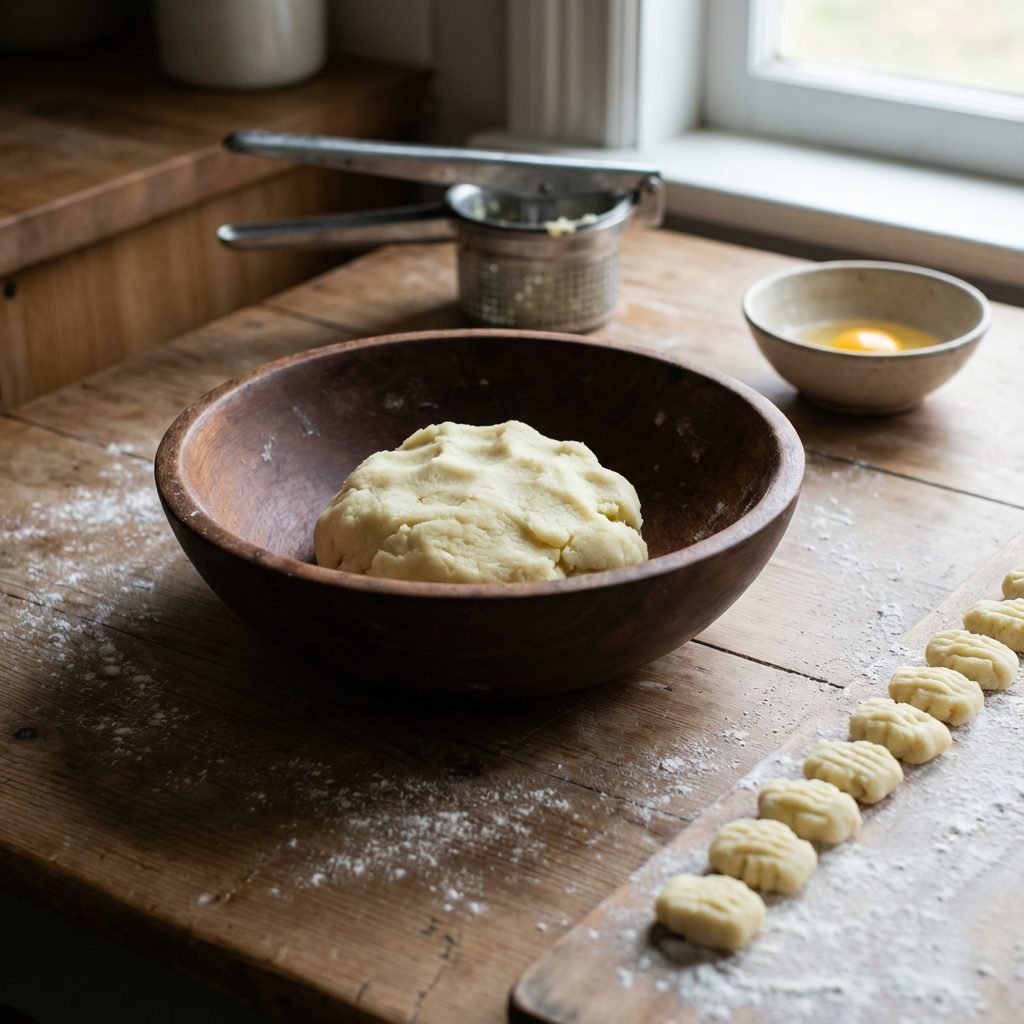
- Step 1: Prepare the Mashed Potatoes. Ensure your mashed potatoes are cold and relatively dry. If they seem overly moist or creamy (from lots of milk or butter), spread them out on a baking sheet and let them air-dry in the refrigerator for an hour. Pass the cold mash through a potato ricer into a large mixing bowl. If you don’t have a ricer, use a fork to break it up as finely as possible, ensuring there are no lumps.
- Step 2: Combine the Ingredients. To the riced potatoes, add the egg yolk, grated Parmesan cheese, salt, pepper, and optional nutmeg. Gently mix with a fork until just combined.
- Step 3: Incorporate the Flour. Sprinkle about 3/4 cup of the flour over the potato mixture. Using your hands or a fork, gently fold the flour in until a shaggy dough begins to form. Be very careful not to overmix at this stage.
- Step 4: Gently Knead the Dough. Turn the mixture out onto a lightly floured surface. Gently knead the dough for just 30-60 seconds, incorporating the remaining 1/4 cup of flour as needed, until it just comes together into a smooth, soft, and slightly tacky ball. The less you work the dough, the lighter your gnocchi will be. The final dough should not be sticky.
- Step 5: Divide and Roll. Cut the dough into four equal pieces using a bench scraper. Working with one piece at a time (keeping the others covered with a clean kitchen towel), roll it out into a long rope about 3/4-inch in diameter. Use light, even pressure from your fingertips.
- Step 6: Cut the Gnocchi. Using the bench scraper or a knife, cut the rope into 1-inch pieces. Place the cut gnocchi onto a parchment-lined baking sheet, making sure they don’t touch.
- Step 7: Shape the Gnocchi (Optional but Recommended). For the classic ridges that help sauce cling to the pasta, gently press each gnocco against the tines of a fork and roll it down, creating an indent on one side and ridges on the other. Alternatively, use a gnocchi board. Place the shaped gnocchi back on the parchment-lined sheet.
- Step 8: Cook the Gnocchi. Bring a large pot of salted water to a rolling boil. Working in batches to avoid overcrowding the pot, carefully drop the gnocchi into the water. Give them a gentle stir to prevent sticking. They will sink to the bottom initially. After 2-3 minutes, they will float to the surface. Cook for another 30-60 seconds after they float, then remove them with a slotted spoon.
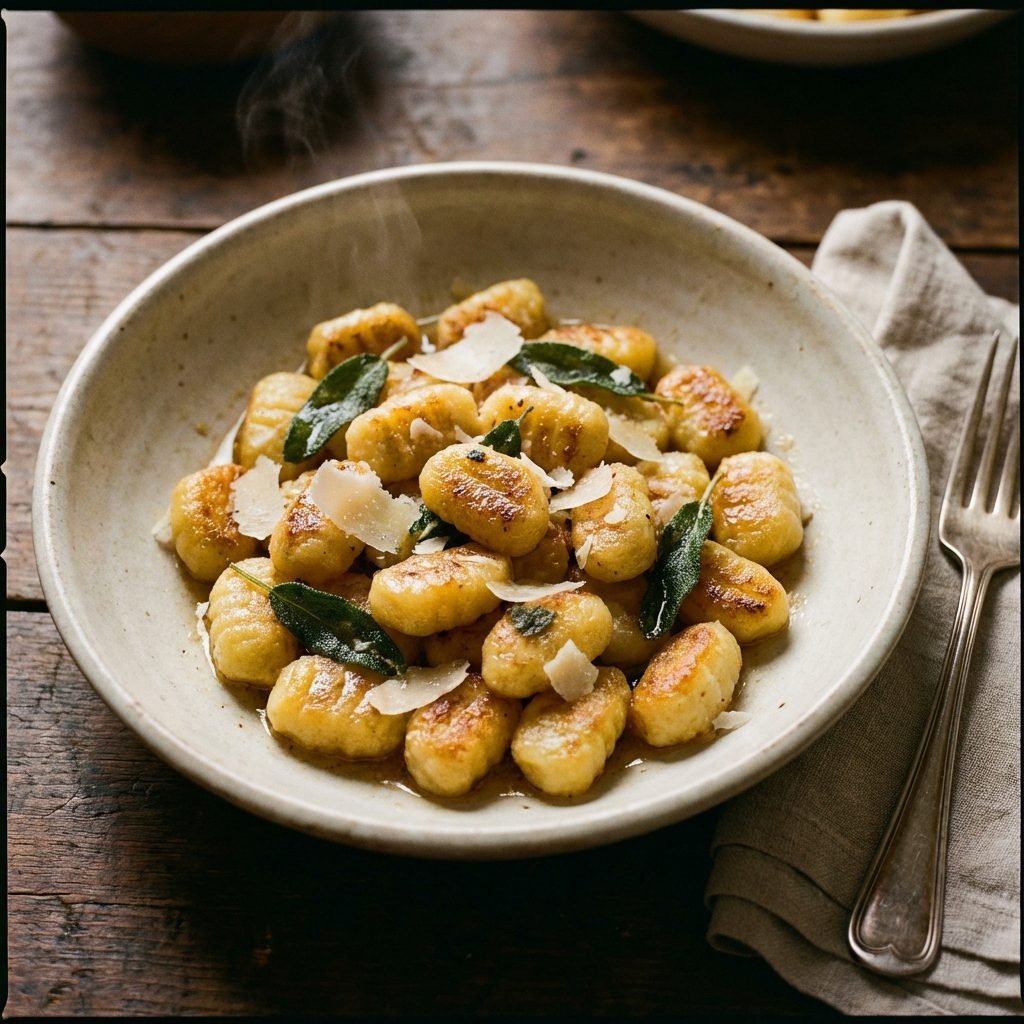
- Step 9: Serve. The gnocchi are now ready to be served. You can toss them directly with your favorite sauce, or for a superior texture, pan-sear them in a little butter or olive oil after boiling until golden brown before saucing. Serve immediately.
Expert Cooking Tips
- The Drier, The Better: The success of your gnocchi hinges on the moisture content of your potatoes. Dry, starchy potatoes like Russets or Idaho make the best base. If your mash is wet, the dough will require too much flour, leading to heavy gnocchi.
- Don’t Overwork the Dough: This is the golden rule of gnocchi making. Overworking develops gluten in the flour, which results in tough, chewy gnocchi instead of light, pillowy ones. Mix and knead only until the dough just comes together.
- Use a Light Touch with Flour: Add flour gradually. You want to use just enough for the dough to be manageable and not sticky. Too much flour will mask the delicate potato flavor and create a dense texture.
- Test One First: Before cooking an entire batch, boil a single gnocco to test its texture and seasoning. If it falls apart, the dough may need a touch more flour. If it’s too dense, you know to be even gentler with the remaining dough.
- Cook in Batches: Never overcrowd the pot when boiling gnocchi. Cooking them in smaller batches allows them to move freely and cook evenly. Overcrowding lowers the water temperature and can cause the gnocchi to clump together or cook unevenly.
Substitutions and Variations
For a gluten-free version, you can substitute the all-purpose flour with a quality gluten-free all-purpose blend that contains xanthan gum. The texture may be slightly different but still delicious. For a richer flavor, you can use Pecorino Romano cheese instead of Parmesan. If you don’t have an egg yolk, you can omit it, but you may need slightly less flour as the yolk acts as a binder and adds fat.
Common Mistakes to Avoid
The most common mistake is creating gummy or tough gnocchi. This is almost always caused by one of three things: 1) Using mashed potatoes that are too wet or warm, forcing you to add excess flour. 2) Adding too much flour from the start, resulting in a dense, flavorless dough. 3) Overworking the dough, which develops too much gluten and ruins the delicate, pillowy texture. Always work gently and quickly, and use cold, dry potatoes.
Serving Suggestions
The beauty of potato gnocchi lies in its versatility. For a classic and simple preparation, toss with brown butter and fresh sage leaves, finished with a sprinkle of Parmesan. A vibrant pesto sauce is another excellent choice. They are also sturdy enough to stand up to a hearty bolognese or a simple, fresh tomato and basil sauce. For a decadent treat, serve them in a creamy gorgonzola sauce with toasted walnuts.
Storage and Reheating Tips
To store uncooked gnocchi, arrange them in a single layer on a parchment-lined baking sheet and freeze until solid, about 1-2 hours. Once frozen, transfer them to a freezer-safe bag or container. They can be stored in the freezer for up to 2 months. Cook directly from frozen; do not thaw. They will just need an extra minute or two in the boiling water. Cooked gnocchi should be eaten immediately for the best texture.
Nutrition Facts (Estimated)
| Serving Size | 1 serving (approx. 1/4 of recipe) |
| Calories | 380 kcal |
| Fat | 12g |
| Saturated Fat | 6g |
| Unsaturated Fat | 6g |
| Trans Fat | 0g |
| Cholesterol | 65mg |
| Sodium | 450mg |
| Carbohydrates | 55g |
| Fiber | 5g |
| Sugar | 3g |
| Protein | 13g |
Frequently Asked Questions
Why are my gnocchi gummy and heavy?
This is the most common issue and usually results from too much flour or overworking the dough. Use cold, dry mashed potatoes to minimize the amount of flour needed. Knead the dough just until it comes together and no more. The goal is a light, airy texture, which requires a gentle hand.
Can I make this recipe without an egg?
Yes, you can make eggless gnocchi. The egg yolk adds richness and acts as a binder, but it’s not strictly necessary. If you omit it, your dough might be slightly stickier, so be prepared to adjust flour lightly, but the gnocchi will be just as delicious.
What kind of leftover mashed potatoes work best?
The ideal leftover mash is made from starchy potatoes like Russets or Idaho and isn’t overly enriched with cream, milk, or butter. A drier mash is much easier to work with and requires less flour. If your mash is very creamy, try drying it out in the fridge as mentioned in the instructions.
Do I have to create the ridges on the gnocchi?
No, creating ridges with a fork or gnocchi board is optional. The gnocchi will cook and taste the same without them. However, the ridges serve a functional purpose: they create little pockets that trap sauce, ensuring every bite is perfectly flavorful.
Conclusion
There is a profound sense of accomplishment that comes from transforming what many would consider food scraps into a meal of such comfort and elegance. This recipe is a testament to the fact that great food doesn’t always require expensive ingredients or complicated techniques; sometimes, it just requires a little creativity and a respect for the food we have. So the next time you have leftover mashed potatoes, don’t see them as a problem to be solved. See them as the beginning of a delicious new adventure—one that ends with a perfect plate of pillowy, homemade gnocchi.