Don’t Throw Away Stale Bread: Make This Authentic Panzanella Instead
Don’T Throw Away Stale Bread: Make This Authentic Panzanella Instead
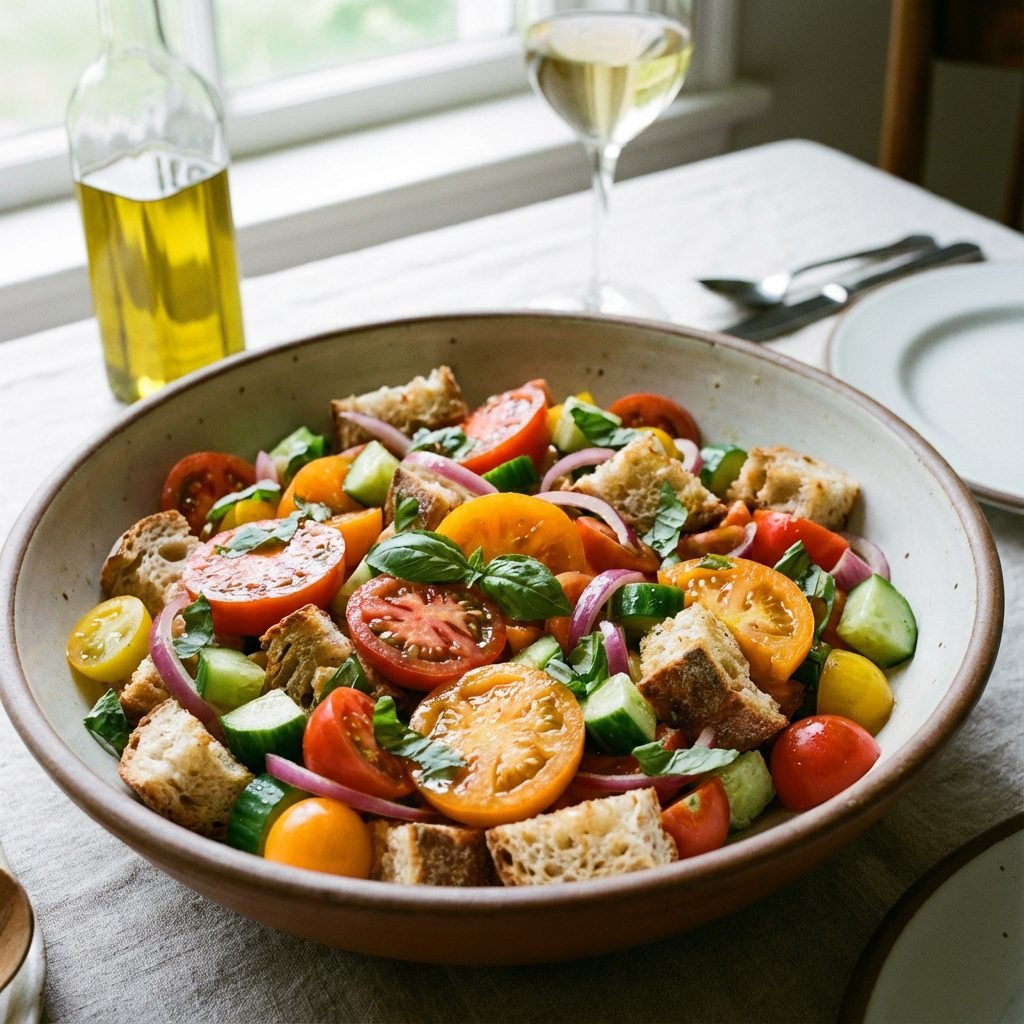
In the heart of Tuscany, where resourcefulness is as rich as the soil, a culinary tradition known as ‘cucina povera’ or ‘poor kitchen’ was born. This philosophy of using simple, humble ingredients to create extraordinary dishes is perfectly embodied by Panzanella. Far from being just a salad, Panzanella is a celebration of summer’s bounty and a testament to the magic of transformation. It takes something that might otherwise be discarded—stale, crusty bread—and turns it into the star of a vibrant, refreshing, and deeply satisfying meal. This authentic recipe is your ticket to a sun-drenched Italian afternoon, proving that the most delicious meals often come from the simplest of beginnings. Forget sad, soggy bread salads; this is Panzanella as it’s meant to be: a harmonious medley of textures and flavors that sings of summer.
20 minutes
0 minutes
50 minutes (includes 30 minutes for resting)
4-6 servings
Salad
Tossing
Italian
Vegetarian
Why You’ll Love This Recipe
- An authentic Tuscan recipe that honors tradition.
- The perfect way to use up stale, day-old bread, reducing food waste.
- A no-cook recipe ideal for hot summer days.
- Packed with fresh, seasonal vegetables and a bright, zesty vinaigrette.
- Easily adaptable with other vegetables or additions like cheese or olives.
Equipment You’ll Need
- Large mixing bowl
- Small bowl or jar for vinaigrette
- Whisk
- Sharp chef’s knife
- Cutting board
- Colander
Ingredients
- 1 lb (about 450g) stale, crusty rustic bread (like ciabatta or a country loaf), cut or torn into 1-inch cubes
- 1.5 lbs (about 680g) ripe, juicy tomatoes (heirloom, beefsteak, or vine-ripened are best), chopped
- 1 large English cucumber, peeled, seeded, and diced
- 1 medium red onion, very thinly sliced
- 1 cup packed fresh basil leaves, torn or roughly chopped
- 1/2 cup extra virgin olive oil, plus more for drizzling
- 3 tablespoons red wine vinegar
- 2 cloves garlic, minced
- 1 teaspoon sea salt, plus more to taste
- 1/2 teaspoon freshly ground black pepper
Instructions
- Place the cubed stale bread in a large bowl. In a separate bowl, combine the chopped tomatoes with 1/2 teaspoon of salt. Let the tomatoes sit for 10-15 minutes to release their juices. This juice is liquid gold for the salad.
- While the tomatoes macerate, prepare the red onion. To mellow its sharp bite, place the thinly sliced onion in a small bowl of cold water for about 10 minutes. Drain well before using.
- Prepare the vinaigrette. In a small bowl or a jar with a lid, combine the 1/2 cup of extra virgin olive oil, red wine vinegar, minced garlic, remaining 1/2 teaspoon of salt, and black pepper. Whisk or shake vigorously until well emulsified.
- Pour the juices released from the tomatoes over the bread cubes. Toss gently to coat. Let the bread sit for a few minutes to absorb the flavorful liquid, but not so long that it becomes complete mush.
- Add the salted tomatoes, drained red onion, diced cucumber, and torn basil leaves to the bowl with the bread.
- Pour the vinaigrette over the salad. Use your hands or two large spoons to gently toss everything together, ensuring all the ingredients are well-coated.
- Let the Panzanella rest at room temperature for at least 30 minutes before serving. This crucial step allows the bread to fully absorb the dressing and the flavors to meld together into a cohesive, delicious whole.
- Before serving, taste and adjust seasoning with more salt and pepper if needed. Garnish with a few extra basil leaves and a final drizzle of high-quality olive oil.
Expert Cooking Tips
- The bread is key. Use a high-quality, artisan-style loaf with a firm crust and open crumb. It must be properly stale (hard and dry), not just soft, day-old bread.
- Don’t skip salting the tomatoes. The juice they release is essential for flavoring the bread and forms the base of the dressing.
- Use the best ingredients you can find. Since this salad is so simple, the quality of the tomatoes, olive oil, and vinegar will shine through.
- For a milder onion flavor, soak the sliced red onions in cold water or a mixture of water and vinegar for 10 minutes, then drain.
- Tear, don’t cut, the basil. Tearing the leaves releases their aromatic oils without bruising them as much as a knife would.
Substitutions and Variations
For a different flavor profile, you can add other summer vegetables like chopped bell peppers (red or yellow), celery, or radishes. A handful of capers or Kalamata olives can add a briny kick. For a non-vegetarian version, add some high-quality canned tuna in olive oil or a few chopped anchovy fillets to the vinaigrette. To make it a more substantial meal, add cubes of fresh mozzarella or creamy cannellini beans.
Common Mistakes to Avoid
The most common mistake is using fresh, soft bread. This will disintegrate into a soggy, porridge-like mess. The bread must be truly stale and hard. Another error is over-soaking the bread; it should be softened by the tomato juices and vinaigrette but still retain some of its texture and bite. Finally, don’t serve it immediately. The salad absolutely must rest for at least 30 minutes for the flavors to marry properly.
Serving Suggestions
Panzanella is a fantastic standalone light lunch, but it also serves as a perfect side dish. Pair it with grilled chicken, steak, or fish for a complete summer meal. It’s also wonderful alongside a cheese and charcuterie board. Serve with a crisp Italian white wine like a Vermentino or Pinot Grigio, or a light red like Chianti.
Storage and Reheating Tips
Panzanella is best enjoyed the day it is made, ideally within a few hours of assembly. While you can store leftovers in an airtight container in the refrigerator for up to a day, be aware that the bread will continue to soften and the salad will lose its textural contrast. It will still be flavorful, but the experience will be different.
Nutrition Facts (Estimated)
| Serving Size | 1 serving (approx. 1.5 cups) |
| Calories | 380 kcal |
| Fat | 22g |
| Saturated Fat | 3.5g |
| Unsaturated Fat | 18.5g |
| Trans Fat | 0g |
| Cholesterol | 0mg |
| Sodium | 480mg |
| Carbohydrates | 36g |
| Fiber | 6g |
| Sugar | 9g |
| Protein | 8g |
Frequently Asked Questions
My bread isn’t stale enough. What can I do?
If your bread is only a day old and not truly hard, you can speed up the process. Cut it into cubes, spread them on a baking sheet, and bake in a 300°F (150°C) oven for 10-15 minutes, or until dried out and lightly toasted. Let it cool completely before using.
Can I make Panzanella ahead of time?
You can prepare the components ahead of time, but you should not assemble the salad until about 30-60 minutes before you plan to serve it. You can chop the vegetables, make the vinaigrette, and cube the bread in advance. Store them in separate airtight containers in the refrigerator (except for the bread and tomatoes, which should be kept at room temperature).
Conclusion
Panzanella is more than just a recipe; it’s a way of thinking about food. It’s about taking pride in simplicity, celebrating the peak of seasonal produce, and finding beauty in ingredients that others might overlook. By transforming a stale loaf of bread into the foundation of this iconic Tuscan salad, you’re not just making a meal—you’re participating in a centuries-old tradition of delicious resourcefulness. So next time you have leftover bread, resist the urge to throw it away. Instead, embrace the spirit of ‘cucina povera’ and create a dish that is rustic, elegant, and unforgettable.