Don’t Throw Away Stale Bread: Make Authentic Spanish Migas
Don’T Throw Away Stale Bread: Make Authentic Spanish Migas
In the world of culinary alchemy, few transformations are as magical or as meaningful as turning stale, forgotten bread into a dish of profound flavor and history. Enter Spanish Migas, a testament to rustic ingenuity and the soul of Spanish peasant cooking. Born from necessity in the arid plains of Spain, Migas (which translates to ‘crumbs’) was the hearty, calorie-dense meal of shepherds who needed to make the most of their limited provisions. Today, it has evolved from a humble breakfast into a beloved dish served in homes and tapas bars across the country, celebrated for its savory depth and delightful texture. This recipe honors that tradition, showing you how to transform a humble loaf of day-old bread into a golden, garlic-infused feast studded with spicy chorizo. It’s more than just a recipe; it’s a lesson in resourcefulness and a delicious link to a rich culinary past.
10 minutes (plus 2 hours or overnight for bread to soak)
20 minutes
30 minutes (excluding soaking time)
4 servings
Main Course
Pan-Frying
Spanish
Omnivore
Why You’ll Love This Recipe
- Authentic Spanish flavor with simple, accessible ingredients.
- A perfect zero-waste recipe to use up stale bread.
- Highly versatile and easily customizable with different additions.
- Ready in under 30 minutes, ideal for a hearty breakfast, lunch, or dinner.
Equipment You’ll Need
- Large, heavy-bottomed skillet or paella pan
- Large bowl
- Sharp knife
- Cutting board
- Wooden spoon or spatula
Ingredients
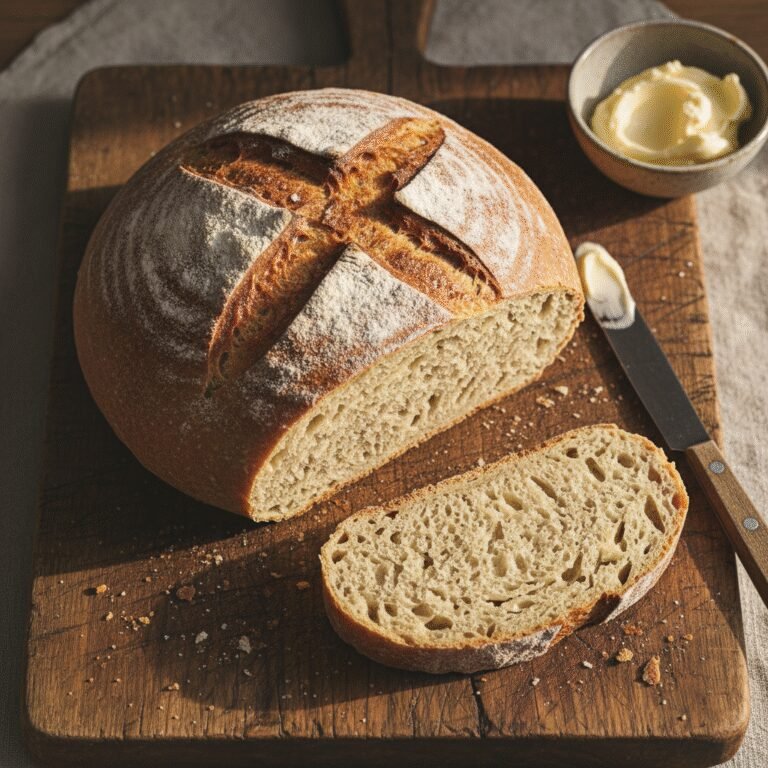
- 1 lb (about 450g) stale, crusty country-style bread, cut into 1/2-inch cubes
- 1 cup (240ml) water, plus more if needed
- 1/2 teaspoon salt
- 1/3 cup (80ml) extra virgin olive oil
- 6 oz (170g) Spanish chorizo, casing removed and diced
- 6-8 cloves garlic, peeled and lightly crushed
- 1 teaspoon sweet or hot smoked paprika (Pimentón de la Vera)
- Optional for serving: fried eggs, green grapes, roasted red peppers, chopped parsley
Instructions
- Prepare the Bread: Place the bread cubes in a large bowl. In a small cup, mix the water and salt until dissolved. Drizzle the salted water evenly over the bread cubes, tossing gently to moisten them without making them soggy. The goal is to rehydrate the bread slightly, not create a paste. Cover the bowl with a damp cloth and let it sit for at least 2 hours, or preferably overnight in the refrigerator. This step is crucial for the final texture.
- Render the Chorizo: Heat the olive oil in a large, heavy-bottomed skillet over medium heat. Add the diced chorizo and cook, stirring occasionally, until it has rendered its fat and become crispy, about 5-7 minutes. Use a slotted spoon to remove the chorizo from the skillet, leaving the flavorful, paprika-infused oil behind. Set the chorizo aside.
- Infuse the Oil: Add the crushed garlic cloves to the same skillet. Cook in the chorizo-infused oil for 1-2 minutes until they are fragrant and golden brown. Be careful not to burn them. Remove the garlic cloves and set them aside with the chorizo (or discard if you prefer a milder garlic flavor).
- Cook the Migas: Add the moistened bread cubes to the skillet. Stir well to coat them in the flavored oil. Reduce the heat to medium-low and begin the process of cooking the migas, breaking up any large clumps with your spoon. Cook for 15-20 minutes, turning and tossing the bread crumbs frequently. The key is patience; you want the crumbs to slowly toast until they are golden brown and slightly crispy on the outside while remaining tender inside.
- Combine and Season: Once the migas have reached the desired texture, return the cooked chorizo and garlic to the skillet. Sprinkle the smoked paprika over everything and stir to combine well, cooking for another minute to toast the spice. Taste and adjust seasoning if necessary.
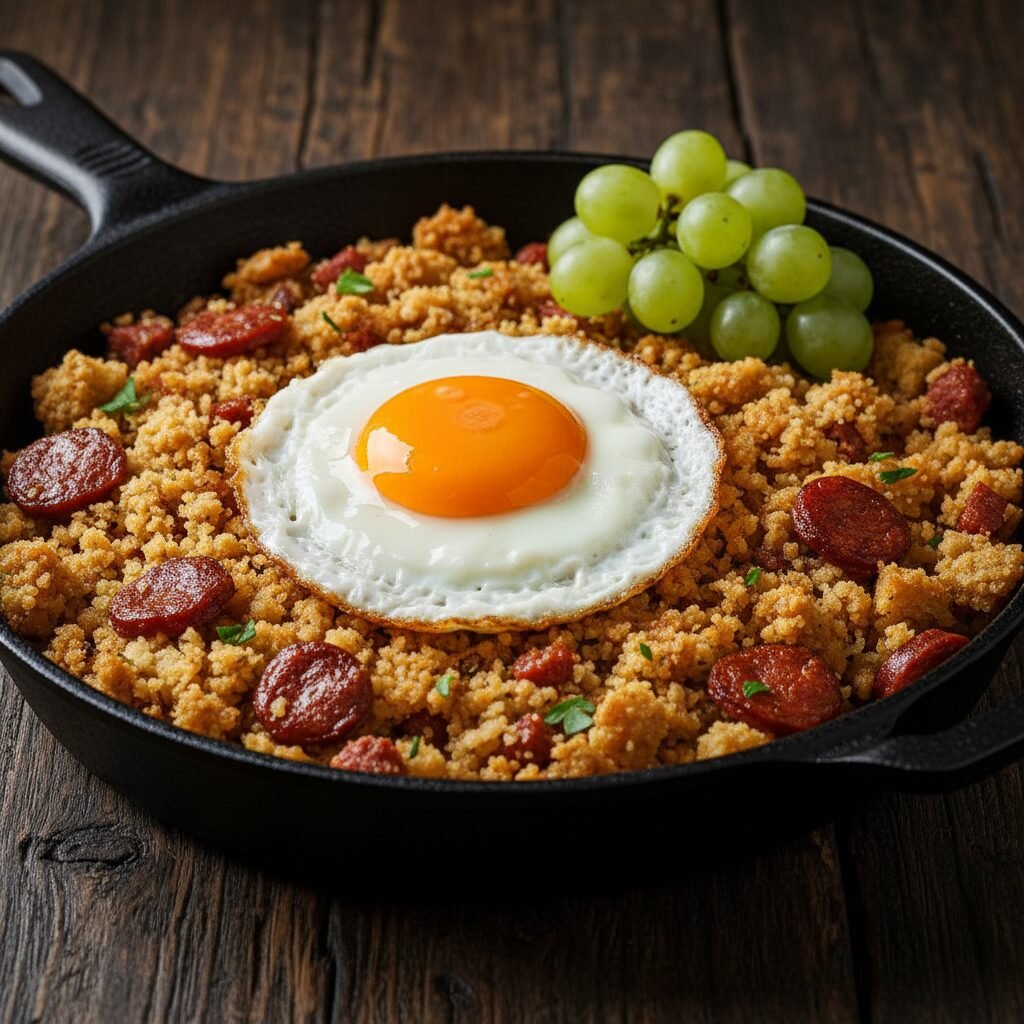
- Serve Immediately: Serve the migas hot, straight from the skillet. Garnish with chopped parsley and serve alongside traditional accompaniments like a fried egg on top or a handful of sweet green grapes to balance the savory flavors.
Expert Cooking Tips
- The Right Bread is Key: Use a dense, rustic loaf with a tight crumb. Airy breads like ciabatta or baguette will not work as well and can turn to mush.
- Don’t Drown the Bread: The goal is to moisten, not soak. The bread should feel slightly damp, not waterlogged. It’s better to start with less water and add a tiny bit more if needed.
- Constant Movement: Keep the migas moving in the pan to ensure they cook evenly and develop a crispy exterior without burning.
- Control Your Heat: Maintain a medium to medium-low heat. Too high, and the bread will burn before it cooks through; too low, and it will steam instead of fry.
Substitutions and Variations
For a vegetarian version, omit the chorizo and use an extra 2 tablespoons of olive oil. Sauté diced mushrooms, red bell peppers, and onions to build flavor, and be sure to use smoked paprika for that characteristic Spanish taste. For a different flavor profile, you can substitute pancetta or bacon for the chorizo, but you will lose the paprika flavor from the rendered fat.
Common Mistakes to Avoid
The most common mistake is using fresh bread, which will absorb too much water and turn into a soggy porridge. Another frequent error is oversaturating the stale bread; this also leads to a mushy texture. Finally, rushing the cooking process and not allowing the bread crumbs to slowly toast and become crispy will result in a disappointing final dish. Patience is essential.
Serving Suggestions
The classic way to serve migas is topped with a runny fried egg (migas con huevo). The rich yolk creates a delicious sauce that coats the crispy bread. Another traditional pairing is sweet green grapes or melon, whose juicy sweetness provides a perfect contrast to the salty, savory chorizo. Serve as a hearty brunch, a light lunch with a side salad, or as a tapa with a glass of Spanish red wine like a Tempranillo.
Storage and Reheating Tips
Store leftover migas in an airtight container in the refrigerator for up to 3 days. To reheat, place them in a dry, non-stick skillet over medium heat and toss frequently until warmed through and crispy again. Avoid reheating in the microwave, as this will make them soft and soggy.
Nutrition Facts (Estimated)
| Serving Size | 1 serving (approx. 1.5 cups) |
| Calories | 480 kcal |
| Fat | 28g |
| Saturated Fat | 9g |
| Unsaturated Fat | 19g |
| Trans Fat | 0g |
| Cholesterol | 50mg |
| Sodium | 950mg |
| Carbohydrates | 40g |
| Fiber | 3g |
| Sugar | 3g |
| Protein | 16g |
Frequently Asked Questions
What is the best type of bread for Migas?
The ideal bread is a dense, country-style loaf that is at least a day or two old. Look for a bread with a tight crumb that can hold its shape when moistened. In Spain, they often use ‘pan de pueblo’ or ‘pan candeal’.
Can I make Migas gluten-free?
Yes, you can use a high-quality, dense gluten-free loaf that is a few days old. The texture might be slightly different, but it can still be delicious. Ensure your chorizo is also certified gluten-free.
My migas turned out soggy. What did I do wrong?
Soggy migas are usually caused by one of two things: using bread that wasn’t stale enough, or adding too much water. Ensure your bread is properly hard and dry, and only add enough water to moisten the crumbs, not saturate them.
Conclusion
Migas is more than just a dish; it’s a philosophy of cooking that finds beauty and flavor in the simplest of ingredients. By making this recipe, you’re not only preventing food waste but also participating in a centuries-old culinary tradition. Each crispy, savory bite tells a story of resourcefulness and the enduring power of a good, simple meal. We encourage you to embrace the rustic charm of Migas, make it your own with different toppings, and share this comforting piece of Spanish history with your family and friends.