Creamier Than Mac & Cheese: The Broccoli Orzo Skillet You Need
Creamier Than Mac & Cheese: The Broccoli Orzo Skillet You Need
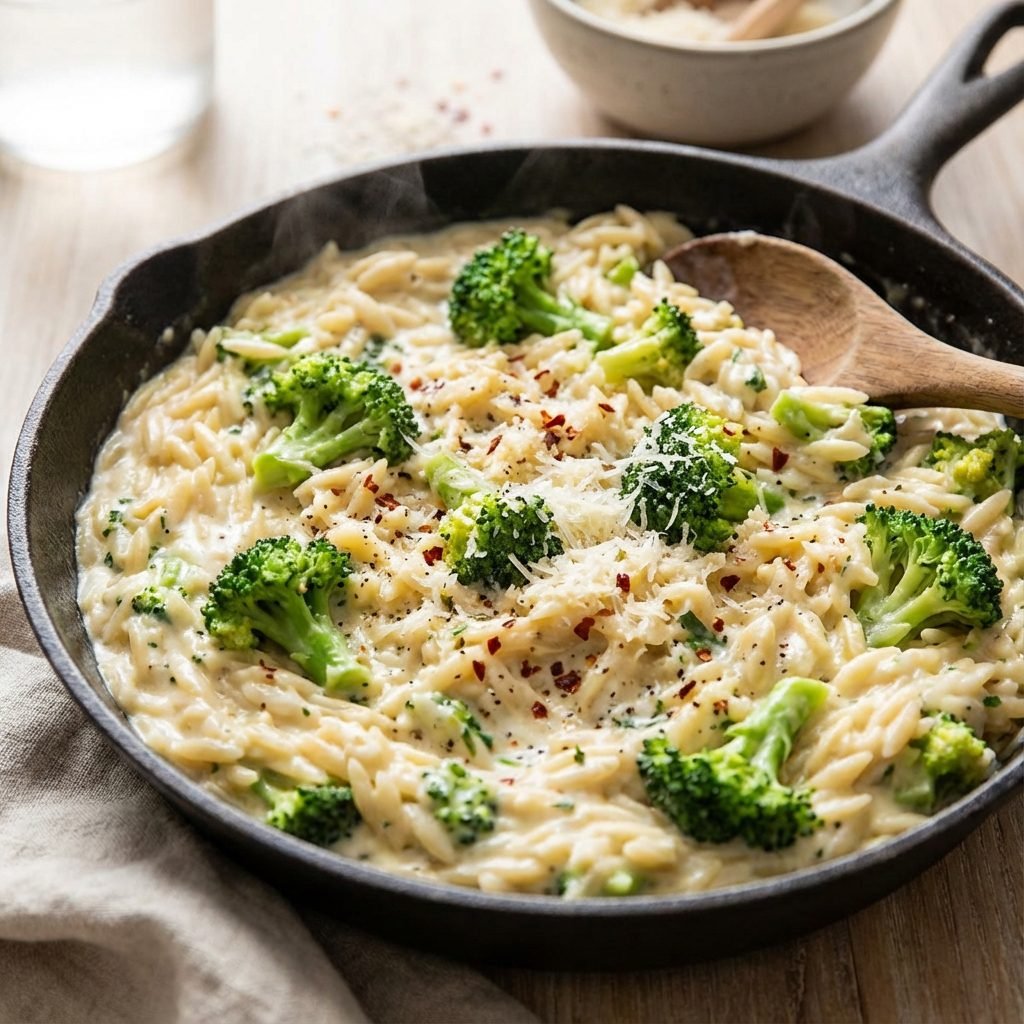
Forget everything you thought you knew about quick weeknight dinners. We’re here to introduce a dish so luxuriously creamy, so deeply satisfying, and so deceptively simple, it will earn a permanent spot in your rotation. Meet the Broccoli Orzo Skillet, a one-pan wonder that delivers all the comforting, cheesy goodness of classic macaroni and cheese, but with a sophisticated twist and a welcome dose of greens. The magic lies in the method: the orzo pasta cooks directly in a savory blend of broth and milk, releasing its starches to create a velvety, self-thickening sauce without a drop of heavy cream. Paired with tender broccoli florets and a sharp, tangy blend of cheeses, this meal is a masterclass in flavor, texture, and efficiency. Get ready to redefine comfort food.
10 minutes
20 minutes
30 minutes
4-6 servings
Main Course
Sautéing, Simmering
American
Vegetarian
Why You’ll Love This Recipe
- A true one-skillet meal for minimal cleanup.
- Achieves an incredibly creamy texture without heavy cream.
- Ready from start to finish in about 30 minutes.
- A sophisticated yet kid-friendly alternative to mac & cheese.
- Easily customizable with different vegetables or proteins.
Equipment You’ll Need
- Large skillet or Dutch oven with a lid (at least 12 inches)
- Chef’s knife
- Cutting board
- Measuring cups and spoons
- Cheese grater
- Spatula or wooden spoon
Ingredients
- 2 tablespoons olive oil
- 1 medium yellow onion, finely chopped
- 3 cloves garlic, minced
- 1 ½ cups (10 oz) uncooked orzo pasta
- 3 cups vegetable broth, low sodium
- 1 cup whole milk
- 1 teaspoon Dijon mustard
- ½ teaspoon salt, plus more to taste
- ¼ teaspoon black pepper, freshly ground
- 1 large head of broccoli (about 4-5 cups), cut into small, bite-sized florets
- 1 ½ cups (6 oz) sharp cheddar cheese, freshly grated
- ½ cup (2 oz) Parmesan cheese, freshly grated
- 1 tablespoon fresh lemon juice (optional, for brightness)
- Pinch of red pepper flakes (optional, for heat)
Instructions
- Heat the olive oil in a large skillet or Dutch oven over medium heat. Add the chopped onion and sauté for 4-5 minutes, until softened and translucent.
- Add the minced garlic and cook for another minute until fragrant, stirring constantly to prevent burning.
- Stir in the uncooked orzo pasta, toasting it in the skillet for about 1-2 minutes. This step enhances its nutty flavor.
- Pour in the vegetable broth and whole milk. Stir in the Dijon mustard, salt, and black pepper. Bring the mixture to a gentle simmer.
- Once simmering, reduce the heat to low, cover the skillet, and cook for 10-12 minutes, stirring occasionally to prevent the orzo from sticking to the bottom.
- Uncover the skillet and stir in the broccoli florets. Replace the lid and continue to cook for another 3-5 minutes, or until the orzo is al dente and the broccoli is tender-crisp. Most of the liquid should be absorbed, but the mixture should still be saucy.
- Remove the skillet from the heat completely. This is a crucial step to prevent the cheese from becoming grainy. Let it sit for 1-2 minutes.
- Gradually stir in the grated cheddar and Parmesan cheese until fully melted and the sauce is smooth and creamy.
- Stir in the optional lemon juice and red pepper flakes, if using. Taste and adjust seasoning with additional salt and pepper as needed.
- Serve immediately, garnished with extra Parmesan cheese if desired.
Expert Cooking Tips
- Use freshly grated cheese. Pre-shredded cheeses are often coated with anti-caking agents that can prevent them from melting smoothly, resulting in a gritty sauce.
- Cut broccoli into small, even-sized florets. This ensures they cook quickly and evenly along with the pasta.
- Stir frequently. As the orzo cooks, it releases starches that can cause it to stick to the bottom of the pan. A quick stir every few minutes will prevent this.
- Don’t overcook the pasta. Orzo cooks quickly. Aim for al dente, as it will continue to cook slightly from the residual heat of the sauce.
Substitutions and Variations
For a non-vegetarian version, use chicken broth and add cooked, shredded chicken or crumbled sausage at the end. You can swap broccoli for other quick-cooking vegetables like chopped asparagus, frozen peas (added in the last 2 minutes), or fresh spinach (stirred in with the cheese). For cheeses, a blend of Gruyère, Fontina, or white cheddar works beautifully. For a richer sauce, you can substitute half-and-half for the whole milk.
Common Mistakes to Avoid
The most common mistake is adding the cheese while the skillet is still over direct heat. This can cause the cheese to ‘break’ or separate, leading to a greasy, grainy texture. Always remove the pan from the heat before stirring in the cheese. Another pitfall is not stirring the orzo enough, allowing it to clump together and stick to the pan. Finally, ensure your heat is at a gentle simmer, not a rolling boil, which can cause the liquid to evaporate too quickly before the pasta is cooked.
Serving Suggestions
This creamy orzo skillet is a hearty meal on its own, but it pairs wonderfully with a simple green salad with a vinaigrette to cut through the richness. For a more substantial meal, serve it alongside grilled chicken breast, seared shrimp, or a slice of crusty garlic bread for dipping into the delicious sauce.
Storage and Reheating Tips
Store leftovers in an airtight container in the refrigerator for up to 3 days. The pasta will absorb more of the sauce as it sits. To reheat, place the desired portion in a saucepan over low heat and add a splash of milk or broth, stirring gently until it’s heated through and the sauce has returned to a creamy consistency. Microwaving is possible but can lead to uneven heating.
Nutrition Facts (Estimated)
| Serving Size | Approximately 1.5 cups |
| Calories | 485 kcal |
| Fat | 22 g |
| Saturated Fat | 11 g |
| Unsaturated Fat | 9 g |
| Trans Fat | 0 g |
| Cholesterol | 45 mg |
| Sodium | 750 mg |
| Carbohydrates | 54 g |
| Fiber | 6 g |
| Sugar | 6 g |
| Protein | 20 g |
Frequently Asked Questions
Can I make this recipe gluten-free?
Yes, you can substitute the orzo with a gluten-free orzo or a similar small-shaped gluten-free pasta. Be mindful that gluten-free pastas can have different cooking times and liquid absorption rates, so you may need to adjust the cooking time and amount of broth accordingly.
Can I make this dish ahead of time?
This dish is best enjoyed immediately after cooking for the optimal creamy texture. While you can make it ahead and reheat it, the pasta will absorb much of the sauce upon sitting, and it may not be as creamy as when fresh. If you must make it ahead, follow the reheating instructions in the ‘Storage Tips’ section.
Can I use frozen broccoli?
Yes, you can use frozen broccoli florets. There’s no need to thaw them first. Add them directly to the skillet at the same step as fresh broccoli; you may need to add 1-2 minutes to the cooking time to ensure they are heated through.
Conclusion
With its unparalleled creaminess, one-pan simplicity, and comforting flavor profile, the Broccoli Orzo Skillet is more than just a recipe—it’s a solution for busy weeknights, a crowd-pleaser for all ages, and a testament to the fact that elegant, satisfying meals don’t need to be complicated. It’s the kind of dish that brings a moment of pure culinary joy, leaving you with a full belly and, best of all, only one pan to wash. We’re confident that once you try it, you’ll agree it’s a true kitchen game-changer.