Authentic Pozole Rojo: The Hearty Mexican Soup That Cures Everything
Authentic Pozole Rojo: The Hearty Mexican Soup That Cures Everything
Pozole is more than just a soup; it’s a cornerstone of Mexican culinary tradition, a celebratory dish served at weddings, holidays, and significant family gatherings. Its history is deep and fascinating, stretching back to pre-Columbian times. Pozole Rojo, with its rich, crimson broth derived from a symphony of dried chiles, is perhaps the most iconic version. This isn’t just food; it’s a communal experience. The act of preparing it is a labor of love, and the ritual of dressing your own bowl with a colorful mosaic of fresh garnishes is part of its magic. It’s often said in Mexico that a steaming bowl of pozole can cure anything from a broken heart to a common cold, and once you taste the profound, complex flavors and feel its warming embrace, you’ll understand why. This recipe is an homage to that tradition, a guide to creating a truly authentic Pozole Rojo in your own kitchen. We will forgo shortcuts like chile powders and instead build a broth with deep, layered flavor from whole dried chiles, slow-cooked pork, and nixtamalized corn. Prepare to create a dish that not only nourishes the body but also comforts the soul.
45 minutes
3 to 4 hours
3 hours 45 minutes to 4 hours 45 minutes
Serves 8-10
Main Course
Slow-Cooking
Mexican
Gluten-Free
Why You’ll Love This Recipe
- Authentic recipe using whole dried chiles for a deep, complex flavor.
- Features fall-apart tender, slow-simmered pork shoulder.
- Naturally gluten-free and packed with protein.
- Includes a comprehensive guide to the essential fresh garnishes that make pozole a complete meal.
- Detailed instructions for achieving a perfectly smooth and rich chile sauce.
Equipment You’ll Need
- Large stockpot or Dutch oven (at least 8 quarts)
- Blender (high-powered is recommended)
- Fine-mesh sieve
- Large bowl
- Tongs
- Skillet
- Cutting board
- Chef’s knife
- Ladle
Ingredients
- For the Pork and Broth:
- 3 lbs bone-in pork shoulder (Boston butt), cut into 3-inch chunks
- 1 large white onion, halved
- 1 whole head of garlic, top sliced off
- 2 bay leaves
- 1 tablespoon salt, plus more to taste
- 12 cups water
- 2 (25-ounce) cans of white hominy, rinsed and drained
- For the Red Chile Sauce:
- 8 large dried Guajillo chiles, stemmed and seeded
- 4 dried Ancho chiles, stemmed and seeded
- 2-4 dried Chiles de Árbol, stemmed (optional, for heat)
- 1/2 white onion, roughly chopped
- 4 cloves garlic, peeled
- 1 teaspoon Mexican oregano
- 1/2 teaspoon cumin seeds (or ground cumin)
- For the Garnishes (serve in separate bowls):
- 1/2 head of green cabbage, thinly shredded
- 1 bunch radishes, thinly sliced
- 1 large white onion, finely diced
- 1 bunch fresh cilantro, chopped
- Limes, cut into wedges
- Dried Mexican oregano
- Tostadas or tortilla chips for serving
- Crushed red pepper or hot sauce (optional)
Instructions
- Step 1: Cook the Pork. Place the pork shoulder chunks in the large stockpot or Dutch oven. Add the halved onion, the head of garlic, bay leaves, and 1 tablespoon of salt. Pour in the 12 cups of water, ensuring the pork is fully submerged. Bring to a boil over high heat, then reduce the heat to a low simmer. Skim off any foam that rises to the surface for the first 15-20 minutes. Cover partially and let it simmer gently for 2 to 2.5 hours, or until the pork is completely tender and easily shreds with a fork.
- Step 2: Prepare the Chiles. While the pork is simmering, prepare the chile sauce. Place a dry skillet over medium heat. Working in batches, toast the dried Guajillo, Ancho, and Árbol chiles for about 20-30 seconds per side until they become fragrant and slightly change color. Be very careful not to burn them, or they will become bitter. Remove the toasted chiles and place them in a large heatproof bowl. Pour enough hot water over them to cover completely. Let them soak for 30 minutes to rehydrate and soften.
- Step 3: Create the Chile Sauce. Transfer the softened chiles to a blender using tongs. Add 1 cup of the chile soaking liquid, the roughly chopped 1/2 onion, 4 cloves of garlic, 1 teaspoon of Mexican oregano, and the cumin. Blend on high speed until the mixture is completely smooth, which may take a few minutes. If needed, add a little more of the soaking liquid to help it blend.
- Step 4: Strain the Sauce. Place a fine-mesh sieve over a medium bowl and pour the blended chile mixture through it. Use a spoon or spatula to press the liquid through the sieve, leaving the skins and seeds behind. This step is crucial for a silky, smooth broth. Discard the solids.
- Step 5: Shred the Pork. Once the pork is tender, carefully remove it from the pot using tongs and place it on a cutting board. Also remove and discard the onion, garlic head, and bay leaves. Let the pork cool slightly, then shred it into bite-sized pieces, discarding any large pieces of fat or gristle. Strain the broth remaining in the pot through a fine-mesh sieve to remove any remaining solids, then return the clarified broth to the pot.
- Step 6: Combine and Simmer. Pour the strained red chile sauce into the pot with the clarified pork broth. Whisk to combine. Bring the mixture to a simmer over medium heat. Add the shredded pork and the rinsed and drained hominy to the pot. Stir everything together.
- Step 7: Final Simmer and Seasoning. Let the pozole simmer for at least another 45 minutes to an hour, uncovered, allowing the flavors to meld and the broth to slightly thicken. Taste the pozole and season generously with salt as needed. The flavor should be rich and savory.
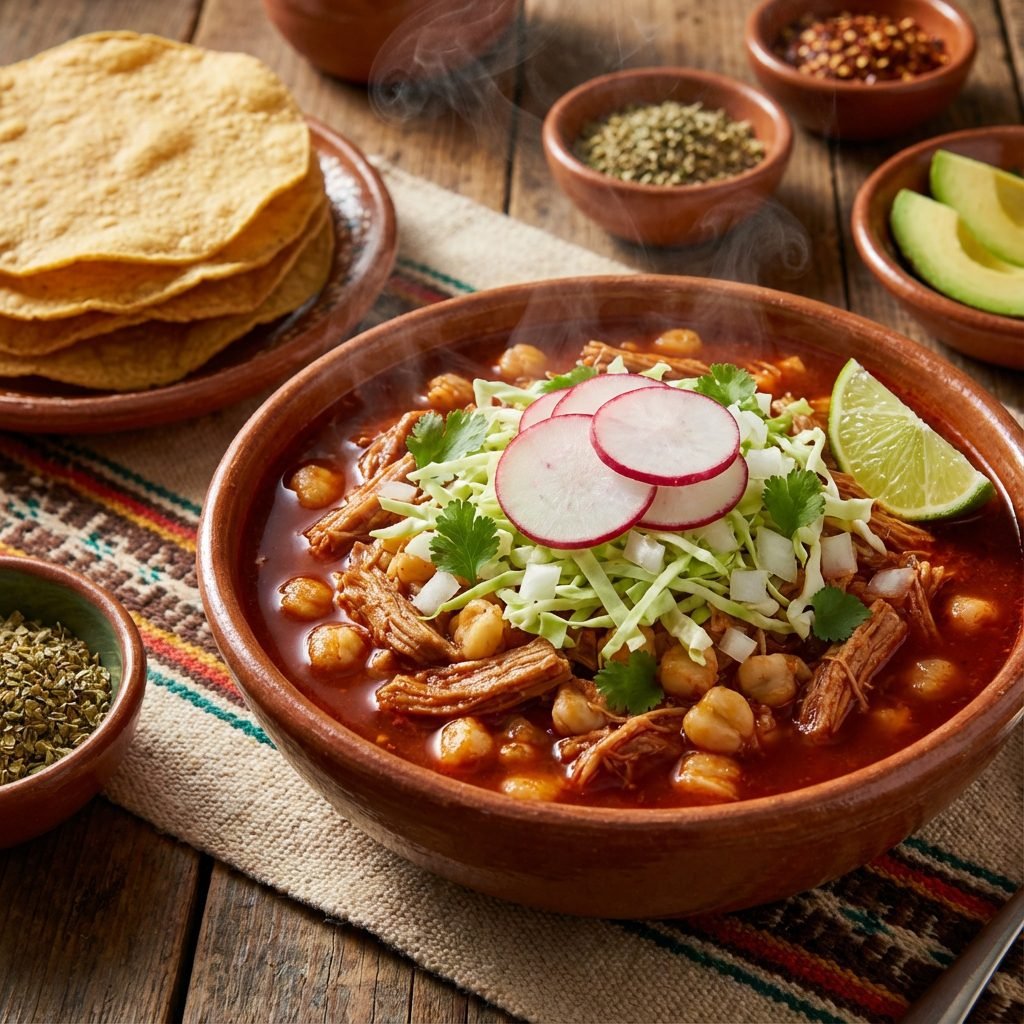
- Step 8: Serve. Ladle the hot pozole into large bowls, making sure each serving has a good amount of pork and hominy. Serve immediately, allowing everyone to customize their own bowl with the prepared garnishes: shredded cabbage, sliced radishes, diced onion, cilantro, a squeeze of lime juice, and a sprinkle of dried oregano.
Expert Cooking Tips
- Toast, Don’t Burn: The key to a deep, smoky chile flavor is to lightly toast the dried chiles until fragrant. If they smoke and turn black, they will impart a bitter taste to your entire dish. Work quickly and keep them moving.
- The Importance of Straining: Do not skip straining the chile sauce. It removes tough chile skins and seeds, which results in a luxuriously smooth broth. This is the difference between homemade and restaurant-quality pozole.
- Patience with the Pork: The foundation of great pozole is fall-apart tender pork. Don’t rush the simmering process. The low and slow cooking not only tenderizes the meat but also creates a rich, flavorful base broth.
- Season at the End: Because the broth simmers for a long time and reduces, it’s best to do your final salt seasoning at the very end to avoid it becoming overly salty.
- Garnish Generously: The garnishes are not optional; they are an integral part of the dish. The freshness and crunch of the cabbage, radishes, and onion cut through the richness of the broth, while lime adds essential acidity.
Substitutions and Variations
For the protein, bone-in chicken thighs and breast can be used to make Pozole de Pollo; adjust cooking time accordingly. If you cannot find both Guajillo and Ancho chiles, you can use all Guajillo, but the flavor will be slightly less complex with fewer raisiny notes. There is no suitable substitute for hominy, as its unique texture and flavor are definitional to the dish.
Common Mistakes to Avoid
The most common mistake is using pre-ground chili powder instead of whole dried chiles. This creates a gritty texture and a flat, one-dimensional flavor. Another frequent error is failing to strain the chile purée, which results in a bitter sauce with an unpleasant texture. Rushing the cooking time for the pork will lead to tough, chewy meat instead of the desired tender shreds. Finally, under-garnishing or skipping them altogether is a disservice to the dish; the fresh toppings provide a crucial balance of texture and flavor.
Serving Suggestions
Serve pozole in deep, wide bowls to accommodate the soup and a generous amount of garnishes. Create a ‘garnish bar’ by placing all the toppings in separate small bowls in the center of the table, allowing guests to build their own perfect bowl. Crispy tostadas, either plain or spread with a thin layer of crema, are the traditional accompaniment for scooping and dipping. For beverages, a crisp Mexican lager, a refreshing agua de jamaica (hibiscus iced tea), or a classic margarita pairs perfectly.
Storage and Reheating Tips
Leftover pozole tastes even better the next day. Store the soup base in an airtight container in the refrigerator for up to 5 days. Keep the fresh garnishes separate and prepare them just before serving. Pozole also freezes exceptionally well. Allow it to cool completely, then transfer to freezer-safe containers or bags and freeze for up to 3 months. Thaw overnight in the refrigerator and reheat gently on the stovetop.
Nutrition Facts (Estimated)
| Serving Size | 1 serving (approx. 1.5 cups) |
| Calories | 485 kcal |
| Fat | 26g |
| Saturated Fat | 9g |
| Unsaturated Fat | 17g |
| Trans Fat | 0g |
| Cholesterol | 95mg |
| Sodium | 980mg |
| Carbohydrates | 34g |
| Fiber | 8g |
| Sugar | 4g |
| Protein | 31g |
Frequently Asked Questions
What exactly is hominy?
Hominy is corn that has undergone a process called nixtamalization, where it’s soaked and cooked in an alkaline solution (usually limewater). This process loosens the hulls from the kernels, softens them, and unlocks nutrients like niacin, making them more digestible. It results in a unique, slightly chewy texture and a distinct corn flavor that is essential to pozole.
Is this pozole recipe very spicy?
The spice level is easily controlled. Guajillo and Ancho chiles are prized for their deep, fruity flavor, not intense heat. The spiciness in this recipe comes from the optional Chiles de Árbol. Use 1-2 for a mild background warmth, or 4 or more if you prefer a spicier soup. You can also omit them entirely for a very mild version.
Can I make pozole in an Instant Pot or slow cooker?
Yes. For an Instant Pot, cook the pork and aromatics on high pressure for about 50-60 minutes. For a slow cooker, cook the pork and aromatics on low for 6-8 hours. In both cases, prepare the chile sauce as directed, then combine everything (pork, broth, sauce, hominy) in the appliance and cook for another hour (on ‘Sauté’ for Instant Pot, or on ‘High’ for slow cooker) to allow flavors to meld.
Conclusion
Making authentic Pozole Rojo is a journey worth taking. It’s a process that connects you to one of the most beloved traditions of Mexican cuisine. As the rich, fragrant aroma fills your home, you’re not just cooking; you’re creating an experience. Each spoonful is a perfect harmony of savory broth, tender meat, hearty hominy, and the bright, fresh crunch of your chosen garnishes. Whether you’re making it for a special occasion or as a comforting meal to share with loved ones, this pozole will deliver on its promise to warm, nourish, and maybe even cure a little bit of whatever ails you. Enjoy the process, and ¡buen provecho!