Authentic Misir Wot: The Spicy Lentil Dish You Need In Your Life
Authentic Misir Wot: The Spicy Lentil Dish You Need In Your Life
Welcome to a journey of flavor, a deep dive into one of Ethiopia’s most cherished and iconic dishes: Misir Wot. This vibrant, spicy red lentil stew is more than just a meal; it’s a cornerstone of Ethiopian cuisine and culture, beloved for its complex flavors and soul-warming comfort. Misir Wot (Amharic: ምስር ወጥ) is a staple, especially during the fasting periods observed by Ethiopian Orthodox Christians, as it’s completely plant-based. But its appeal transcends dietary choices. The magic lies in its foundation: a slow-cooked base of finely chopped red onions, a generous amount of the fiery and aromatic berbere spice blend, and the rich, spiced clarified butter known as niter kibbeh. The result is a stew with incredible depth—spicy, savory, slightly sweet, and utterly addictive. Whether you’re a seasoned fan of Ethiopian food or a curious newcomer, this recipe will guide you through creating an authentic Misir Wot that will transport your senses straight to the heart of Addis Ababa.
20 minutes
50 minutes
1 hour 10 minutes
6 servings
Main Course
Stovetop Simmering
Ethiopian
Vegan
Why You’ll Love This Recipe
- Authentic Ethiopian flavor profile.
- Naturally vegan, vegetarian, and gluten-free.
- Hearty, nutritious, and packed with plant-based protein and fiber.
- Perfect for meal prepping as the flavors deepen over time.
- A one-pot dish for easy cooking and cleanup.
Equipment You’ll Need
- Large heavy-bottomed pot or Dutch oven
- Wooden spoon or spatula
- Chef’s knife
- Cutting board
- Measuring cups and spoons
Ingredients
- 1 cup split red lentils (misir), picked over and rinsed well
- 2 large red onions, finely chopped
- 4-6 cloves garlic, minced
- 1 tablespoon fresh ginger, grated
- 3 tablespoons berbere spice blend (use a high-quality one for best results)
- 2 tablespoons tomato paste
- 1/4 cup niter kibbeh (Ethiopian spiced clarified butter), or vegan butter/vegetable oil for a vegan version
- 4 cups vegetable broth or water, plus more as needed
- 1/2 teaspoon salt, or to taste
Instructions
- Rinse the red lentils under cold water until the water runs clear. This removes excess starch and any potential debris. Set aside.
- Place the finely chopped red onions in a large, dry, heavy-bottomed pot or Dutch oven over medium heat. Cook, stirring frequently, for 10-15 minutes. The onions will soften, release their moisture, and become deeply fragrant. This traditional step, called ‘dry cooking,’ is crucial for developing the wot’s foundational flavor.
- Once the onions are very soft and have reduced significantly, add the niter kibbeh (or oil/vegan butter). Stir well to combine and cook for another 5 minutes until the onions are almost jam-like in consistency.
- Add the minced garlic and grated ginger to the pot. Sauté for 1-2 minutes until fragrant, being careful not to let them burn.
- Stir in the berbere spice blend and tomato paste. Cook for another 2-3 minutes, stirring constantly. This step, known as ‘blooming the spices,’ is essential for unlocking their full aroma and flavor.
- Add the rinsed red lentils to the pot, followed by the 4 cups of vegetable broth or water. Stir everything together, ensuring the lentils are fully submerged.
- Bring the mixture to a boil, then reduce the heat to low, cover the pot, and let it simmer. Cook for 25-30 minutes, stirring occasionally to prevent the lentils from sticking to the bottom.
- After 25-30 minutes, the lentils should be tender and have broken down, creating a thick, porridge-like consistency. If the wot is too thick for your liking, you can add a little more broth or water to reach your desired consistency.
- Season with salt to taste. Allow it to simmer for a final 5 minutes for the flavors to meld.
- Serve hot, traditionally with injera, or with rice as an alternative.
Expert Cooking Tips
- Don’t Rush the Onions: The initial dry-cooking of the onions is the most important step for an authentic flavor base. Be patient and let them cook down properly before adding any fat.
- Quality Berbere is Key: The entire dish hinges on the quality of your berbere. Source it from an Ethiopian market or a reputable spice dealer for the most authentic taste.
- Control the Heat: Berbere can be quite spicy. If you are sensitive to heat, start with a smaller amount (e.g., 2 tablespoons) and you can add more later if desired.
- Stir Occasionally: Lentils, especially red lentils, can stick to the bottom of the pot and scorch easily. Be sure to give the wot a good stir every 5-10 minutes during simmering.
Substitutions and Variations
For a fully vegan Misir Wot, substitute the niter kibbeh with high-quality vegetable oil (like avocado or sunflower oil) or a good vegan butter. To mimic the spiced flavor of niter kibbeh, you can add a pinch of cardamom, fenugreek, and black cumin (nigella) seeds to the oil as it heats. While red lentils are traditional and provide the classic texture, you could use brown or green lentils in a pinch, but be aware that the cooking time will be longer and the final texture will be less creamy.
Common Mistakes to Avoid
The most common mistake is undercooking the onions. Rushing this step will result in a wot that lacks the deep, slightly sweet flavor base it’s known for. Another frequent error is burning the berbere spice blend. When you add it to the pot, keep the heat at medium-low and stir constantly to prevent it from scorching, which would make the entire dish bitter. Finally, failing to rinse the lentils can result in a gritty texture and a ‘muddy’ taste.
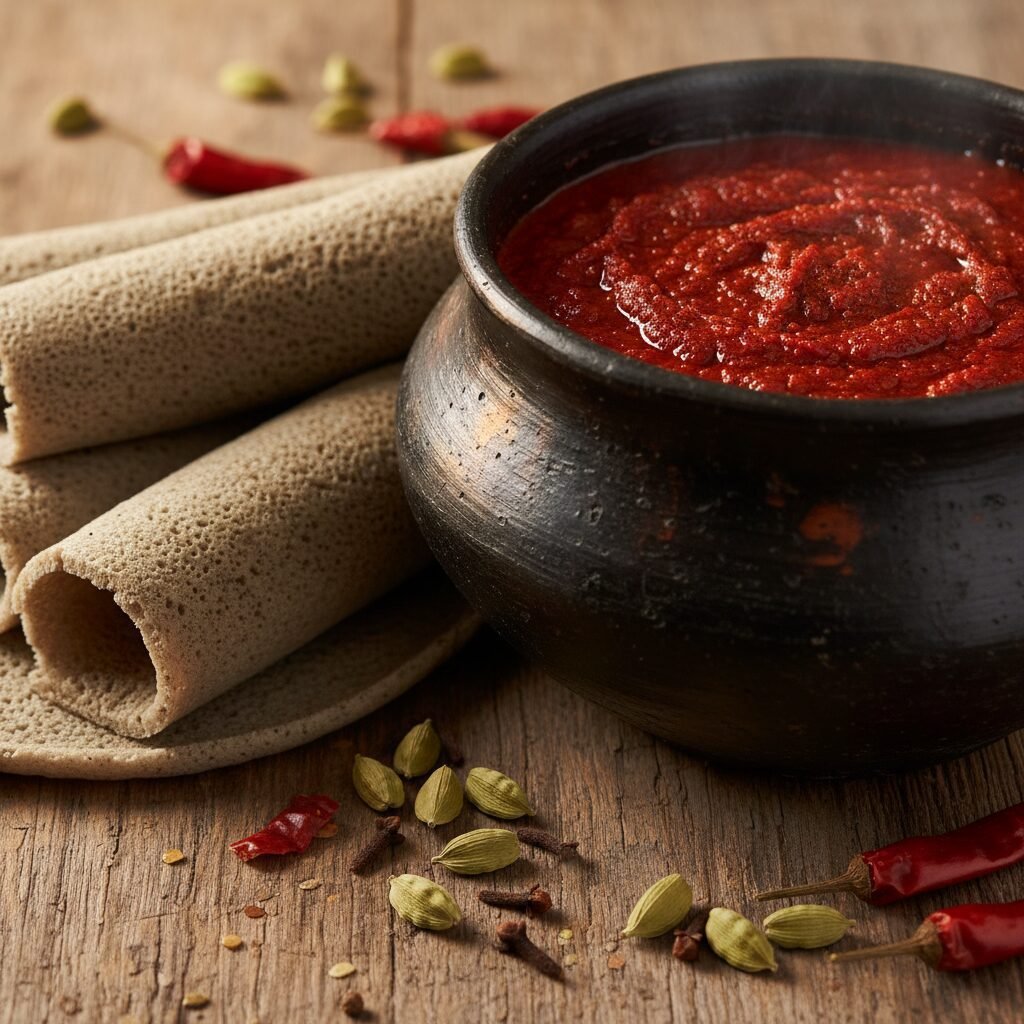
Serving Suggestions
The most authentic way to serve Misir Wot is on a large platter lined with injera, a spongy, slightly sour fermented flatbread. The wot is spooned onto the injera, and you use additional pieces of injera to scoop it up. It is a central component of the ‘Yetsom Beyaynetu,’ a vegetarian combination platter, often served alongside other dishes like Gomen Wot (collard greens), Atkilt Wat (cabbage and potatoes), and Shiro Wot (chickpea stew). For a non-traditional approach, it can also be served over rice, quinoa, or with a side of crusty bread.
Storage and Reheating Tips
Misir Wot stores exceptionally well and its flavors often improve overnight. Allow the wot to cool completely before transferring it to an airtight container. It can be refrigerated for up to 5 days. For longer storage, Misir Wot freezes beautifully. Portion it into freezer-safe containers or bags and freeze for up to 3 months. To reheat, thaw overnight in the refrigerator and gently warm on the stovetop over low heat, adding a splash of water or broth to loosen it if necessary.
Nutrition Facts (Estimated)
| Serving Size | 1 cup (approx. 240g) |
| Calories | 345 kcal |
| Fat | 13g |
| Saturated Fat | 2g |
| Unsaturated Fat | 10g |
| Trans Fat | 0g |
| Cholesterol | 0mg |
| Sodium | 580mg |
| Carbohydrates | 42g |
| Fiber | 19g |
| Sugar | 6g |
| Protein | 17g |
Frequently Asked Questions
What is berbere and where can I find it?
Berbere is a traditional Ethiopian spice blend that is the heart and soul of many wots. It typically includes chili peppers, garlic, ginger, basil, korarima, rue, ajwain, nigella, and fenugreek. Its flavor is complex, fiery, and deeply aromatic. You can find it at African or international grocery stores, specialty spice shops, or online.
Is Misir Wot very spicy?
The spiciness of Misir Wot comes almost entirely from the berbere blend, and the heat level can vary significantly between brands. Generally, it is considered a moderately spicy dish. If you prefer less heat, start with a smaller amount of berbere and taste as you go.
Can I make this dish oil-free?
Yes, you can make an oil-free version. Complete the initial dry-cooking of the onions, then add the garlic and ginger with a splash of water to prevent sticking. Add the berbere and tomato paste and continue to cook with small splashes of water as needed until fragrant, then proceed with the recipe. The niter kibbeh adds significant richness and flavor, so the final result will be different, but still delicious.
Conclusion
Mastering Misir Wot is like unlocking a new level of culinary achievement. It’s a dish that demonstrates how simple, humble ingredients can be transformed into something extraordinarily flavorful and satisfying. This recipe provides a gateway to the rich and diverse world of Ethiopian cuisine. We encourage you to embrace the process, savor the aromas that will fill your kitchen, and share this incredible dish with friends and family. Enjoy your taste of Ethiopia!