Pasta Alla Zozzona: The Creamy Roman Hybrid of Carbonara and Sausage
Pasta Alla Zozzona: The Creamy Roman Hybrid Of Carbonara And Sausage
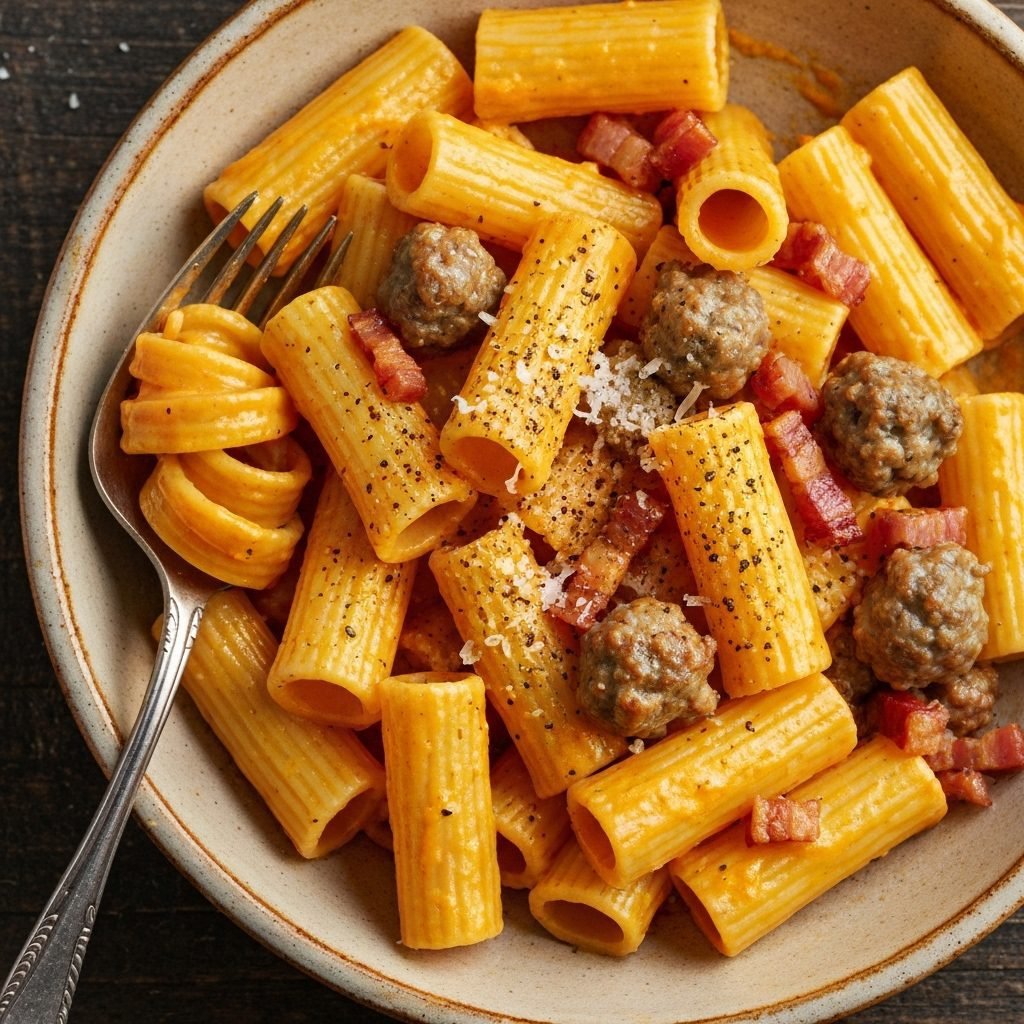
Welcome to the glorious, indulgent world of Pasta Alla Zozzona. If you’ve ever found yourself torn between the peppery bite of Cacio e Pepe, the rich pork and tomato of Amatriciana, and the creamy, egg-laced perfection of Carbonara, this dish is your salvation. The name ‘zozzona’ translates from Roman dialect to ‘dirty’ or ‘filthy,’ but in the culinary context, it signifies something wonderfully messy, rich, and over-the-top. It’s a harmonious collision of Rome’s most beloved pasta dishes, incorporating guanciale, sausage, Pecorino Romano, egg yolks, and a touch of tomato. This isn’t just a recipe; it’s an experience—a celebration of Roman culinary ingenuity that results in the ultimate comfort food. Prepare to create a dish so decadent and satisfying, it feels like a well-deserved sin.
15 minutes
20 minutes
35 minutes
4-6 servings
Main Course
Sautéing, Boiling
Italian
Standard
Why You’ll Love This Recipe
- A decadent fusion of four classic Roman pastas: Carbonara, Amatriciana, Gricia, and Cacio e Pepe.
- Features a rich, velvety sauce made from egg yolks, Pecorino cheese, and savory rendered pork fat.
- Combines two types of cured pork—guanciale and Italian sausage—for complex flavor and texture.
- A true one-pan sauce wonder that comes together in under 30 minutes.
- The ultimate comfort food for a special occasion or an indulgent weeknight meal.
Equipment You’ll Need
- Large pot for boiling pasta
- Large, heavy-bottomed skillet or sauté pan
- Medium mixing bowl
- Whisk
- Tongs
- Colander or spider strainer
- Cheese grater
Ingredients
- 1 lb (450g) rigatoni or similar short, ridged pasta
- 4 oz (115g) guanciale, cut into small cubes or strips
- 8 oz (225g) high-quality Italian sausage, casings removed
- 4 large egg yolks
- 1 cup (100g) freshly grated Pecorino Romano cheese, plus more for serving
- 1 cup (240g) tomato passata or crushed San Marzano tomatoes
- 1 teaspoon coarsely ground black pepper, plus more for serving
- Salt for pasta water
Instructions
- Bring a large pot of water to a rolling boil. Salt it generously—it should taste like the sea.
- While the water heats, place the cubed guanciale in a large, cold skillet. Turn the heat to medium-low and let the fat render out slowly until the guanciale is golden brown and crispy, about 8-10 minutes. Remove the crispy guanciale with a slotted spoon and set aside, leaving the rendered fat in the skillet.
- Add the Italian sausage to the same skillet with the rendered fat. Increase the heat to medium and cook, breaking it up with a spoon, until it’s browned and cooked through, about 5-7 minutes.
- Pour the tomato passata into the skillet with the sausage. Stir to combine, scraping up any browned bits from the bottom of the pan. Let the sauce simmer gently for about 5-10 minutes to allow the flavors to meld. Keep it warm over low heat.
- While the sauce simmers, cook the pasta in the boiling water according to package directions until al dente. Before draining, reserve at least 1.5 cups of the starchy pasta water.
- In a medium bowl, whisk together the egg yolks, grated Pecorino Romano, and a generous amount of coarse black pepper until a thick, smooth paste forms.
- To temper the egg mixture and prevent scrambling, slowly whisk about 1/4 cup of the hot pasta water into the egg and cheese paste. Continue adding water, a tablespoon at a time, until the sauce is the consistency of heavy cream. This is a crucial step.
- Drain the pasta and immediately add it to the skillet with the sausage and tomato sauce. Toss vigorously to coat the pasta completely. IMPORTANT: Remove the skillet from the heat.
- Pour the tempered egg and cheese mixture over the hot pasta, tossing continuously and quickly with tongs. Add the crispy guanciale back into the pan. The residual heat from the pasta and sauce will cook the eggs and melt the cheese, creating a creamy, glossy sauce. If the sauce is too thick, add a splash of the reserved pasta water at a time until it reaches your desired consistency.
- Serve immediately in warm bowls, garnished with another sprinkle of Pecorino Romano and a final crack of black pepper.
Expert Cooking Tips
- Use high-quality ingredients. The flavor of this dish depends on good guanciale, Pecorino Romano, and Italian sausage.
- Render the guanciale slowly over low heat. This process extracts the maximum amount of flavorful fat and results in perfectly crispy bits.
- Do not overcook the pasta. Cooking it al dente ensures it will have the perfect texture after being tossed in the hot sauce.
- The most critical step is to remove the pan from the heat before adding the egg mixture. If the pan is too hot, the eggs will scramble instantly.
- Starchy pasta water is liquid gold. It helps emulsify the fat and cheese, creating a smooth, creamy sauce that clings to the pasta. Always reserve more than you think you’ll need.
Substitutions and Variations
While guanciale (cured pork jowl) is traditional for its unique flavor, you can substitute it with high-quality, thick-cut pancetta. If neither is available, thick-cut bacon can be used in a pinch, but it will add a smoky flavor. For the pasta, any short tube pasta with ridges like mezze maniche or penne rigate works well to capture the thick sauce. Parmigiano-Reggiano can be used instead of Pecorino Romano, but it will result in a slightly less sharp and salty flavor.
Common Mistakes to Avoid
The most common mistake is scrambling the eggs. This happens when the pan is too hot when the egg mixture is added. Always take the pan completely off the heat. Another error is not reserving enough pasta water, which is essential for creating the creamy sauce and adjusting its consistency. Finally, don’t drain all the rendered fat from the guanciale; this fat is the flavor foundation of the entire sauce.
Serving Suggestions
Pasta Alla Zozzona is incredibly rich, so it’s best served with simple accompaniments that can cut through the fat. A crisp green salad with a sharp lemon vinaigrette is a perfect counterpoint. Serve with crusty Italian bread to mop up every last bit of the delicious sauce. For a wine pairing, a medium-bodied Italian red with good acidity, such as a Chianti Classico or a Barbera, will complement the dish beautifully.
Storage and Reheating Tips
Due to the egg-based sauce, Pasta Alla Zozzona is best enjoyed immediately. If you have leftovers, store them in an airtight container in the refrigerator for up to 2 days. To reheat, do so gently in a non-stick skillet over low heat. Add a splash of water or milk to help loosen the sauce and prevent it from breaking or becoming oily. Avoid reheating in the microwave, as it can make the pasta rubbery and cause the sauce to separate.
Nutrition Facts (Estimated)
| Serving Size | 1 serving (approx. 220g) |
| Calories | 810 kcal |
| Fat | 52g |
| Saturated Fat | 21g |
| Unsaturated Fat | 31g |
| Trans Fat | 0g |
| Cholesterol | 310mg |
| Sodium | 1350mg |
| Carbohydrates | 55g |
| Fiber | 4g |
| Sugar | 6g |
| Protein | 34g |
Frequently Asked Questions
What does ‘alla zozzona’ actually mean?
In the Roman dialect, ‘zozzona’ translates to ‘dirty’ or ‘filthy.’ In a culinary sense, it refers to a dish that is rich, messy, and loaded with indulgent ingredients, combining elements from multiple other dishes into one glorious creation.
Can I use whole eggs instead of just yolks?
You can, but using only yolks creates a much richer, creamier, and more velvety sauce. Using whole eggs will result in a thinner sauce that is more prone to scrambling due to the higher water content in the egg whites.
Is this dish very salty?
It can be, as guanciale, sausage, and Pecorino cheese are all naturally salty. This is why it’s crucial to salt your pasta water carefully and to taste the sauce before considering adding any extra salt at the end.
Conclusion
Pasta Alla Zozzona is more than just a meal; it’s a testament to the Roman philosophy of making something extraordinary out of simple, powerful ingredients. It’s a dish that demands your full attention and rewards you with a depth of flavor that is comforting, complex, and utterly unforgettable. Whether you’re a seasoned Italian cook or a curious foodie, mastering this ‘deliciously dirty’ pasta will undoubtedly become a proud moment in your culinary journey. Enjoy every single, decadent bite.