The Poor Man’s Parmesan: Why Italians Love This $2 Pasta
The Poor Man’S Parmesan: Why Italians Love This $2 Pasta
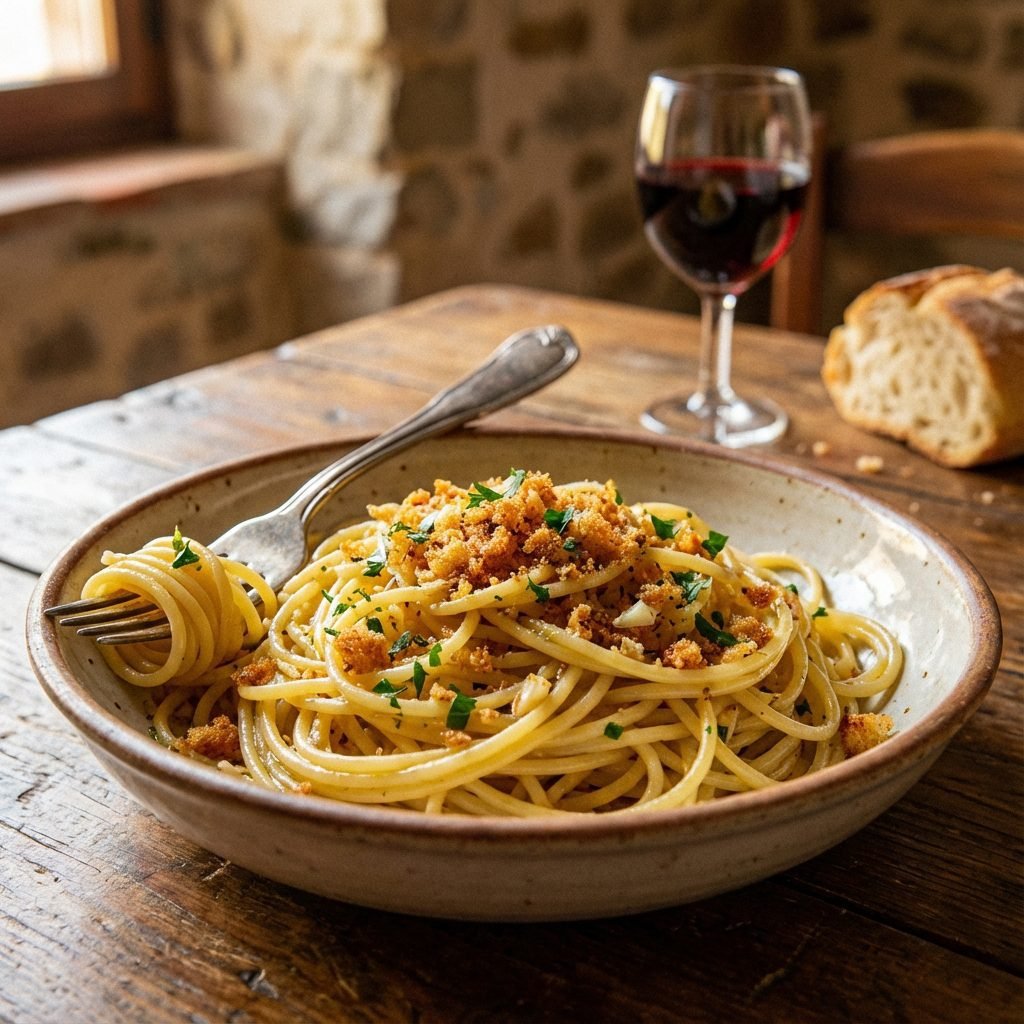
In the heart of Italian culinary philosophy lies a concept known as ‘cucina povera,’ or the ‘kitchen of the poor.’ It’s a testament to the ingenuity and resourcefulness of generations who transformed humble, inexpensive ingredients into dishes of extraordinary flavor and comfort. It’s not about deprivation, but about elevation. And nowhere is this spirit more deliciously embodied than in a timeless classic from Southern Italy: Pasta con la Mollica, or pasta with breadcrumbs. This dish, affectionately nicknamed ‘The Poor Man’s Parmesan,’ is the ultimate proof that a truly luxurious meal isn’t defined by its price tag. By pan-toasting stale breadcrumbs in golden olive oil, Italian home cooks created a substitute for costly aged cheeses like Parmigiano-Reggiano. What they discovered was not just a replacement, but a revelation. The ‘mollica atturrata’ (toasted breadcrumbs) provide a delightful crunch, a nutty, savory depth, and a texture that transforms a simple bowl of pasta into a multi-layered sensory experience. This recipe is more than just a budget-friendly meal—it’s a delicious history lesson, a celebration of simplicity, and a dish so satisfying you’ll wonder why you ever thought you needed cheese at all.
10 minutes
15 minutes
25 minutes
Serves 4
Main Course
Sautéing, Boiling
Italian
Vegetarian
Why You’ll Love This Recipe
- Incredibly budget-friendly, costing just a few dollars per serving.
- A classic example of Italian ‘cucina povera’, turning simple ingredients into a gourmet experience.
- Quick and easy to make, perfect for a weeknight dinner in under 30 minutes.
- Features a unique crunchy texture and savory flavor from toasted breadcrumbs, the ‘poor man’s Parmesan’.
Equipment You’ll Need
- Large pot or Dutch oven
- Large skillet or frying pan
- Colander
- Measuring cups and spoons
- Chef’s knife
- Cutting board
- Wooden spoon or spatula
Ingredients
- 1 lb (450g) spaghetti, bucatini, or other long pasta
- 1/2 cup extra virgin olive oil, divided
- 1 cup coarse breadcrumbs from a day-old rustic loaf
- 4-6 cloves garlic, thinly sliced
- 1/2 teaspoon red pepper flakes (or more, to taste)
- 2-3 oil-packed anchovy fillets, minced (optional, for umami)
- 1/2 cup finely chopped fresh flat-leaf parsley
- Coarse salt, for pasta water
- Freshly ground black pepper, to taste
Instructions
- Bring a large pot of water to a rolling boil. Once boiling, season it generously with coarse salt. It should taste like the sea. This is the primary opportunity to season the pasta itself.
- While the water heats, prepare the ‘Poor Man’s Parmesan’. Heat 1/4 cup of the olive oil in a large skillet over medium heat. Add the coarse breadcrumbs and toast, stirring frequently, until they are deep golden brown and fragrant, about 5-7 minutes. Be vigilant to prevent burning. Transfer the toasted breadcrumbs to a bowl and set aside.
- Add the pasta to the boiling water and cook according to package directions until ‘al dente’—tender but with a firm bite.
- While the pasta cooks, wipe out the skillet and add the remaining 1/4 cup of olive oil. Heat it over medium-low heat. Add the sliced garlic, red pepper flakes, and the optional minced anchovy fillets. Cook gently, stirring occasionally, until the garlic is fragrant and just beginning to turn a pale gold, about 2-3 minutes. The anchovies will dissolve into the oil, creating a savory base. Be careful not to brown or burn the garlic, as it will become bitter.
- Just before the pasta is done, use a heatproof measuring cup to reserve about 1 cup of the starchy pasta water. This is a crucial ingredient for the sauce.
- Drain the cooked pasta in a colander. Immediately add the hot pasta to the skillet with the garlic-oil mixture. Turn the heat up to medium.
- Add about 1/2 cup of the reserved pasta water to the skillet. Toss the pasta vigorously with tongs for about 1-2 minutes. The starch from the water will emulsify with the oil, creating a light, creamy sauce that clings to every strand.
- Remove the skillet from the heat. Add the chopped parsley and about three-quarters of the toasted breadcrumbs. Season with freshly ground black pepper and toss everything together until well combined.
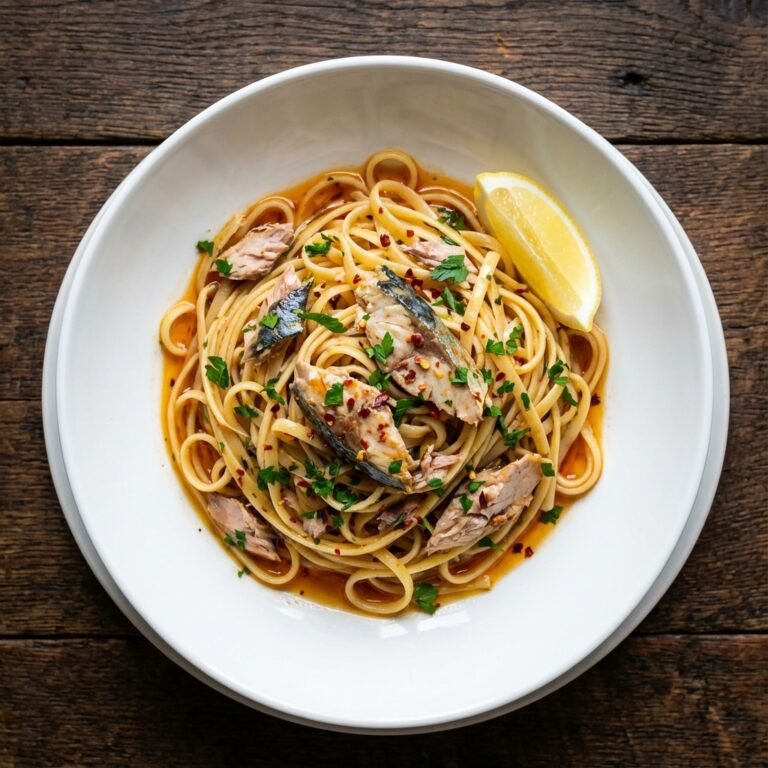
- Divide the pasta among four warm bowls. Garnish generously with the remaining toasted breadcrumbs for an extra crunchy topping. Serve immediately.
Expert Cooking Tips
- For the best texture, make your own breadcrumbs. Tear or pulse day-old rustic bread (like ciabatta or sourdough) into coarse, pea-sized crumbs. The irregular texture is far superior to fine, store-bought crumbs.
- Don’t be shy with the salt in your pasta water. A well-seasoned pasta is the foundation of a flavorful dish.
- Control your heat. The garlic and breadcrumbs can go from perfectly golden to burnt and bitter in a matter of seconds. Gentle, consistent heat is your friend.
- The reserved pasta water is liquid gold. It’s the key to transforming simple olive oil into a silky sauce that coats the pasta beautifully. Always reserve more than you think you’ll need.
Substitutions and Variations
To make this dish vegan, simply omit the optional anchovy fillets. For a gluten-free version, use your favorite gluten-free spaghetti and substitute gluten-free breadcrumbs or coarse-ground toasted nuts like almonds or walnuts. While spaghetti or bucatini are traditional, any pasta shape will work; orecchiette is particularly good at catching the little bits of breadcrumb and garlic.
Common Mistakes to Avoid
The most common mistake is burning the breadcrumbs or the garlic. Toast them over medium-low heat and remove them from the pan as soon as they are golden. Another frequent error is forgetting to reserve the starchy pasta water; without it, the pasta can be dry and oily instead of lightly sauced. Lastly, don’t add all the breadcrumbs into the pan at once. Reserving some for a final garnish ensures you get that signature crunch with every bite.
Serving Suggestions
This dish is a complete and satisfying meal on its own. Serve it hot, straight from the skillet, in warm bowls. A simple side salad with a sharp lemon vinaigrette provides a fresh, acidic contrast to the rich pasta. Alternatively, serve with a side of sautéed greens like spinach or broccoli rabe, or simple steamed asparagus. A crisp, dry white wine like a Pinot Grigio or a light-bodied red like a Valpolicella would pair beautifully.
Storage and Reheating Tips
Pasta con la Mollica is best enjoyed immediately to appreciate the crispy texture of the breadcrumbs. If you have leftovers, they can be stored in an airtight container in the refrigerator for up to two days. The breadcrumbs will soften upon refrigeration. To reheat, warm the pasta gently in a skillet over low heat, adding a splash of water or olive oil to loosen it up. For a better texture, you can top the reheated pasta with freshly toasted breadcrumbs.
Nutrition Facts (Estimated)
| Serving Size | 1 serving (approx. 1/4 of recipe) |
| Calories | 480 kcal |
| Fat | 18g |
| Saturated Fat | 2.5g |
| Unsaturated Fat | 15.5g |
| Trans Fat | 0g |
| Cholesterol | 0mg |
| Sodium | 450mg |
| Carbohydrates | 68g |
| Fiber | 5g |
| Sugar | 3g |
| Protein | 13g |
Frequently Asked Questions
What kind of bread is best for the breadcrumbs?
A sturdy, rustic, day-old loaf like sourdough, ciabatta, or a country-style Italian bread is ideal. These breads create coarse, irregular crumbs that toast up beautifully and provide the best texture. Avoid soft, pre-packaged sandwich bread.
Can I use store-bought breadcrumbs?
You can, but the result won’t be quite the same. Homemade breadcrumbs from stale bread have a much better texture and flavor. If you must use store-bought, opt for coarse panko-style breadcrumbs over the fine, powdery kind for a better crunch.
Why are anchovies included as an option? Will it taste fishy?
Anchovies are a classic secret ingredient in many Southern Italian dishes. They dissolve completely into the hot oil, adding a deep, savory, umami flavor without a ‘fishy’ taste. They enhance the saltiness and complexity, much like a dash of fish sauce in Southeast Asian cooking. If you’re hesitant, try using just one or two fillets to start; you won’t taste fish, you’ll just taste a richer, more complex sauce.
Conclusion
Pasta con la Mollica is more than a recipe; it’s a philosophy. It teaches us that elegance can be found in simplicity and that the most memorable meals are often born from the most humble ingredients. By embracing the principles of ‘cucina povera,’ you’re not just making a delicious, affordable dinner—you’re connecting with a rich tradition of culinary creativity. So next time you have a piece of stale bread, don’t discard it. Toast it, toss it with pasta, and savor the taste of true Italian ingenuity. You might just find that the ‘Poor Man’s Parmesan’ is richer than you ever imagined.