Garlic Butter Mofongo: How to Smash Plantains Like a Pro
Garlic Butter Mofongo: How To Smash Plantains Like A Pro
Welcome to the ultimate guide to crafting one of Puerto Rico’s most iconic and beloved dishes: Mofongo. This isn’t just a recipe; it’s an experience. Mofongo is a testament to the rich culinary tapestry of the Caribbean, a hearty, savory dish born from Taino, Spanish, and African influences. At its core, it’s a simple concept: fried green plantains mashed with garlic and other flavorful bits. But the result is anything but simple. It’s a textural masterpiece—crispy on the outside, dense and tender on the inside, and bursting with flavor. In this recipe, we elevate the classic by drenching it in a luxurious garlic butter sauce, transforming it into an unforgettable meal. We’ll walk you through every step, from selecting the perfect green plantain to the satisfying, rhythmic work of smashing it in a pilón. Get ready to connect with a piece of culinary history and create a dish that is pure comfort and soul.
20 minutes
25 minutes
45 minutes
4 servings
Main Course/Side Dish
Frying, Mashing
Puerto Rican
Gluten-Free
Why You’ll Love This Recipe
- Authentic Puerto Rican flavor profile
- Features a rich, homemade garlic butter sauce (mojito isleño style)
- Achieves the perfect texture: crispy yet tender
- Comprehensive guide for beginners and experienced cooks alike
- Versatile dish that can be served as a main course or a side
Equipment You’ll Need
- Large, heavy-bottomed skillet or Dutch oven
- Pilón (traditional wooden mortar and pestle)
- Slotted spoon or spider strainer
- Small saucepan
- Cutting board and sharp knife
- Small bowl for shaping
Ingredients
- 4 large green plantains
- 4-6 cups of neutral oil for frying (canola, vegetable, or corn oil)
- 1 cup crushed chicharrones (fried pork rinds), optional but highly recommended
- Salt to taste
- For the Garlic Butter Sauce:
- 1/2 cup (1 stick) unsalted butter
- 1/4 cup olive oil
- 8-10 cloves garlic, minced or pressed
- 1/4 cup chicken or vegetable broth
- 2 tablespoons finely chopped fresh cilantro, plus more for garnish
Instructions
- Prepare the Plantains: Using a sharp knife, trim the ends off each plantain. Score the peel lengthwise in 3-4 places, being careful not to cut too deep into the flesh. Pry the peel off with your fingers or the knife. Cut the peeled plantains into 1-inch thick rounds.
- First Fry: Pour the frying oil into your large skillet or Dutch oven to a depth of about 2 inches. Heat over medium-high heat until the oil reaches 350°F (175°C). If you don’t have a thermometer, a piece of plantain should sizzle gently when added. Carefully add half of the plantain rounds to the hot oil. Do not overcrowd the pan. Fry for 4-6 minutes, turning occasionally, until they are golden yellow but not browned. They should be cooked through and tender.
- Drain the Plantains: Using a slotted spoon, remove the fried plantains from the oil and transfer them to a paper towel-lined plate to drain excess oil. Sprinkle lightly with salt. Repeat the frying process with the remaining plantain rounds.
- Make the Garlic Butter Sauce: While the plantains are frying, melt the butter with the olive oil in a small saucepan over medium-low heat. Add the minced garlic and cook for 1-2 minutes until fragrant, being careful not to let it brown or burn. Pour in the broth, stir to combine, and let it simmer for another minute. Remove from heat and stir in the chopped cilantro. Set aside.
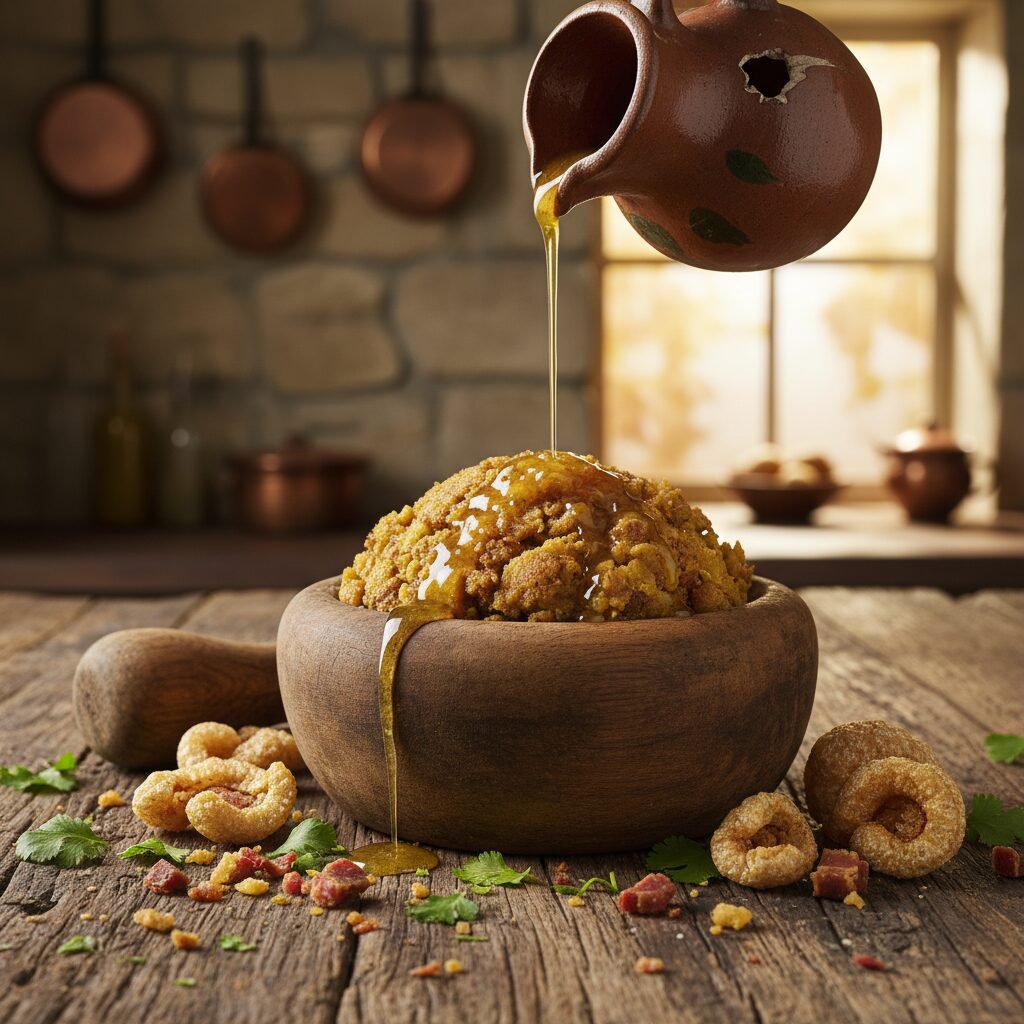
- Smash the Mofongo: This is the crucial step. Working in batches while the plantains are still hot, place 4-5 fried plantain rounds into the pilón. Add a spoonful of the garlic butter sauce and a sprinkle of the crushed chicharrones (if using). Using the pestle, firmly smash and grind the plantains, mixing them with the sauce and chicharrones. Continue until you have a cohesive, textured mash. Don’t overwork it into a paste; some texture is desirable.
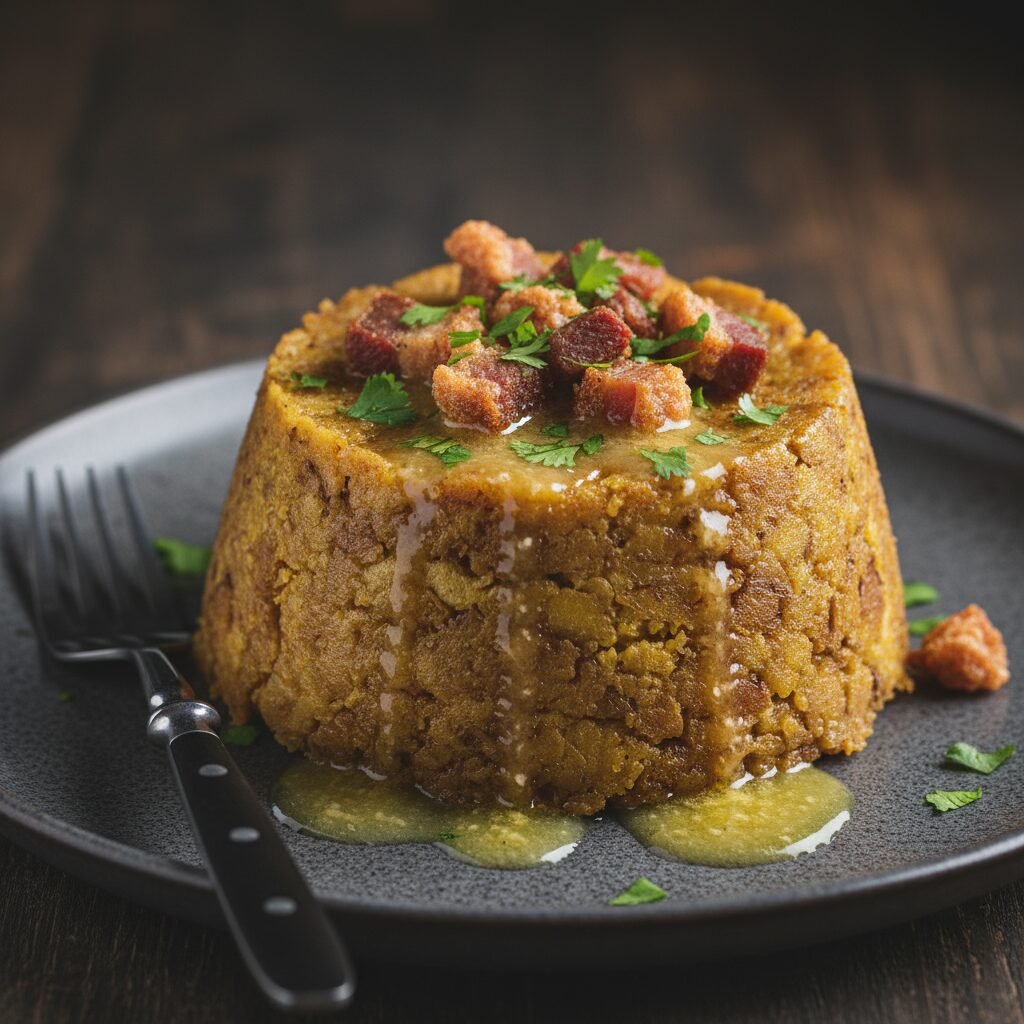
- Shape and Serve: Scrape the mofongo from the pilón and press it into a small bowl to shape it into a dome or mound. Invert the bowl onto a serving plate. Repeat the mashing and shaping process with the remaining plantains.
- Final Touches: Once all mofongo mounds are plated, drizzle any remaining garlic butter sauce over the top. Garnish with extra fresh cilantro and serve immediately while hot.
Expert Cooking Tips
- Use Firmly Green Plantains: The key to great mofongo is using unripe, green plantains. Yellow or ripe plantains are too sweet and soft, resulting in a mushy texture.
- Mash While Hot: It is essential to mash the plantains immediately after frying while they are still hot and pliable. If they cool down, they become stiff and difficult to mash properly.
- Don’t Burn the Garlic: When making the sauce, cook the garlic gently over low heat. Browned or burnt garlic will impart a bitter taste to the entire dish.
- Control Your Oil Temperature: Maintaining a consistent oil temperature of 350°F (175°C) ensures the plantains cook through without absorbing too much oil or burning on the outside.
Substitutions and Variations
No pilón? No problem. You can use a sturdy bowl and a potato masher, the flat bottom of a heavy can, or a meat tenderizer to smash the plantains. For a vegetarian version, simply omit the chicharrones; you can add crispy fried onions or shallots for a similar crunchy texture. If you don’t have chicharrones, crispy crumbled bacon is a common and delicious substitute.
Common Mistakes to Avoid
The most common mistake is using ripe (yellow) plantains instead of green ones, which results in a sweet, mushy dish called ‘maduros,’ not mofongo. Another pitfall is letting the plantains cool before mashing; they must be mashed while hot to achieve the correct texture. Finally, under-salting is a frequent error. Plantains need a generous amount of salt to bring out their flavor, so taste and adjust as you go.
Serving Suggestions
Mofongo is incredibly versatile. Serve it as a main course by stuffing it or topping it with shrimp in garlic sauce (camarones al ajillo), stewed chicken (pollo guisado), shredded beef (ropa vieja), or fried pork (masitas de cerdo). It’s also a fantastic side dish for grilled steak or fish. For a truly traditional experience, serve it with a small bowl of warm chicken broth on the side for dipping or pouring over the mofongo to moisten it.
Storage and Reheating Tips
Mofongo is best enjoyed fresh, as it can dry out upon reheating. However, if you have leftovers, store them in an airtight container in the refrigerator for up to 2 days. To reheat, you can microwave it in short bursts with a damp paper towel over it to add moisture, or you can crumble it and pan-fry it in a little butter or oil until heated through and crispy.
Nutrition Facts (Estimated)
| Serving Size | 1 serving (approx. 1.5 cups) |
| Calories | 580 kcal |
| Fat | 32g |
| Saturated Fat | 11g |
| Unsaturated Fat | 19g |
| Trans Fat | 0g |
| Cholesterol | 35mg |
| Sodium | 450mg |
| Carbohydrates | 68g |
| Fiber | 6g |
| Sugar | 4g |
| Protein | 7g |
Frequently Asked Questions
What is the difference between mofongo and tostones?
Both are made from fried green plantains. For tostones, plantains are fried once, smashed flat into discs, and then fried a second time until crispy. For mofongo, plantains are fried once until tender, then mashed in a pilón with garlic and other ingredients to form a mound.
Can I make mofongo without a pilón?
Yes. While a pilón is traditional and adds to the experience, you can achieve a similar result by using a sturdy bowl and a potato masher, the bottom of a glass, or a meat mallet to smash the hot plantains.
Why is my mofongo dry?
Mofongo can be dry if you don’t use enough fat (like the garlic butter sauce or oil from chicharrones) during the mashing process. Be generous with the sauce. Serving it with extra sauce or a side of broth also helps combat dryness.
Conclusion
You’ve done it! You have successfully mastered the art of making Garlic Butter Mofongo. This dish is more than just food; it’s a celebration of culture, a labor of love, and a deeply satisfying meal that comforts the soul. Each bite, rich with garlic, butter, and the unique flavor of plantain, tells a story. Whether you serve it as the star of the show or as a humble side, mofongo is guaranteed to impress. We hope you enjoy this taste of Puerto Rico and feel the pride of smashing plantains like a pro.