Authentic Pastitsio: The Creamy Greek Lasagna You Will Crave
Authentic Pastitsio: The Creamy Greek Lasagna You Will Crave
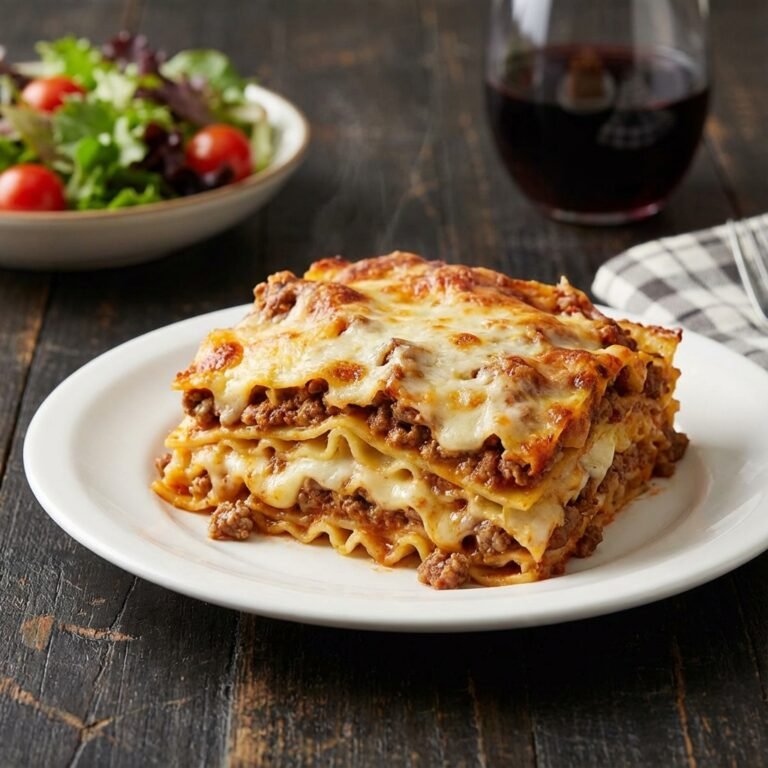
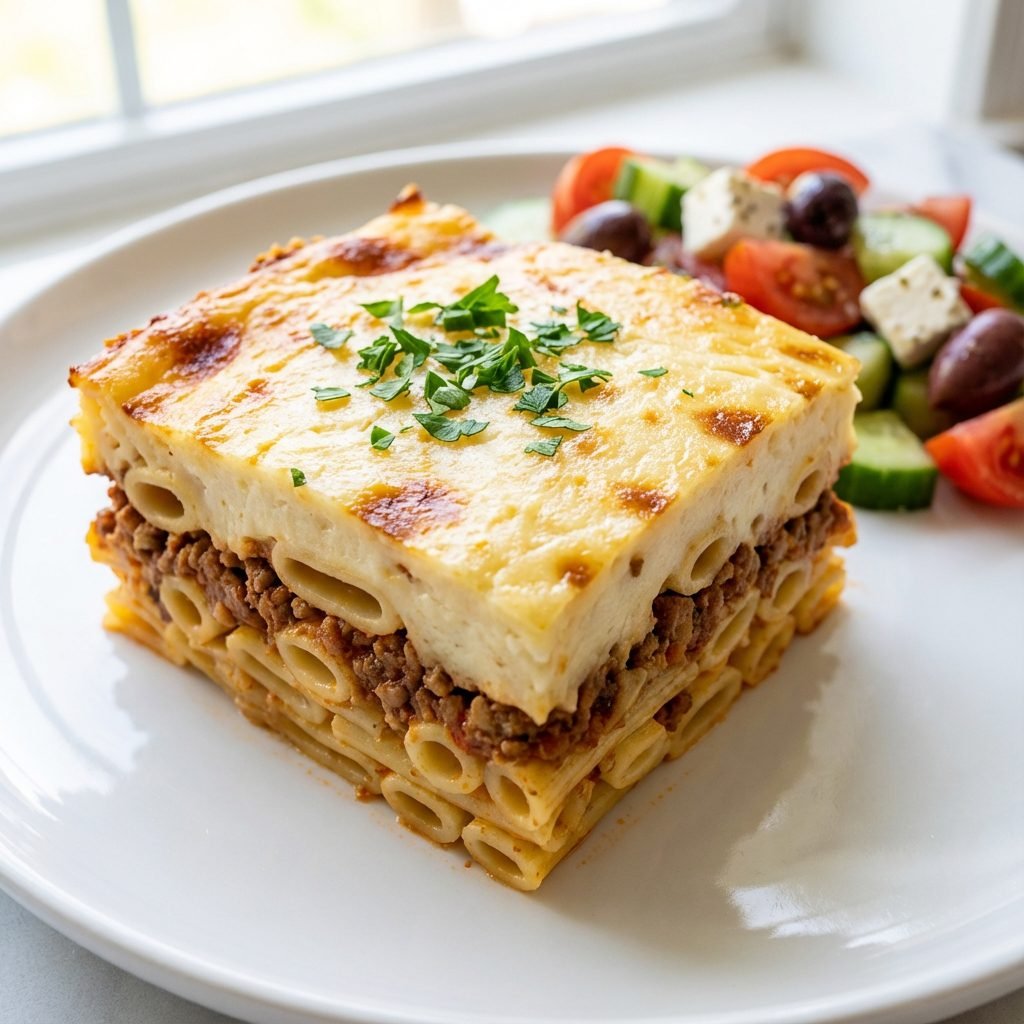
Welcome to the ultimate comfort food experience, straight from the heart of a Greek kitchen. Pastitsio is often called ‘Greek lasagna,’ and while the comparison is a good starting point, this dish is a culinary masterpiece in its own right. Imagine layers of tender tubular pasta, a rich and aromatic meat sauce simmered with warm spices like cinnamon and allspice, all crowned with an impossibly thick and creamy béchamel sauce baked to golden perfection. It’s a dish that fills the home with an irresistible aroma and brings families together around the table. This recipe provides an authentic, step-by-step guide to creating a Pastitsio that is robust, flavorful, and structurally perfect, ensuring you can cut beautiful, clean slices every time. Prepare to fall in love with your new favorite baked pasta dish.
45 minutes
50 minutes
1 hour 50 minutes (includes 15 min resting time)
9-12 servings
Main Course
Baking
Greek
Traditional
Why You’ll Love This Recipe
- Features a luxuriously thick and creamy béchamel topping.
- Aromatic meat sauce infused with traditional Greek spices.
- Perfectly layered for beautiful, clean slices.
- An ideal make-ahead dish for family dinners or special occasions.
Equipment You’ll Need
- 9×13 inch baking dish
- Large pot (for pasta)
- Large skillet or Dutch oven (for meat sauce)
- Medium saucepan (for béchamel)
- Whisk
- Colander
- Measuring cups and spoons
- Spatula
Ingredients
- For the Pasta:
- 1 lb (450g) pastitsio pasta (Misko No. 2) or bucatini/ziti
- 2 tablespoons unsalted butter, melted
- 2 large egg whites, lightly beaten
- 1/2 cup grated Kefalotyri or Parmesan cheese
- Salt for boiling water
- For the Meat Sauce:
- 2 tablespoons olive oil
- 2 lbs (900g) lean ground beef
- 2 medium onions, finely chopped
- 3 cloves garlic, minced
- 1/2 cup dry red wine
- 1 (15-ounce) can crushed tomatoes
- 2 tablespoons tomato paste
- 1 cinnamon stick (or 1/2 teaspoon ground cinnamon)
- 1/4 teaspoon ground allspice
- 1/4 teaspoon ground nutmeg
- 1 bay leaf
- 1 teaspoon dried oregano
- 1 cup water or beef broth
- Salt and freshly ground black pepper to taste
- For the Béchamel Sauce:
- 8 tablespoons (1/2 cup) unsalted butter
- 3/4 cup all-purpose flour
- 4 cups whole milk, warmed
- 1/2 teaspoon ground nutmeg
- 2 large egg yolks, lightly beaten
- 1 cup grated Kefalotyri or a mix of Parmesan and Romano cheese
- Salt and white pepper to taste
Instructions
- Make the Meat Sauce: Heat olive oil in a large skillet or Dutch oven over medium-high heat. Add the ground beef and cook, breaking it apart, until browned. Drain any excess fat. Add the chopped onions and cook until softened, about 5-7 minutes. Stir in the garlic and cook for another minute until fragrant.
- Simmer the Sauce: Pour in the red wine to deglaze the pan, scraping up any browned bits. Let it cook for 2 minutes. Stir in the crushed tomatoes, tomato paste, cinnamon stick, allspice, nutmeg, bay leaf, oregano, and water/broth. Season with salt and pepper. Bring to a simmer, then reduce heat to low, cover, and let it cook for at least 30 minutes, or until the sauce is thick and rich. Remove the cinnamon stick and bay leaf before using.
- Cook the Pasta: While the sauce simmers, bring a large pot of salted water to a boil. Cook the pasta according to package directions, but undercook it by 2-3 minutes so it’s very al dente. Drain well.
- Prepare the Pasta Base: In a large bowl, toss the drained pasta with the melted butter, beaten egg whites, and 1/2 cup of grated cheese. This helps bind the bottom layer. Spread this pasta mixture evenly in the bottom of your 9×13 inch baking dish.
- Make the Béchamel Sauce: In a medium saucepan, melt 8 tablespoons of butter over medium heat. Whisk in the flour and cook for 1-2 minutes to form a roux. Gradually pour in the warm milk while whisking constantly to prevent lumps. Continue to cook, whisking frequently, until the sauce thickens enough to coat the back of a spoon (about 8-10 minutes).
- Temper the Eggs: Remove the béchamel from the heat. In a small bowl, whisk the egg yolks. Slowly pour about a cup of the hot béchamel into the egg yolks while whisking vigorously. This tempers the eggs so they don’t scramble. Pour the egg yolk mixture back into the saucepan with the rest of the béchamel.
- Finish the Béchamel: Return the saucepan to low heat. Stir in the 1 cup of grated cheese, nutmeg, salt, and white pepper. Cook for another minute until the cheese is melted and the sauce is smooth and very thick. Set aside.
- Assemble the Pastitsio: Spread the prepared meat sauce evenly over the pasta layer in the baking dish. Pour the thick béchamel sauce over the meat, spreading it carefully to cover the entire surface.
- Bake the Dish: Bake in a preheated oven at 375°F (190°C) for 40-50 minutes, or until the top is a deep golden brown and the sauce is bubbly around the edges.
- Rest Before Serving: This is a critical step! Let the Pastitsio cool on a wire rack for at least 15-20 minutes before cutting. This allows the layers to set, ensuring clean, beautiful slices. Serve warm.
Expert Cooking Tips
- Use the Right Pasta: Traditional pastitsio pasta (hollow, long tubes) is best. If you can’t find it, bucatini or penne are good substitutes.
- Thicken Your Sauces: Both the meat sauce and the béchamel need to be quite thick. A runny meat sauce will make the dish soggy, and a thin béchamel won’t create the distinct top layer.
- Warm the Milk: Warming the milk before adding it to the roux helps create a smoother, lump-free béchamel sauce.
- Don’t Skip the Resting Time: Cutting into the Pastitsio immediately after it comes out of the oven will result in a messy pile. Patience is key for perfect presentation.
Substitutions and Variations
For the meat, you can use ground lamb or a 50/50 mix of beef and lamb for a more traditional flavor. If you can’t find Kefalotyri cheese, a combination of Parmesan and Romano cheese works well. For a non-alcoholic version, you can substitute the red wine with an equal amount of beef broth.
Common Mistakes to Avoid
The most common mistake is not letting the dish rest after baking, which causes the layers to collapse when cut. Another pitfall is a runny meat sauce; ensure it has simmered long enough to become thick. Finally, be sure to whisk the béchamel constantly to avoid lumps and a burnt taste.
Serving Suggestions
Serve Pastitsio with a classic Greek salad (Horiatiki) with tomatoes, cucumbers, olives, and feta cheese. A side of crusty bread is also excellent for soaking up any extra sauce on the plate. A glass of Greek red wine, like an Agiorgitiko, pairs beautifully.
Storage and Reheating Tips
Leftover Pastitsio can be stored in an airtight container in the refrigerator for up to 4 days. It also freezes exceptionally well. You can freeze the entire dish before baking, or freeze individual cooked portions. To reheat, thaw in the refrigerator and bake at 350°F (175°C) until heated through.
Nutrition Facts (Estimated)
| Serving Size | 1 slice (approx. 1/9th of dish) |
| Calories | 720 kcal |
| Fat | 38 g |
| Saturated Fat | 19 g |
| Unsaturated Fat | 16 g |
| Trans Fat | 1 g |
| Cholesterol | 160 mg |
| Sodium | 850 mg |
| Carbohydrates | 55 g |
| Fiber | 4 g |
| Sugar | 8 g |
| Protein | 35 g |
Frequently Asked Questions
Can I make Pastitsio ahead of time?
Yes, Pastitsio is a great make-ahead dish. You can assemble the entire dish, cover it tightly, and refrigerate it for up to 24 hours before baking. You may need to add 10-15 minutes to the baking time if it’s going into the oven straight from the fridge.
What is Kefalotyri cheese and what can I substitute it with?
Kefalotyri is a hard, salty Greek cheese made from sheep’s or goat’s milk. It has a sharp, tangy flavor. If you can’t find it, the best substitute is a mix of equal parts Parmesan and Pecorino Romano cheese.
Why did my layers mix together?
This usually happens if the meat sauce is too thin or if the béchamel is not thick enough. Ensure the meat sauce has simmered down to a thick consistency and that your béchamel can heavily coat a spoon before layering.
Conclusion
There you have it—a comprehensive guide to creating an authentic, show-stopping Pastitsio. While it has a few components, each step is simple and contributes to the final, glorious result. The rich spices, the comforting pasta, and that decadent creamy topping come together in a symphony of flavor and texture. This is more than just a meal; it’s a taste of Greek hospitality, perfect for sharing with those you love. Enjoy every single bite!