Skordalia: The Addictive Greek Potato Dip Made With 5 Ingredients
Skordalia: The Addictive Greek Potato Dip Made With 5 Ingredients
Transport your senses to a sun-drenched Greek taverna with a single, creamy spoonful of Skordalia. This is not just a dip; it’s a culinary institution, a cornerstone of Hellenic cuisine that embodies the philosophy of making something extraordinary from the humblest of ingredients. Skordalia is a powerful, pungent, and utterly addictive purée, traditionally made with a base of potatoes or stale bread, emulsified with copious amounts of garlic and olive oil, and sharpened with a splash of vinegar or lemon juice. Its texture is luxuriously smooth, somewhere between fluffy mashed potatoes and a thick, velvety sauce. The flavor is a bold declaration: a fiery kick from the raw garlic, mellowed by the earthy potato, enriched by the fruity bitterness of good olive oil, and brightened by a tangy acidic finish. It’s a dish that proves simplicity is the ultimate sophistication. While often served as part of a meze platter, its versatility extends to being a perfect accompaniment for fried fish, grilled meats, and roasted vegetables. Forget bland, store-bought dips; this homemade Skordalia recipe, using just five core ingredients, will become a staple in your culinary repertoire, a go-to for everything from casual get-togethers to elegant dinner parties.
15 minutes
20 minutes
35 minutes
Makes approximately 2.5 cups (serves 6-8)
Appetizer, Dip, Side Dish
Boiling, Blending
Greek
Vegan
Why You’ll Love This Recipe
- Authentic Greek flavor with a simple, traditional recipe.
- Made with only 5 primary, pantry-staple ingredients.
- Naturally vegan, gluten-free, and dairy-free.
- Incredibly versatile: serve as a dip, spread, or side dish.
- Quick and easy to prepare in under 40 minutes.
Equipment You’ll Need
- Large pot or Dutch oven
- Colander
- Food processor (recommended) or a potato ricer/masher
- Silicone spatula
- Measuring cups and spoons
- Vegetable peeler
Ingredients
- 1.5 lbs (about 680g) starchy potatoes, such as Russet or Idaho, peeled and cut into 1-inch chunks
- 6-8 large cloves of garlic, peeled (adjust to your preference for pungency)
- 3/4 cup (180ml) high-quality extra virgin olive oil
- 3 tablespoons red wine vinegar (or fresh lemon juice for a brighter taste)
- 1 teaspoon coarse sea salt, plus more to taste
- 1/4 teaspoon freshly ground black pepper (optional)
- 1/2 cup reserved potato cooking water, or more as needed
- For Garnish (optional): chopped fresh parsley, a drizzle of extra virgin olive oil, Kalamata olives
Instructions
- Place the peeled and chunked potatoes in a large pot. Cover with cold, salted water by at least one inch. Bring to a boil over high heat.
- Once boiling, reduce the heat to medium and simmer for 15-20 minutes, or until the potatoes are very tender and easily pierced with a fork. They should be almost falling apart.
- While the potatoes are cooking, prepare the garlic. Add the peeled garlic cloves and 1 teaspoon of coarse sea salt to the bowl of a food processor. Pulse several times until the garlic is finely minced into a paste. This step is crucial for releasing the garlic’s flavor and ensuring it incorporates smoothly.
- Before draining the potatoes, carefully scoop out and reserve about 1 cup of the starchy cooking water. This water is liquid gold for adjusting the dip’s consistency later. Drain the cooked potatoes thoroughly in a colander and let them steam dry for a minute or two.
- Transfer the hot, drained potatoes directly into the food processor with the garlic paste. Pulse a few times to break them down. Be careful not to over-process at this stage.
- Set the food processor to its low setting. With the machine running, slowly and steadily stream in the 3/4 cup of extra virgin olive oil. This process of slow addition is key to creating a stable emulsion, resulting in a creamy, non-greasy texture. The mixture should become smooth and velvety.
- Once all the oil is incorporated, pour in the red wine vinegar (or lemon juice) and pulse a few times to combine.
- Check the consistency. If the Skordalia is too thick, add the reserved potato water, one tablespoon at a time, with the processor running, until you reach your desired consistency. It should be thick but spreadable, similar to a very smooth hummus.
- Taste the Skordalia and adjust the seasoning. Add more salt, pepper, or a little more vinegar/lemon juice if needed to balance the flavors.
- Transfer the finished Skordalia to a serving bowl. For the best flavor, let it rest at room temperature for at least 30 minutes to allow the flavors to meld and mature. The garlic will become slightly less sharp as it sits.
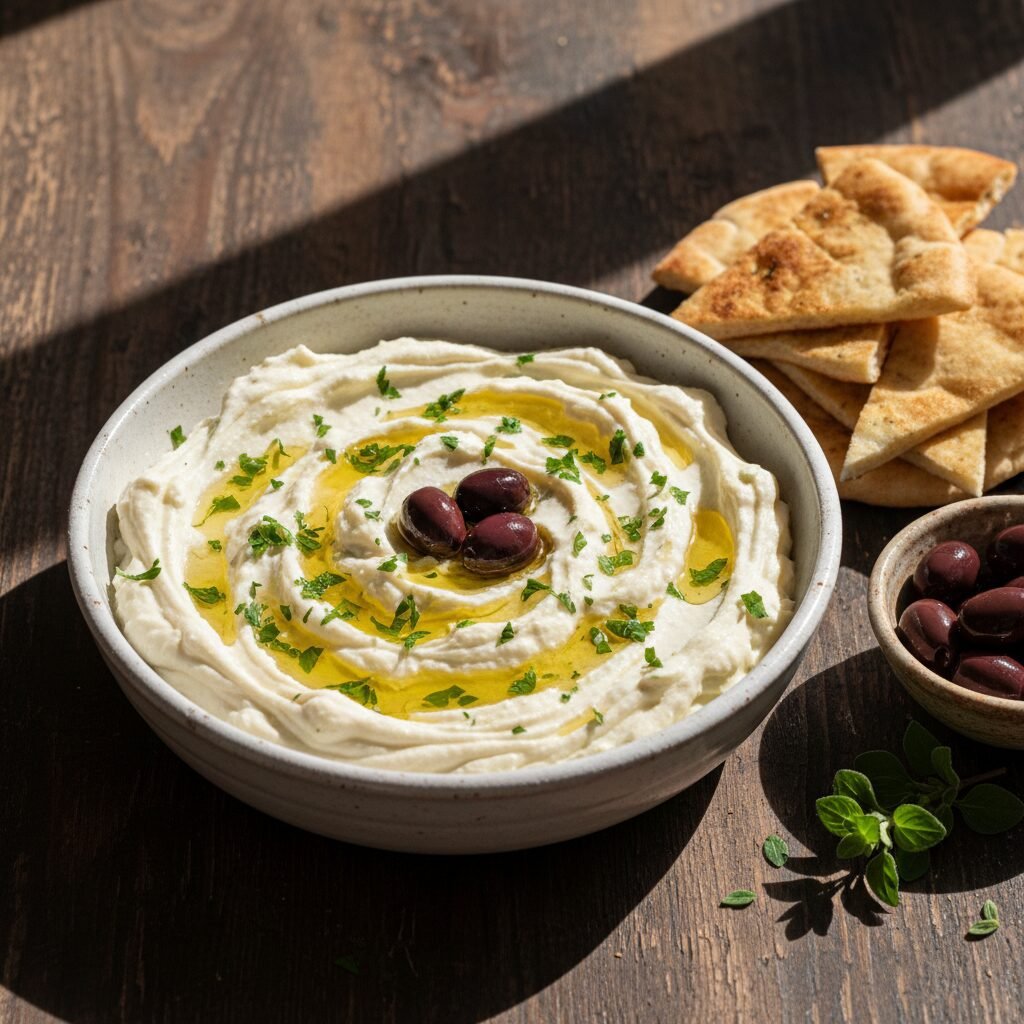
- Before serving, create a swirl on top with the back of a spoon. Drizzle generously with a final touch of high-quality olive oil and sprinkle with fresh parsley and a few Kalamata olives, if desired.
Expert Cooking Tips
- Choose the Right Potato: Starchy potatoes like Russets are essential. Their low moisture and high starch content break down into a fluffy, absorbent base, perfect for soaking up the olive oil and creating a light texture. Waxy potatoes can become gluey when processed.
- Don’t Fear the Garlic: Authentic Skordalia is unapologetically garlicky. However, if you prefer a milder flavor, you can blanch the garlic cloves in boiling water for 30 seconds before processing, or use roasted garlic for a sweeter, nuttier profile.
- The Slow Drizzle is Key: Do not dump the olive oil in all at once. Streaming it in slowly while the processor is running is the secret to a perfect emulsion. This prevents the oil from separating and creates a uniformly creamy dip.
- Beware the Gummy Texture: Over-processing potatoes releases too much starch, resulting in a sticky, gummy consistency. Use a food processor sparingly, pulsing just enough to combine. For a more rustic, foolproof texture, pass the cooked potatoes through a ricer first, then whisk in the garlic paste, oil, and vinegar by hand.
- Let It Rest: The flavor of Skordalia improves significantly after resting. The harsh bite of the raw garlic mellows, and all the ingredients have a chance to meld into a more cohesive and delicious whole. Plan to make it at least 30 minutes before you intend to serve it.
Substitutions and Variations
For a more traditional, rustic version, you can substitute the potatoes with 1 lb of stale, crustless country bread soaked in water and squeezed dry. Another classic variation uses ground almonds or walnuts mixed with the potato or bread base for a richer, nuttier flavor and texture. For the acid component, white wine vinegar or fresh lemon juice can be used interchangeably with red wine vinegar, each offering a slightly different tang.
Common Mistakes to Avoid
The most common mistake is over-processing the potatoes, leading to a gluey, unpalatable texture. To avoid this, use a food processor with caution or opt for a potato ricer and hand mixing. Another pitfall is not using enough olive oil or adding it too quickly, which can cause the dip to be bland or the oil to separate. Finally, under-seasoning is frequent; Skordalia is a bold dish that requires a generous amount of salt and acid to balance the richness of the oil and the pungency of the garlic. Always taste and adjust seasoning at the end.
Serving Suggestions
Serve Skordalia at room temperature as part of a meze platter alongside pita bread, Kalamata olives, feta cheese, and cucumber slices. It is the classic accompaniment to fried salt cod (bakaliaros) or fried calamari. It also pairs beautifully with grilled lamb chops, roasted chicken, or as a flavorful base for a platter of roasted vegetables like beets, zucchini, and bell peppers. You can even use it as a bold sandwich spread in place of mayonnaise.
Storage and Reheating Tips
Store leftover Skordalia in an airtight container in the refrigerator for up to 4 days. Note that the garlic flavor will intensify and become more pronounced as it sits. Before serving leftovers, allow the dip to come to room temperature for about 30 minutes and give it a good stir to loosen it up. You may need to whisk in a splash of water or olive oil to restore its original creamy consistency.
Nutrition Facts (Estimated)
| Serving Size | 1/4 cup (approx. 60g) |
| Calories | 145 kcal |
| Fat | 11 g |
| Saturated Fat | 1.5 g |
| Unsaturated Fat | 9.5 g |
| Trans Fat | 0 g |
| Cholesterol | 0 mg |
| Sodium | 210 mg |
| Carbohydrates | 10 g |
| Fiber | 1.2 g |
| Sugar | 0.8 g |
| Protein | 1.5 g |
Frequently Asked Questions
My Skordalia turned out gummy and sticky. What did I do wrong?
This is the most common issue and is almost always caused by over-mixing the potatoes in a blender or food processor. The high speed breaks down the starch molecules, resulting in a glue-like texture. Use a potato ricer for the best results, or pulse very minimally in a food processor.
Can I make Skordalia ahead of time?
Yes, Skordalia is an excellent make-ahead dish. In fact, its flavor improves after resting for a few hours or even overnight in the refrigerator. Just be aware the garlic flavor will become stronger. Store it in an airtight container and bring it to room temperature before serving.
Is there an alternative to using potatoes?
Absolutely. The two other traditional bases for Skordalia are stale bread (soaked and squeezed dry) or a nut base (typically almonds or walnuts, finely ground). Each provides a unique texture and flavor profile to the dip.
The raw garlic flavor is too strong for me. How can I tone it down?
To mellow the garlic, you can either use fewer cloves, blanch them in boiling water for 30-60 seconds before using, or use roasted garlic instead. Roasting garlic transforms its flavor from sharp and pungent to sweet, nutty, and mild.
Conclusion
Skordalia is more than a recipe; it’s a testament to the power of simple, high-quality ingredients. With its creamy texture and bold, unforgettable flavor, this Greek garlic and potato dip is a culinary journey in every bite. It’s a dish that connects you to a rich history of Mediterranean cooking while being perfectly suited for the modern table. Whether you’re dipping, spreading, or dolloping, we are confident that once you make this authentic Skordalia from scratch, you’ll never look back. It’s a simple, rustic, and profoundly satisfying dish that deserves a permanent place in your kitchen.