Gigantes Plaki: The Creamy Greek Baked Beans You Can’t Stop Eating
Gigantes Plaki: The Creamy Greek Baked Beans You Can’T Stop Eating
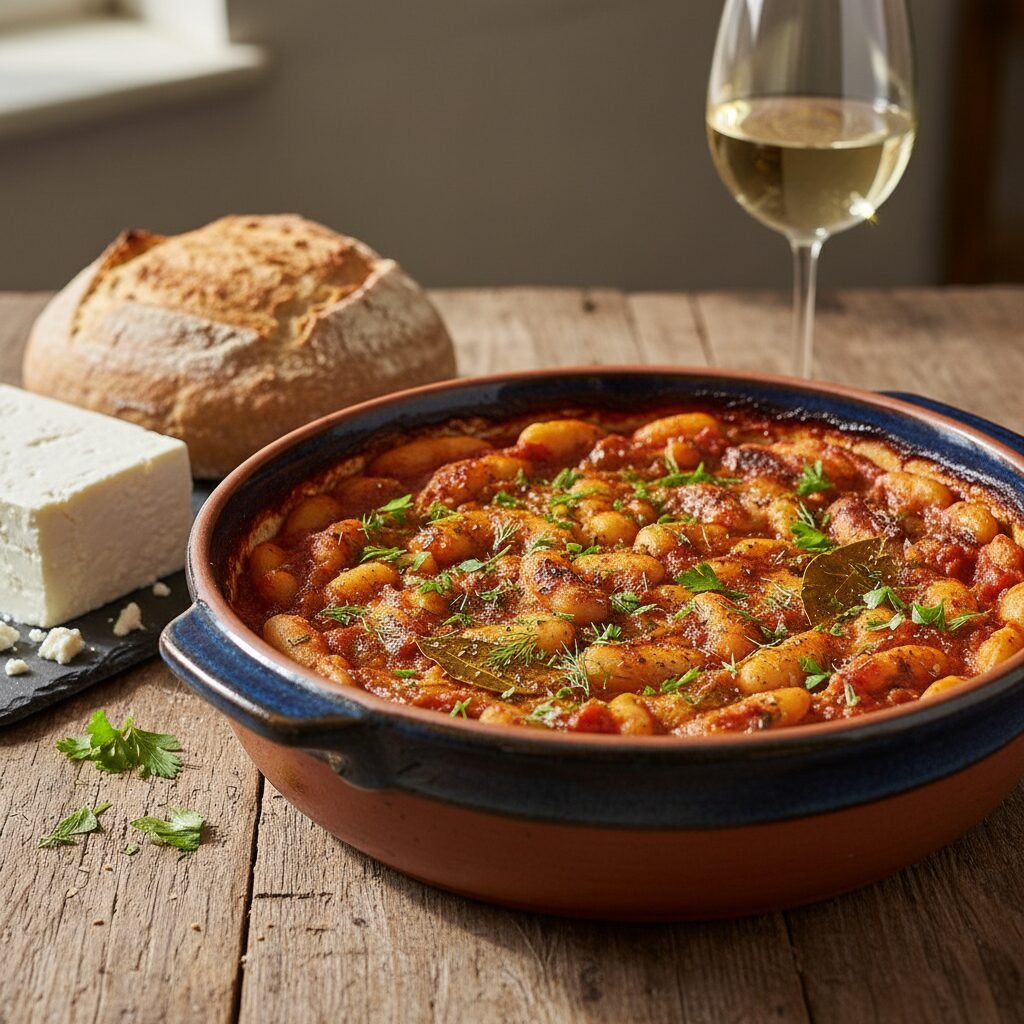
Welcome to the heart of Greek comfort food. Gigantes Plaki (Γίγαντες Πλακί) is more than just a dish of baked beans; it’s a culinary institution, a staple of the wholesome, vegetable-forward Mediterranean diet. The name itself tells the story: ‘Gigantes’ for the giant, creamy white beans, and ‘Plaki’ for the method of baking in a wide, shallow dish. This iconic recipe transforms humble legumes into a rich, aromatic, and deeply satisfying meal. The beans are first simmered to a tender, buttery consistency, then baked in a savory tomato sauce infused with garlic, onions, and a generous amount of golden Greek olive oil. Finished with a shower of fresh herbs like dill and parsley, each spoonful is a perfect balance of creamy texture and bright, rustic flavor. Whether served as a hearty vegetarian main course, a star player in a meze spread, or a comforting side dish, Gigantes Plaki is a testament to the simple, elegant power of Greek cooking.
20 minutes (plus 8-12 hours for soaking beans)
1 hour 45 minutes
2 hours 5 minutes (plus soaking time)
6-8 servings
Main Course / Side Dish
Baking
Greek
Vegetarian
Why You’ll Love This Recipe
- Authentic Greek flavor profile
- Hearty, satisfying, and naturally vegetarian/vegan
- Perfect for meal prep, as flavors deepen over time
- A crowd-pleasing dish suitable for any occasion
- Rich in plant-based protein and fiber
Equipment You’ll Need
- Large bowl (for soaking beans)
- Large pot or Dutch oven
- Large skillet
- 9×13 inch (or similar large) baking dish
- Chef’s knife
- Cutting board
- Wooden spoon or spatula
Ingredients
- 1 lb (500g) dried giant beans (Gigantes), or large lima beans
- 1/2 cup extra virgin olive oil, plus more for drizzling
- 2 large yellow onions, finely chopped
- 4-5 cloves garlic, minced
- 2 large carrots, peeled and diced
- 2 celery stalks, diced
- 1 (28-ounce/800g) can crushed or diced tomatoes
- 2 tablespoons tomato paste
- 1 bay leaf
- 1 teaspoon dried oregano
- 1 cup chopped fresh parsley, divided
- 1/2 cup chopped fresh dill, divided
- 4 cups vegetable broth or water from cooking the beans
- 1 teaspoon sea salt, or to taste
- 1/2 teaspoon freshly ground black pepper, or to taste
- Optional: 1/4 teaspoon red pepper flakes for a hint of heat
Instructions
- First, prepare the beans. Place the dried gigantes beans in a large bowl and cover with at least 4 inches of cold water. Let them soak for a minimum of 8 hours, or preferably overnight. They will more than double in size.
- Drain and rinse the soaked beans. Place them in a large pot or Dutch oven and cover with fresh water. Bring to a boil, then reduce the heat to a gentle simmer. Cook for 60-90 minutes, or until the beans are tender but not falling apart. The exact time will depend on the age and quality of your beans. Skim off any foam that rises to the surface. Once tender, drain the beans, reserving about 4 cups of the cooking liquid.
- Preheat your oven to 375°F (190°C).
- While the beans are cooking, prepare the sauce. In a large skillet, heat the 1/2 cup of olive oil over medium heat. Add the chopped onions, carrots, and celery. Sauté for 8-10 minutes, until softened and the onions are translucent.
- Add the minced garlic and cook for another minute until fragrant. Stir in the tomato paste and cook for one minute more to deepen its flavor.
- Pour in the crushed tomatoes, add the bay leaf, dried oregano, half of the fresh parsley, and half of the fresh dill. Season with salt, pepper, and red pepper flakes if using. Bring the sauce to a simmer and let it cook for about 10 minutes to allow the flavors to meld.
- Carefully add the pre-cooked beans to the skillet with the tomato sauce. Gently stir everything together to coat the beans. If your skillet is not large enough, you can do this step directly in your baking dish.
- Transfer the bean and sauce mixture to your 9×13 inch baking dish and spread it into an even layer. Pour the reserved bean cooking liquid (or vegetable broth) over the top until the beans are almost fully submerged.
- Drizzle a little more olive oil over the surface. Bake, uncovered, for 45-60 minutes. The sauce should thicken and bubble, and the top layer of beans should become slightly golden and caramelized.
- Remove from the oven and let it rest for at least 10 minutes before serving. Discard the bay leaf. Garnish generously with the remaining fresh parsley and dill. Serve warm.
Expert Cooking Tips
- Do not skip the soaking and pre-cooking steps. This is crucial for achieving the signature creamy texture of the beans and ensuring they cook evenly in the oven.
- Use high-quality Greek extra virgin olive oil. It is a primary flavor component in this dish, not just a cooking medium.
- Be patient when simmering the beans. Check them for tenderness periodically. You want them soft enough to crush with a fork but still holding their shape.
- Don’t be shy with the herbs. The fresh parsley and dill added at the end provide a burst of freshness that cuts through the richness of the sauce.
Substitutions and Variations
If you cannot find authentic Gigantes beans, large lima beans or butter beans are the best substitutes. For the herbs, you can use dried if fresh are unavailable (use 1/3 the amount), but the final flavor will be less vibrant. In a pinch, canned butter beans can be used; if so, skip the soaking and boiling steps, rinse them well, and reduce the final baking time to 30-35 minutes.
Common Mistakes to Avoid
A common mistake is undercooking the beans before they go into the oven, which results in a final dish that is tough rather than creamy. Another pitfall is not using enough liquid for the baking stage; the beans will absorb a lot of moisture, and if the dish is too dry, it won’t develop a luscious sauce. Finally, be sure to season adequately. Taste the sauce before adding the beans and adjust salt and pepper as needed.
Serving Suggestions
Serve Gigantes Plaki warm as a main dish with a side of crumbled feta cheese, Kalamata olives, and plenty of crusty bread for dipping into the delicious sauce. It also shines as part of a traditional Greek meze platter alongside tzatziki, hummus, and pita bread. For a more substantial meal, it pairs beautifully with grilled lamb, chicken, or a simple green salad dressed with lemon and olive oil.
Storage and Reheating Tips
Leftovers can be stored in an airtight container in the refrigerator for up to 5 days. The flavors will continue to meld and often taste even better the next day. Reheat gently in a saucepan over low heat, adding a splash of water if needed, or in the microwave.
Nutrition Facts (Estimated)
| Serving Size | 1 cup (approx. 250g) |
| Calories | 380 kcal |
| Fat | 16g |
| Saturated Fat | 2.5g |
| Unsaturated Fat | 13.5g |
| Trans Fat | 0g |
| Cholesterol | 0mg |
| Sodium | 550mg |
| Carbohydrates | 45g |
| Fiber | 14g |
| Sugar | 9g |
| Protein | 15g |
Frequently Asked Questions
Can I make Gigantes Plaki in a slow cooker?
Yes, you can adapt this recipe for a slow cooker. After sautéing the aromatics and creating the sauce, combine everything (including soaked, but uncooked, beans and liquid) in the slow cooker. Cook on low for 6-8 hours or on high for 3-4 hours, until the beans are tender.
Is this recipe vegan and gluten-free?
Yes, this recipe is naturally vegan and gluten-free. Just ensure you serve it with gluten-free bread if you have a dietary restriction.
Can I freeze this dish?
Absolutely. Gigantes Plaki freezes very well. Allow it to cool completely, then transfer to a freezer-safe container. It can be frozen for up to 3 months. Thaw overnight in the refrigerator before reheating.
Conclusion
Gigantes Plaki is the embodiment of Greek rustic cuisine: simple, wholesome ingredients transformed into something truly spectacular. Its creamy texture and rich, savory flavor make it a beloved dish for good reason. We encourage you to embrace the slow process of preparing the beans from scratch—the reward is a dish that is not only delicious but also deeply nourishing and comforting. Kali Orexi! (Enjoy your meal!)