Grandma’s Classic Borscht: The Detox Soup That Actually Tastes Amazing
Grandma’S Classic Borscht: The Detox Soup That Actually Tastes Amazing
Step into a world of vibrant color, rich flavor, and soul-warming comfort with a bowl of classic borscht. This isn’t just any soup; it’s a taste of history, a hug in a bowl, and a powerhouse of nutrients. Often associated with dreary winter days, this Eastern European staple is, in fact, a year-round delight. My grandmother’s recipe transforms humble root vegetables into a culinary masterpiece that is both deeply satisfying and surprisingly light. Forget bland ‘detox’ diets; this soup is packed with beets, cabbage, and other vegetables that support your body’s natural cleansing processes while delivering an incredible depth of flavor. It strikes the perfect balance between earthy, sweet, and tangy, creating a complex taste that evolves with every spoonful. This recipe honors tradition while being perfectly suited for the modern, health-conscious kitchen.
25 minutes
1 hour 15 minutes
1 hour 40 minutes
8 servings
Soup
Stovetop Simmering
Eastern European
Vegetarian / Gluten-Free
Why You’ll Love This Recipe
- Authentic family recipe passed down through generations.
- Packed with vitamins, minerals, and antioxidants from beets and other vegetables.
- A perfect balance of sweet, savory, and tangy flavors.
- Naturally vegetarian and gluten-free, with an easy vegan option.
- The flavor deepens and improves, making it perfect for leftovers.
Equipment You’ll Need
- Large pot or Dutch oven (5-quart or larger)
- Chef’s knife
- Large cutting board
- Box grater or food processor with a grating attachment
- Measuring cups and spoons
- Ladle
Ingredients
- 2 tablespoons olive oil or sunflower oil
- 1 large yellow onion, finely chopped
- 2 large carrots, peeled and grated
- 2 celery stalks, finely chopped
- 4 medium beets (about 1.5 lbs), peeled and grated
- 8 cups high-quality vegetable broth
- 2 medium potatoes, peeled and diced into 1/2-inch cubes
- 1/2 small head of green cabbage, thinly shredded
- 1 (14.5-ounce) can diced tomatoes, undrained
- 3 tablespoons tomato paste
- 3 cloves garlic, minced
- 1 bay leaf
- 2 tablespoons apple cider vinegar (or more, to taste)
- 1 tablespoon granulated sugar (optional, to balance acidity)
- 1 teaspoon salt, or to taste
- 1/2 teaspoon black pepper, or to taste
- 1/2 cup chopped fresh dill, divided
- Sour cream or plain yogurt, for serving
Instructions
- Heat the olive oil in a large pot or Dutch oven over medium heat. Add the chopped onion, grated carrots, and celery. Sauté for 8-10 minutes, until the vegetables are softened and the onion is translucent.
- Add the minced garlic and cook for another minute until fragrant.
- Stir in the grated beets and cook for 5 minutes, stirring occasionally, to let them soften slightly.
- Pour in the vegetable broth and add the diced potatoes, shredded cabbage, diced tomatoes (with their juice), tomato paste, and the bay leaf. Stir everything together well.
- Bring the soup to a boil, then reduce the heat to low, cover the pot, and let it simmer for 45-60 minutes, or until the potatoes are tender and the flavors have melded.
- Once the vegetables are cooked through, remove the pot from the heat. Discard the bay leaf.
- Stir in the apple cider vinegar, sugar (if using), salt, and pepper. Taste and adjust the seasoning as needed. You may want more vinegar for tang, salt for flavor, or sugar for balance.
- Stir in half of the fresh dill.
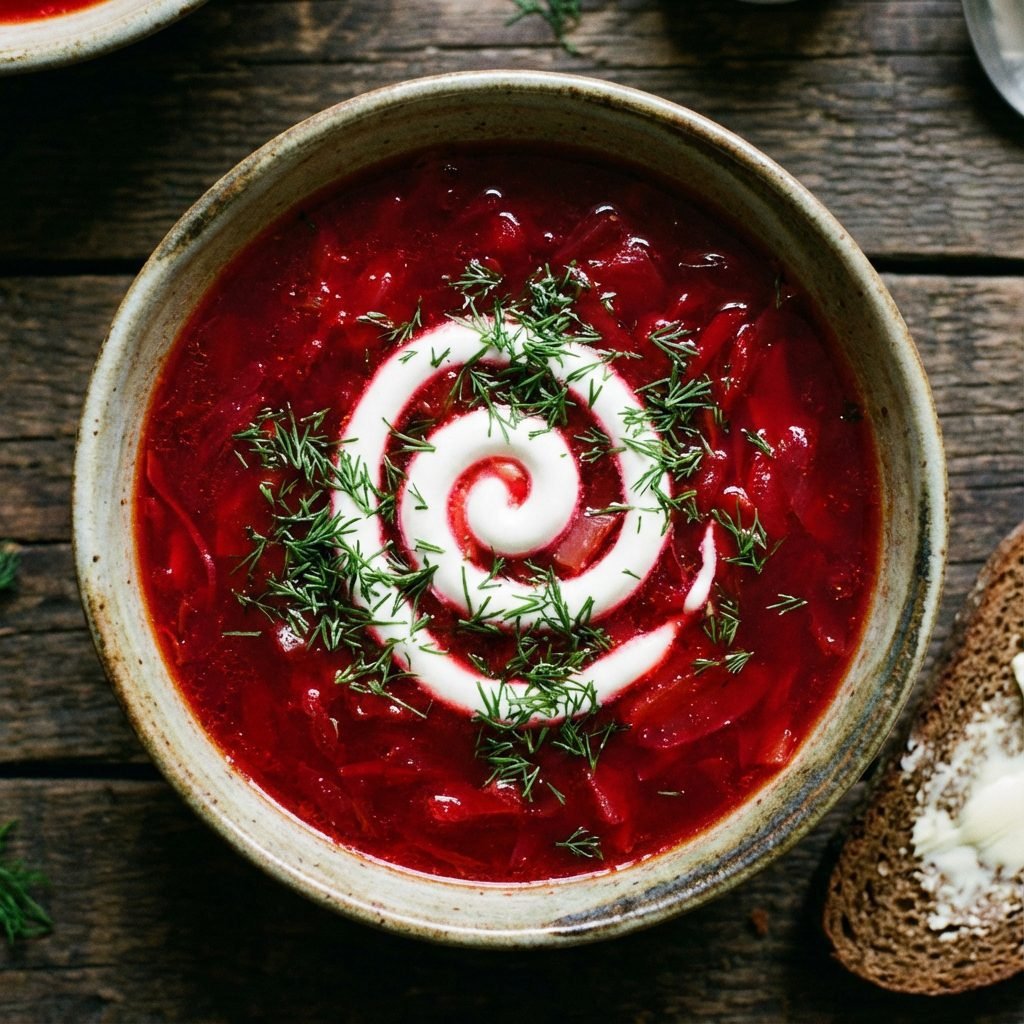
- Ladle the borscht into bowls. Garnish each serving with a generous dollop of sour cream and a sprinkle of the remaining fresh dill.
Expert Cooking Tips
- For a deeper, earthier flavor, you can roast the beets before peeling and grating them. Wrap them in foil and bake at 400°F (200°C) for about an hour, or until tender.
- Don’t skip the final addition of vinegar. This acidity is crucial for brightening the flavors and preserving the soup’s beautiful ruby color.
- Shredding or grating the vegetables helps them cook evenly and creates a wonderful texture. A food processor can make this step much faster.
- Like many soups and stews, borscht tastes even better the next day as the flavors have more time to meld together.
Substitutions and Variations
For a vegan version, simply omit the sour cream garnish or use a plant-based alternative like cashew cream or vegan sour cream. For a heartier, non-vegetarian soup, you can add 1 lb of beef chuck, browned with the onions, and simmer it until tender before adding the other vegetables. You can also use beef broth instead of vegetable broth.
Common Mistakes to Avoid
A common mistake is under-seasoning. Borscht has many earthy components, so it needs adequate salt and a bright kick of acidity from vinegar or lemon juice to make the flavors pop. Another pitfall is overcooking the cabbage, which can become mushy; add it as directed to ensure it retains a slight texture. Finally, don’t boil the soup vigorously after the initial boil; a gentle simmer is key to developing flavor without turning the vegetables to mush.
Serving Suggestions
Borscht is traditionally served hot with a generous dollop of full-fat sour cream (smetana) and a sprinkle of fresh dill. It pairs beautifully with a slice of dense, dark rye bread or pumpernickel for dipping. For a lighter meal, a simple green salad on the side works well. Some also enjoy it with small meat-filled pastries (piroshki) or simple boiled potatoes.
Storage and Reheating Tips
Allow the borscht to cool completely before storing. It can be refrigerated in an airtight container for up to 5 days. To freeze, ladle the cooled soup into freezer-safe containers or bags, leaving an inch of headspace. It will keep well in the freezer for up to 3 months. Thaw overnight in the refrigerator and reheat gently on the stovetop. Note that the texture of the potatoes may change slightly upon freezing.
Nutrition Facts (Estimated)
| Serving Size | 1 bowl (approx. 1.5 cups) |
| Calories | 185 kcal |
| Fat | 6g |
| Saturated Fat | 2.5g |
| Unsaturated Fat | 3g |
| Trans Fat | 0g |
| Cholesterol | 10mg |
| Sodium | 480mg |
| Carbohydrates | 30g |
| Fiber | 8g |
| Sugar | 13g |
| Protein | 5g |
Frequently Asked Questions
Can I use pre-cooked beets to save time?
Yes, absolutely. If using pre-cooked, packaged beets, grate them and add them to the soup during the last 15 minutes of simmering time, just to heat them through and let their flavor infuse the broth.
Why did my borscht turn brownish instead of bright red?
The vibrant red color of beets is sensitive to heat and pH. Overcooking can dull the color. The most important factor is adding an acid, like vinegar or lemon juice, at the end of cooking. The acid helps to stabilize and brighten the red pigment.
Is this soup meant to be served hot or cold?
While this recipe is for a classic hot borscht, there are variations of cold borscht (often called ‘chłodnik’) that are popular in the summer. They are typically lighter, often made with buttermilk or kefir, and served chilled.
Conclusion
There is something magical about transforming a pile of root vegetables into a soup this stunning and delicious. Grandma’s Classic Borscht is more than just food; it’s a celebration of simple ingredients, wholesome nourishment, and the enduring power of a family recipe. Every spoonful is a testament to the fact that healthy eating can and should be incredibly flavorful. We hope this vibrant, comforting soup brings as much joy to your table as it has to ours for generations.