This 1929 Depression Era Water Pie Tastes Like Pure Magic
This 1929 Depression Era Water Pie Tastes Like Pure Magic
Step back in time to an era of profound ingenuity and resilience with a recipe born from necessity: the 1929 Depression Era Water Pie. It sounds impossible, a dessert made primarily from water, sugar, and flour, yet it transforms in the oven into something truly remarkable. This pie is a testament to the creativity of households that had to make do with pantry staples when eggs, milk, and fresh fruit were luxuries. The result is a surprisingly rich, custardy pie with a sweet, buttery, vanilla-kissed flavor that defies its humble origins. It’s not just a dessert; it’s a delicious piece of American history, a conversation starter, and a powerful reminder that the simplest ingredients can create pure magic.
15 minutes
60 minutes
1 hour 15 minutes (plus cooling time)
One 9-inch pie (8 servings)
Dessert
Baking
American
Vegetarian
Why You’ll Love This Recipe
- Made with basic pantry staples: no eggs, milk, or special ingredients required.
- A fascinating and delicious piece of culinary history from the Great Depression.
- Incredibly budget-friendly and easy to assemble.
- Transforms into a surprisingly rich and smooth custard-like filling.
- Perfect for bakers of all skill levels.
Equipment You’ll Need
- 9-inch pie plate
- Mixing bowl
- Whisk
- Rolling pin (if making crust from scratch)
- Measuring cups and spoons
Ingredients
- 1 unbaked 9-inch pie crust (store-bought or homemade)
- 1 ½ cups water
- 1 ¼ cups granulated sugar
- 4 tablespoons all-purpose flour
- 2 teaspoons vanilla extract
- 4 tablespoons unsalted butter, cut into small pieces
- Pinch of salt
- Optional: Pinch of cinnamon or nutmeg for dusting
Instructions
- Preheat your oven to 400°F (200°C).
- Carefully place your unbaked pie crust into a 9-inch pie plate. Crimp the edges as desired. Set aside.
- In a small bowl, whisk together the granulated sugar, all-purpose flour, and a pinch of salt. This prevents the flour from clumping.
- Pour this dry mixture evenly into the bottom of the unbaked pie crust.
- Gently and slowly, pour the 1 ½ cups of water over the sugar and flour mixture. Do not stir! The magic happens as these layers bake and combine on their own.
- Drizzle the vanilla extract over the surface of the water.
- Dot the top of the pie with the small pieces of unsalted butter, distributing them as evenly as possible.
- Carefully place the pie on a baking sheet (to catch any potential drips) and bake at 400°F (200°C) for 15 minutes.
- After 15 minutes, reduce the oven temperature to 375°F (190°C). Continue to bake for another 40-45 minutes.
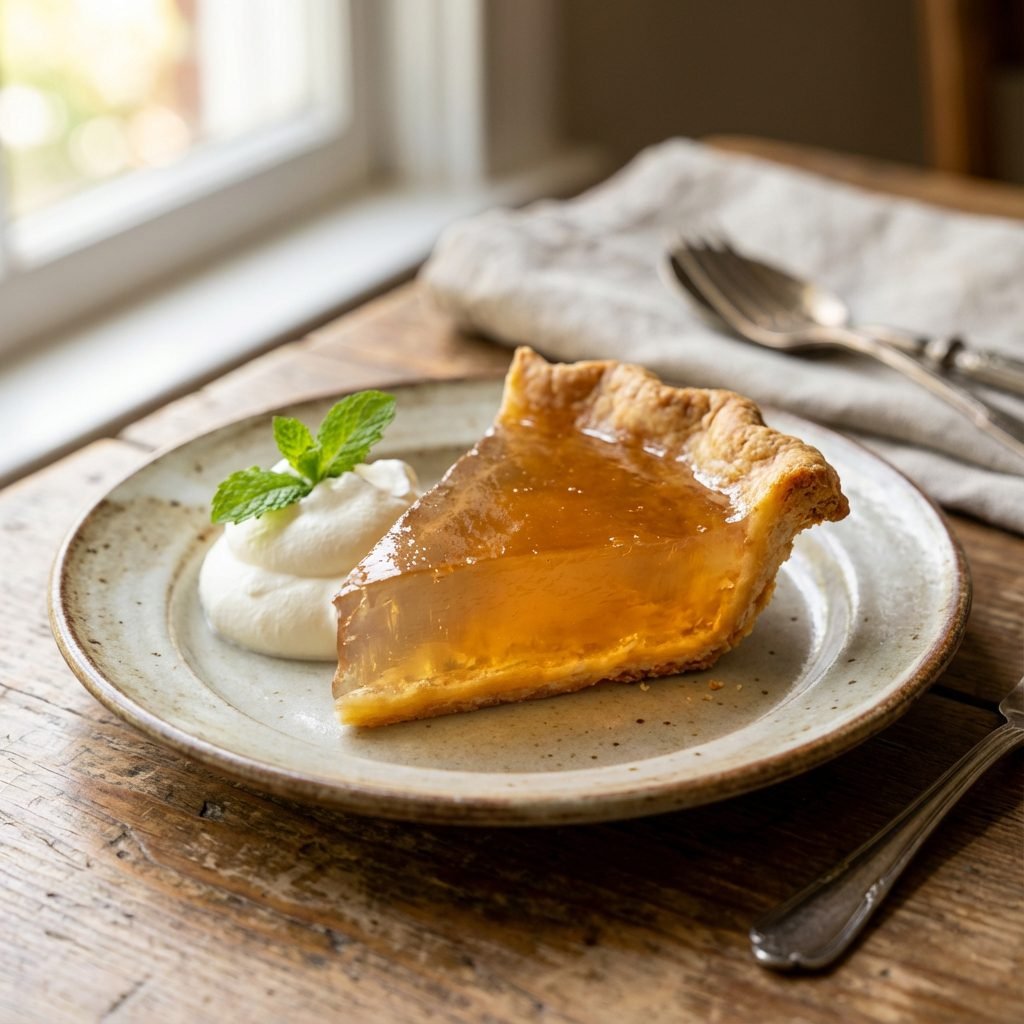
- The pie is done when the crust is golden brown and the center is set but still has a distinct, gelatin-like wobble when gently shaken. It will firm up completely as it cools.
- Remove the pie from the oven and place it on a wire rack to cool completely to room temperature (at least 2-3 hours). For best results and clean slices, chill in the refrigerator for an additional hour before serving.
Expert Cooking Tips
- Do Not Stir: The most critical step is to not stir the ingredients once they are in the pie crust. The layering is what creates the unique texture.
- Cool Completely: This pie absolutely must cool completely, and is even better when chilled. Slicing it while warm will result in a runny filling.
- Watch the Wobble: The sign of a perfectly cooked water pie is a center that jiggles like Jell-O. If it’s sloshing, it needs more time. If it’s solid, it may be slightly overbaked.
- Use a Baking Sheet: Placing the pie plate on a baking sheet makes it easier to handle and will save you from cleaning up any potential spills in your oven.
Substitutions and Variations
For a richer flavor, you can substitute half the water with evaporated milk. Brown sugar can be used in place of white sugar for a deeper, molasses-like taste. For a hint of spice, add 1/4 teaspoon of cinnamon or nutmeg to the dry flour and sugar mixture.
Common Mistakes to Avoid
The most common mistake is slicing the pie before it has fully cooled and set. The cooling process is an essential part of the ‘cooking’ where the filling thickens to its final custard-like consistency. Another mistake is overbaking; this can make the filling slightly tough rather than silky smooth. Trust the wobble test.
Serving Suggestions
Serve slices of water pie chilled. It is delicious on its own, but a dollop of whipped cream or a small scoop of vanilla ice cream complements its simple sweetness perfectly. A light dusting of cinnamon or nutmeg just before serving adds a lovely aromatic touch.
Storage and Reheating Tips
Store any leftover pie covered with plastic wrap or in an airtight container in the refrigerator. It will keep well for up to 4 days. The pie is not suitable for freezing as it will alter the texture of the filling.
Nutrition Facts (Estimated)
| Serving Size | 1 slice (1/8th of pie) |
| Calories | 280 kcal |
| Fat | 12g |
| Saturated Fat | 7g |
| Unsaturated Fat | 4g |
| Trans Fat | 0g |
| Cholesterol | 30mg |
| Sodium | 180mg |
| Carbohydrates | 41g |
| Fiber | 1g |
| Sugar | 26g |
| Protein | 3g |
Frequently Asked Questions
Why is it called Water Pie?
It gets its name from its primary liquid ingredient: water. During the Great Depression, when milk and eggs were scarce or too expensive, resourceful home cooks developed this recipe using water to create the body of the custard-like filling.
Does it actually taste good?
Yes, surprisingly so! The sugar, butter, and vanilla create a flavor profile reminiscent of a simple custard or a sugar cream pie. The texture is smooth and satisfying. It’s a testament to how simple ingredients can create something wonderful.
Can I use a store-bought pie crust?
Absolutely. A store-bought refrigerated or frozen pie crust works perfectly for this recipe and is a great time-saver. Just be sure to follow the package directions for use in a single-crust pie.
Conclusion
Water Pie is more than just a dessert; it’s a story in a pie plate. Each slice carries the history of resilience, innovation, and the ability to create comfort from the barest of essentials. Whether you’re a history buff, a curious baker, or simply looking for an easy and delicious dessert, this 1929 Depression Era Water Pie is a recipe that will surprise and delight you. It proves that sometimes, the most magical things come from the simplest of places.