Hungarian Langos: The Cheesy Garlic Fried Bread of Your Dreams
Hungarian Langos: The Cheesy Garlic Fried Bread Of Your Dreams
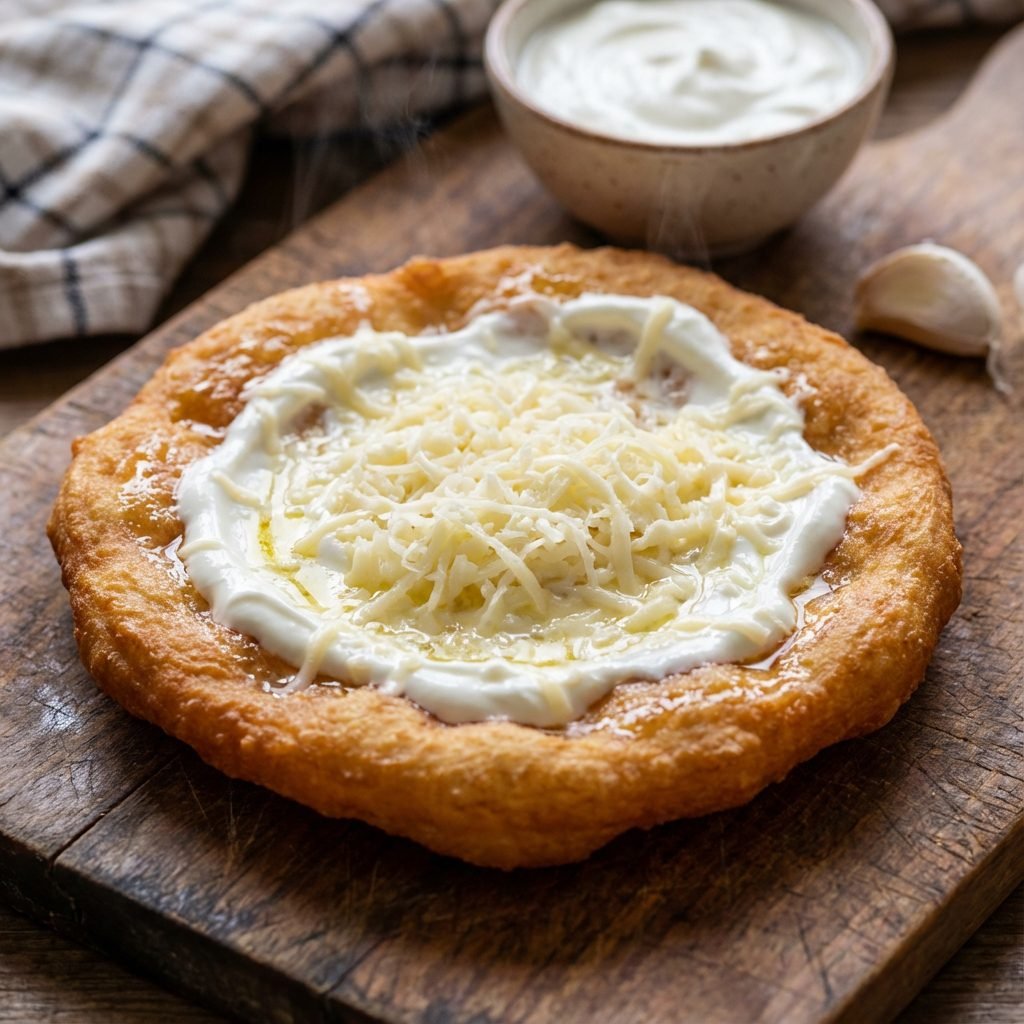
Imagine wandering through a bustling Budapest market, the air filled with the tantalizing aroma of something sweet, savory, and utterly irresistible. That, my friends, is the scent of freshly fried Lángos. This iconic Hungarian street food is a simple yet profound pleasure: a disk of deep-fried dough that puffs up to be simultaneously crispy on the outside, and cloud-like, chewy, and soft on the inside. Traditionally slathered with garlic, sour cream, and a generous blanket of grated cheese, Lángos is the ultimate comfort food. While it may seem like a treat reserved for European holidays, this recipe demystifies the process, bringing the authentic taste of Hungary’s most beloved snack right into your home kitchen. Prepare to fall in love with this golden, garlic-infused masterpiece.
20 minutes
20 minutes
1 hour 40 minutes (includes 60 minutes rising time)
6-8 langos
Snack/Street Food
Deep-Frying
Hungarian
Vegetarian
Why You’ll Love This Recipe
- Authentic street food experience at home.
- Achieves the perfect texture: crispy exterior with a light, chewy interior.
- Versatile and customizable with a variety of savory or sweet toppings.
- A straightforward recipe using simple, accessible ingredients.
- Perfect for parties, gatherings, or as a special indulgent treat.
Equipment You’ll Need
- Large mixing bowl or a stand mixer with a dough hook
- Small bowl
- Plastic wrap or a clean kitchen towel
- Large, heavy-bottomed pot or deep fryer
- Kitchen thermometer
- Slotted spoon or spider strainer
- Wire rack and paper towels
- Pastry brush
- Cheese grater
Ingredients
- For the Dough:
- 1 cup (240ml) lukewarm milk (around 110°F/43°C)
- 1/2 cup (120ml) lukewarm water
- 2 1/4 teaspoons (1 packet or 7g) active dry yeast
- 1 teaspoon granulated sugar
- 4 cups (500g) all-purpose flour, plus more for dusting
- 1 1/2 teaspoons salt
- 1 medium potato (about 150g), boiled, peeled, and mashed until smooth
- 2 tablespoons vegetable oil, plus more for greasing
- For Frying:
- 4-6 cups (1-1.5 liters) neutral oil, like canola, sunflower, or vegetable oil
- For the Classic Topping:
- 3-4 cloves garlic, minced or pressed
- 1/4 cup (60ml) water or sunflower oil
- 1/2 teaspoon salt
- 1 cup (240g) full-fat sour cream
- 2 cups (200g) shredded cheese (like Trappista, Emmental, or Gruyère)
Instructions
- 1. Activate the Yeast: In a small bowl, combine the lukewarm milk, lukewarm water, sugar, and active dry yeast. Stir gently and let it sit for 5-10 minutes until it becomes frothy and bubbly. This indicates the yeast is active.
- 2. Prepare the Potato: If you haven’t already, boil, peel, and mash one medium potato. Ensure it’s completely smooth with no lumps. Let it cool to lukewarm.
- 3. Mix the Dough: In a large bowl or the bowl of a stand mixer, whisk together the flour and salt. Add the yeast mixture, the mashed potato, and 2 tablespoons of oil. Mix until a shaggy dough forms.
- 4. Knead the Dough: Turn the dough out onto a lightly floured surface and knead for 8-10 minutes until it’s smooth, elastic, and no longer sticky. Alternatively, use a stand mixer with a dough hook on medium-low speed for 5-7 minutes. The dough should be soft and pliable.
- 5. First Rise: Lightly oil the mixing bowl, place the dough inside, and turn it over to coat. Cover the bowl with plastic wrap or a damp kitchen towel. Let it rise in a warm, draft-free place for about 60 minutes, or until doubled in size.
- 6. Divide and Shape: Gently punch down the risen dough. Divide it into 6-8 equal pieces. Roll each piece into a ball. Place them on a lightly floured surface, cover, and let them rest for 15 minutes.
- 7. Heat the Oil: Pour the frying oil into a large, deep pot to a depth of at least 2 inches. Heat the oil over medium-high heat to 350-375°F (175-190°C). Use a thermometer for accuracy.
- 8. Stretch the Langos: Working with one ball of dough at a time, use your oiled fingers to stretch it into a thin disc, about 6-8 inches in diameter. The key is to make the center very thin while leaving a slightly thicker, puffy rim around the edge.
- 9. Fry the Langos: Carefully lower one stretched dough disc into the hot oil. It should sizzle immediately. Fry for 1-2 minutes per side, until it’s a beautiful golden brown and puffed up. Use a spoon to baste the top with hot oil as it fries to encourage puffing.
- 10. Drain: Using a slotted spoon or tongs, remove the langos from the oil, allowing excess oil to drip off. Place it on a wire rack lined with paper towels to drain.
- 11. Prepare the Topping: While the langos are still hot, prepare the garlic wash. In a small bowl, mix the minced garlic, salt, and water (for a lighter taste) or oil (for a richer taste).
- 12. Assemble and Serve: Immediately brush the hot, fried langos with the garlic mixture. Then, spread a generous layer of sour cream over the top, followed by a hearty pile of shredded cheese. Serve immediately while hot and crispy.
Expert Cooking Tips
- Oil Temperature is Crucial: Use a kitchen thermometer to maintain the oil between 350-375°F (175-190°C). Too low, and the langos will be greasy; too high, and it will burn before cooking through.
- The Potato Secret: The mashed potato is a traditional addition that makes the dough incredibly soft and tender. Don’t skip it for the most authentic texture.
- Stretch, Don’t Roll: Use your fingers to stretch the dough. This creates the characteristic uneven, rustic shape with a thin center and puffy edges that a rolling pin can’t replicate.
- Don’t Overcrowd the Pot: Fry one langos at a time unless you have a very large pot. Overcrowding will drop the oil temperature, resulting in soggy bread.
- Serve Immediately: Langos is at its absolute best when it’s piping hot, fresh from the fryer. Have your toppings ready to go so you can serve them right away.
Substitutions and Variations
For a quicker version, you can omit the mashed potato, but the dough will be slightly less tender. If you don’t have active dry yeast, you can use an equal amount of instant yeast and mix it directly with the dry ingredients. For a vegan version, use plant-based milk (like unsweetened almond or soy), a vegan sour cream alternative, and your favorite vegan shredded cheese. The topping possibilities are endless: try adding chopped dill, red onions, bacon bits, or even turn it into a dessert with powdered sugar, Nutella, or fruit jam.
Common Mistakes to Avoid
The most common mistake is incorrect oil temperature, leading to a greasy or burnt result. Another frequent error is making the dough discs too thick; this prevents the center from cooking through, leaving it doughy. Be sure to stretch the center until it’s almost translucent. Finally, not allowing the dough to rise sufficiently will result in a dense, heavy langos rather than a light and airy one.
Serving Suggestions
Serve Lángos hot and fresh as the star of the show. It’s a fantastic party food, a comforting lunch, or a satisfying late-night snack. While it’s a complete meal in itself, you can pair it with a simple, crisp green salad with a vinaigrette dressing to cut through the richness. A cold, crisp lager beer or a dry Hungarian white wine like Furmint is the perfect beverage to accompany it.
Storage and Reheating Tips
Lángos is best enjoyed immediately. If you have leftovers, store the plain, untopped fried bread in an airtight container at room temperature for up to 24 hours. To reheat, place them in a 375°F (190°C) oven or an air fryer for 3-5 minutes until heated through and crispy again. Do not microwave, as it will become soft and chewy. The raw dough can be stored in an airtight container in the refrigerator for up to 2 days.
Nutrition Facts (Estimated)
| Serving Size | 1 langos with classic toppings |
| Calories | 480 kcal |
| Fat | 26g |
| Saturated Fat | 9g |
| Unsaturated Fat | 15g |
| Trans Fat | 0g |
| Cholesterol | 35mg |
| Sodium | 650mg |
| Carbohydrates | 52g |
| Fiber | 2g |
| Sugar | 5g |
| Protein | 13g |
Frequently Asked Questions
Can I make the dough ahead of time?
Yes. After the first rise, you can punch the dough down, wrap it tightly, and refrigerate it for up to 48 hours. Let it sit at room temperature for about 30-60 minutes before shaping and frying.
Can I bake or air-fry langos instead of deep-frying?
While you can, the result will be very different and not a traditional langos. Deep-frying is essential for the signature puffy, crispy-chewy texture. Baking will result in a bread similar to pizza crust, and air-frying will create a drier, less puffy version.
My langos didn’t puff up. What went wrong?
This could be due to a few reasons: your yeast may not have been active (always check for frothiness), your dough may have been under-proofed, or your oil wasn’t hot enough when you added the dough. A sudden sizzle upon contact with the oil is key to the initial puff.
Conclusion
There is a unique magic in tearing into a piece of freshly made Lángos—the crunch of the crust, the steam rising from the soft interior, and the decadent combination of tangy sour cream and sharp, savory garlic. This recipe is more than just instructions; it’s an invitation to create a moment of pure, unadulterated comfort and joy. Whether you’re sharing with family or treating yourself, mastering homemade Lángos is a culinary achievement that will transport your senses straight to the heart of Hungary.