Authentic Tortilla Española: How to Make Spain’s Famous Potato Omelet
Authentic Tortilla EspañOla: How To Make Spain’S Famous Potato Omelet
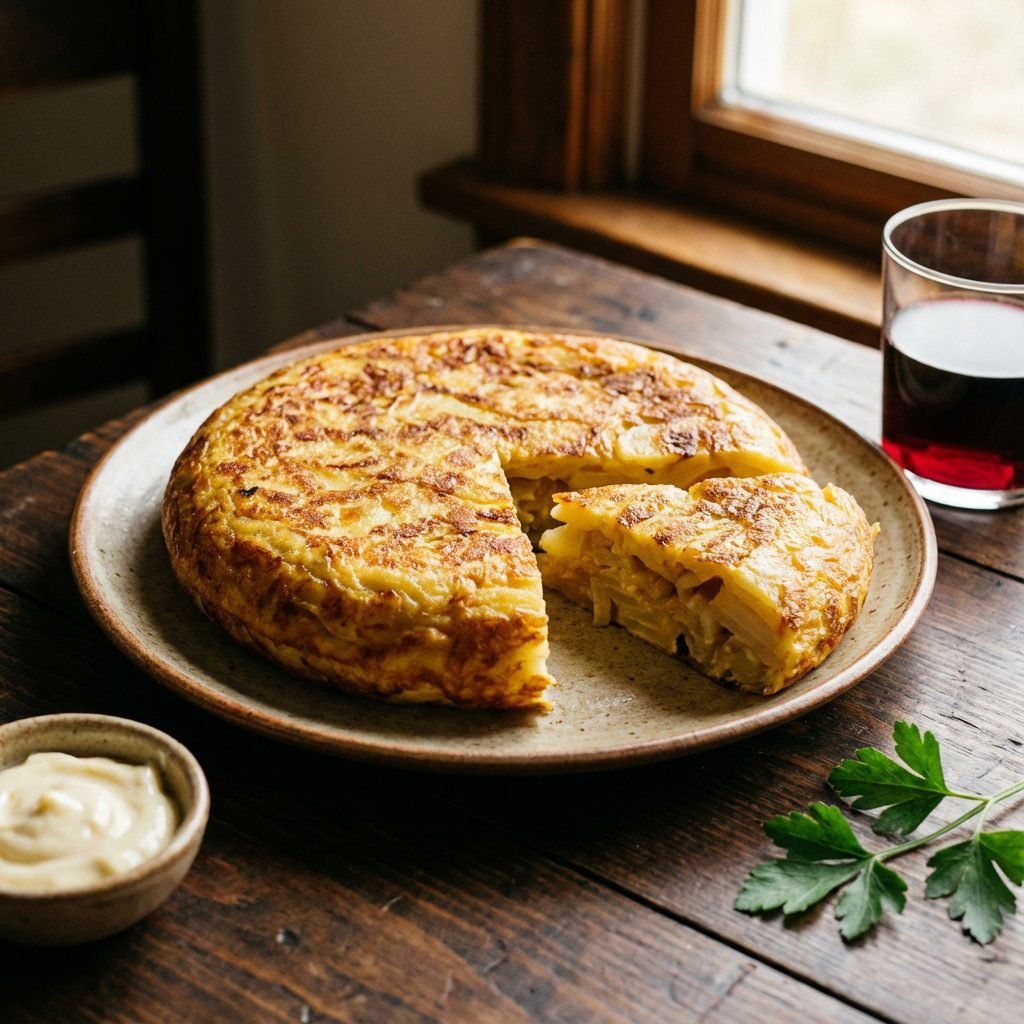
Step into any tapas bar in Spain, from the bustling streets of Madrid to the quiet villages of Andalusia, and you’ll find one dish that is universally cherished: the Tortilla Española. Also known as Tortilla de Patatas, this is not the thin, corn-based flatbread of Mexico, but a glorious, thick, and savory potato omelet. Its beauty lies in its simplicity—just potatoes, eggs, onions (a topic of much friendly debate), olive oil, and salt. Yet, when made correctly, these humble ingredients transform into something sublime. This recipe will guide you through the authentic process, from gently poaching the potatoes in olive oil to executing the all-important, nerve-wracking flip. Prepare to master a true icon of Spanish cuisine that’s perfect for breakfast, lunch, dinner, or as a delicious tapa.
15 minutes
30 minutes
45 minutes
Serves 4-6 as a main, 8-10 as a tapa
Main Course
Pan-Frying
Spanish
Vegetarian
Why You’ll Love This Recipe
- Master the authentic Spanish technique for a perfect, tender interior.
- Uses simple, inexpensive, and readily available ingredients.
- A versatile dish that can be served hot, warm, or at room temperature.
- Naturally gluten-free and vegetarian.
Equipment You’ll Need
- 10-inch non-stick skillet
- Large mixing bowl
- A large plate (wider than the skillet)
- Slotted spoon or spider strainer
- Sharp knife
- Cutting board
Ingredients
- 1 ½ pounds (about 700g) waxy potatoes (like Yukon Gold or Russet), peeled
- 1 large yellow onion, thinly sliced
- 6 large eggs
- 1 ½ cups extra-virgin olive oil, for frying
- 1 teaspoon fine sea salt, or to taste
- Freshly ground black pepper (optional)
Instructions
- Prepare the Potatoes and Onions: Slice the peeled potatoes into thin, 1/8-inch (3mm) rounds. A mandoline is helpful for uniformity but not essential. Place the sliced potatoes in a bowl and add the thinly sliced onion and 1 teaspoon of salt. Toss everything together with your hands to distribute the salt evenly.
- Cook the Potatoes and Onions: Pour the 1 ½ cups of olive oil into your 10-inch non-stick skillet over medium heat. The oil should be deep enough to mostly submerge the potatoes. Carefully add the potato and onion mixture to the pan. The goal is to poach or ‘confit’ them, not deep-fry. Adjust the heat so the oil is at a constant, gentle simmer, not a vigorous boil. Cook for 20-25 minutes, stirring occasionally, until the potatoes are very tender and can be easily pierced with a fork. They should not be crispy or browned.
- Drain and Combine: While the potatoes cook, crack the 6 eggs into a large mixing bowl and whisk them well until uniform. Once the potatoes are tender, carefully drain them through a colander or with a slotted spoon, reserving about 2 tablespoons of the flavorful olive oil. Let the potatoes cool for a few minutes, then gently fold them into the beaten eggs. Add a pinch of black pepper if using. Let this mixture sit for at least 10 minutes to allow the flavors to meld.
- Cook the First Side: Wipe out the skillet and add 1 tablespoon of the reserved olive oil. Heat it over medium-high heat until hot. Give the egg and potato mixture one last stir and pour it into the hot skillet. Use a spatula to spread it evenly and tuck in the edges to create a rounded shape. Reduce the heat to medium-low and cook for 5-7 minutes, until the edges are set and the center is still slightly runny. You can gently shake the pan to ensure it’s not sticking.
- The Flip: This is the crucial step. Place a large plate, upside down, over the skillet. With one hand firmly on the plate and the other on the skillet handle, quickly and confidently flip the skillet over. The tortilla will now be on the plate, cooked-side up.
- Cook the Second Side: Gently slide the tortilla from the plate back into the skillet. Use your spatula to again tuck the edges under to maintain the classic curved shape. Cook for another 4-6 minutes, or until the tortilla is cooked to your desired doneness (some prefer it slightly gooey in the center, or ‘jugosa’).
- Rest and Serve: Slide the finished tortilla onto a clean plate. Let it rest for at least 10-15 minutes before slicing. This allows the center to set up properly. Serve warm, at room temperature, or cold. It’s delicious on its own, with a dollop of aioli, or tucked into a piece of crusty bread for a ‘bocadillo’.
Expert Cooking Tips
- Use Waxy Potatoes: Waxy potatoes like Yukon Gold hold their shape better and result in a creamier texture than starchy potatoes like Idaho.
- Slow-Cook the Potatoes: The key to a great tortilla is gently poaching the potatoes in olive oil, not frying them crispy. This makes them tender and infuses them with flavor.
- Don’t Skimp on Salt: Potatoes and eggs need a good amount of salt to bring out their flavor. Salting the potatoes before cooking helps them season from the inside out.
- Be Confident with the Flip: Hesitation is your enemy. A quick, decisive flip is the safest and most effective way to turn the tortilla. Practice over a sink if you’re nervous!
- Let it Rest: Allowing the tortilla to rest before slicing is essential. It helps the eggs set completely, making it easier to cut clean wedges.
Substitutions and Variations
The most classic debate in Spain is whether to include onion. Feel free to omit it for a purist ‘tortilla sin cebolla’. For variations, you can add diced chorizo, sautéed bell peppers, spinach, or mushrooms to the potato mixture before adding the eggs.
Common Mistakes to Avoid
A common mistake is cooking the potatoes at too high a heat, causing them to brown and become crispy instead of tender. Another pitfall is under-seasoning; be sure to taste and adjust salt levels. Finally, using a pan that is not non-stick can lead to disaster, as the tortilla will stick and break apart during the flip.
Serving Suggestions
Serve as a main dish with a simple green salad. Cut into small cubes and serve with toothpicks as a tapa. Make a ‘bocadillo de tortilla’ by placing a wedge inside a split baguette. It pairs wonderfully with a glass of Spanish wine like Rioja or a crisp Albariño. A side of garlic aioli or romesco sauce is also a fantastic accompaniment.
Storage and Reheating Tips
Leftover Tortilla Española can be stored in an airtight container in the refrigerator for up to 3 days. It is excellent eaten cold straight from the fridge or can be gently reheated in a microwave or a skillet over low heat. Do not freeze.
Nutrition Facts (Estimated)
| Serving Size | 1/6th of tortilla |
| Calories | 380 kcal |
| Fat | 26g |
| Saturated Fat | 5g |
| Unsaturated Fat | 21g |
| Trans Fat | 0g |
| Cholesterol | 280mg |
| Sodium | 450mg |
| Carbohydrates | 22g |
| Fiber | 3g |
| Sugar | 3g |
| Protein | 14g |
Frequently Asked Questions
My tortilla fell apart when I flipped it. What went wrong?
This usually happens for a few reasons: the tortilla wasn’t set enough before flipping, the pan was not non-stick, or there wasn’t enough oil in the pan for the second side. Ensure the edges are firm and the center is just slightly wobbly before you attempt the flip.
Can I use less oil to make it healthier?
While you can reduce the oil, the large amount is traditional for poaching the potatoes, which gives the tortilla its characteristic texture and flavor. If you reduce it too much, you will be pan-frying the potatoes, resulting in a different, less authentic texture. The potatoes don’t absorb all the oil; most of it is drained away.
Why do you let the potato and egg mixture sit?
Letting the warm, cooked potatoes sit in the raw egg for 10-15 minutes does two things: it gently starts to cook the egg, and more importantly, it allows the potatoes to absorb the egg mixture, resulting in a more cohesive and flavorful tortilla.
Conclusion
Mastering the Tortilla Española is a rite of passage for anyone who loves Spanish food. It’s a testament to how extraordinary simple ingredients can be when treated with care. Whether you serve it for a weekend brunch, a light dinner, or as the star of a tapas spread, this recipe will bring an authentic taste of Spain right into your kitchen. Enjoy the process, embrace the flip, and savor every delicious bite.