Tuscan Pappa Al Pomodoro: Don’t Throw Away That Stale Bread
Tuscan Pappa Al Pomodoro: Don’T Throw Away That Stale Bread
In the heart of Tuscany, where resourcefulness is as rich as the soil, lies a culinary tradition known as ‘cucina povera’ or ‘poor cooking.’ This philosophy isn’t about lack, but about ingenuity—transforming simple, humble ingredients into dishes of profound flavor and comfort. Pappa al Pomodoro is the quintessential embodiment of this spirit. This rustic, thick tomato and bread soup is a masterclass in turning what many would discard—stale, day-old bread—into the star of the show. It’s more than a soup; it’s a porridge-like stew, a comforting hug in a bowl that speaks of sun-drenched Italian hillsides and the wisdom of generations past. Forget everything you think you know about bread in soup; this isn’t about soggy croutons. It’s about bread melting into a velvety, rich foundation for sweet tomatoes, fragrant garlic, and fresh basil. Prepare to discover the magic of making something truly extraordinary from almost nothing.
15 minutes
45 minutes
1 hour
4-6 servings
Soup
Simmering
Italian (Tuscan)
Vegetarian
Why You’ll Love This Recipe
- Authentic Tuscan ‘cucina povera’ recipe
- Transforms stale bread into a delicious, hearty meal
- Simple, rustic, and deeply comforting
- Vegetarian and easily made vegan
- Requires minimal, high-quality ingredients
Equipment You’ll Need
- Large heavy-bottomed pot or Dutch oven
- Wooden spoon
- Chef’s knife
- Cutting board
Ingredients
- 1 pound (about 450g) stale, crusty Tuscan or Italian bread, cut into 1-inch cubes
- 1/4 cup extra-virgin olive oil, plus more for drizzling
- 4 cloves garlic, thinly sliced
- 1 (28-ounce/800g) can San Marzano whole peeled tomatoes, crushed by hand
- 4 cups high-quality vegetable broth
- 1 large bunch of fresh basil, leaves picked (about 1.5 cups packed)
- 1/2 teaspoon red pepper flakes (optional)
- Kosher salt and freshly ground black pepper to taste
Instructions
- Heat the 1/4 cup of extra-virgin olive oil in a large Dutch oven or heavy-bottomed pot over medium heat. Add the sliced garlic and optional red pepper flakes. Cook, stirring frequently, until the garlic is fragrant and lightly golden, about 2-3 minutes. Be careful not to burn it.
- Pour the hand-crushed San Marzano tomatoes and their juices into the pot. Stir to combine with the garlic and oil. Season with a generous pinch of salt and black pepper.
- Bring the mixture to a gentle simmer and cook for about 10 minutes, allowing the tomato flavors to deepen.
- Pour in the vegetable broth and bring the mixture back to a steady simmer.
- Add the cubes of stale bread to the pot, along with about two-thirds of the fresh basil leaves. Stir everything together until the bread is submerged in the liquid.
- Reduce the heat to low, cover the pot, and let it simmer for at least 30 minutes, or until the bread has completely softened and started to break down, thickening the soup into a porridge-like consistency. Stir occasionally to prevent sticking.
- Once the soup is thick, remove it from the heat. Use your wooden spoon to mash any remaining large pieces of bread against the side of the pot to create a more uniform, rustic texture.
- Stir in the remaining fresh basil leaves. Taste and adjust the seasoning with more salt and pepper as needed.
- Let the Pappa al Pomodoro rest for at least 15-20 minutes off the heat before serving. This allows the flavors to meld and the soup to thicken further.
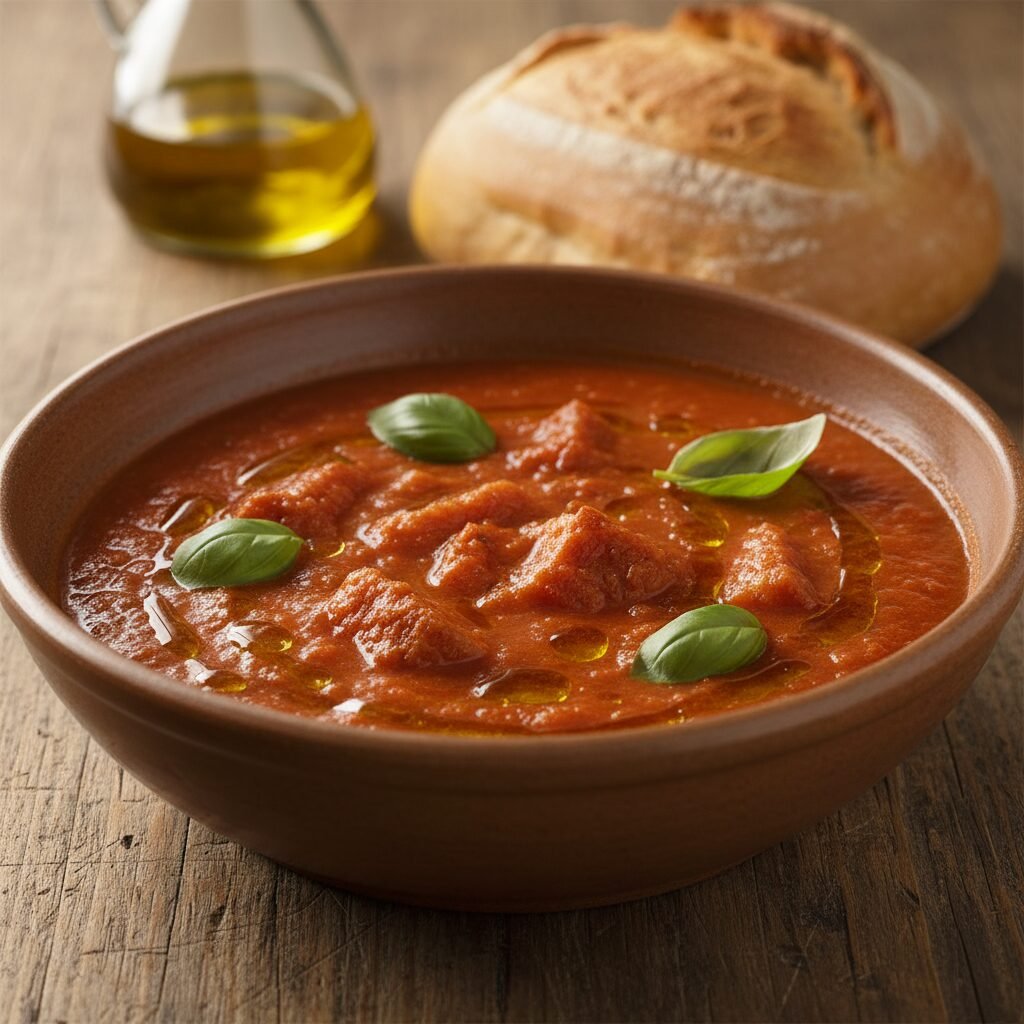
- Ladle into bowls, drizzle generously with high-quality extra-virgin olive oil, and garnish with a few small basil leaves.
Expert Cooking Tips
- Use genuinely stale, hard bread. Fresh bread will turn into a gummy, unpleasant mush. The bread should be at least a day or two old.
- Invest in high-quality ingredients. Since the recipe is so simple, the flavor of your San Marzano tomatoes and extra-virgin olive oil will shine through.
- Don’t rush the simmer. The long, slow cooking time is crucial for the bread to properly break down and absorb all the flavors of the tomato and broth.
- The soup should be very thick, almost like a savory porridge. If it seems too thin, let it simmer uncovered for a bit longer. If it’s too thick, stir in a splash more broth or hot water.
Substitutions and Variations
While traditional Tuscan bread (which is salt-free) is ideal, any crusty, stale artisan bread like a ciabatta or a country-style sourdough will work well. If you only have fresh tomatoes, you can use about 2 pounds of very ripe Roma tomatoes, blanched, peeled, and chopped. Chicken broth can be used instead of vegetable broth if you are not aiming for a vegetarian dish.
Common Mistakes to Avoid
The most common mistake is using fresh bread. This recipe is designed specifically to rehydrate and break down dry, stale bread. Fresh bread will disintegrate into a paste-like texture. Another error is under-seasoning; the bread absorbs a lot of salt, so be sure to taste and adjust the seasoning at the end of cooking. Finally, don’t skimp on the final drizzle of high-quality olive oil—it adds a crucial layer of fruity, peppery flavor that finishes the dish perfectly.
Serving Suggestions
Serve Pappa al Pomodoro warm or at room temperature, never piping hot. A generous drizzle of your best extra-virgin olive oil and a few fresh basil leaves are classic and essential. For a richer dish, you can add a dollop of fresh ricotta or a sprinkle of grated Parmigiano-Reggiano on top. It’s a substantial meal on its own but also pairs beautifully with a simple arugula salad dressed with lemon and olive oil.
Storage and Reheating Tips
Pappa al Pomodoro is one of those magical dishes that tastes even better the next day. Store leftovers in an airtight container in the refrigerator for up to 3 days. The soup will thicken considerably as it cools; you may need to stir in a splash of water or broth when reheating gently on the stovetop. Freezing is not recommended as it can negatively affect the texture of the bread.
Nutrition Facts (Estimated)
| Serving Size | Approx. 1.5 cups |
| Calories | 320 kcal |
| Fat | 16g |
| Saturated Fat | 2.3g |
| Unsaturated Fat | 13.7g |
| Trans Fat | 0g |
| Cholesterol | 0mg |
| Sodium | 580mg |
| Carbohydrates | 38g |
| Fiber | 6g |
| Sugar | 9g |
| Protein | 7g |
Frequently Asked Questions
Can I use pre-made breadcrumbs instead of stale bread?
No, this is not recommended. The recipe relies on the structure of stale bread cubes, including the crust, to create its signature thick, porridge-like texture. Breadcrumbs would dissolve too quickly and result in a very different consistency.
Is this soup supposed to be smooth?
Not at all. Pappa al Pomodoro is meant to be rustic and textured. You should still have the soft, integrated structure of the broken-down bread. It should not be blended or pureed.
My soup seems bland. What did I do wrong?
Blandness usually comes from under-seasoning or using subpar ingredients. Be generous with salt, as the bread absorbs a lot. Also, ensure you’re using flavorful, ripe tomatoes (like San Marzano) and a high-quality, peppery extra-virgin olive oil for finishing.
Conclusion
Pappa al Pomodoro is more than a recipe; it’s a story of culinary heritage. It teaches us to see value where others see waste and to understand that the most profound flavors often come from the simplest of ingredients treated with care and respect. By making this soup, you are not just feeding yourself; you are participating in a timeless Italian tradition of resourceful, soulful cooking. So next time you find yourself with a loaf of bread past its prime, rejoice. You’re just one step away from a truly memorable Tuscan meal.