This Italian Peasant Dish Tastes Like Pure Comfort
This Italian Peasant Dish Tastes Like Pure Comfort
There are certain dishes that transcend mere sustenance, offering a sense of warmth and well-being that feels like a hug from the inside out. This is the essence of Italian *cucina povera*, or ‘peasant cooking’—a philosophy of creating deeply satisfying meals from simple, humble ingredients. At the heart of this tradition is Pasta e Fagioli, or pasta and beans. More than just a soup, it’s a hearty, one-pot meal that has nourished families across Italy for generations. Each region has its own subtle variation, but the core remains the same: a rich, savory broth brimming with tender beans, vegetables, and pasta. It’s a testament to the idea that the most memorable meals don’t require fancy ingredients or complicated techniques, but rather time, care, and a respect for the ingredients at hand. Prepare to fall in love with the rustic charm and profound comfort of this timeless classic.
20 minutes
40 minutes
1 hour
6-8 servings
Main Course
Stovetop / One-Pot
Italian
Standard
Why You’ll Love This Recipe
- Hearty and Budget-Friendly: Uses simple, inexpensive pantry staples to create a deeply satisfying and filling meal.
- One-Pot Wonder: The entire dish comes together in a single pot, making for easy preparation and even easier cleanup.
- Richly Flavorful: A slow-simmered soffritto, savory pancetta, and an optional Parmesan rind create incredible depth of flavor.
- Completely Customizable: Easily adapted for vegetarian or vegan diets, and you can use any beans or small pasta you have on hand.
Equipment You’ll Need
- Large Dutch oven or heavy-bottomed pot
- Wooden spoon or spatula
- Chef’s knife
- Cutting board
- Ladle
Ingredients
- 2 tablespoons extra virgin olive oil
- 4 ounces pancetta, diced
- 1 large yellow onion, finely chopped
- 2 medium carrots, finely chopped
- 2 celery stalks, finely chopped
- 4 cloves garlic, minced
- 1 tablespoon tomato paste
- 1 sprig fresh rosemary
- 1 (28-ounce) can crushed tomatoes
- 6 cups low-sodium chicken or vegetable broth
- 1 (15-ounce) can cannellini beans, rinsed and drained
- 1 (15-ounce) can red kidney beans or borlotti beans, rinsed and drained
- 1 piece Parmesan cheese rind (optional, but highly recommended)
- 1 cup small pasta, such as ditalini, small shells, or elbow macaroni
- Salt and freshly ground black pepper to taste
- For serving: freshly grated Parmesan cheese, chopped fresh parsley, and extra virgin olive oil
Instructions
- Heat the olive oil in a large Dutch oven or heavy-bottomed pot over medium heat. Add the diced pancetta and cook, stirring occasionally, until it becomes crispy and has rendered its fat, about 5-7 minutes. Do not drain the fat.
- Add the chopped onion, carrots, and celery (the soffritto) to the pot. Sauté until the vegetables have softened and the onion is translucent, about 8-10 minutes. This step builds a crucial layer of flavor, so don’t rush it.
- Stir in the minced garlic and cook until fragrant, about 1 minute. Add the tomato paste and cook, stirring constantly, for another minute to deepen its flavor.
- Pour in the crushed tomatoes, chicken or vegetable broth, both cans of beans, the fresh rosemary sprig, and the Parmesan rind (if using). Stir everything together to combine.
- Bring the mixture to a boil, then reduce the heat to low, cover, and let it simmer for at least 20 minutes to allow the flavors to meld together. For a deeper flavor, you can simmer for up to 40 minutes.
- Uncover the pot, increase the heat to medium, and bring the soup back to a gentle boil. Stir in the small pasta. Cook, stirring occasionally, until the pasta is al dente, according to package directions (usually 7-10 minutes).
- Once the pasta is cooked, remove the pot from the heat. Fish out the rosemary sprig and the Parmesan rind and discard them. Taste the soup and season generously with salt and freshly ground black pepper.
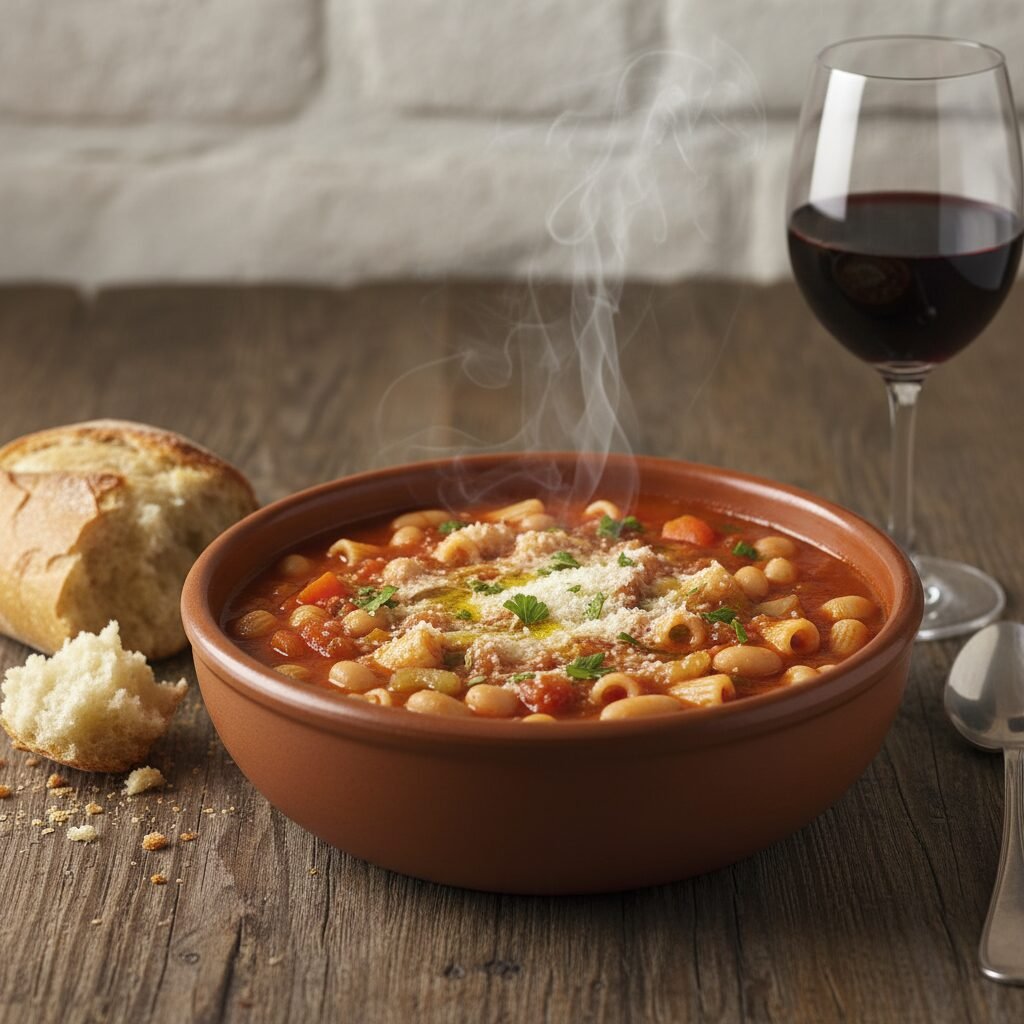
- Ladle the Pasta e Fagioli into warm bowls. Garnish with a generous amount of freshly grated Parmesan cheese, a sprinkle of chopped parsley, and a final drizzle of good-quality extra virgin olive oil before serving.
Expert Cooking Tips
- Don’t Rush the Soffritto: The initial sauté of onion, carrot, and celery is the foundation of the dish. Cooking them slowly over medium heat until they are very soft and sweet builds an incredible depth of flavor that can’t be replicated.
- Use a Parmesan Rind: If you have a leftover rind from a wedge of Parmesan cheese, toss it into the soup as it simmers. It will impart a savory, umami-rich flavor to the broth that is truly magnificent.
- For a Creamier Texture: For a thicker, creamier consistency without adding any dairy, carefully scoop out about 1 cup of the bean and broth mixture (before adding the pasta), blend it until smooth, and then stir it back into the pot.
- Mind the Pasta: The pasta will continue to absorb liquid as it sits, so be sure to cook it only until al dente. If you anticipate having leftovers, consider cooking the pasta separately and adding it to individual bowls upon serving.
Substitutions and Variations
To make this recipe vegetarian, simply omit the pancetta and use vegetable broth. To replicate some of the savory depth, you can add a teaspoon of smoked paprika or a tablespoon of soy sauce. For a vegan version, follow the vegetarian instructions and omit the Parmesan rind and cheese garnish. Any combination of beans like borlotti, cannellini, or Great Northern beans works well. For a gluten-free option, use your favorite small gluten-free pasta, but cook it separately and add it to each bowl to prevent it from breaking down in the soup.
Common Mistakes to Avoid
A common mistake is under-seasoning. Because the ingredients are simple, the final seasoning is critical. Be sure to taste and adjust with salt and pepper after the pasta is cooked. Another pitfall is adding too much pasta, which can absorb all the liquid and turn the dish into a dense porridge. Stick to the recipe’s measurements. Finally, don’t skip the final garnishes; a drizzle of high-quality olive oil and a generous grating of fresh Parmesan cheese are not just decorative—they are essential flavor components that complete the dish.
Serving Suggestions
Serve this hearty dish hot in large, rustic bowls. The perfect accompaniment is a loaf of crusty Italian bread for dipping into the rich, flavorful broth. A simple green salad with a light vinaigrette can provide a fresh, crisp contrast to the richness of the soup. For a complete meal, pair it with a glass of robust Italian red wine, such as a Chianti or a Barbera.
Storage and Reheating Tips
Leftover Pasta e Fagioli can be stored in an airtight container in the refrigerator for up to 4 days. Be aware that the pasta will continue to absorb the broth, causing the soup to thicken considerably. When reheating, you may need to add a splash of water or broth to loosen it to your desired consistency. Reheat gently on the stovetop over low heat or in the microwave.
Nutrition Facts (Estimated)
| Serving Size | 1 bowl (approx. 1.5 cups) |
| Calories | 450 kcal |
| Fat | 15g |
| Saturated Fat | 5g |
| Unsaturated Fat | 10g |
| Trans Fat | 0g |
| Cholesterol | 20mg |
| Sodium | 800mg |
| Carbohydrates | 55g |
| Fiber | 12g |
| Sugar | 5g |
| Protein | 20g |
Frequently Asked Questions
Can I use dried beans instead of canned?
Absolutely. You will need about 1.5 cups of dried cannellini or borlotti beans. Soak them overnight, then drain. You’ll need to cook them in the broth for a longer period before adding the other ingredients. Simmer them until they are tender (which can take 1-2 hours) before proceeding with the recipe from the point of adding the pasta.
Can I freeze Pasta e Fagioli?
Yes, but it’s best to freeze it without the pasta. The pasta can become very soft and mushy upon thawing and reheating. Prepare the soup base completely, let it cool, and freeze it for up to 3 months. When you’re ready to eat, thaw the soup, bring it to a simmer, and cook a fresh batch of pasta directly in it.
My soup seems too thick/thin. How can I adjust it?
The consistency of Pasta e Fagioli is a matter of personal preference. If your soup is too thick, simply stir in a bit more broth or hot water until it reaches the consistency you like. If it’s too thin, you can let it simmer uncovered for a little longer to allow some of the liquid to evaporate, or use the blending trick mentioned in the cooking tips to thicken it up.
Conclusion
Pasta e Fagioli is more than just a recipe; it’s a culinary tradition steeped in history and comfort. It’s a celebration of making something extraordinary out of the ordinary. With each spoonful, you taste the rustic heart of Italy—a simple, honest, and profoundly delicious meal that has the power to warm you, body and soul. We hope this dish becomes a beloved staple in your home, a go-to meal for chilly nights when all you crave is a hug in a bowl.