The Dreamiest Dessert Made Entirely From Leftover Rice and Milk
The Dreamiest Dessert Made Entirely From Leftover Rice And Milk
In the world of culinary alchemy, few transformations are as magical or as comforting as turning humble leftovers into a truly spectacular dish. We often view leftover rice as a mere afterthought, destined for a quick stir-fry or simply forgotten at the back of the fridge. But what if I told you that this simple staple, combined with a bit of milk and a touch of sweetness, could become the creamiest, most soul-soothing dessert you’ve ever tasted? This recipe is a tribute to resourcefulness and the quiet joy of creating something wonderful from next to nothing. It’s a classic rice pudding, elevated to its full potential, proving that you don’t need fancy ingredients or complicated techniques to achieve dessert perfection. Prepare to fall in love with a timeless classic that’s as kind to your wallet as it is to your palate.
5 minutes
25-30 minutes
30-35 minutes
4 servings
Dessert
Stovetop
International
Gluten-Free, Vegetarian
Why You’ll Love This Recipe
- Transforms leftover rice into a luxurious dessert.
- Incredibly simple with just a handful of pantry staples.
- A budget-friendly and sustainable way to reduce food waste.
- Highly customizable with different milks, sweeteners, and toppings.
- The ultimate comfort food, perfect served warm or chilled.
Equipment You’ll Need
- Medium saucepan or pot
- Wooden spoon or heatproof spatula
- Measuring cups and spoons
Ingredients
- 2 cups cooked and chilled long-grain white rice (e.g., Basmati or Jasmine)
- 3 cups whole milk (or 2% milk)
- 1/3 cup granulated sugar (adjust to taste)
- 1 teaspoon pure vanilla extract
- 1/4 teaspoon salt
- Ground cinnamon or nutmeg, for garnish (optional)
Instructions
- In a medium saucepan, combine the 2 cups of chilled, cooked rice, 3 cups of milk, 1/3 cup of sugar, and 1/4 teaspoon of salt.
- Stir everything together and place the saucepan over medium heat. Bring the mixture to a gentle simmer, stirring occasionally to prevent the rice from sticking to the bottom.
- Once it begins to simmer, immediately reduce the heat to low. Allow the pudding to cook gently for 20-25 minutes. It is crucial to stir frequently (every few minutes) to prevent a skin from forming and to ensure the bottom doesn’t scorch.
- Continue to cook until the pudding has thickened considerably and the rice grains are very soft and suspended in a creamy sauce. The mixture should coat the back of a spoon. Remember that it will thicken further as it cools.
- Remove the saucepan from the heat. Stir in the 1 teaspoon of vanilla extract until it’s fully incorporated.
- Let the pudding cool for at least 10-15 minutes before serving. This allows it to set to the perfect consistency.
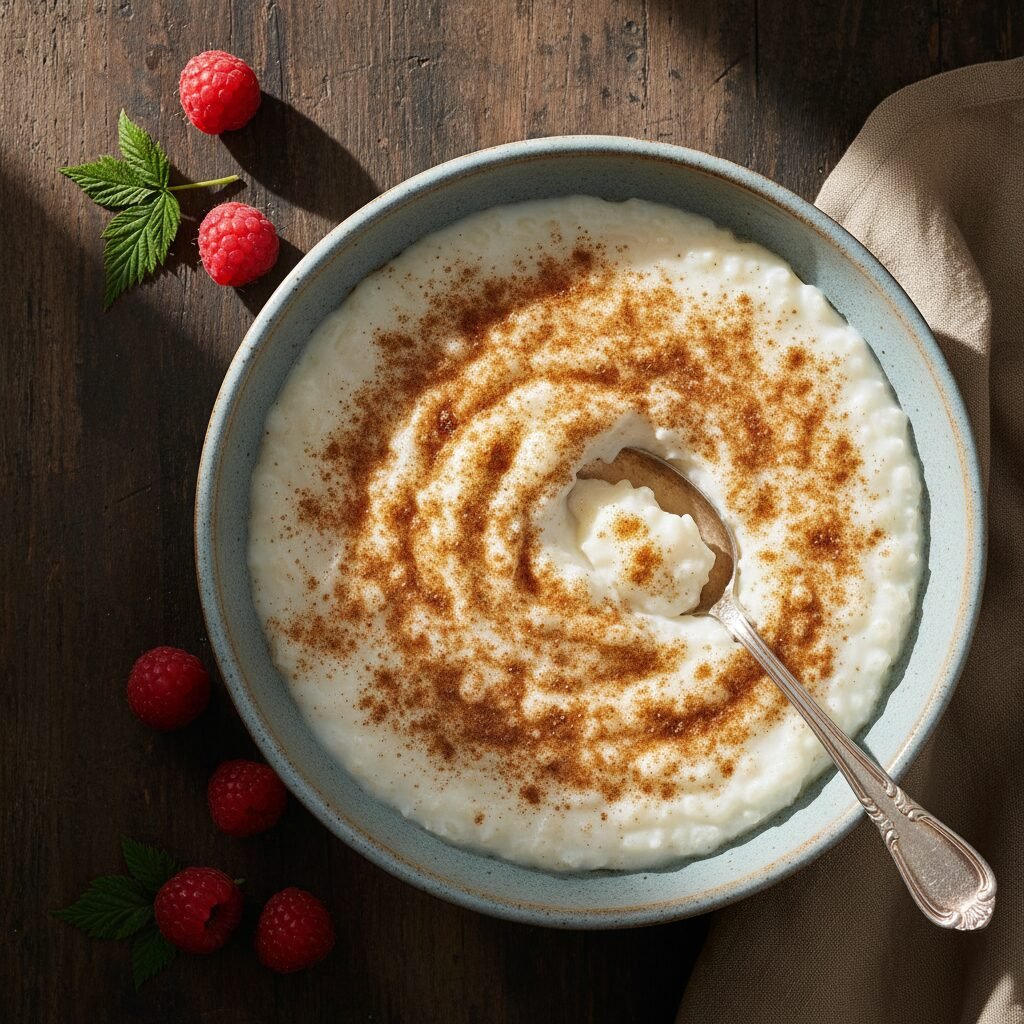
- Serve warm in bowls, garnished with a sprinkle of ground cinnamon or nutmeg. It can also be chilled in the refrigerator and served cold.
Expert Cooking Tips
- For the best texture, use day-old, cold rice. The chilled, separated grains absorb the milk more evenly than warm, freshly cooked rice.
- Patience is key. Do not be tempted to turn up the heat to speed up the process. A low, gentle simmer is essential for a creamy, unscorched result.
- The type of rice matters. Long-grain white rice like Basmati or Jasmine works beautifully. For an even creamier, starchier pudding, you can use Arborio rice.
- Taste and adjust sweetness at the end. You can always add a bit more sugar or a drizzle of maple syrup if needed, but you can’t take it away.
- For a richer pudding, you can substitute half a cup of the milk with heavy cream or evaporated milk.
Substitutions and Variations
This recipe is wonderfully adaptable. For a dairy-free or vegan version, substitute the milk with full-fat coconut milk, oat milk, or almond milk. You may need to adjust the cooking time slightly. Instead of granulated sugar, feel free to use maple syrup, honey (not vegan), brown sugar, or coconut sugar. For added flavor, infuse the milk with a cinnamon stick, a few cardamom pods, or a strip of lemon or orange zest while it simmers (remember to remove them before serving).
Common Mistakes to Avoid
The most common mistake is cooking the pudding on heat that is too high. This will cause the milk to scald and the rice and sugar to burn on the bottom of the pan, creating a bitter taste and a grainy texture. The second common error is not stirring frequently enough, which also leads to sticking and uneven cooking. Finally, avoid overcooking. If the pudding becomes overly thick in the pan, it can become stiff and clumpy once it cools. It’s better to pull it from the heat when it’s still a bit looser than your desired final consistency.
Serving Suggestions
This dreamy dessert is a blank canvas. Serve it warm on a chilly evening, dusted with cinnamon and nutmeg. For a more decadent treat, top it with a dollop of whipped cream, a drizzle of caramel sauce, or a spoonful of fruit compote or jam. It’s also delicious topped with toasted nuts like almonds or pecans for a bit of crunch, or with fresh berries for a burst of freshness. When served chilled, it makes a refreshing and satisfying treat.
Storage and Reheating Tips
Allow the rice pudding to cool completely to room temperature before storing. Transfer it to an airtight container and refrigerate for up to 4 days. The pudding will thicken significantly when chilled. To serve leftovers, you can enjoy it cold straight from the fridge or gently reheat it on the stovetop or in the microwave. If reheating, stir in a splash of milk to loosen the consistency and restore its creamy texture.
Nutrition Facts (Estimated)
| Serving Size | 1 serving (approx. 1 cup) |
| Calories | 285 kcal |
| Fat | 6g |
| Saturated Fat | 3.5g |
| Unsaturated Fat | 2.5g |
| Trans Fat | 0g |
| Cholesterol | 20mg |
| Sodium | 160mg |
| Carbohydrates | 50g |
| Fiber | 1g |
| Sugar | 22g |
| Protein | 8g |
Frequently Asked Questions
Can I use brown rice instead of white rice?
Yes, you can use leftover cooked brown rice. However, the texture will be chewier and more rustic, and it may require a little more milk and a longer cooking time to reach a creamy consistency.
My rice pudding is too thin. How can I fix it?
If your pudding is watery, it likely just needs more time. Continue simmering it over low heat, stirring frequently, until more of the liquid has been absorbed and it has thickened to your liking. Remember it will set further upon cooling.
Can I add raisins or other dried fruit?
Absolutely! Stir in a handful of raisins, chopped dates, or other dried fruit during the last 5-10 minutes of cooking. This will allow them to plump up and soften in the warm pudding.
Conclusion
There is a profound satisfaction in creating a dish that is both comforting and resourceful. This recipe for rice pudding is more than just a way to use up leftovers; it’s a celebration of simple ingredients and the power of a warm, homemade dessert to bring a moment of peace and delight to your day. We encourage you to embrace this recipe, make it your own with different spices and toppings, and rediscover the simple, dreamy pleasure of rice pudding.