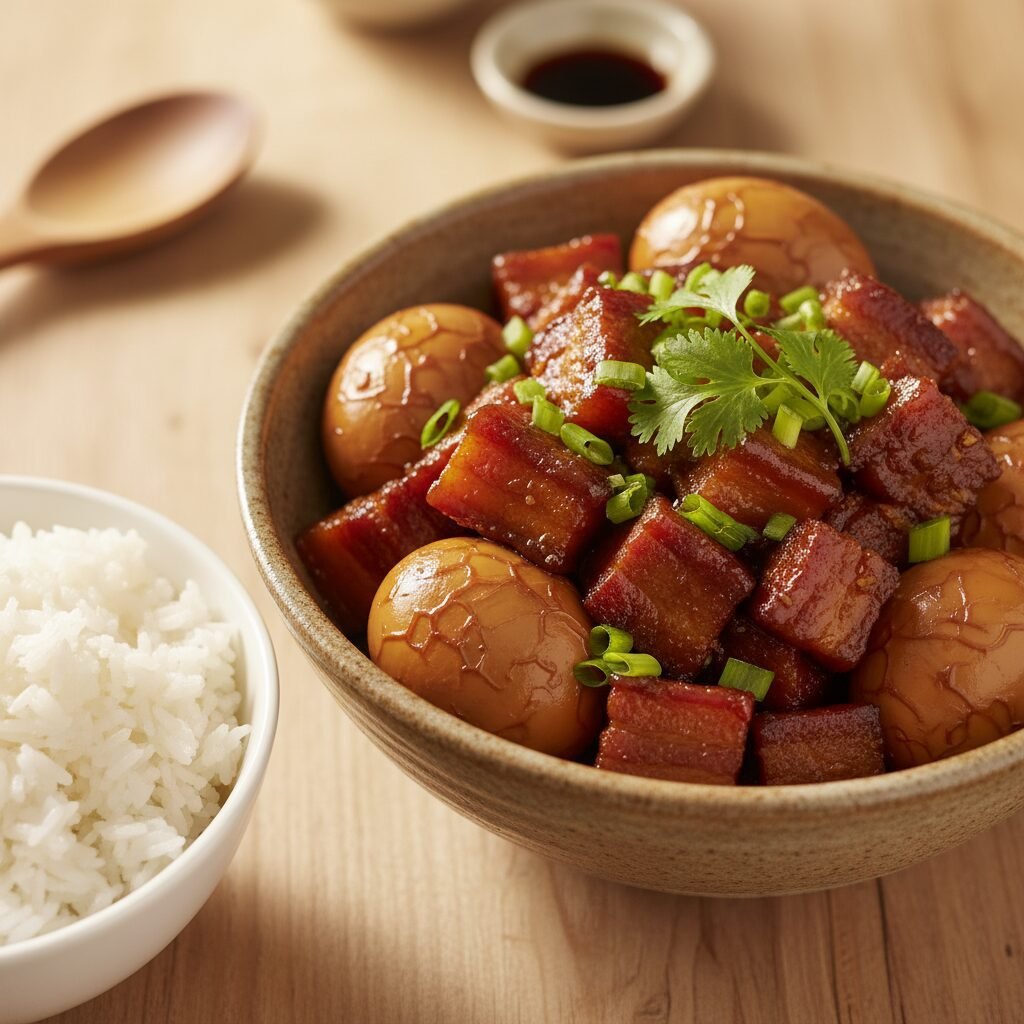
Melt-In-Your-Mouth Caramelized Pork And Eggs (Thit Kho)
Melt-In-Your-Mouth Caramelized Pork And Eggs (Thit Kho)
Get ready to create a truly magical dish that will transport your taste buds straight to Vietnam! This Melt-In-Your-Mouth Caramelized Pork and Eggs, known as Thit Kho, is a beloved classic for a reason. It’s a comforting, savory, and slightly sweet stew that’s surprisingly simple to make, perfect for a cozy family dinner.
20 minutes
1 hour 30 minutes
1 hour 50 minutes
6-8 servings
Main Dish
Braising
Vietnamese
Pork, Egg
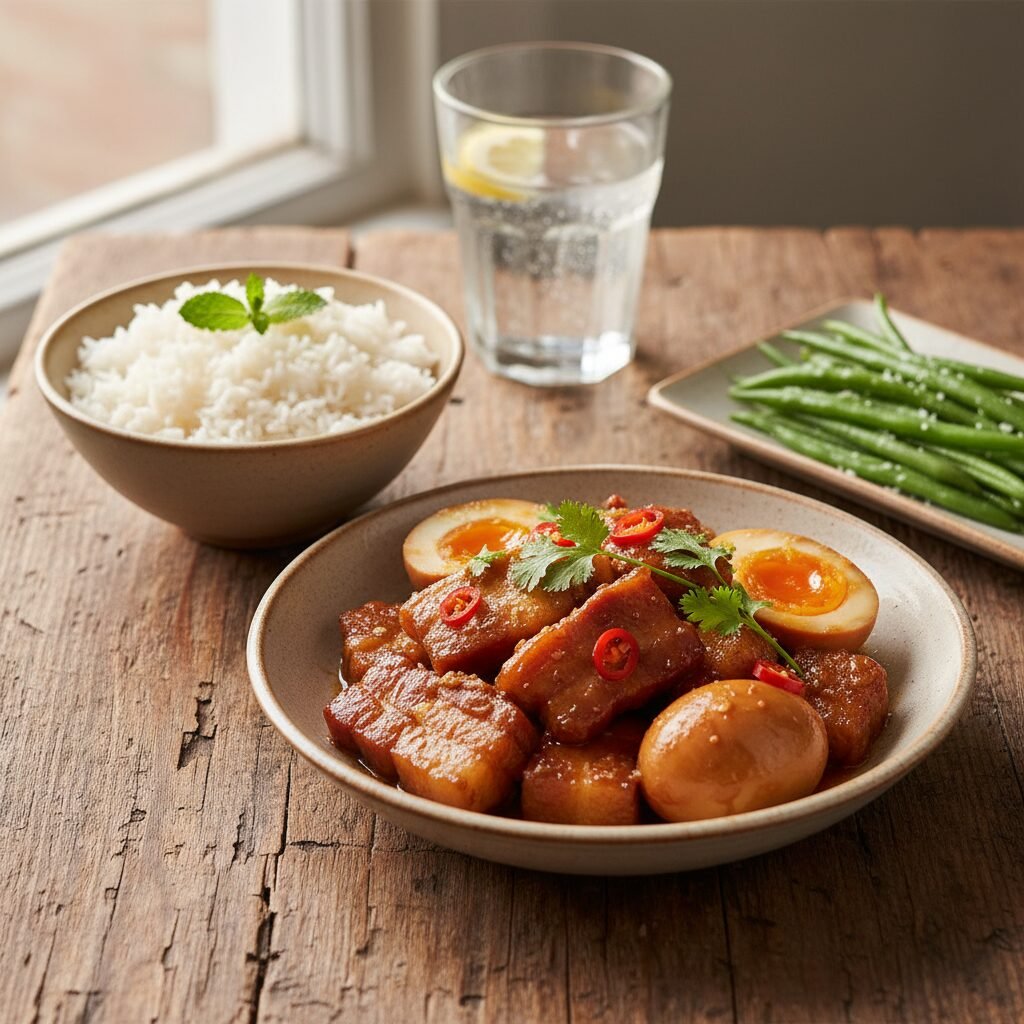
Oh, sweet friends, do I have a treat for you today! If you’re anything like me, you adore those recipes that just wrap you up in a warm hug, full of flavor and tradition. Today, we’re diving into the heart of Vietnamese comfort food with a dish that’s truly legendary: Melt-In-Your-Mouth Caramelized Pork and Eggs, or as it’s lovingly called, Thit Kho. This isn’t just a meal; it’s an experience, a story told through tender pork belly, perfectly simmered eggs, and a rich, glossy caramel sauce that will have everyone asking for seconds (and maybe even thirds!).
I remember the first time I truly savored Thit Kho. It was at a friend’s house, a beautiful Vietnamese mama who cooked with such love and intention. The aroma alone was enough to make my stomach rumble, a tantalizing blend of savory, sweet, and a hint of something deeply umami. When I took that first bite, I was absolutely smitten. The pork was so incredibly tender, practically melting on my tongue, and the eggs had soaked up all that glorious sauce. It was pure culinary bliss, and I knew right then and there that I had to learn how to recreate that magic in my own kitchen.
Fast forward a few years, and after many attempts, tweaks, and a lot of happy taste-testing from my family, I’ve finally perfected my own version of this incredible dish. And today, I’m so excited to share all my secrets with you! This recipe is designed to be approachable for home cooks, even if you’ve never ventured into Vietnamese cuisine before. We’ll walk through each step together, from creating that gorgeous caramel to simmering everything to perfection. Trust me, the effort is minimal compared to the incredible reward you’ll get. So, grab your apron, put on some calming music, and let’s make some unforgettable Thit Kho!
History & Origins
Thit Kho, or Thit Kho Tau, literally translates to “braised pork” or “pork stew with soy sauce.” It’s a cornerstone of Vietnamese home cooking, deeply ingrained in the culture and often considered the ultimate comfort food. While its exact origins are a bit hazy, it’s widely believed to have roots in Chinese braising techniques, which were adapted and transformed with local Vietnamese ingredients and flavors over centuries. The “Tau” in Thit Kho Tau refers to a Chinese influence, specifically the use of soy sauce and the braising method.
This dish holds a special place in Vietnamese households, particularly during the Lunar New Year (Tet holiday). It symbolizes prosperity and abundance, with the pork representing wealth and the eggs symbolizing new beginnings and family unity. Families often prepare a large pot of Thit Kho to last for several days during Tet, as it’s believed that cooking during the holiday brings bad luck. The beauty of Thit Kho is that it tastes even better the next day, as the flavors deepen and meld, making it perfect for holiday feasting.
Beyond Tet, Thit Kho is a staple weeknight meal, a testament to its versatility and comforting appeal. Every Vietnamese family seems to have its own cherished version, passed down through generations, with subtle variations in seasoning, the cut of pork used, or the addition of ingredients like coconut water. My recipe today honors these traditions while making it accessible for you to create your own delicious memories.
Why This Recipe Works
The magic of Melt-In-Your-Mouth Caramelized Pork and Eggs lies in a few key culinary principles that work in harmony to create its signature flavor and texture. First, let’s talk about the caramelization. We start by making a simple caramel from sugar and water. This isn’t just for sweetness; it creates a beautiful amber color and a complex, slightly bitter-sweet depth that forms the foundation of our sauce. This caramel, combined with fish sauce, is what gives Thit Kho its distinctive savory-sweet balance and gorgeous hue.
Next, the choice of pork belly is crucial. Pork belly, with its alternating layers of lean meat and rich fat, is ideal for slow braising. As it simmers, the collagen in the connective tissues breaks down into gelatin, resulting in that incredibly tender, melt-in-your-mouth texture. The fat renders slowly, infusing the sauce with flavor and keeping the meat moist, rather than drying out. This long, slow cooking process is essential for transforming a tough cut into something truly luxurious.
The braising liquid, a combination of coconut water, fish sauce, and the caramel, is another star. Coconut water adds a subtle natural sweetness and helps tenderize the pork, while fish sauce provides that essential umami depth and saltiness that balances the sweetness of the caramel. The hard-boiled eggs, added towards the end, act like little sponges, soaking up all these incredible flavors, making them just as delicious as the pork itself. The gentle simmer allows all these components to meld together, creating a harmonious, deeply flavorful stew where every ingredient plays a vital role.
Why You’ll Love This Recipe
- ✓Achieves incredibly tender, melt-in-your-mouth pork belly.
- ✓Features a rich, glossy, savory-sweet caramel sauce.
- ✓Hard-boiled eggs absorb all the delicious flavors.
- ✓A comforting and traditional Vietnamese family meal.
- ✓Perfect for meal prepping as flavors deepen overnight.
- ✓Surprisingly simple to make with common ingredients.
Equipment You’ll Need
- ✓Large heavy-bottomed pot or Dutch oven
- ✓Small saucepan (for caramel)
- ✓Cutting board
- ✓Sharp knife
- ✓Slotted spoon
- ✓Measuring cups and spoons
Ingredients
- ✓2 lbs pork belly, skin on or off, cut into 1.5-2 inch cubes
- ✓8 large hard-boiled eggs, peeled
- ✓1/4 cup granulated sugar
- ✓1/4 cup water (for caramel)
- ✓1/2 cup fish sauce (good quality, like Red Boat)
- ✓1/4 cup coconut water (from a can or fresh)
- ✓4-5 cloves garlic, minced
- ✓1 large shallot, thinly sliced
- ✓1 tablespoon black pepper, freshly ground
- ✓1-2 bird’s eye chilies (optional, for heat)
- ✓2 cups water or more coconut water (for braising)
- ✓Cooked jasmine rice, for serving
- ✓Fresh cilantro and sliced green onions, for garnish
Instructions
-
Step 1: Prepare the Pork
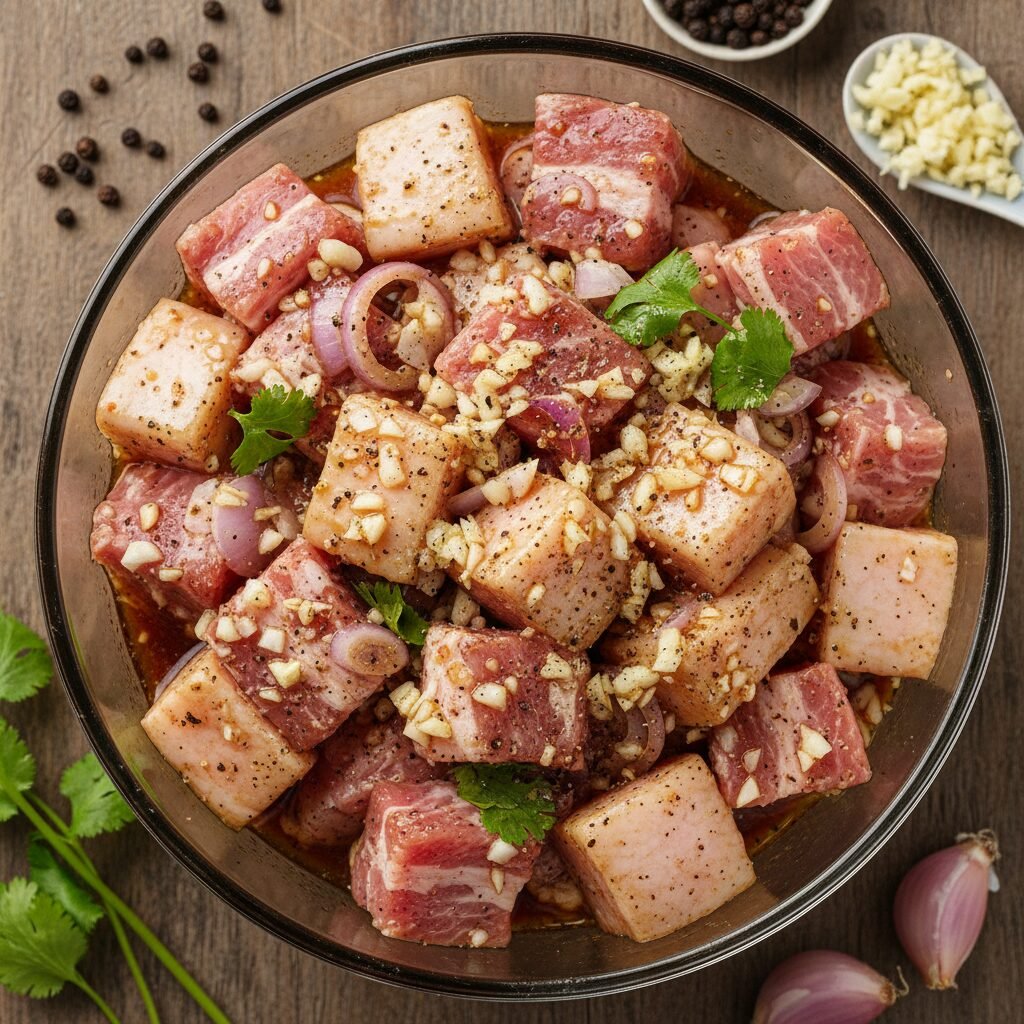
- Rinse the pork belly cubes thoroughly and pat them completely dry with paper towels. This helps with browning. In a large bowl, combine the pork belly with 2 tablespoons of fish sauce, minced garlic, sliced shallots, and a generous amount of freshly ground black pepper. Mix well to coat every piece. Let it marinate for at least 30 minutes at room temperature, or ideally, overnight in the refrigerator for deeper flavor.
-
Step 2: Make the Caramel Sauce
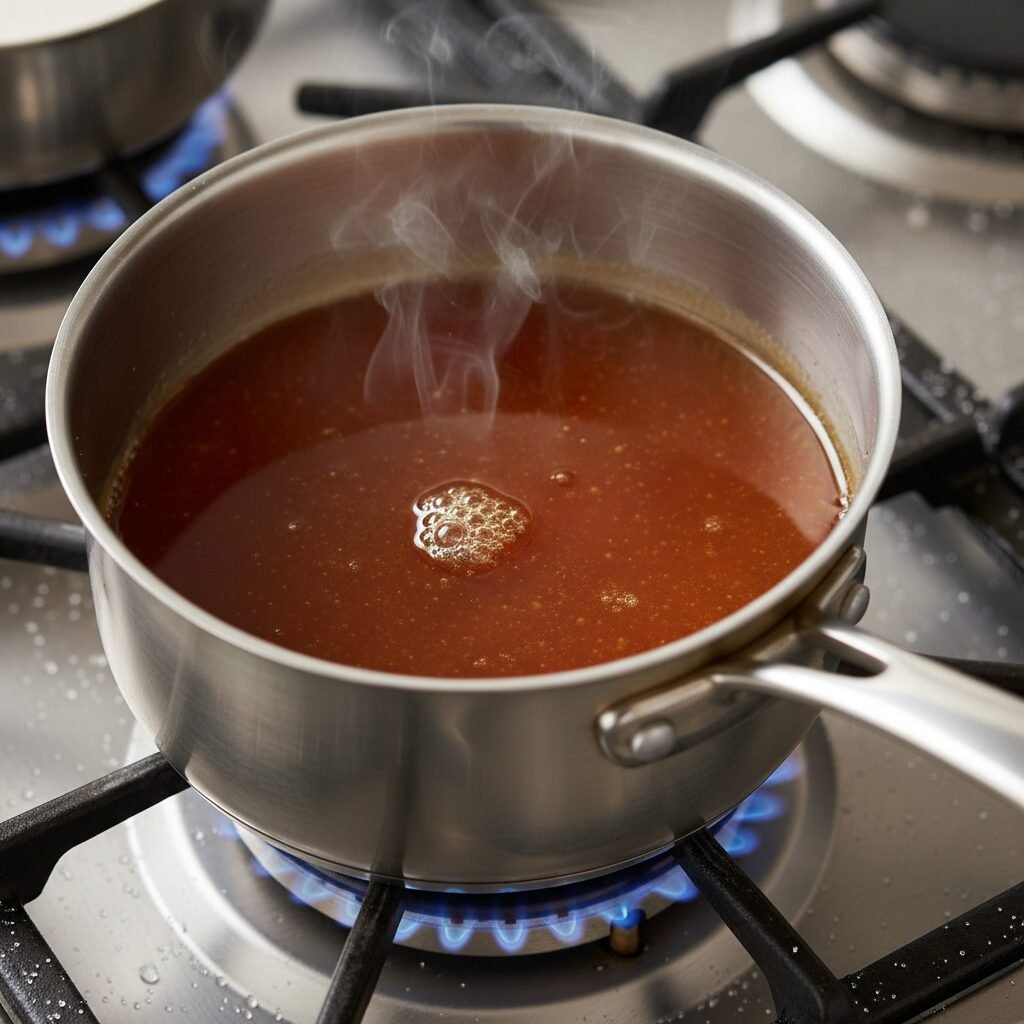
- In a small, heavy-bottomed saucepan, combine the 1/4 cup of granulated sugar and 1/4 cup of water. Place over medium heat and bring to a boil without stirring. Once it boils, reduce the heat to medium-low and let it simmer. Watch it carefully! The sugar will melt, then turn clear, then a light amber, and finally a deep, rich caramel color. This usually takes about 5-8 minutes. As soon as it reaches a deep amber (like dark honey), immediately remove it from the heat. Do not let it burn! It can go from perfect to burnt very quickly.
-
Step 3: Brown the Pork
- Heat your large heavy-bottomed pot or Dutch oven over medium-high heat. Add the marinated pork belly (without adding any extra oil, as the pork belly will render its own fat). Brown the pork on all sides until nicely golden. This step adds a lot of flavor and texture. Once browned, remove the pork from the pot and set aside, leaving any rendered fat in the pot.
-
Step 4: Combine and Simmer
- Carefully pour the hot caramel sauce into the pot with the rendered pork fat. Be cautious as it may splatter. Immediately add the remaining fish sauce, coconut water, and 2 cups of water (or more coconut water). Stir gently to combine, scraping up any browned bits from the bottom of the pot. Bring the liquid to a gentle simmer.
-
Step 5: Braise the Pork and Eggs
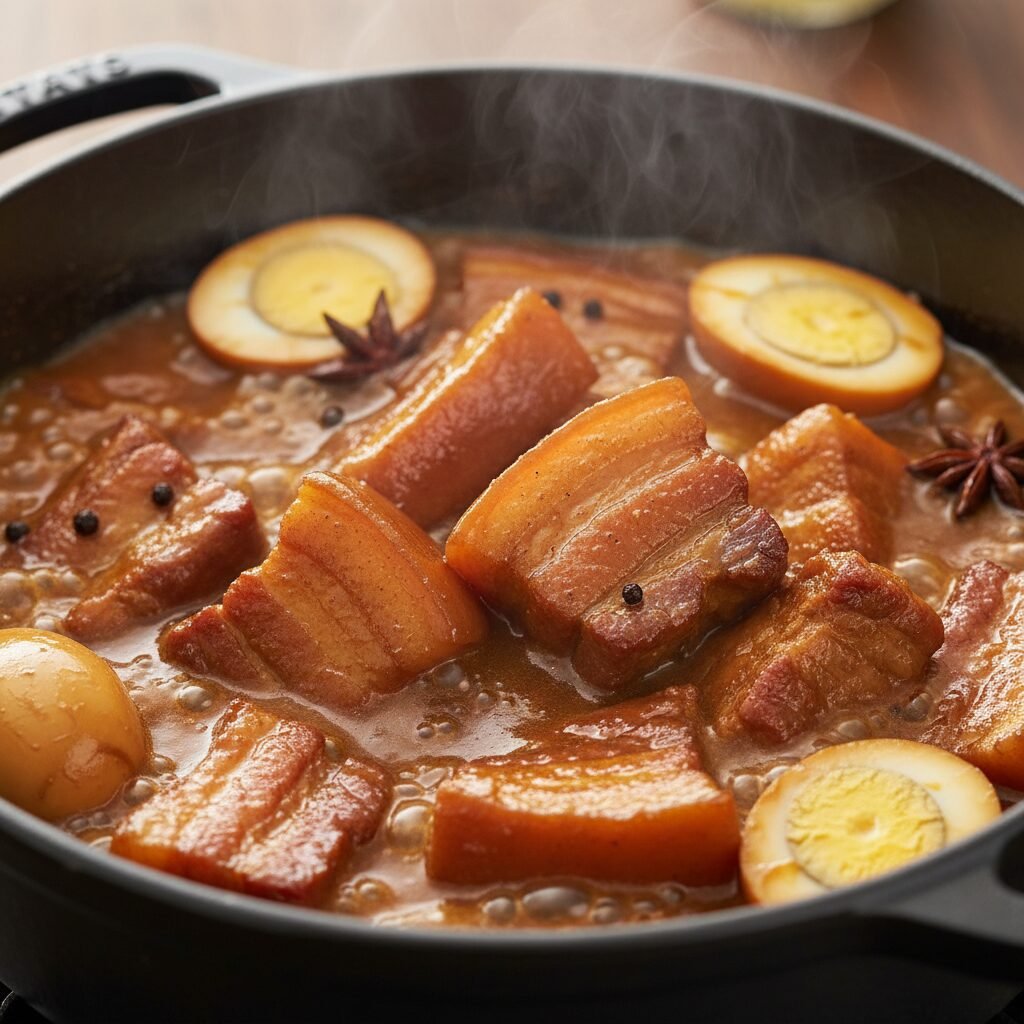
- Return the browned pork belly to the pot. Add the peeled hard-boiled eggs and the optional bird’s eye chilies. Ensure the pork and eggs are mostly submerged in the liquid. If not, add a little more water or coconut water until they are. Bring the mixture back to a gentle simmer, then reduce the heat to low, cover the pot, and let it braise for at least 1 hour to 1 hour 30 minutes, or until the pork is incredibly tender and easily pierced with a fork. Stir occasionally to prevent sticking and ensure even cooking.
-
Step 6: Finish and Serve
- After braising, taste the sauce and adjust seasoning if needed. You might want a tiny pinch more sugar or fish sauce, depending on your preference. The sauce should be rich, savory, and slightly sweet. The pork should be fork-tender, and the eggs beautifully stained by the caramel. Ladle the Thit Kho generously over steaming hot jasmine rice. Garnish with fresh cilantro and sliced green onions. Serve immediately and watch it disappear!
Expert Cooking Tips
- ✓Don’t rush the caramel: Making the caramel is the trickiest part. Keep a close eye on it and remove it from heat as soon as it reaches the desired deep amber color. If it’s too light, it won’t have enough depth; if it’s too dark, it will be bitter.
- ✓Pork belly cut: Ask your butcher to cut the pork belly into 1.5-2 inch cubes for even cooking and a good meat-to-fat ratio.
- ✓Marinating time: While 30 minutes is fine, marinating the pork overnight truly makes a difference in flavor penetration.
- ✓Gentle simmer: Maintain a very gentle simmer during braising. A rolling boil will toughen the pork and evaporate the liquid too quickly.
- ✓Adjusting liquid: If the liquid reduces too much during braising, add a little more hot water or coconut water to keep the pork and eggs submerged.
- ✓Taste and adjust: Always taste the sauce before serving. Vietnamese cooking is all about balancing sweet, salty, and savory. Adjust with a tiny bit more sugar or fish sauce as needed.
Substitutions and Variations
While pork belly is traditional and highly recommended for its melt-in-your-mouth texture, you can certainly experiment with other cuts of pork if you prefer. Pork shoulder (boneless, skinless) or pork butt, cut into similar-sized cubes, can be used, though they will yield a leaner result and might require slightly longer braising to achieve tenderness. For the eggs, while hard-boiled chicken eggs are standard, you could try quail eggs for a delightful, bite-sized variation, especially if you’re serving this for a special occasion. If you don’t have fresh coconut water, you can use canned coconut water (unsweetened) or even just plain water, though the coconut water adds a lovely subtle sweetness and depth. For a vegetarian twist, you could try braising firm tofu and mushrooms in a similar caramel sauce, omitting the fish sauce and using a vegetarian mushroom sauce instead.
Common Mistakes to Avoid
One of the most common mistakes when making Thit Kho is burning the caramel. This happens quickly, and burnt caramel will make your entire dish taste bitter. Watch it like a hawk and remove it from the heat as soon as it’s a deep amber. Another pitfall is not browning the pork sufficiently. Browning creates a flavorful crust and adds depth to the final dish. Don’t skip this step! Also, not simmering gently enough can lead to tough pork. A hard boil will cook the pork too quickly on the outside while leaving the inside chewy. Keep it at a low, gentle simmer. Finally, not tasting and adjusting seasoning is a missed opportunity. Flavors can vary, so always taste the sauce before serving and tweak the fish sauce or sugar to your preference.
Serving Suggestions
Thit Kho is traditionally served with a generous portion of steaming hot jasmine rice. The rice is perfect for soaking up all that incredible, glossy caramel sauce. For a complete and balanced meal, I love to serve it alongside some fresh, crisp vegetables. A simple side of steamed or blanched green beans, broccoli, or a refreshing cucumber salad with a light vinaigrette provides a wonderful contrast to the rich pork. A sprinkle of fresh cilantro and sliced green onions on top adds a burst of freshness and color. Sometimes, I’ll even add a side of pickled mustard greens (dua chua) for a tangy counterpoint that cuts through the richness beautifully.
Storage and Reheating Tips
One of the best things about Thit Kho is that it tastes even better the next day! The flavors have more time to meld and deepen. Allow the dish to cool completely before transferring it to an airtight container. It can be stored in the refrigerator for up to 3-4 days. To reheat, gently warm it on the stovetop over medium-low heat until heated through, adding a splash of water or coconut water if the sauce has thickened too much. Thit Kho also freezes well. Store cooled portions in freezer-safe containers for up to 2-3 months. Thaw overnight in the refrigerator before reheating.
Nutrition Facts (Estimated)
| Serving Size | 1 cup |
| Calories | 450 kcal |
| Fat | 35g |
| Saturated Fat | 12g |
| Unsaturated Fat | 20g |
| Trans Fat | 0g |
| Cholesterol | 150mg |
| Sodium | 850mg |
| Carbohydrates | 10g |
| Fiber | 0g |
| Sugar | 15g |
| Protein | 25g |
Frequently Asked Questions
What kind of pork belly should I use?
For the best results, use skin-on pork belly with a good balance of meat and fat. If you prefer, skinless pork belly works too, but the skin adds a lovely texture when braised.
Can I make this dish less spicy?
Absolutely! The bird’s eye chilies are entirely optional. If you prefer no heat, simply omit them. If you like a very mild warmth, you can add just one chili, or even a pinch of red pepper flakes.
Why is my caramel bitter?
Your caramel likely cooked too long and burned. Caramelization is a delicate process. It should be a deep amber color, but not dark brown or black. Remove it from the heat as soon as it reaches that rich amber hue.
Can I use regular water instead of coconut water?
Yes, you can use regular water, but coconut water adds a subtle natural sweetness and helps tenderize the pork, contributing to the authentic flavor. If using water, you might want to add a tiny bit more sugar to balance the flavors.
My pork isn’t tender enough, what happened?
The pork needs sufficient time to braise at a gentle simmer. If it’s not tender, it likely hasn’t cooked long enough, or the heat was too high. Continue simmering until it’s fork-tender. Different cuts or thicknesses of pork may require varying cooking times.
Can I prepare this dish in advance?
Yes, Thit Kho is an excellent make-ahead dish! The flavors actually deepen and improve overnight. Prepare it a day in advance, store it in the refrigerator, and gently reheat before serving.
What if I don’t have a Dutch oven?
A large, heavy-bottomed pot with a tight-fitting lid will work perfectly. The key is even heat distribution and a lid that retains moisture during the long simmer.
Is fish sauce really necessary?
Yes, fish sauce is absolutely essential for authentic Thit Kho. It provides the crucial umami, saltiness, and depth of flavor that defines the dish. There’s no direct substitute that will yield the same result.
Conclusion
And there you have it, my sweet friends – a truly unforgettable journey into the heart of Vietnamese cuisine with this incredible Melt-In-Your-Mouth Caramelized Pork and Eggs. This dish is more than just a recipe; it’s a testament to the power of simple ingredients, slow cooking, and a whole lot of love coming together to create something truly magical. Whether you’re making it for a special occasion or just a cozy weeknight dinner, I promise it will bring warmth and joy to your table.
I hope you feel inspired to try this recipe and make it your own. Don’t be intimidated by the caramel; with a little patience and attention, you’ll master it in no time. And when you take that first bite of tender pork, rich sauce, and perfectly infused egg, you’ll know exactly why this dish is so cherished. Happy cooking, and may your kitchen always be filled with delicious aromas and happy memories!