20-Minute Gyudon: The Savory Japanese Beef Bowl Better Than Takeout
20-Minute Gyudon: The Savory Japanese Beef Bowl Better Than Takeout
Oh, sweet friends, get ready for a weeknight game-changer! This 20-Minute Gyudon recipe brings the magic of a savory Japanese beef bowl right to your kitchen table, tasting even better than your favorite takeout. It’s quick, comforting, and absolutely bursting with flavor – perfect for busy moms and hungry families!
10 minutes
10 minutes
20 minutes
4 servings
Main Course
Simmering
Japanese
Omnivore
Hello, lovely friends! Are you ready for a recipe that’s about to become your new weeknight superhero? Because today, we’re diving headfirst into the wonderful world of Gyudon, and let me tell you, this 20-Minute Gyudon: The Savory Japanese Beef Bowl Better Than Takeout is going to knock your socks off! As a busy mom, I know the struggle is real when it comes to getting a delicious, wholesome dinner on the table without spending hours in the kitchen. We want flavor, we want comfort, and we want it FAST, right?
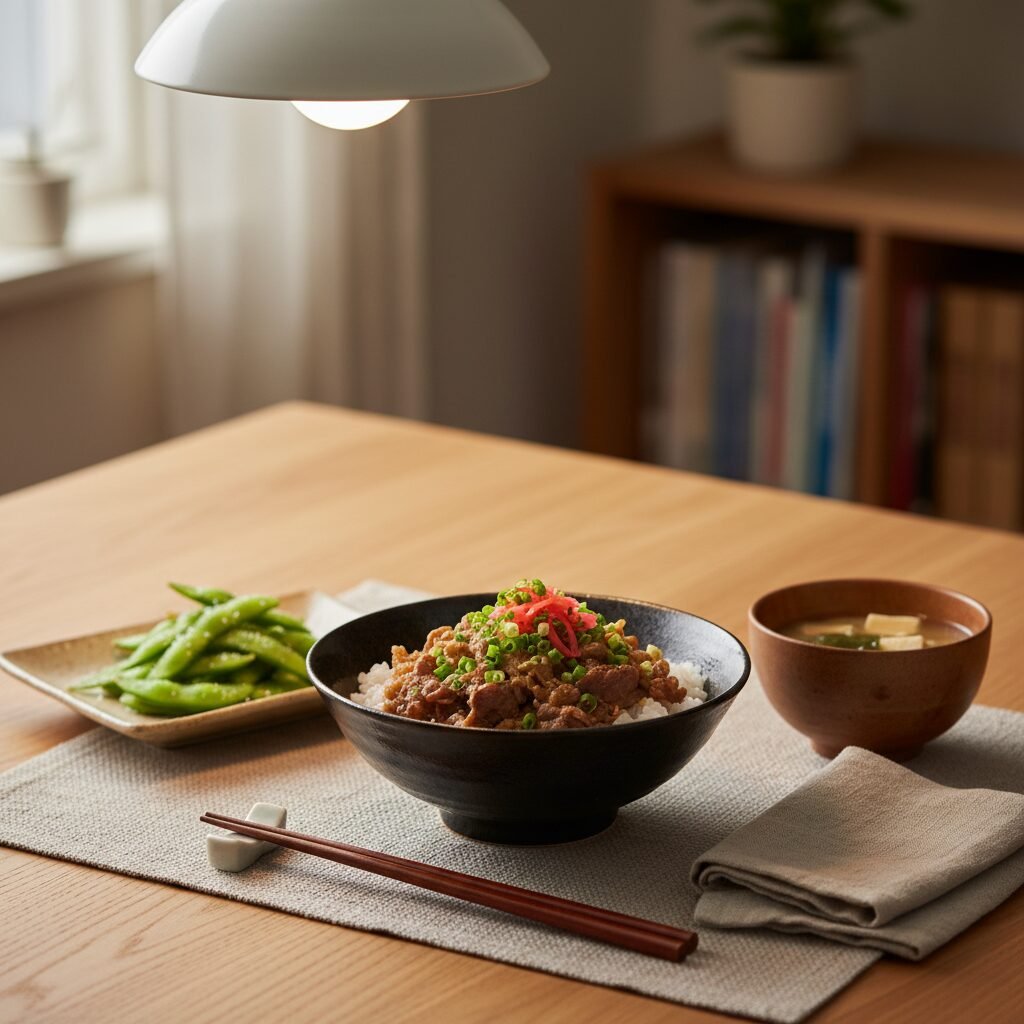
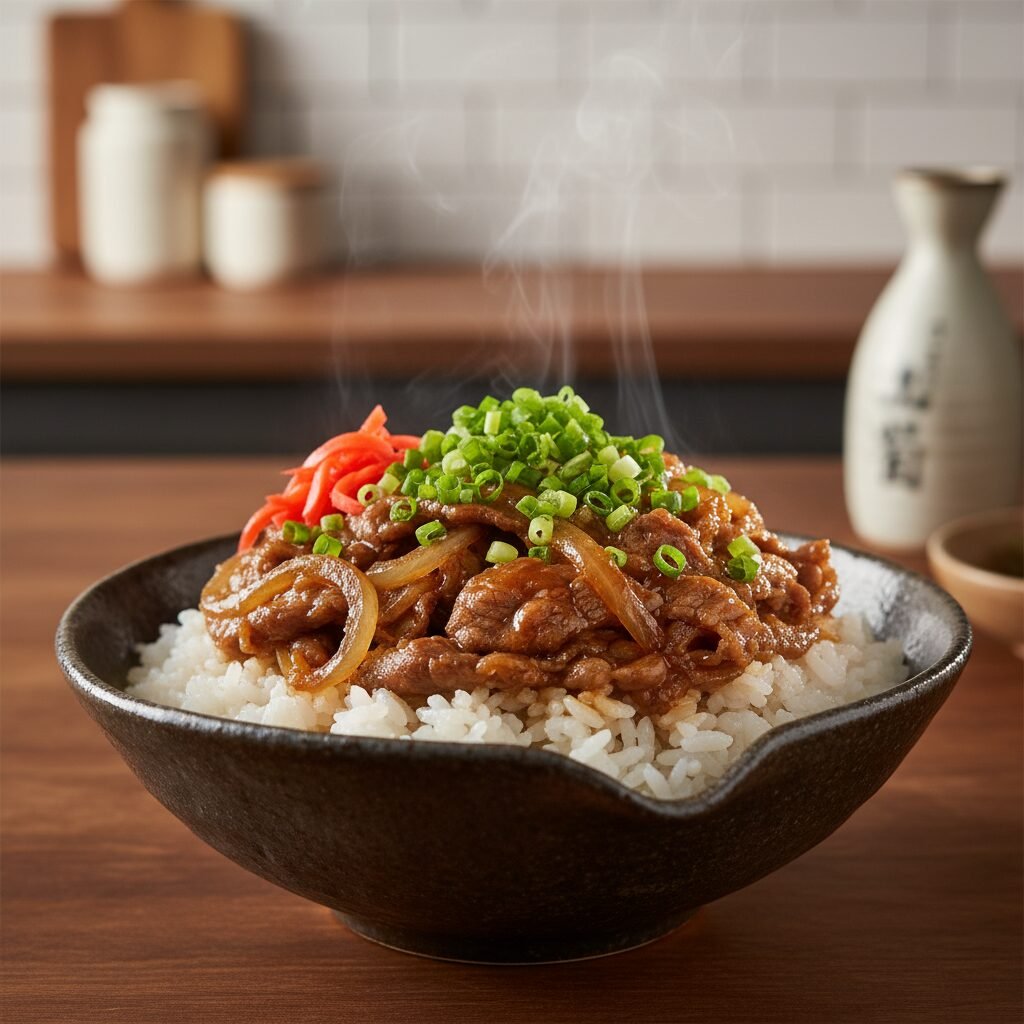
Well, consider your culinary prayers answered! This Japanese beef bowl, often called Gyudon, is a beloved classic for a reason. It features tender, thinly sliced beef and sweet, caramelized onions simmered in a rich, savory-sweet sauce, all served over a bed of fluffy white rice. It’s the kind of meal that wraps you in a warm hug after a long day, and the best part? From start to finish, you can have this masterpiece ready in just 20 minutes. Yes, you read that right – twenty minutes!
Forget about expensive takeout or complicated recipes. This homemade Gyudon is not only incredibly simple to make, but it also allows you to control the quality of your ingredients, ensuring a fresh, vibrant, and utterly satisfying meal for your whole family. My kids absolutely adore this dish, and honestly, so do I! It’s become a staple in our home, and I just know it’s going to become one in yours too. So, grab your apron, put on your favorite playlist, and let’s get cooking some magic!
History & Origins
The story of Gyudon is as comforting as the dish itself! This iconic Japanese beef bowl literally translates to ‘beef bowl’ (gyu = beef, don = bowl), and it has been a beloved staple in Japan for over a century. Its origins can be traced back to the late 19th century, during the Meiji era, when beef consumption became more widespread in Japan. Initially, it was a dish called ‘gyunabe,’ a beef hot pot, but it evolved into the simpler, quicker ‘gyumeshi’ or ‘gyudon’ – a bowl of rice topped with beef and onions simmered in a flavorful sauce.
Gyudon gained immense popularity through fast-food chains like Yoshinoya and Sukiya, which made it an affordable and convenient meal for everyone, from busy office workers to students. It’s the ultimate comfort food, a quick energy boost, and a taste of home all rolled into one delicious bowl. What I love most about its history is how it represents a blend of tradition and practicality, perfectly suited for modern life. And now, we get to bring that rich history and incredible flavor right into our own kitchens, making it a part of our family’s story too!
Why This Recipe Works
So, what makes this 20-minute Gyudon recipe so incredibly delicious and efficient? It all comes down to a few culinary secrets, my friends! First, the star of the show is the thinly sliced beef. Whether you use shabu-shabu or sukiyaki cut beef, or even thinly sliced ribeye, the thinness is key. It cooks incredibly fast, absorbing all the wonderful flavors of the sauce in mere minutes, ensuring tender, melt-in-your-mouth perfection without any tough chewiness.
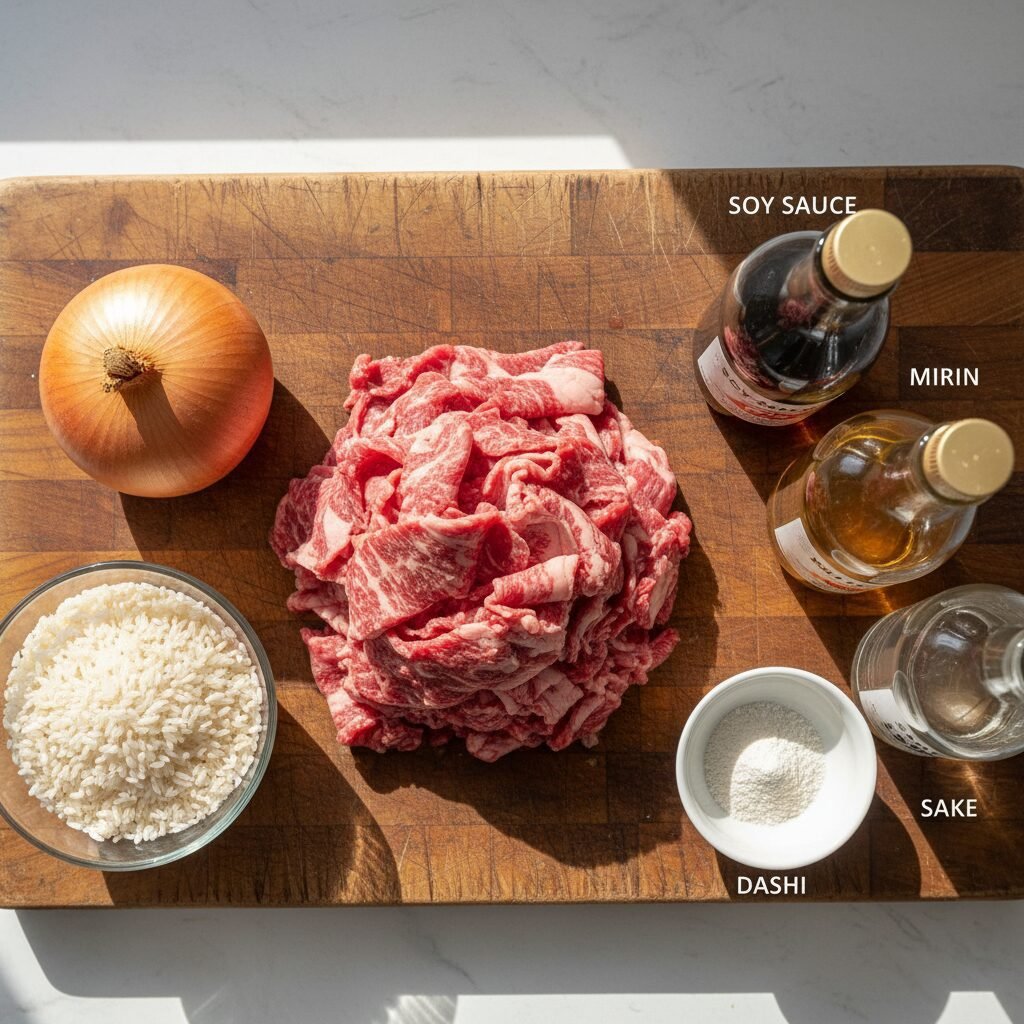
Next, let’s talk about the sauce – the heart and soul of Gyudon! It’s a harmonious blend of dashi, soy sauce, mirin, sake, and sugar. Dashi, a Japanese stock, provides a deep umami base that’s essential for authentic flavor. Soy sauce brings the savory depth, mirin adds a lovely sweetness and gloss, sake tenderizes the beef and adds complexity, and a touch of sugar balances everything out. This combination creates a perfectly balanced, savory-sweet, and incredibly addictive broth that permeates every strand of beef and every grain of rice.
The onions play a crucial role too! When thinly sliced and simmered in the sauce before the beef, they soften beautifully and release their natural sweetness, caramelizing slightly and adding another layer of flavor and texture. The quick cooking method ensures that the beef is just cooked through, preventing it from becoming tough, while the onions become wonderfully tender. It’s a symphony of flavors and textures, all coming together in a flash, making it a truly brilliant and satisfying meal!
Why You’ll Love This Recipe
- ✓Ready in just 20 minutes, perfect for busy weeknights.
- ✓Tender, thinly sliced beef simmered in a savory-sweet sauce.
- ✓Authentic Japanese flavors, better than takeout!
- ✓Simple ingredients, easy-to-follow steps for home cooks.
- ✓A comforting and satisfying meal for the whole family.
- ✓Customizable with your favorite toppings and garnishes.
Equipment You’ll Need
- ✓Large skillet or shallow pot
- ✓Sharp knife
- ✓Cutting board
- ✓Measuring cups and spoons
- ✓Serving bowls
Ingredients
- ✓1 lb thinly sliced beef (shabu-shabu or sukiyaki cut, or thinly sliced ribeye/sirloin)
- ✓1 large yellow onion, thinly sliced
- ✓1 cup dashi (or 1 cup water + 1 tsp dashi powder)
- ✓1/4 cup soy sauce (low sodium if preferred)
- ✓3 tbsp mirin
- ✓2 tbsp sake (or dry sherry, or an extra tablespoon of mirin for alcohol-free)
- ✓2 tbsp granulated sugar
- ✓4 cups cooked short-grain white rice, for serving
- ✓Optional garnishes: pickled ginger (beni shoga), chopped green onions, a raw or soft-boiled egg yolk, shichimi togarashi (Japanese seven-spice blend)
Instructions
-
Step 1: Prep Your Ingredients
First things first, let’s get everything ready! Thinly slice your yellow onion. If your beef isn’t already thinly sliced (like shabu-shabu or sukiyaki cuts), make sure to slice it against the grain as thinly as possible. This is key for quick cooking and tenderness!
-
Step 2: Create the Flavorful Sauce
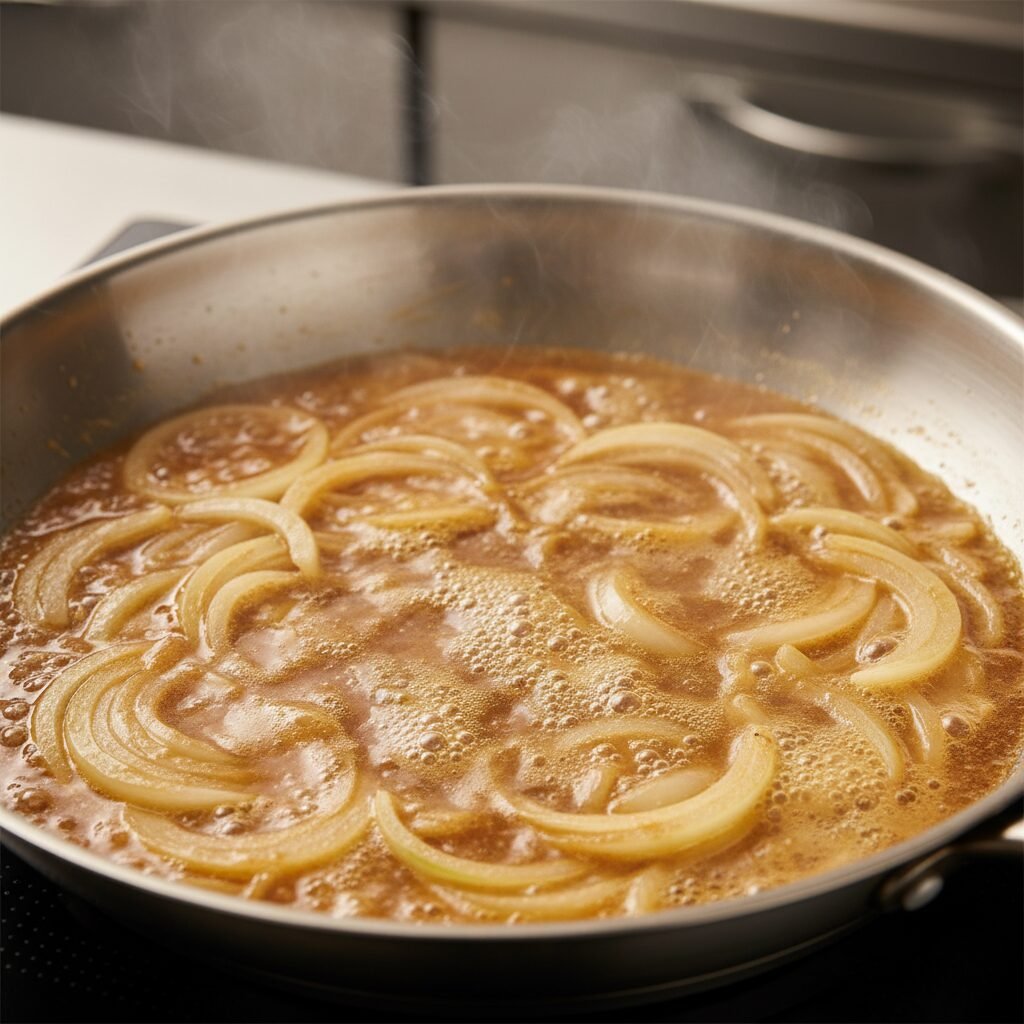
In a large skillet or a shallow pot, combine the dashi (or water with dashi powder), soy sauce, mirin, sake, and sugar. Give it a good whisk to dissolve the sugar. Bring this magical mixture to a gentle simmer over medium heat. Oh, the aroma already!
-
Step 3: Soften the Onions
Add your thinly sliced onions to the simmering sauce. Let them cook for about 5-7 minutes, or until they become beautifully tender and translucent. They’ll absorb all that wonderful flavor and release their natural sweetness.
-
Step 4: Cook the Beef
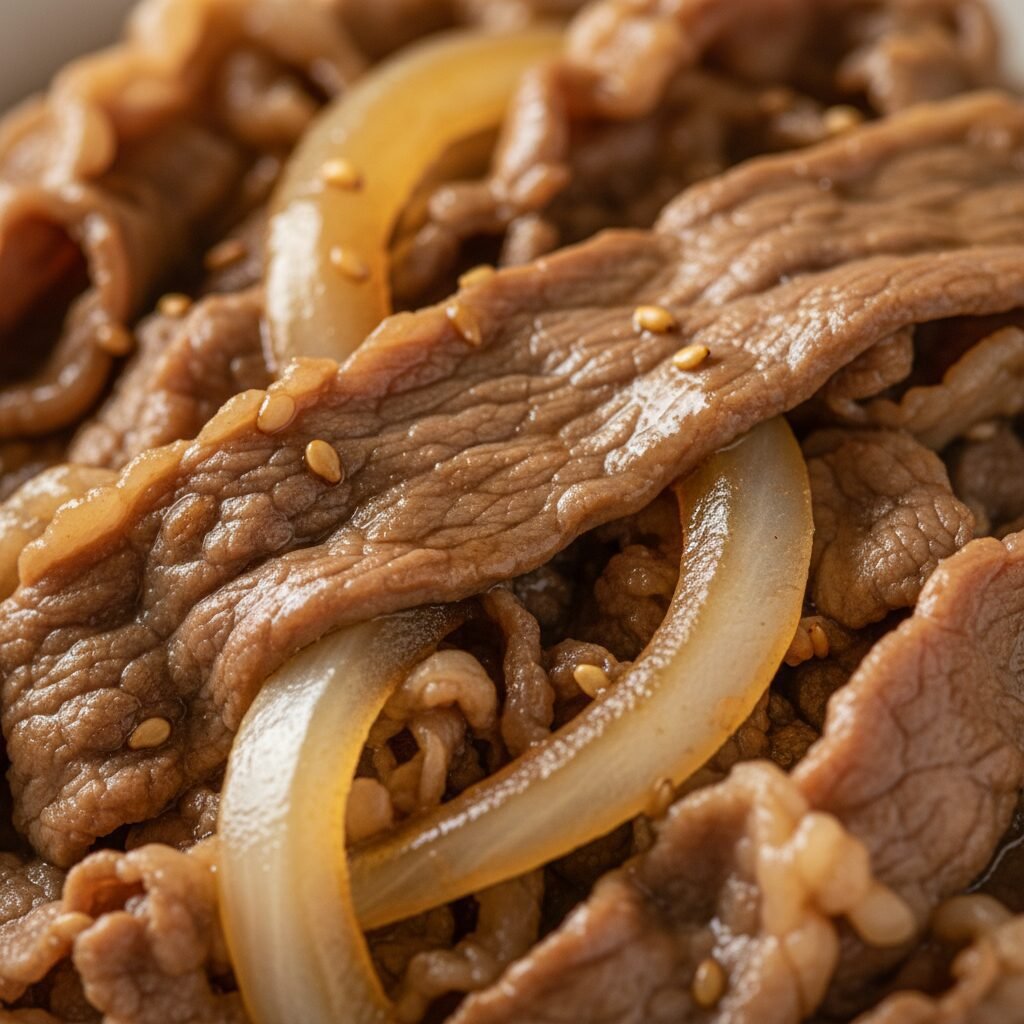
Now for the star! Add the thinly sliced beef to the pot, spreading it out gently so that each piece gets coated in the sauce and cooks evenly. This part is super fast – cook for just 2-3 minutes, or until the beef is no longer pink. Be careful not to overcook it, sweet friends, as thin beef can get tough quickly!
-
Step 5: Taste and Adjust
Give the sauce a quick taste. This is your moment to shine! If you prefer it a little sweeter, add a touch more sugar. If you like it saltier, a tiny splash more soy sauce. Make it perfect for your family’s palate!
-
Step 6: Assemble Your Bowls
Time to serve up this deliciousness! Spoon a generous amount of hot, fluffy cooked short-grain white rice into individual serving bowls. Then, lovingly top the rice with the savory beef and onion mixture, making sure to drizzle plenty of that incredible sauce over everything. That sauce is liquid gold!
-
Step 7: Garnish and Enjoy!
For that authentic touch and extra burst of flavor, garnish your Gyudon bowls! I love adding a sprinkle of chopped green onions and a dollop of bright red pickled ginger (beni shoga). For the adventurous, a raw or soft-boiled egg yolk stirred into the hot beef and rice adds an amazing creaminess. A dash of shichimi togarashi also adds a lovely kick! Serve immediately and watch those happy faces!
Expert Cooking Tips
- ✓Use good quality beef: Since the beef cooks so quickly, the quality really shines through. Look for well-marbled shabu-shabu or sukiyaki cuts for the best tenderness and flavor.
- ✓Don’t overcrowd the pan: If you’re making a very large batch, cook the beef in two smaller batches to ensure it cooks evenly and quickly, rather than steaming.
- ✓Adjust sweetness to taste: The balance of sweet and savory is personal. Feel free to tweak the sugar and mirin amounts to your liking.
- ✓Freshly cooked rice is best: Gyudon is truly at its peak when served over warm, freshly cooked short-grain Japanese rice. The steam helps meld the flavors.
- ✓Sake substitute: If you don’t have sake, a dry sherry can work in a pinch, or simply omit it and add an extra tablespoon of mirin for a non-alcoholic version, though the flavor profile will be slightly different.
Substitutions and Variations
Life happens, and sometimes we don’t have every ingredient on hand! No worries, sweet friends, here are some easy substitutions for your Gyudon:
- Beef: If you can’t find thinly sliced beef, you can buy a sirloin, ribeye, or even flank steak and freeze it for about 30 minutes to an hour. This makes it much easier to slice super thinly against the grain yourself! Ground beef can also be used in a pinch, though the texture will be different.
- Dashi: While dashi is key for authentic flavor, if you don’t have it, you can use chicken broth or even vegetable broth, though the umami depth will be less pronounced. You can also buy dashi powder and mix it with water.
- Sake: As mentioned in the tips, dry sherry is a good substitute. For an alcohol-free version, simply omit it and add an extra tablespoon of mirin, or a tiny splash of white grape juice.
- Onions: While yellow onions are traditional, white or even red onions (though they’ll give a slightly different color) can work.
- Sugar: Brown sugar can be used for a deeper, molasses-like sweetness.
Common Mistakes to Avoid
Even the simplest recipes can have little pitfalls! Here are a few common mistakes to avoid when making your Gyudon, so you can achieve perfection every time:
- Overcooking the beef: This is the biggest one! Thinly sliced beef cooks incredibly fast. As soon as it loses its pink color, it’s done. Overcooking will result in tough, chewy beef, and nobody wants that!
- Not slicing the beef thinly enough: If your beef slices are too thick, they won’t absorb the sauce as well, and they’ll take longer to cook, increasing the risk of overcooking. Aim for paper-thin slices.
- Skimping on the sauce: The sauce is what makes Gyudon so delicious! Don’t be shy with drizzling it over your rice. It’s meant to soak into the rice, creating that irresistible savory-sweet experience.
- Using the wrong type of rice: While you can use any rice, short-grain Japanese rice is traditionally used because of its sticky texture, which is perfect for soaking up the sauce and holding the beef. Long-grain rice might be too dry or separate too much.
- Forgetting to taste and adjust: Every palate is different! Always taste your sauce before serving and adjust the sweetness or saltiness to your family’s preference.
Serving Suggestions
Gyudon is a complete meal in itself, but it’s also wonderfully versatile for pairing! Here are some of my favorite ways to serve it:
- Classic Toppings: Don’t forget the traditional garnishes like bright red pickled ginger (beni shoga) for a tangy contrast, and fresh chopped green onions for a pop of color and mild oniony bite.
- Creamy Egg Yolk: For an extra rich and creamy experience, gently place a raw egg yolk (from a very fresh, pasteurized egg!) or a soft-boiled egg yolk right on top of the hot beef and rice. Stir it in just before eating – it’s divine!
- Spicy Kick: A sprinkle of shichimi togarashi (Japanese seven-spice blend) adds a lovely warmth and subtle heat.
- Side Dishes: Pair your Gyudon with a simple side salad dressed with a ginger dressing, a bowl of miso soup, or some steamed edamame for a truly authentic Japanese meal experience.
- Vegetable Boost: You can quickly sauté some spinach or bok choy with a touch of soy sauce and garlic as a healthy side.
Storage and Reheating Tips
If you happen to have any leftovers (which is rare in my house!), here’s how to store your delicious Gyudon:
- Separate Storage: It’s best to store the beef and onion mixture separately from the cooked rice. This prevents the rice from becoming soggy.
- Refrigeration: Place the beef and onion mixture in an airtight container and refrigerate for up to 3 days. Store cooked rice in a separate airtight container in the refrigerator for up to 2-3 days.
- Reheating: To reheat, gently warm the beef and onion mixture in a skillet over medium-low heat until heated through. You can add a tiny splash of water or dashi if it seems a bit dry. Reheat the rice separately in the microwave or by steaming until hot. Then, assemble your fresh bowl and enjoy!
- Freezing: The beef and onion mixture can be frozen for up to 1 month. Thaw overnight in the refrigerator before reheating. I don’t recommend freezing cooked rice as it can change texture, but if you do, ensure it’s cooled quickly and reheated thoroughly.
Nutrition Facts (Estimated)
| Serving Size | 1 bowl |
| Calories | 450 kcal |
| Fat | 20g |
| Saturated Fat | 8g |
| Unsaturated Fat | 10g |
| Trans Fat | 0.5g |
| Cholesterol | 70mg |
| Sodium | 800mg |
| Carbohydrates | 45g |
| Fiber | 3g |
| Sugar | 15g |
| Protein | 25g |
Frequently Asked Questions
What kind of beef is best for Gyudon?
The best beef for Gyudon is thinly sliced beef, often labeled as shabu-shabu or sukiyaki cut. Ribeye, sirloin, or even flank steak sliced paper-thin against the grain also work wonderfully. The key is thinness for quick cooking and tenderness!
Can I make Gyudon without sake?
Yes, you can! Sake adds a unique depth of flavor, but you can substitute it with dry sherry or simply omit it. If omitting, you might add an extra tablespoon of mirin to maintain a similar sweetness and gloss, or a tiny splash of white grape juice for a non-alcoholic option.
Is dashi essential for Gyudon?
Dashi is highly recommended for authentic Japanese flavor as it provides a crucial umami base. You can buy dashi powder and mix it with water, or use homemade dashi. If you absolutely can’t find it, chicken or vegetable broth can be used, but the flavor profile will be less traditional.
How do I prevent the beef from becoming tough?
The secret to tender beef is to slice it very thinly against the grain and to cook it quickly. Once the beef loses its pink color, it’s done – usually just 2-3 minutes. Overcooking is the main culprit for tough beef in Gyudon.
What are common garnishes for Gyudon?
Traditional garnishes include pickled ginger (beni shoga), chopped green onions, and sometimes a raw or soft-boiled egg yolk for added richness. A sprinkle of shichimi togarashi (Japanese seven-spice blend) is also popular for a little kick.
Can I make this recipe ahead of time for meal prep?
You can definitely prep components ahead! Slice your onions and store them in the fridge. You can also pre-mix the sauce ingredients. The beef cooks so quickly that it’s best to cook it fresh just before serving to maintain its tenderness. You can cook the rice ahead of time and reheat it.
Is Gyudon spicy?
Traditionally, Gyudon is not spicy. It has a savory-sweet flavor profile. However, you can add a touch of heat with shichimi togarashi or a tiny dash of chili oil if you prefer a spicy kick!
What kind of rice should I use?
Short-grain Japanese white rice is ideal for Gyudon. Its slightly sticky texture is perfect for soaking up the delicious sauce and complementing the beef. Sushi rice is a good option if you can’t find specific ‘short-grain Japanese rice’.
Conclusion
And there you have it, my wonderful friends! Your very own, incredibly delicious, and unbelievably quick 20-Minute Gyudon: The Savory Japanese Beef Bowl Better Than Takeout. I truly hope this recipe brings as much joy and comfort to your family’s dinner table as it does to mine. It’s more than just a meal; it’s a moment of delicious simplicity, a taste of adventure, and a testament to how easy it can be to create something truly special, even on the busiest of nights.
So go ahead, whip up a batch, gather your loved ones, and savor every single bite. Don’t forget to share your Gyudon creations with me – I absolutely adore seeing what you make! Happy cooking, and remember, every meal made with love is a masterpiece!