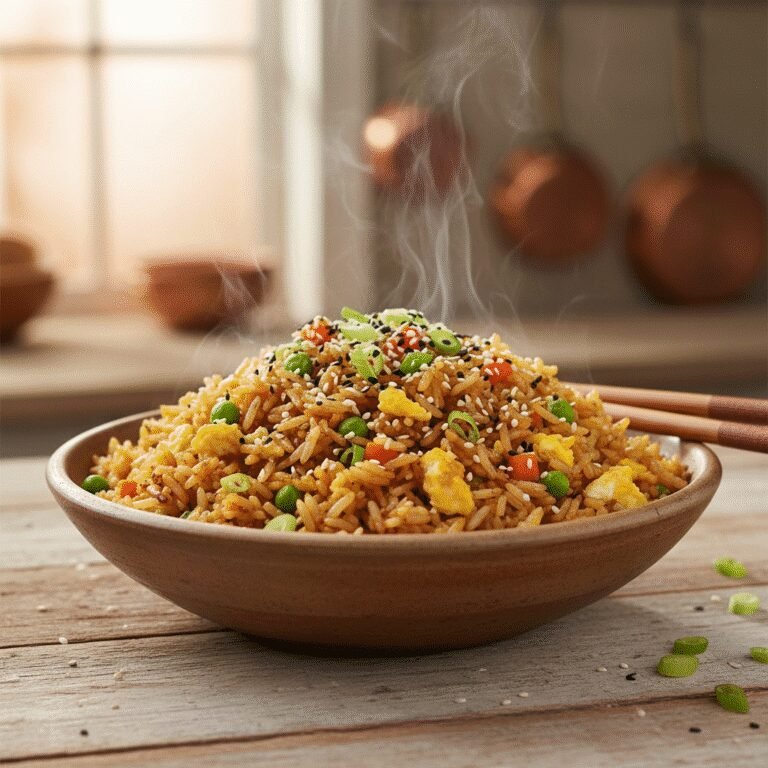
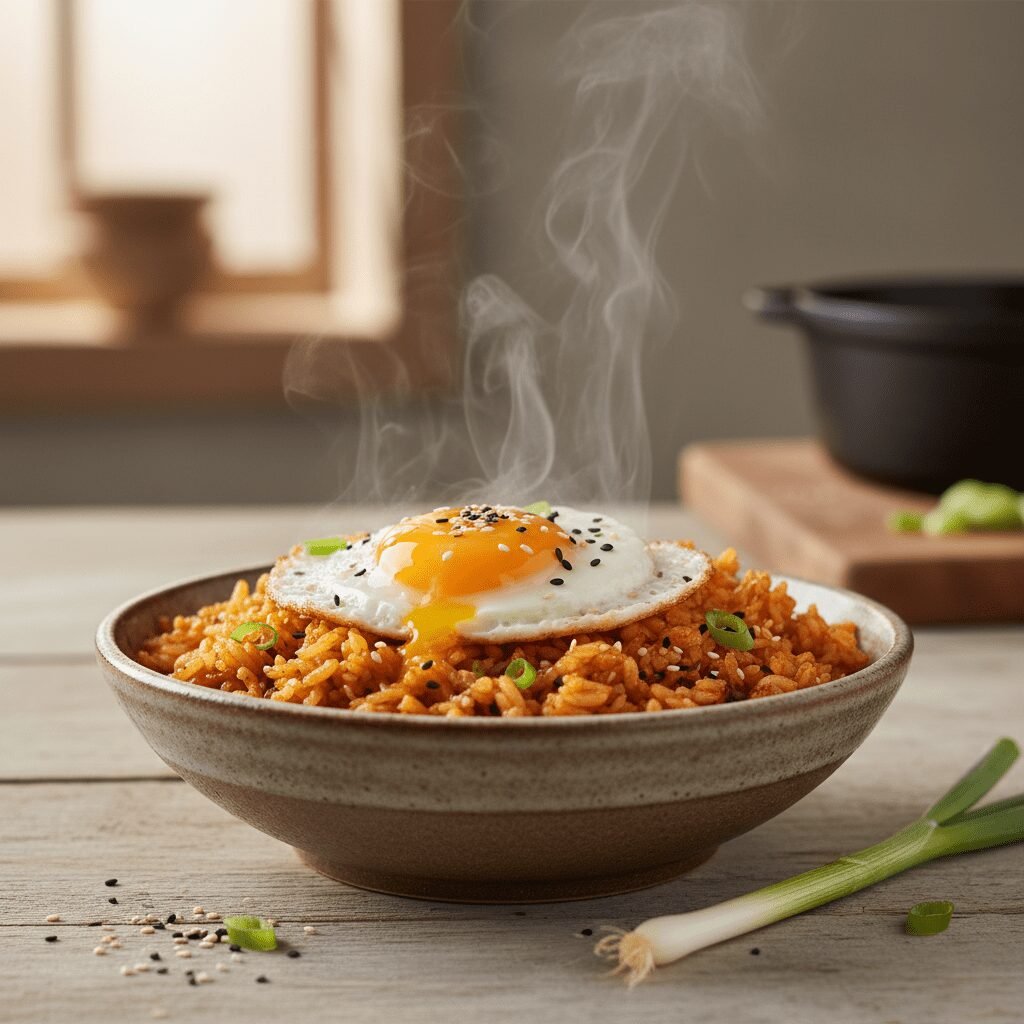
15 Minute Kimchi Fried Rice: The Ultimate Leftover Rice Transformation
15 Minute Kimchi Fried Rice: The Ultimate Leftover Rice Transformation
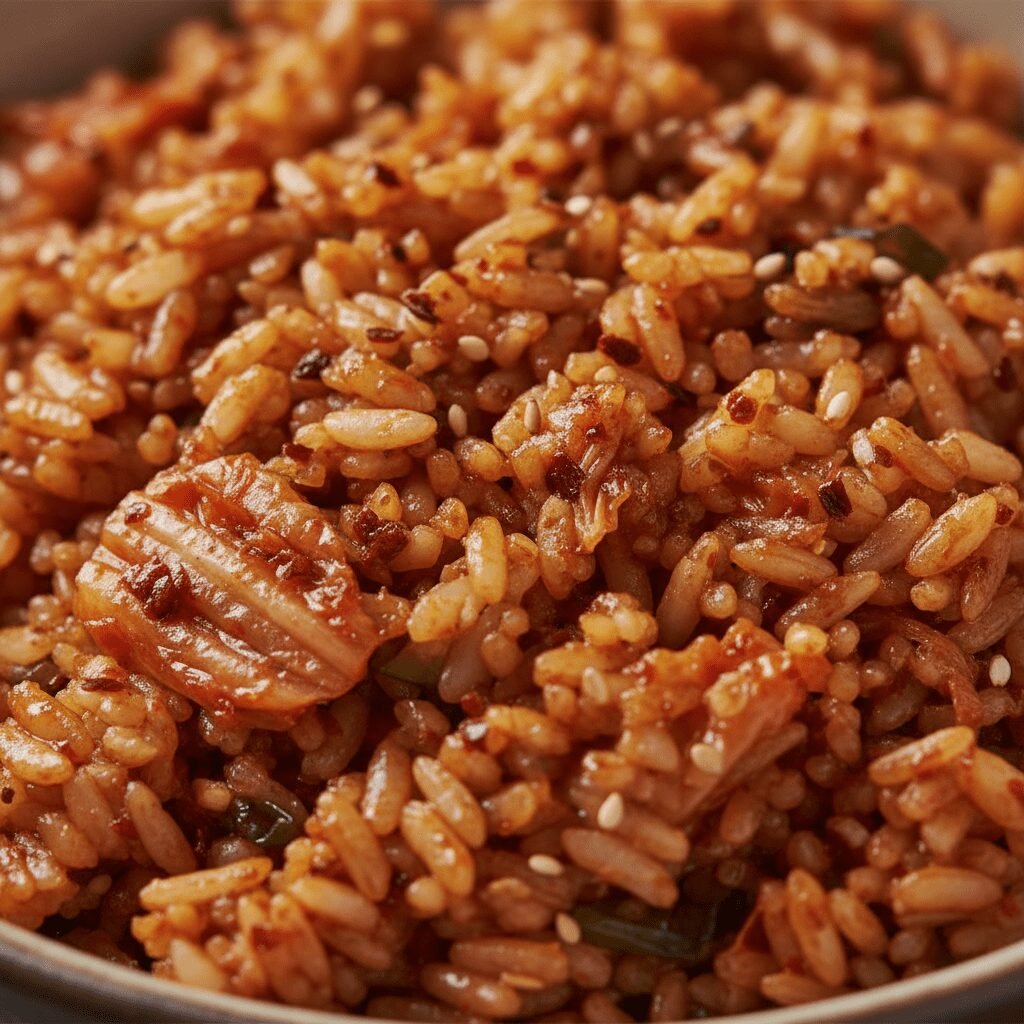
Transform your leftover rice into a vibrant, flavorful, and incredibly quick meal with this 15-minute Kimchi Fried Rice recipe! It’s the perfect weeknight savior, bursting with savory, spicy, and tangy notes that will make your taste buds sing. Get ready to fall in love with this easy, delicious dish!
5 minutes
10 minutes
15 minutes
2 servings
Main Dish
Stir-fry
Korean
Pescatarian (can be made Vegetarian/Vegan)
Oh, sweet friends! Do you ever find yourself staring into the fridge, wondering what magical creation you can whip up with that lonely container of leftover rice? Well, let me tell you, I’ve got the ultimate secret weapon that will turn those humble grains into a culinary masterpiece in mere minutes: 15 Minute Kimchi Fried Rice! This isn’t just a recipe; it’s a revelation, a busy mom’s best friend, and a flavor explosion all rolled into one.
As a busy mama myself, I know the struggle is real when it comes to getting a delicious, wholesome meal on the table without spending hours in the kitchen. That’s why I’m absolutely head-over-heels for this kimchi fried rice. It’s got that perfect balance of spicy, savory, and a touch of tang that makes every bite an adventure. Plus, it’s incredibly versatile, so you can easily customize it to whatever you have on hand. Think of it as your new go-to for those nights when you need something quick, comforting, and utterly satisfying.
This dish isn’t just about speed; it’s about maximizing flavor with minimal effort. The star of the show, kimchi, brings so much depth and character, transforming simple ingredients into something truly extraordinary. So, grab that leftover rice, a few pantry staples, and let’s get cooking! Your family (and your taste buds!) will thank you.
History & Origins
Kimchi fried rice, or Kimchi Bokkeumbap (김치볶음밥), is a beloved staple in Korean cuisine, cherished for its comforting flavors and ingenious use of leftovers. Its origins are deeply rooted in the Korean tradition of not wasting food, especially the ubiquitous kimchi. Kimchi itself, a fermented vegetable dish, has been a cornerstone of Korean meals for centuries, evolving from simple salted vegetables to the spicy, complex condiment we know today.
The concept of stir-frying rice with other ingredients is common across many Asian cultures, but the addition of fermented kimchi gives this particular dish its unique Korean identity. It’s believed that kimchi fried rice gained widespread popularity as a practical and delicious way to use up older, more sour kimchi, which, when cooked, develops an even richer, deeper flavor. It’s a dish that evokes warmth, home, and resourcefulness, often prepared by mothers and grandmothers as a quick, satisfying meal for their families.
Over time, Kimchi Bokkeumbap has transcended its humble beginnings to become a global favorite, appearing on restaurant menus and in home kitchens worldwide. It’s a testament to the power of simple ingredients and smart cooking techniques to create something truly special. Every spoonful connects you to generations of Korean culinary wisdom, proving that sometimes, the best meals come from the most unexpected places!
Why This Recipe Works
This 15-minute kimchi fried rice isn’t just fast; it’s a culinary marvel that leverages several clever techniques to deliver maximum flavor in minimal time. The magic truly begins with day-old, cold rice. Freshly cooked rice is too moist and will steam rather than fry, leading to a mushy texture. Cold rice, however, has dried out slightly, allowing for those perfectly crispy, separate grains that are the hallmark of great fried rice.
Next, we have the star: kimchi. As kimchi ferments, it develops complex umami notes and a delightful tanginess. When stir-fried, these flavors intensify and mellow slightly, creating a deep, savory base for the dish. The kimchi juice is also crucial, adding moisture and a vibrant red hue. The acidity in the kimchi also helps to cut through the richness of the other ingredients, creating a balanced profile.
The quick cooking method, using a hot pan or wok, ensures that ingredients cook rapidly and develop a slight char, adding another layer of flavor. Sautéing the aromatics (like garlic and onion) first builds a foundational flavor layer, while the addition of gochujang (Korean chili paste) and soy sauce provides that essential sweet, savory, and spicy kick. Finally, the egg, often cooked directly into the rice or as a sunny-side-up topping, adds richness and protein, making it a complete and satisfying meal. It’s a symphony of textures and tastes, all harmonizing in a flash!
Why You’ll Love This Recipe
- ✓Ready in just 15 minutes, perfect for busy weeknights!
- ✓Transforms leftover rice into a delicious, vibrant meal.
- ✓Packed with savory, spicy, and tangy Korean flavors.
- ✓Incredibly versatile – customize with your favorite proteins and veggies.
- ✓A budget-friendly and resourceful way to use up ingredients.
- ✓Comfort food that’s surprisingly easy to make.
Equipment You’ll Need
- ✓Large non-stick skillet or wok
- ✓Spatula or wooden spoon
- ✓Cutting board
- ✓Sharp knife
- ✓Small bowls for ingredients
Ingredients
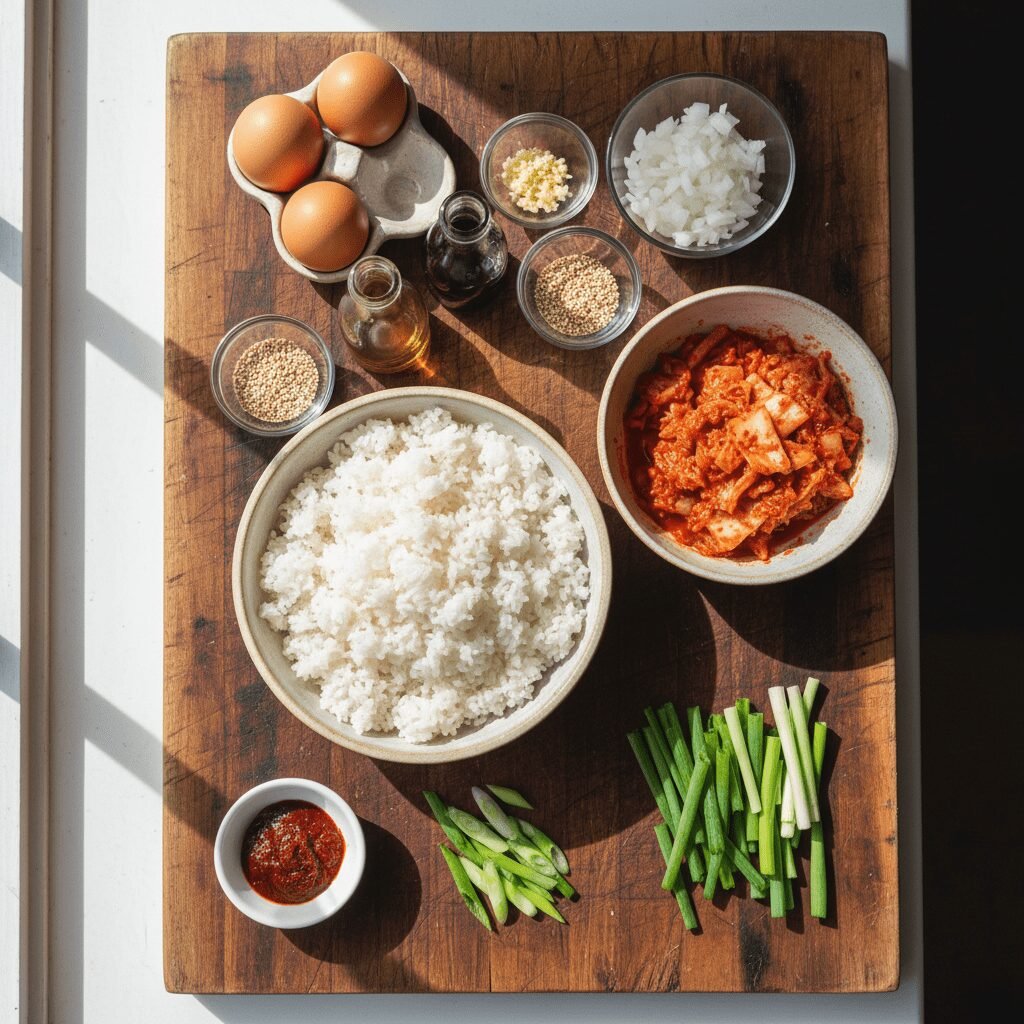
- ✓2 cups cold day-old cooked rice (short or medium grain preferred)
- ✓1 cup chopped kimchi, plus 2-3 tablespoons kimchi juice
- ✓1 tablespoon sesame oil, divided
- ✓1 tablespoon vegetable oil
- ✓1/2 small onion, finely diced
- ✓2 cloves garlic, minced
- ✓1 tablespoon gochujang (Korean chili paste, optional for extra spice)
- ✓1 tablespoon soy sauce (or tamari for gluten-free)
- ✓1 teaspoon sugar (optional, balances flavors)
- ✓2 large eggs
- ✓2 green onions, chopped (for garnish)
- ✓1 teaspoon toasted sesame seeds (for garnish)
- ✓Optional: 1/2 cup cooked protein (e.g., spam, chicken, tofu, shrimp)
Instructions
-
Step 1: Prep Your Ingredients
- First things first, let’s get everything ready! Chop your kimchi into bite-sized pieces and set aside the kimchi juice. Finely dice your onion and mince the garlic. If you’re adding any protein, make sure it’s cooked and ready to go. This makes the stir-frying process super smooth!
-
Step 2: Sauté Aromatics
- Heat the vegetable oil in a large non-stick skillet or wok over medium-high heat. Add the diced onion and sauté for 2-3 minutes until it starts to soften. Toss in the minced garlic and cook for another minute until fragrant, being careful not to burn it.
-
Step 3: Add Kimchi and Rice
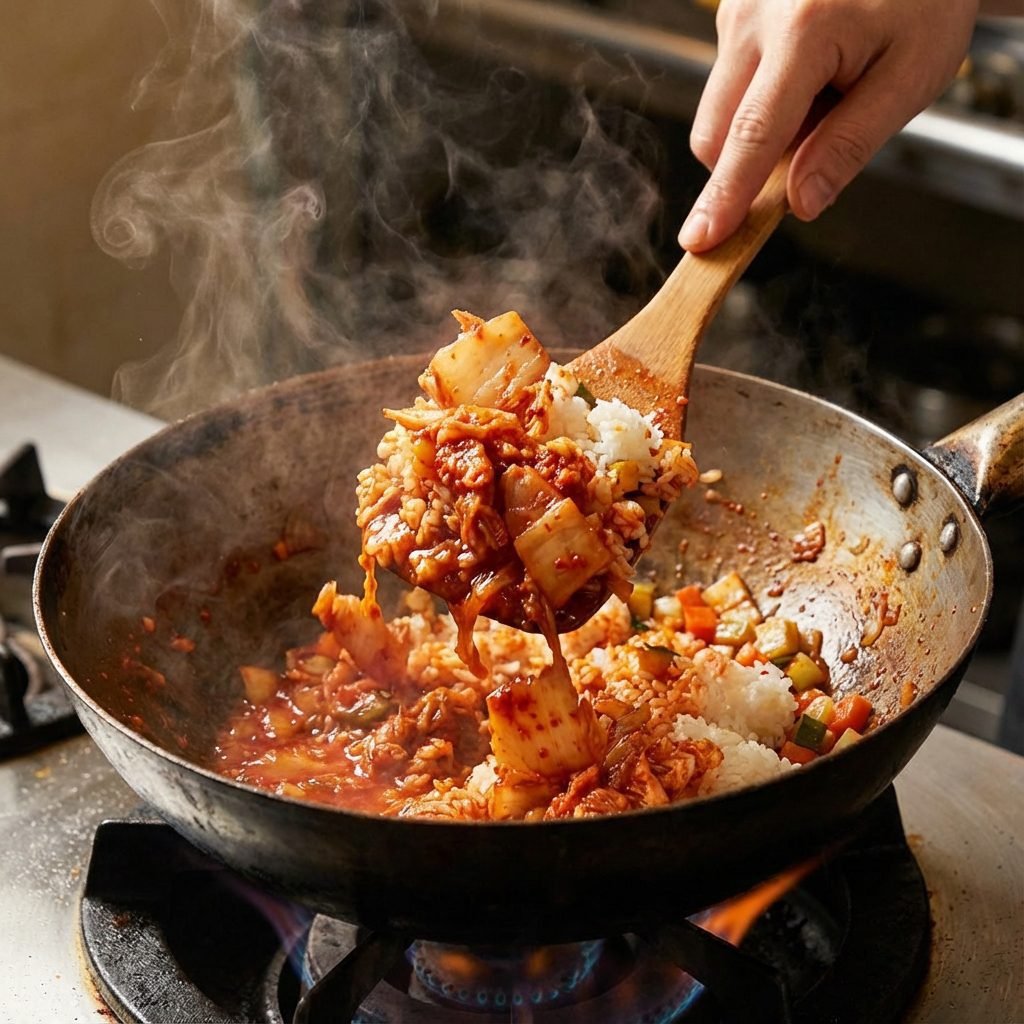
- Now for the star! Add the chopped kimchi and kimchi juice to the pan. Stir-fry for 2-3 minutes, allowing the kimchi to soften and its flavors to deepen. Next, add your cold day-old rice. Break up any clumps with your spatula and stir well to combine with the kimchi and aromatics. Continue to stir-fry for 3-4 minutes, pressing the rice against the pan to get some lovely crispy bits.
-
Step 4: Season and Stir
- Stir in the gochujang (if using), soy sauce, and sugar (if using). Mix everything thoroughly until the rice is evenly coated and has a beautiful reddish hue. If you’re adding cooked protein, now’s the time to toss it in and heat it through.
-
Step 5: Cook the Eggs
- Push the rice to one side of the pan, creating a clear space. Add 1/2 tablespoon of sesame oil to the empty space. Crack the two eggs directly into the pan. You can either scramble them directly in the pan and then mix them into the rice, or cook them sunny-side up to serve on top. For scrambled, cook until just set, then gently fold into the rice.
-
Step 6: Garnish and Serve
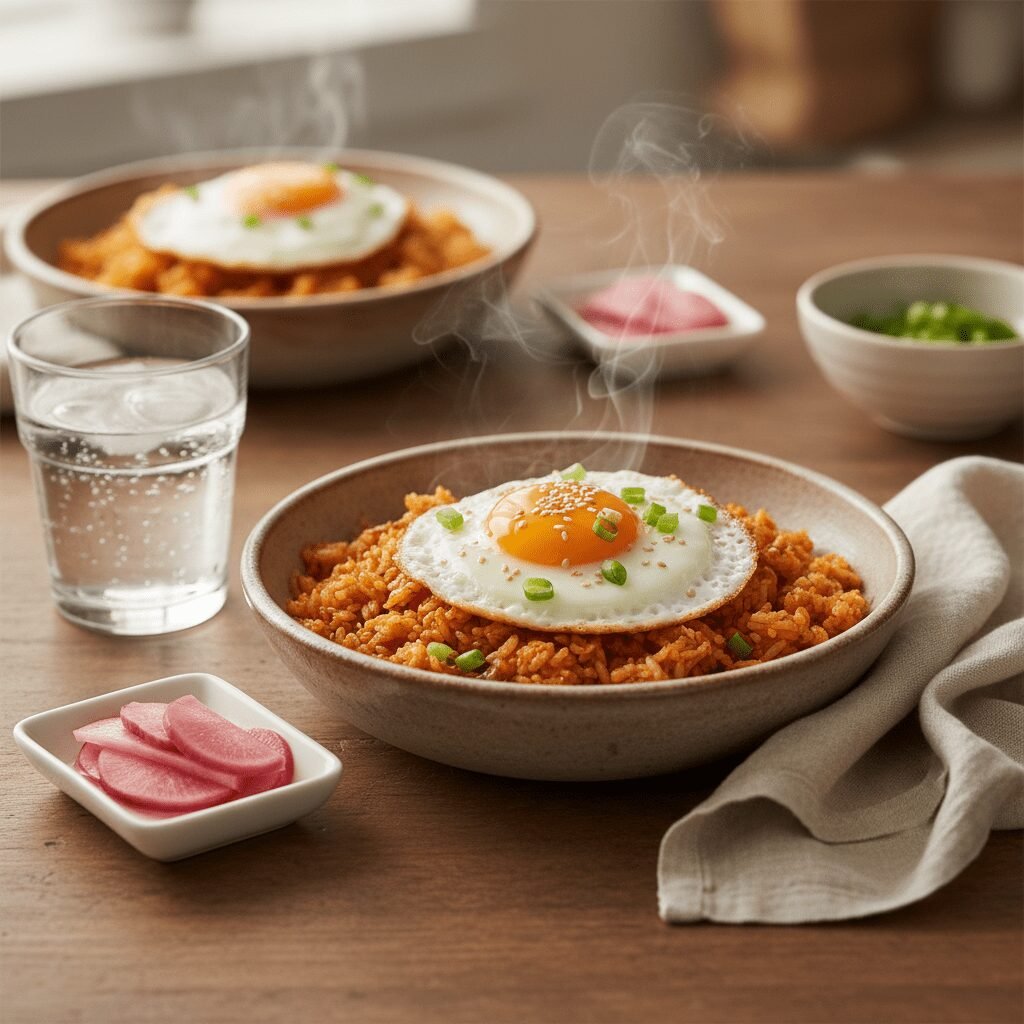
- Remove the pan from the heat. Drizzle with the remaining 1/2 tablespoon of sesame oil. Divide the kimchi fried rice into two bowls. Garnish generously with chopped green onions and toasted sesame seeds. If you cooked your eggs sunny-side up, gently place one on top of each serving. Serve immediately and enjoy your delicious, homemade 15-minute masterpiece!
-
Chef’s Note:
- The key to great fried rice is high heat and cold rice. Don’t overcrowd your pan, or the rice will steam instead of fry. If you have a larger batch, consider cooking it in two smaller batches.
Expert Cooking Tips
- ✓Use cold, day-old rice: This is non-negotiable for crispy, non-mushy fried rice. Freshly cooked rice has too much moisture.
- ✓High heat is your friend: Cook on medium-high to high heat to get those lovely slightly charred bits on the rice and kimchi.
- ✓Don’t overcrowd the pan: If making a larger batch, cook in two separate batches to ensure even frying and prevent steaming.
- ✓Taste and adjust: Kimchi varies in saltiness and spice. Taste your fried rice before serving and adjust soy sauce, gochujang, or sugar to your preference.
- ✓Press and stir: When frying the rice, occasionally press it against the bottom of the pan with your spatula for a minute or two to encourage browning and crispiness.
- ✓Customize your spice: If you love heat, add more gochujang or a pinch of red pepper flakes. For less spice, reduce or omit the gochujang.
Substitutions and Variations
This recipe is wonderfully flexible! If you don’t have gochujang, you can use sriracha for a similar spicy kick, though the flavor profile will be slightly different. For a vegetarian version, simply omit any meat and ensure your kimchi is vegan (some brands use fish sauce). You can add extra veggies like peas, carrots, bell peppers, or spinach – just sauté them with the onions. For protein, cooked chicken, shrimp, tofu, or even canned tuna (drained) work beautifully. If you’re out of green onions, a sprinkle of chives or even finely chopped regular onion can work as a garnish. For a gluten-free option, use tamari instead of soy sauce.
Common Mistakes to Avoid
The biggest mistake people make with fried rice is using freshly cooked, warm rice. This leads to a sticky, clumpy, and mushy texture because the moisture in the rice steams rather than fries. Always use cold, day-old rice! Another common error is overcrowding the pan. If you put too much rice and too many ingredients into a pan that isn’t large enough, the temperature drops, and everything steams instead of stir-frying, again leading to a less-than-ideal texture. Lastly, not allowing the kimchi to cook down slightly can result in a less integrated flavor. Give it a few minutes to soften and release its deliciousness before adding the rice.
Serving Suggestions
Kimchi fried rice is a meal in itself, but it pairs wonderfully with a few simple additions! A sunny-side-up egg on top is classic and adds a rich, runny yolk that mixes beautifully with the spicy rice. For a little extra freshness, serve with a side of sliced cucumbers or a simple green salad with a light vinaigrette. A sprinkle of crumbled nori (seaweed snacks) adds a lovely umami crunch. And if you’re feeling extra fancy, a side of pickled radishes or a bowl of clear broth soup would complete the Korean-inspired feast!
Storage and Reheating Tips
Leftover kimchi fried rice stores beautifully! Once cooled completely, transfer it to an airtight container and refrigerate for up to 3-4 days. To reheat, you can microwave it in short bursts, stirring occasionally, until heated through. For best results and to regain some of that lovely crispiness, reheat it in a skillet over medium heat with a tiny bit of oil, stirring frequently, until warmed through and slightly crispy again. It’s a fantastic meal prep option for quick lunches!
Nutrition Facts (Estimated)
| Serving Size | 1 bowl |
| Calories | 450 kcal |
| Fat | 18g |
| Saturated Fat | 5g |
| Unsaturated Fat | 10g |
| Trans Fat | 0g |
| Cholesterol | 190mg |
| Sodium | 980mg |
| Carbohydrates | 55g |
| Fiber | 4g |
| Sugar | 8g |
| Protein | 15g |
Frequently Asked Questions
Can I use fresh rice instead of day-old rice?
While you technically can, it’s highly recommended to use cold, day-old rice. Freshly cooked rice has too much moisture, which will make your fried rice mushy and clumpy instead of light and crispy. If you must use fresh rice, spread it out on a baking sheet and let it cool completely, or even pop it in the fridge for an hour to dry out a bit.
What kind of kimchi should I use?
Napa cabbage kimchi (Baechu Kimchi) is the most common and recommended type. For the best flavor, use kimchi that’s a bit older and more fermented, as its sourness and depth will really shine when cooked. If your kimchi is very fresh, the flavor might be milder.
Is Kimchi Fried Rice very spicy?
The spice level can be adjusted! Kimchi itself has a moderate spice. Adding gochujang (Korean chili paste) will increase the heat significantly. If you prefer less spice, you can reduce or omit the gochujang. For more heat, add extra gochujang or a pinch of red pepper flakes.
Can I add meat or other vegetables?
Absolutely! This recipe is incredibly versatile. Cooked proteins like spam, chicken, beef, shrimp, or tofu are popular additions. For vegetables, try peas, carrots, bell peppers, mushrooms, or spinach. Just make sure any raw vegetables are cooked through before adding the rice.
What if I don’t have sesame oil?
Toasted sesame oil adds a distinct nutty aroma and flavor that is characteristic of Korean cuisine. While you can technically make it without, the flavor profile will be different. If you don’t have it, you can omit it, but I highly recommend getting some for an authentic taste!
How do I get crispy rice?
The keys to crispy rice are using cold, day-old rice, cooking on medium-high to high heat, and not overcrowding your pan. Also, occasionally press the rice against the bottom of the pan with your spatula and let it sit for a minute before stirring again to encourage browning.
Can I make this vegan?
Yes! Ensure your kimchi is vegan (some brands contain fish sauce or shrimp paste). Omit the eggs and any meat. You can add pan-fried tofu or tempeh for protein. Use tamari instead of soy sauce if you need it to be gluten-free as well.
What’s the difference between gochujang and sriracha?
While both are chili pastes, they have different flavor profiles. Gochujang is a Korean fermented chili paste with a complex, savory, slightly sweet, and spicy flavor. Sriracha is a Thai-style hot sauce, typically brighter, tangier, and garlic-forward. You can substitute sriracha in a pinch, but the flavor of the fried rice will be different.
Conclusion
And there you have it, my dear friends! A truly magical transformation of humble leftover rice into a dish that’s bursting with flavor, ready in a flash, and guaranteed to bring smiles to your dinner table. This 15-Minute Kimchi Fried Rice isn’t just a recipe; it’s a testament to how simple ingredients, a little creativity, and a dash of love can create something truly extraordinary. It’s the perfect solution for those busy weeknights when you crave something comforting and delicious without the fuss.
So, next time you’re wondering what to do with that extra rice, remember this recipe. It’s a game-changer, a lifesaver, and a delicious journey into the heart of Korean comfort food. Don’t be afraid to make it your own, experiment with different additions, and most importantly, enjoy every single flavorful bite. Happy cooking, and may your kitchen always be filled with joy and delicious aromas!